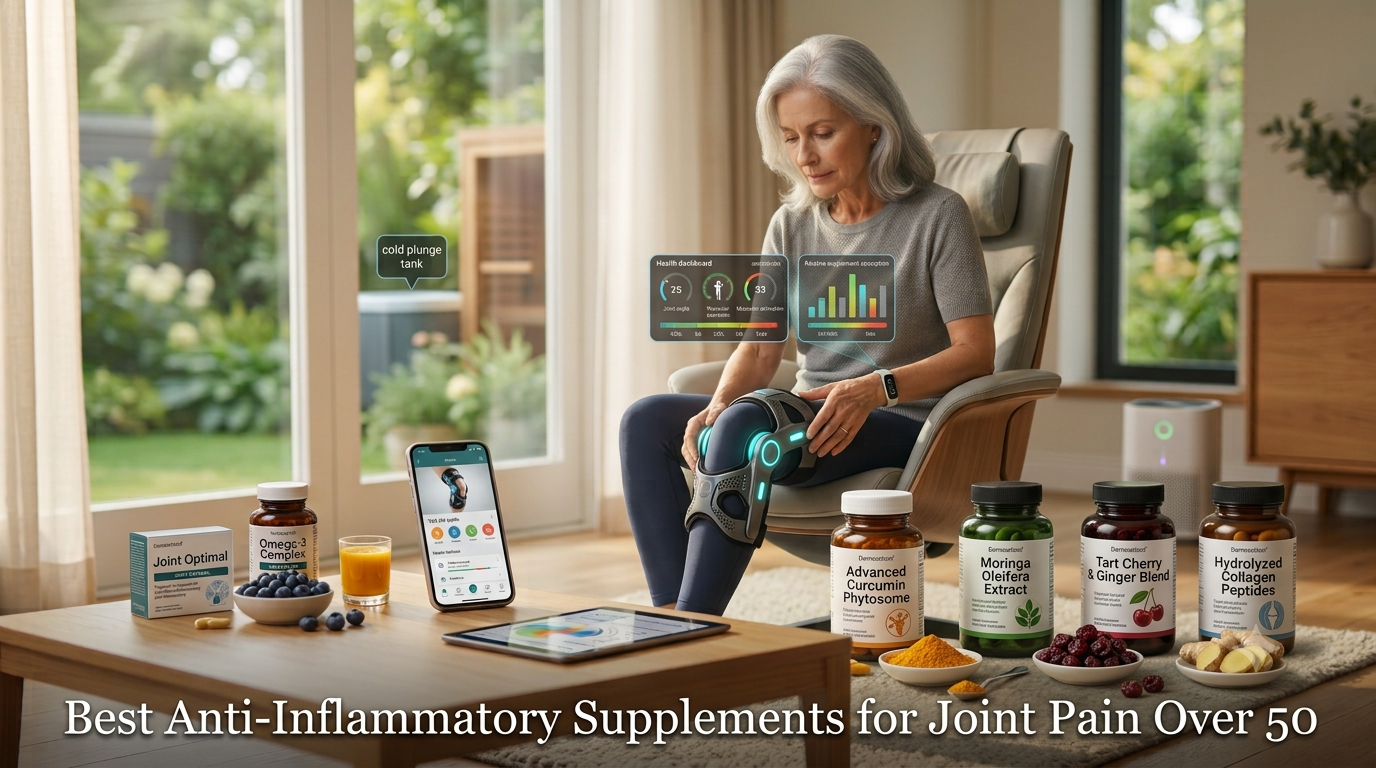
Looking for the best anti-inflammatory supplements for joint pain after 50? Here's what has real evidence behind it, dosages to know, and how to choose wisely.
Introduction
I walked into a vitamin shop a few years back looking for “something for my joints” and walked out $80 poorer with a bag full of bottles I barely understood. Fish oil, turmeric, something called MSM I'd never heard of, a glucosamine chondroitin combo the guy at the counter swore by, and even a bottle of green tea extract capsules he threw in as an afterthought recommendation. Half of it sat in my cabinet for months because I honestly had no idea if any of it was actually working, or if I was just really good at convincing myself it was.
Since then I've done a lot more digging, talked to my doctor about what's actually backed by decent research versus what's mostly marketing, and gone through some trial and error with my own bloodwork to figure out what's actually helped me over the past several years of trying different things. I want to walk you through what I've learned, what has real evidence behind it, and what's more questionable, so you're not stuck guessing the way I was that first day at the vitamin shop.
One thing upfront: supplements are exactly that, supplemental. They work best alongside diet, exercise, and other lifestyle habits, not as a replacement for them. And definitely talk to your doctor before starting anything new, especially if you're on other medications, since some of these can interact with things like blood thinners.
I also want to be upfront that I'm not a doctor or a nutritionist, just someone who's spent a fair amount of time reading research summaries, talking to my own physician, and experimenting cautiously with my own body over the past several years. What follows is meant to give you a clearer starting point for those conversations, not to replace them.
Why Supplements Are Worth Considering for Joint Pain After 50
Before getting into specific supplements, it's worth understanding why this category makes sense to explore in the first place, and where its real limits are.
As we age, a few things happen that make supplementation more relevant than it might have been in our 30s, when most of us barely thought about any of this at all:
- Nutrient absorption becomes less efficient, meaning even a decent diet might not deliver quite as much of certain nutrients as it used to, simply due to changes in digestive function that come with age
- Natural production of certain joint-supporting compounds declines, like the body's own glucosamine and collagen production, which were plentiful in younger years without any conscious effort
- Chronic low-grade inflammation increases, and certain supplements have research behind them specifically for modulating inflammatory pathways
- Deficiencies become more common, particularly vitamin D, which a surprising number of adults over 50 are low in without realizing it, often without any obvious symptoms pointing directly to the deficiency itself
That said, I want to be upfront that the supplement industry is not tightly regulated the way prescription medications are, and there's a lot of variability in quality, dosage accuracy, and evidence strength between different products and different supplement categories entirely. Some things on this list have genuinely solid research behind them. Others are more “reasonably promising but not conclusive.” I'll try to be honest about which is which as we go.
My general approach now is to get bloodwork done periodically to see what I'm actually deficient in, rather than taking a giant stack of supplements based on guesswork. That single shift, from “take everything that sounds helpful” to “take what my bloodwork shows I actually need,” saved me money and probably some unnecessary supplement burden on my body too.
I'd also add that supplements interact with each other and with the food you eat in ways that aren't always intuitive. Fat-soluble vitamins like D need some dietary fat present to absorb well, while certain minerals compete with each other for absorption if taken in large amounts at the same time. None of this needs to become a full-time hobby of research, but it's worth knowing that timing and combination can matter almost as much as which specific product you choose, which is part of why I lean toward simpler routines with fewer total supplements rather than piling on everything that sounds promising.
Omega-3 Fish Oil: The Best-Researched Option
If I had to pick just one supplement to recommend from this entire list, it would be omega-3 fish oil, mostly because it has some of the strongest and most consistent research behind it for joint and general inflammatory health, spanning decades of studies across different populations and conditions.
What the evidence shows: Omega-3 fatty acids, specifically EPA and DHA found in fish oil, have been studied fairly extensively for their anti-inflammatory properties. Research has shown benefits particularly for people with rheumatoid arthritis, with some studies showing reduced joint tenderness and stiffness, and there's reasonable supporting evidence for general inflammatory and cardiovascular benefits that indirectly support joint health too.
Typical dosage: Most studies use doses in the range of 1,000-3,000mg combined EPA/DHA daily, though this varies based on the specific condition being addressed and individual factors like existing cardiovascular risk or current diet. It's worth discussing your specific situation with a doctor, since therapeutic doses used in some studies are notably higher than what's found in a standard multivitamin or lower-dose fish oil capsule sold at most general retailers.
What to look for when buying:
- Check the EPA and DHA content specifically, not just total fish oil milligrams, since some products are diluted with less-active filler oils that inflate the total number without adding much actual benefit
- Look for third-party testing certifications (like IFOS or USP) to confirm purity and reduce concerns about heavy metal contamination, which is a legitimate concern given that fish can accumulate mercury and other contaminants from ocean water
- Consider a burp-free or enteric-coated formula if you experience the classic “fish burps” that turn a lot of people off fish oil entirely before they ever give it a fair trial
I switched brands after my first fish oil experience left me with that unpleasant aftertaste all day, and finding a properly enteric-coated version made a huge difference in whether I actually stuck with taking it consistently. Sometimes the biggest barrier isn't whether something works, it's whether you can tolerate taking it every day without dreading it.
Vegetarian and vegan alternatives exist too, typically algae-based omega-3 supplements, which provide similar EPA and DHA content without using fish-derived sources. These tend to be a bit pricier but are a solid option if dietary preference or ethics rule out traditional fish oil for you.
Storage matters more than people expect too. Fish oil can oxidize (go rancid) if stored improperly, particularly in heat or light, and rancid fish oil isn't just unpleasant, it may actually be less effective and potentially produce more oxidative byproducts than fresh oil. I keep mine in the refrigerator now, which a pharmacist recommended, and it's noticeably reduced the fishy aftertaste I used to get compared to when I stored it in a kitchen cabinet near the stove.
It's also worth checking that a product actually discloses its EPA and DHA amounts separately on the label rather than just listing a vague “fish oil” total. Some cheaper products bury a lower concentration of actual active omega-3s within a larger total fish oil number, which can be misleading if you're trying to hit a specific therapeutic dose based on research recommendations.
Turmeric and Curcumin for Joint Inflammation
Turmeric, and more specifically its active compound curcumin, has become one of the most popular natural anti-inflammatory supplements, and there's a reasonable amount of research supporting its use, though with some important caveats.
What the evidence shows: Several studies have found curcumin supplementation associated with reduced joint pain and improved function in people with osteoarthritis, with some research suggesting effects comparable to certain over-the-counter pain relievers, though study quality and results vary considerably from trial to trial. It's considered a reasonably promising option, particularly for people looking for something with fewer side effects than long-term NSAID use, which carries its own risks with extended use, particularly for the stomach and kidneys.
The absorption problem: Here's the catch that a lot of people don't realize: curcumin on its own is poorly absorbed by the body. Studies showing meaningful benefit typically use curcumin formulated with black pepper extract (piperine), which significantly improves absorption, or specialized formulations designed to enhance bioavailability. A plain turmeric supplement without one of these enhancements may not deliver much benefit at all, regardless of the dose on the label.
Typical dosage: Studies generally use curcumin extract doses in the range of 500-1,000mg daily, ideally with piperine or another bioavailability enhancer included in the formula.
What to look for when buying:
- Confirm the product specifically contains curcumin extract, not just turmeric powder, since turmeric powder alone contains only a small percentage of curcumin by weight
- Check that piperine (often labeled as BioPerine, a common branded version) or another absorption enhancer is included in the formula, not just curcumin on its own
- Be aware that curcumin can interact with blood thinners and certain other medications, so it's worth discussing with your doctor, especially if you're on any prescription medications for heart health or blood clotting
I made the classic beginner mistake of buying a cheap turmeric supplement without checking for piperine, and honestly never noticed much difference after a couple months of taking it. Switching to a properly formulated curcumin extract with piperine included made a noticeably bigger difference, which really drove home how much formulation details matter in this specific category.
I'll also mention that some people experience mild digestive upset from curcumin, particularly at higher doses, which surprised me since it's often marketed as a gentle, natural alternative to medications with more well-known side effects. Starting with a lower dose and gradually increasing, rather than jumping straight to the full studied dose, helped me avoid the stomach discomfort I experienced the first time I tried it at full strength right away. It's a small adjustment, but one that made the difference between sticking with it consistently and giving up on it after a rough first week.
Vitamin D: The Overlooked Joint Health Factor
Vitamin D doesn't get the same buzz as trendier joint supplements, but it's genuinely one of the more important ones to consider, especially since deficiency is so common in adults over 50.
What the evidence shows: Low vitamin D levels have been linked with increased inflammation and are associated with higher rates of joint pain and muscle weakness in several studies. Vitamin D plays a role in immune function and inflammatory regulation, and correcting a deficiency, if one exists, can meaningfully improve how you feel, not just for joints but for overall energy and wellbeing too.
Why deficiency is so common after 50:
- Skin becomes less efficient at producing vitamin D from sun exposure as we age, sometimes significantly less efficient compared to skin in your 20s or 30s
- Many people spend less time outdoors, especially during work-heavy years or in colder climates where outdoor time naturally shrinks for months at a stretch
- Sunscreen use, while important for skin cancer prevention, does reduce vitamin D synthesis from sun exposure, creating a genuine trade-off worth being aware of
- Dietary sources of vitamin D are fairly limited, mostly fatty fish, fortified dairy, and egg yolks, none of which most people eat in large enough quantities daily to meet their needs from diet alone
Typical dosage: This genuinely depends on your current levels, which is why getting a blood test (25-hydroxyvitamin D) before supplementing is so useful. General maintenance doses often range from 1,000-2,000 IU daily, but people with confirmed deficiency sometimes need considerably higher doses temporarily, under a doctor's guidance, to correct the deficiency before dropping to a maintenance dose.
What to look for when buying:
- Vitamin D3 (cholecalciferol) is generally considered more effective at raising blood levels than D2 (ergocalciferol)
- Since vitamin D is fat-soluble, taking it with a meal containing some fat improves absorption
I found out I was significantly deficient in vitamin D through a routine blood panel, which honestly surprised me since I don't consider myself someone who avoids the outdoors. My doctor put me on a higher therapeutic dose for a few months to correct the deficiency, then dropped me to a maintenance dose once my levels normalized. I noticed a difference not just in my joints but in my general energy levels too, which I hadn't expected going in.
I'd encourage anyone reading this to actually ask for a vitamin D test at their next physical rather than assuming it's automatically included in routine bloodwork, since in my experience it often isn't unless specifically requested. It's a simple blood draw, usually not expensive, and given how common deficiency is in this age group, it's one of the more useful, actionable pieces of information you can get about your own joint and overall health.
It's also worth noting that vitamin D toxicity, while uncommon, is possible with excessive long-term high-dose supplementation, which is another reason working with your doctor rather than self-prescribing a high dose indefinitely matters here. The therapeutic doses used to correct a genuine deficiency are typically meant to be temporary, followed by a lower, ongoing maintenance dose once levels normalize, rather than continuing the higher dose indefinitely without rechecking levels.
Glucosamine and Chondroitin: What the Evidence Actually Shows
These two are often sold together and have been popular joint supplements for decades, but the research on them is honestly more mixed than a lot of marketing suggests, so I want to be straightforward about that.
What the evidence shows: Some studies have found modest benefit for osteoarthritis symptoms, particularly for knee osteoarthritis, while other well-designed studies have found little to no benefit beyond what a placebo provides. The overall research picture is genuinely inconsistent, and major health organizations have given somewhat mixed recommendations on whether to routinely suggest these supplements.
My honest take: I tried a glucosamine chondroitin combination for about four months and didn't notice a clear difference I could confidently attribute to the supplement rather than other changes I was making at the same time, like exercise and diet adjustments. That's obviously just one person's experience, not a controlled study, but it lines up with the more mixed research picture rather than the dramatic claims sometimes seen in marketing.
If you decide to try it anyway:
- Typical studied doses are around 1,500mg glucosamine and 1,200mg chondroitin daily
- Give it a genuine multi-month trial before deciding whether it's helping, since any benefit, if present, tends to build gradually rather than appearing quickly
- Be aware that glucosamine is often derived from shellfish, so those with shellfish allergies should look for a vegetarian source instead
I don't want to discourage anyone from trying it, since individual response genuinely varies and some people do report meaningful benefit. I just think it's worth going in with realistic expectations given the more mixed research, rather than assuming it's a guaranteed fix the way some product marketing implies.
I think part of why glucosamine and chondroitin remain so popular despite the mixed research is that the supplements have been around for decades and built up a lot of word-of-mouth reputation over that time, independent of how the more rigorous clinical trials have actually turned out. That doesn't mean everyone's positive experience is imagined, individual response really does vary, but it does mean the popularity of a supplement isn't always a reliable proxy for how strong the underlying evidence actually is. I try to separate “widely used and well-known” from “strongly proven” when evaluating any supplement, and this pairing is a good example of where those two things don't fully overlap.
Collagen, MSM, and Other Popular Joint Supplements
A handful of other supplements come up frequently in joint health conversations, each with varying levels of evidence behind them.
Collagen: Collagen supplements, often derived from bovine or marine sources, have some emerging evidence supporting joint comfort and potentially supporting cartilage health, though the research is still developing compared to something like omega-3s, which have decades more study behind them. Many people report subjective improvement in joint comfort, and it's generally well-tolerated with few side effects, which makes it a relatively low-risk option to try even with less definitive evidence backing it up.
MSM (methylsulfonylmethane): Some studies suggest MSM may help reduce joint pain and improve physical function, potentially through anti-inflammatory and antioxidant effects, though again, the research base is smaller than for omega-3s or curcumin, and results across studies have been fairly modest overall. It's often combined with glucosamine and chondroitin in commercial joint supplement blends, which can make it harder to evaluate its individual contribution separate from the other ingredients in the mix.
Boswellia (Indian frankincense): This one has a smaller but genuinely interesting research base specifically for osteoarthritis, with some studies showing reduced pain and improved function over the course of several weeks of consistent use. It's less commonly discussed than turmeric but worth knowing about if you're exploring options beyond the more mainstream choices already covered here.
Green tea extract: Contains compounds called catechins that have some research behind them for anti-inflammatory effects, though most of this research focuses on general health benefits rather than joint-specific outcomes, so treat this one as more of a general wellness addition than a targeted joint pain solution.
Probiotics: Given the connection between gut health and systemic inflammation discussed elsewhere in inflammation research, some people find general health and inflammatory benefits from a quality probiotic supplement, though evidence specifically for joint pain outcomes is more indirect than direct at this point.
I've experimented with collagen and MSM at different points, generally with modest, hard-to-measure results, similar to my experience with glucosamine and chondroitin. None of these felt like dramatic game-changers for me personally, but I also want to acknowledge that supplement response really does vary from person to person, and something that did little for me might genuinely help someone else more.
I'd also mention that collagen in particular comes in different forms, sometimes labeled type I, type II, or a blend, and some research suggests type II collagen specifically may be more relevant for joint cartilage support compared to type I, which is more associated with skin and general connective tissue. If you're specifically trying collagen for joint reasons rather than skin or hair benefits, it's worth checking which type a product actually contains rather than assuming all collagen supplements are interchangeable for this particular purpose.
Boswellia is one I'd genuinely consider trying again myself, given how the research has looked more promising than I initially expected when I first came across it. It hasn't gotten nearly the mainstream attention that turmeric has, possibly just due to less aggressive marketing, but the studies I've read on it for osteoarthritis specifically were more encouraging than I expected for a less commonly discussed option.
How to Choose Quality Supplements and Use Them Safely
Regardless of which supplements you decide to try, a few general principles apply across the board for choosing quality products and using them responsibly.
- Look for third-party testing certifications, like USP, NSF, or ConsumerLab verification, which confirm a product actually contains what the label claims and is free from significant contamination or heavy metals
- Talk to your doctor before starting anything new, especially given potential interactions with blood thinners, diabetes medications, and other common prescriptions in this age group
- Get relevant bloodwork done first when possible, particularly for vitamin D, so you're addressing an actual confirmed deficiency rather than guessing based on symptoms alone
- Give any supplement a genuine, multi-month trial before deciding whether it's working, since most of these don't act quickly the way a pain reliever would, and judging too early can lead to abandoning something that would've helped with more patience
- Track your symptoms somewhat objectively, whether through a simple journal or app, so you're evaluating based on actual patterns rather than just a vague overall impression
- Be skeptical of products making dramatic, absolute claims like “eliminates joint pain” or “instant relief,” since legitimate supplements typically show modest, gradual benefits in research rather than dramatic transformations
- Don't stack too many new supplements at once, since doing so makes it hard to know which one, if any, is actually contributing to any change you notice
I'd also gently suggest budgeting realistically for this. Trying every supplement mentioned in this article simultaneously would add up to a genuinely significant monthly cost, and honestly isn't necessary. Based on what I've read and my own bloodwork, I've settled into a fairly simple routine now: fish oil, vitamin D since I confirmed a deficiency, and a curcumin supplement with piperine, since those three have the most consistent evidence behind them for my specific situation. Everything else I tried and eventually set aside, not because they're necessarily bad, but because the evidence and my own experience didn't justify the ongoing cost for me personally.
Timing of when you take supplements throughout the day can also affect both absorption and tolerance. I've found taking fish oil and curcumin with my largest meal of the day, which for me is usually dinner, reduces any mild digestive discomfort compared to taking them on an empty stomach first thing in the morning. Vitamin D, being fat-soluble, also absorbs better with a meal containing some fat, so I've folded it into that same evening routine rather than trying to remember a separate time of day for each individual supplement.
One last practical tip: set a reminder or keep supplements somewhere highly visible, like next to your toothbrush or coffee maker, since consistency matters more than any single perfect dose. I went through a stretch of forgetting my fish oil three or four days a week simply because the bottle was tucked away in a cabinet I didn't open often. Moving it to the counter where I'd actually see it daily made a bigger difference in my consistency than anything about the supplement itself.
Conclusion
The best anti-inflammatory supplements for joint pain after 50 really depend on your specific situation, what your bloodwork shows, and what you're actually trying to address, rather than any single universal recommendation that applies equally to everyone. Omega-3 fish oil and vitamin D (if you're deficient) have some of the strongest evidence behind them, while curcumin with proper absorption enhancement is a reasonably promising option too. Glucosamine, chondroitin, collagen, and MSM have more mixed evidence but may still be worth trying if you're curious, with realistic expectations in place.
Whatever you choose, please talk to your doctor first, especially if you're taking other medications, and consider getting bloodwork done to guide your choices rather than guessing. Give whatever you try a genuine multi-month trial before deciding whether it's helping, since most of these work gradually rather than immediately. And remember that supplements work best as one part of a broader approach, alongside diet, movement, sleep, and the other lifestyle factors that genuinely move the needle on joint inflammation over time.
I'd love to hear what's worked for you in this category, or if you've had a similar experience of trial and error finding what actually makes a difference for your joints. Share your experience in the comments, since real results from real people tend to cut through the marketing noise better than any product description alone. And if you've tried something not covered here, whether it worked or not, I'd genuinely be curious to hear about it, since this is a category where personal experience often ends up being just as informative as the published research itself.