How Heart Rate Variability (HRV) Reveals Your True Inflammation Levels After 50
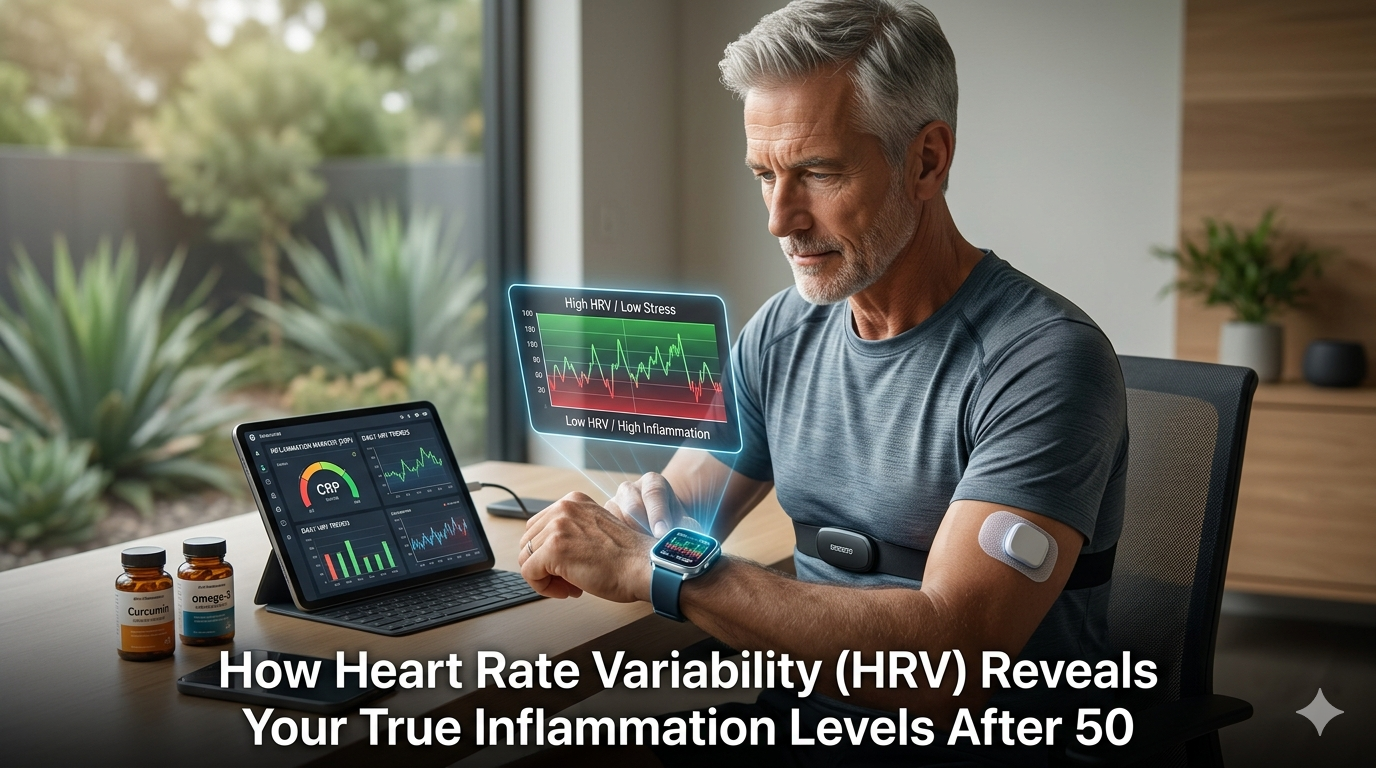
Heart rate variability is the most underutilized real-time window into your inflammation and recovery status after 50. Discover what HRV actually measures, why it matters for inflammaging, and how to use it to optimize your health.
Introduction
Here's a finding from cardiovascular research that reframes how we should think about inflammation monitoring. Adults with chronically low heart rate variability have been shown in large population studies to have significantly higher rates of cardiovascular disease, type 2 diabetes, depression, cognitive decline, and all-cause mortality — independent of conventional risk factors like cholesterol, blood pressure, and even CRP. Low HRV predicts poor health outcomes with a reliability that rivals many of our most trusted clinical biomarkers. And unlike a quarterly blood test that gives you a snapshot frozen in time, HRV is available to you every single morning — a continuous, real-time window into the biological state of your autonomic nervous system, your inflammatory load, and your capacity for recovery.
Most people over 50 who are serious about their health are familiar with the idea of tracking inflammatory markers. They get their CRP checked, maybe their IL-6 if they have access to a functional medicine practitioner, and they use these quarterly snapshots to assess whether their lifestyle interventions are working. This approach is valuable but fundamentally limited. A lot can happen to your inflammatory biology between quarterly blood tests — a week of poor sleep, a stressful period at work, a dietary slip, an illness — and you have no way of knowing in real time how these events are affecting your inflammatory status. HRV fills that gap in a way no other accessible tool currently can.
I started taking HRV seriously after reading Peter Attia's work on longevity monitoring, and the learning curve was steeper than I expected — not because the technology is complicated, but because interpreting HRV correctly requires understanding what it's actually measuring and what the numbers mean in context. Done right, HRV monitoring becomes the most informative daily health feedback loop available outside a clinical setting. Done wrong — which is how most people use it initially — it generates anxiety about daily fluctuations that are perfectly normal and distracts from the trend-level information that actually matters.
This article is the complete HRV guide for over-50s who want to use it as a real-time inflammation and recovery monitoring tool. We're covering what HRV actually is, why it correlates so powerfully with inflammatory status, what drives it up and down, how to measure it properly, how to interpret the data intelligently, and how to combine it with other biohacking tools for a comprehensive anti-inflammatory monitoring system. Let's get into it.
What Is Heart Rate Variability — The Science in Plain English
Most people assume a healthy heart beats with metronomic regularity — tick, tick, tick, like a clock. This intuition is wrong, and understanding why it's wrong is the foundation of everything HRV-based health monitoring is built on. A healthy heart actually beats with subtle irregularity — the time interval between consecutive heartbeats varies continuously, even at rest. This variation is not a flaw or an arrhythmia. It is a sign of health. And its magnitude — how much variability exists in those beat-to-beat intervals — is what we measure as heart rate variability.
The reason heart rate variability exists is the autonomic nervous system — the network of nerves that controls unconscious bodily functions including heart rate, digestion, breathing, and immune activity. The autonomic nervous system has two primary branches with opposing effects on the heart. The sympathetic branch — the fight-or-flight system — increases heart rate and reduces beat-to-beat variability, preparing the body for action or threat response. The parasympathetic branch — the rest-and-digest system — slows heart rate and increases beat-to-beat variability, promoting recovery, digestion, immune regulation, and tissue repair. HRV is essentially a continuous readout of the balance between these two branches — high HRV indicates parasympathetic dominance, low HRV indicates sympathetic dominance or reduced autonomic flexibility.
The vagus nerve is the primary parasympathetic nerve controlling heart rate variability, and it connects the brainstem to virtually every major organ in the body — including the heart, lungs, gut, liver, and immune tissues. The vagus nerve's role in HRV connects it directly to the gut-brain axis, the inflammatory reflex, and the immune-regulatory mechanisms that control systemic inflammatory tone. This anatomical reality is why HRV is such a powerful window into inflammation — the same neural pathway that regulates heart rate variability also regulates immune activity and inflammatory responses throughout the body.
The primary HRV metrics you'll encounter on modern wearables deserve simple explanation. RMSSD — root mean square of successive differences — measures the beat-to-beat variability in milliseconds and is the most commonly used HRV metric in consumer devices. It reflects parasympathetic nervous system activity specifically and is the most sensitive measure of acute HRV changes. SDNN — standard deviation of normal-to-normal intervals — reflects total autonomic variability over a longer measurement period and is more sensitive to overall autonomic health trends. The LF/HF ratio — low frequency to high frequency power ratio — derived from spectral analysis of HRV, reflects the balance between sympathetic and parasympathetic activity. Most consumer devices report RMSSD as their primary HRV metric, often simplified to a single number or score.
What constitutes a healthy HRV range after 50 is profoundly individual — and this is the most important thing to understand about HRV interpretation. Average RMSSD values decline significantly with age — a 25-year-old might average 60-80ms, while a healthy 55-year-old might average 30-50ms and a 65-year-old 25-40ms. These population averages are less useful than your personal baseline — the HRV range that represents your individual physiological normal. Two people the same age with the same apparent health status can have significantly different average HRV values due to genetic factors, fitness levels, and autonomic nervous system architecture. What matters is not your absolute number but your trend relative to your own baseline, and how specific lifestyle choices move your HRV above or below that baseline.
HRV declines naturally with age through several mechanisms — reduced sinoatrial node sensitivity to autonomic input, increased sympathetic nervous system tone from chronic stress and inflammatory load, and declining parasympathetic nervous system function. However — and this is profoundly important — this age-related HRV decline is substantially modifiable through lifestyle. Research consistently shows that physically active, low-stress, well-sleeping, anti-inflammatory-diet-following adults in their 60s and 70s can maintain HRV values that match or exceed those of sedentary, stressed, and inflamed adults decades younger. HRV is less a measure of chronological age and more a measure of biological age and lifestyle quality.
The HRV-Inflammation Connection — What the Research Shows
The relationship between HRV and systemic inflammation is one of the most well-established and mechanistically grounded connections in psychoneuroimmunology — the field studying relationships between the nervous system, psychological states, and immune function. Multiple large population studies and mechanistic research have confirmed a consistent, bidirectional, and clinically meaningful HRV-inflammation relationship.
The primary mechanism linking chronic inflammation to HRV suppression involves direct effects of pro-inflammatory cytokines on autonomic nervous system function. TNF-α, IL-1β, and IL-6 — the central cytokines of systemic inflammaging — directly suppress vagal nerve activity through central nervous system effects on the brainstem nuclei that control parasympathetic output. They also reduce the sensitivity of sinoatrial node pacemaker cells to parasympathetic signals, effectively blunting the heart rate variability response even when vagal tone is present. Elevated CRP — the most commonly measured systemic inflammation marker — consistently and inversely correlates with HRV in population studies. People with higher CRP have lower HRV. People with lower CRP have higher HRV. This correlation is strong enough that some researchers have proposed HRV as a continuous surrogate marker for CRP — a real-time inflammation indicator available daily rather than quarterly.
The relationship is bidirectional — which is what makes it both more concerning and more actionable. Low HRV doesn't just reflect existing inflammation — it actively drives more inflammation through reduced vagal anti-inflammatory activity. The inflammatory reflex is the mechanism at work here. The vagus nerve, through its parasympathetic input to the spleen and other immune tissues, actively suppresses inflammatory cytokine production by macrophages — a mechanism called the cholinergic anti-inflammatory pathway. When acetylcholine — the vagus nerve's neurotransmitter — binds to alpha-7 nicotinic acetylcholine receptors on macrophages, it powerfully suppresses their production of TNF-α, IL-1β, and IL-6. When vagal tone is high — reflected in high HRV — this anti-inflammatory brake is constantly engaged. When vagal tone is low — reflected in low HRV — the brake releases and macrophage inflammatory activity increases unchecked. This is the biological mechanism by which low HRV drives more inflammation, which further suppresses HRV, which allows more inflammation — a vicious cycle that characterizes the autonomic-inflammatory spiral of accelerated aging.
Population-level research has confirmed the clinical significance of this HRV-inflammation relationship across multiple disease domains. The CARDIA study found that low HRV in young adults predicted significantly higher rates of hypertension, metabolic syndrome, and cardiovascular events two decades later. The Framingham Heart Study found that low HRV was an independent predictor of cardiovascular mortality after accounting for traditional risk factors. Research specifically in adults over 60 has found that low HRV predicts cognitive decline, incident dementia, depression, frailty, and all-cause mortality with remarkable consistency. The inflammation mechanism is central to most of these associations — HRV is functioning as an accessible proxy for the inflammatory and autonomic dysfunctions that drive these outcomes.
Perhaps the most clinically interesting finding in the HRV-inflammation literature is that HRV changes predict inflammatory marker changes before those changes are detectable in blood tests. Because HRV reflects real-time autonomic nervous system state — which changes within minutes to hours of inflammatory stimuli — a drop in morning HRV can indicate rising inflammatory activity before the downstream cytokine changes would register in a blood test drawn the same day. This predictive temporal relationship makes HRV not just a reflection of inflammation but an early warning system for it — one that can guide lifestyle adjustments before inflammation escalates to the point of symptomatic or biomarker-detectable consequences.
What Depresses HRV After 50 — The Inflammation Triggers to Know
Understanding what pushes HRV down is as practically important as understanding what raises it — because identifying and eliminating the specific factors that are chronically suppressing your HRV is the fastest path to meaningful HRV improvement and the associated reduction in inflammatory load.
Poor sleep quality has the most immediate and dramatic HRV suppression effect of any lifestyle factor. A single night of poor sleep — whether from insufficient duration, fragmented architecture, or sleep apnea events — produces measurable HRV suppression the following morning that can persist throughout the day. The mechanisms are multiple: insufficient deep slow-wave sleep fails to adequately restore parasympathetic dominance from daytime sympathetic activation, elevated nocturnal cortisol from sleep disruption maintains sympathetic tone, and the inflammatory cytokines released during poor sleep directly suppress vagal activity as described above. Sleep apnea is particularly destructive to HRV — the repeated hypoxic events throughout the night cause autonomic dysfunction that keeps HRV chronically suppressed even on nights when sleep quantity appears adequate. For anyone with low baseline HRV, undiagnosed sleep apnea should be a primary consideration.
Chronic psychological stress produces persistent sympathetic nervous system dominance that chronically suppresses HRV through continuous cortisol and norepinephrine elevation. When the stress response is consistently activated — whether from work pressure, relationship conflict, financial anxiety, health concerns, or the general psychological load that accumulates in modern life — the autonomic nervous system settles into a sympathetic-dominant pattern that progressively reduces both resting HRV and the HRV response to physical challenges. Chronic stress also activates NF-κB in peripheral immune cells — increasing pro-inflammatory cytokine production that further suppresses vagal tone. The stress-HRV-inflammation relationship is bidirectional and self-reinforcing — stress suppresses HRV, low HRV allows more inflammation, inflammation amplifies the physiological stress response.
Overtraining and excessive high-intensity exercise without adequate recovery is one of the most common HRV suppressors in the health-conscious over-50 population. People committed to their health often push exercise intensity higher than their recovery capacity supports — generating cortisol loads that suppress HRV for days following intense sessions. The pattern of chronically suppressed morning HRV following heavy training weeks, combined with subjective fatigue and declining performance, is the signature of overtraining syndrome. This is precisely why HRV monitoring is so valuable for training guidance — it provides objective evidence of inadequate recovery that prevents overtraining before it becomes a chronic inflammatory problem.
Poor dietary choices produce HRV suppression through both acute and chronic mechanisms. A high-glycaemic meal produces a post-meal blood glucose spike followed by insulin surge that acutely suppresses parasympathetic activity and reduces HRV for one to three hours post-meal — a phenomenon measurable with continuous HRV monitoring. Chronically, the metabolic inflammation from high refined carbohydrate and seed oil intake elevates inflammatory cytokines that persistently suppress vagal tone. Alcohol has particularly dramatic and well-documented HRV suppression effects — even moderate alcohol consumption (two to three drinks) produces measurable HRV suppression during sleep that can persist through the following morning, regardless of how you otherwise slept. Heavy alcohol use produces chronic autonomic dysfunction and HRV depression independent of acute effects.
Environmental stressors are the HRV suppressors that most people completely overlook. EMF exposure — particularly from smartphones and WiFi routers used during sleep — has been shown in some research to affect autonomic nervous system function and HRV, though the evidence is more preliminary than for the lifestyle factors above. Air quality has stronger evidence — both acute and chronic exposure to particulate matter and air pollutants produces measurable HRV suppression through inflammatory and direct autonomic mechanisms. Extreme temperature — particularly chronic cold or heat stress without adequate adaptation — generates sympathetic activation that suppresses HRV. And the cumulative load of multiple mild environmental stressors simultaneously may produce HRV suppression greater than any single factor would suggest.
What Raises HRV After 50 — The Anti-Inflammatory Lifestyle Levers
Just as specific factors reliably suppress HRV — and through it, maintain chronic inflammatory activation — specific lifestyle interventions reliably raise HRV by restoring parasympathetic dominance, reducing inflammatory burden, and improving autonomic nervous system flexibility.
Sleep optimization is the single most impactful HRV elevator available — full stop. Improving sleep quality produces HRV improvements that are often dramatic within one to two weeks of consistent change. The specific sleep factors most impactful for HRV are sleep duration (seven to nine hours), sleep timing consistency (same bedtime and wake time seven days per week), sleep architecture quality (maximizing slow-wave deep sleep and REM sleep), and addressing sleep-disordered breathing. Sleeping in a cool environment (18-19°C), blocking light completely, maintaining pre-sleep wind-down without screens, and treating sleep apnea if present are the highest-leverage sleep quality interventions for HRV improvement. Many people following comprehensive anti-inflammatory protocols see more HRV improvement from sleep optimization than from any other single intervention.
Consistent Zone 2 aerobic exercise is the exercise modality with the strongest and most consistent evidence for long-term HRV elevation. As established in our Zone 2 article, regular moderate-intensity aerobic training progressively improves parasympathetic nervous system tone — the primary driver of resting HRV. Research has shown that consistent Zone 2 training at 150-180 minutes per week produces significant HRV improvement over eight to sixteen weeks — improvement that reflects genuine autonomic nervous system remodeling rather than just acute recovery from the previous day's training. The anti-inflammatory effects of Zone 2 — visceral fat reduction, myokine production, gut microbiome improvement, insulin sensitivity enhancement — further elevate HRV indirectly by reducing the inflammatory cytokine load that suppresses vagal tone.
Breathwork and vagal nerve stimulation offer the most immediate available HRV intervention — effects measurable within minutes rather than weeks. Slow, controlled breathing at approximately six breaths per minute — the resonant frequency breathing pattern — powerfully activates the vagus nerve and produces dramatic acute HRV increases through a mechanism called respiratory sinus arrhythmia amplification. At six breaths per minute, heart rate rises during inhalation and falls during exhalation in a synchronized oscillation that maximally activates parasympathetic tone. Ten to twenty minutes of resonant frequency breathing daily — using a simple paced breathing app — produces not just acute HRV elevation but cumulative improvements in baseline resting HRV over weeks of consistent practice. This is because repeated vagal activation through breathwork progressively remodels the autonomic nervous system toward greater parasympathetic tone — a genuine training effect on the nervous system itself.
Cold exposure — cold showers or cold water immersion — produces interesting bidirectional HRV effects that depend on timing and protocol. The initial cold shock produces acute sympathetic activation and transient HRV suppression — the fight-or-flight gasp response. But after the first thirty to sixty seconds of cold exposure, parasympathetic reactivation begins and HRV rises above pre-cold baseline values — particularly during the recovery period following cold exposure. Regular cold exposure over weeks appears to train the autonomic nervous system toward faster sympathetic-to-parasympathetic switching — improving autonomic flexibility that reflects in higher baseline HRV. Cold exposure also reduces systemic inflammatory markers through mechanisms discussed in our visceral fat and mitochondria articles — indirectly supporting HRV elevation through reduced inflammatory vagal suppression.
Anti-inflammatory dietary changes produce HRV improvements on a timeline of weeks to months — consistent with the pace of metabolic and microbiome changes rather than the acute effects of breathwork. Reducing refined carbohydrates and post-meal glucose spikes removes the acute sympathetic activation that post-meal hyperglycaemia produces. Increasing omega-3 fatty acids — which directly improve vagal tone through membrane-mediated effects on cardiac pacemaker cell function — produces HRV improvements over four to eight weeks at therapeutic doses. Polyphenol-rich foods support both the gut microbiome diversity that maintains vagal tone through the gut-brain axis and the direct antioxidant protection of autonomic nerve function.
Specific supplements with documented HRV improvement effects include magnesium glycinate — which directly supports parasympathetic nervous system function and cardiac pacemaker cell regulation — omega-3 fatty acids as mentioned above — adaptogenic herbs including ashwagandha, whose cortisol-reducing and parasympathetic-supporting effects have been specifically linked to HRV improvement in clinical trials — and L-theanine — the amino acid from green tea that promotes alpha-wave brain activity and parasympathetic tone without sedation. These supplements address specific biochemical mechanisms of HRV suppression and complement the lifestyle-based HRV elevation strategies effectively.
How to Measure HRV Accurately — Devices, Protocols, and Pitfalls
Accurate HRV measurement is foundational to using it meaningfully as an inflammation and recovery monitoring tool. The measurement device, the measurement protocol, and the interpretation framework all determine whether your HRV data is informative or misleading.
The gold standard for HRV measurement is ECG-based recording — the same technology used in clinical cardiology. A clinical ECG captures the precise electrical signals of each heartbeat with millisecond accuracy, allowing exact calculation of RMSSD, SDNN, and spectral HRV metrics. For research-grade accuracy, laboratory ECG with validated HRV analysis software is unmatched. For practical daily use, the most accurate consumer-grade ECG-based HRV device is the Polar H10 chest strap — widely used in both research and elite athletic training for its clinical-grade accuracy at an accessible price point.
Consumer wearable devices have made HRV monitoring accessible to anyone, but their accuracy varies meaningfully and understanding their limitations helps you use their data appropriately. The WHOOP band uses a sophisticated algorithm to measure RMSSD from optical photoplethysmography (PPG) during sleep, calculating a daily HRV score from the most stable sleep period. WHOOP's sleep-based measurement approach produces consistent, comparable data and its recovery score algorithm has been validated against ECG-based measurements in multiple studies. The Oura Ring similarly measures HRV during sleep using optical PPG and applies proprietary algorithms to generate readiness scores that incorporate HRV alongside sleep staging, temperature, and other metrics. Both WHOOP and Oura are among the most accurate wrist or finger-based HRV measurement devices currently available to consumers.
Garmin GPS watches with Garmin's Body Battery feature use overnight HRV measurement to calculate daily recovery status and display a morning HRV reading. Accuracy is somewhat lower than WHOOP and Oura due to wrist position variability and algorithm differences, but Garmin devices provide reasonable HRV trend data for most users. Apple Watch measures HRV using its heart rate sensor, but its native HRV measurement is typically brief and inconsistent in timing — for Apple Watch users seeking better HRV data, third-party apps like HRV4Training can use the camera-based pulse measurement or pair with a chest strap for improved accuracy.
The measurement protocol matters as much as the device. For meaningful, comparable HRV data, measure at the same time each morning, in the same body position, before getting out of bed, before caffeine, and ideally after lying quietly for two to three minutes. Morning supine (lying down) HRV is the most stable and most meaningful measurement for trend tracking — it reflects the overall recovery and inflammatory state of your system rather than momentary autonomic fluctuations from activity, posture, or meal timing. Taking your HRV measurement after getting up, having coffee, or checking your phone introduces confounds that make day-to-day comparisons unreliable.
Establishing your personal HRV baseline requires a minimum of 30 consecutive days of measurements — ideally 60-90 days for a reliable reference range. During this baseline period, live normally without making dramatic lifestyle changes. Your baseline represents your individual normal — the range within which your HRV fluctuates under ordinary conditions. Once established, meaningful HRV changes — sustained departures from baseline in either direction — become interpretable signals rather than noise. A single low HRV day means very little. A HRV reading that has been below your baseline for five to seven consecutive days is a meaningful signal worth investigating.
Common measurement mistakes that produce misleading HRV data include measuring at variable times and positions, measuring after alcohol consumption without noting it, taking readings after late-night meals, and measuring during illness without appropriate context. These confounds don't invalidate your HRV monitoring — they make context annotation essential. Most wearable platforms allow you to tag daily readings with lifestyle notes (alcohol, poor sleep, stress, illness) that help you interpret departures from baseline correctly rather than reacting to contextually explained fluctuations as unexplained anomalies.
Using HRV Data to Guide Your Anti-Inflammatory Protocol
Collecting HRV data is only valuable if you use it to make better decisions. Here's the practical framework for translating daily HRV readings into actionable lifestyle adjustments that optimize your anti-inflammatory protocol over time.
Interpreting HRV correctly requires distinguishing between day-to-day fluctuations and meaningful trend changes. Normal HRV fluctuates considerably from day to day — even in well-rested, healthy individuals — due to minor variations in sleep quality, hydration, temperature, and the measurement window captured. A single low HRV reading is rarely actionable as an isolated data point. A sustained downward trend — HRV consistently below your 30-day rolling average for four to seven or more consecutive days — is a meaningful signal indicating elevated physiological stress, insufficient recovery, or rising inflammatory burden that warrants investigation and lifestyle adjustment.
Using HRV to guide exercise intensity decisions is one of its most immediately practical applications. On days when your HRV is at or above your baseline, your nervous system has recovered adequately and you can proceed with planned exercise at intended intensity — Zone 2, resistance training, or a more demanding session. On days when HRV is moderately below baseline — say, 10-20% below your 30-day average — a downgrade to gentle Zone 2 or active recovery is appropriate. On days when HRV is severely below baseline — more than 20% below average — complete rest, sleep prioritization, and investigation of the cause (illness, extreme stress, alcohol, poor sleep) is the appropriate response. This HRV-guided approach prevents the overtraining and cortisol accumulation that occurs when people push hard training sessions regardless of recovery state — the most common exercise-related cause of chronic inflammatory elevation in health-conscious adults.
Using HRV as an illness and recovery readiness marker has become one of the most clinically useful applications in over-50 adults. HRV typically drops significantly in the day or two before overt illness symptoms appear — as the inflammatory response to an incoming infection begins suppressing vagal tone before you feel sick. A sharp unexplained drop in HRV without obvious lifestyle explanation is worth taking seriously as a potential early illness indicator, even if you feel fine. Conversely, using HRV to guide return to normal activity after illness — rather than using subjective feeling — prevents the premature resumption of intense training that commonly prolongs post-illness recovery and inflammatory burden.
One of the most powerful and underutilized HRV applications is systematically identifying your personal inflammation triggers. By annotating your daily HRV readings with specific food choices, sleep quality, stress events, alcohol, supplements, and exercise data, you build an n=1 database of lifestyle-HRV correlations that reveals your individual most impactful triggers. Over months of consistent tracking, patterns emerge that are genuinely illuminating — discovering that a specific food reliably drops your HRV the following morning, or that a particular stress management practice consistently elevates your baseline, provides personalized anti-inflammatory intelligence that no population-level research can provide.
Building an HRV-guided lifestyle adjustment framework requires the discipline to act on what your data tells you rather than what your schedule or preferences dictate. When HRV signals elevated inflammatory load — sustained below-baseline readings — the response framework should include: investigate the potential cause (sleep, diet, alcohol, stress, early illness), reduce exercise intensity to Zone 1-2 only, prioritize eight to nine hours of sleep, implement active stress reduction (breathwork, nature exposure, social connection), consider an anti-inflammatory dietary focus (reduce carbohydrates, increase omega-3s, add anti-inflammatory supplements), and track daily until HRV returns to baseline. This responsive, data-driven protocol prevents acute inflammatory events from becoming chronic inflammatory states.
Advanced HRV Applications for Inflammation and Longevity After 50
With a solid foundation of HRV monitoring and interpretation established, these advanced applications extend HRV's utility as a longevity and anti-inflammatory tool into genuinely sophisticated territory.
HRV biofeedback training — the practice of deliberately learning to control your own HRV through real-time feedback and breathwork — represents one of the most evidence-backed interventions for chronic inflammation and autonomic nervous system rehabilitation. In HRV biofeedback, a sensor provides real-time feedback on your HRV waveform while you practice resonant frequency breathing — learning to synchronize breath rate with heart rate oscillation to maximize HRV amplitude. Research on HRV biofeedback training in clinical populations has shown significant reductions in inflammatory markers, improved cardiovascular autonomic function, reductions in depression and anxiety, and improvements in conditions ranging from hypertension to irritable bowel syndrome. Commercial HRV biofeedback devices including HeartMath emWave2 and Elite HRV provide accessible platforms for daily biofeedback practice without clinical supervision.
Combining HRV with continuous glucose monitor (CGM) data creates the most comprehensive real-time metabolic-inflammatory monitoring system available outside a clinical setting. HRV and blood glucose are mechanistically linked — post-meal glucose spikes produce acute sympathetic activation and HRV suppression, while chronic glucose dysregulation maintains chronically elevated sympathetic tone and reduced parasympathetic activity. By observing the relationship between specific foods and post-meal glucose responses on your CGM alongside next-morning HRV readings, you develop precise, personalized knowledge of which foods are most metabolically and autonomically stressful for your individual physiology. The combination of CGM and HRV data allows genuinely precision nutrition — optimizing food choices not just for calories or macronutrients but for their real-time effects on your inflammatory and autonomic biology.
The relationship between HRV and biological age is one of the most interesting emerging areas in longevity science. Research examining HRV alongside epigenetic clock-based biological age measurements has found that people with higher HRV for their chronological age consistently show younger biological ages on DNA methylation-based aging clocks. This suggests that the same lifestyle factors that maintain high HRV — consistent Zone 2 exercise, quality sleep, low stress, anti-inflammatory diet, social connection — are also driving biological age reduction through the cellular mechanisms that epigenetic clocks measure. HRV improvement over time may therefore serve as an accessible proxy for biological age reduction — providing a practical, daily indicator of whether your anti-inflammaging protocol is producing the cellular-level rejuvenation that epigenetic testing would confirm less frequently and more expensively.
The gut-HRV connection adds another fascinating dimension to HRV monitoring after 50. The vagus nerve — the primary determinant of HRV — innervates the entire gastrointestinal tract and is in continuous bidirectional communication with the gut microbiome. Research has documented specific gut bacteria that directly influence vagal tone — particularly SCFA-producing species whose butyrate production stimulates vagal afferent signaling in the gut wall, improving central parasympathetic tone and raising HRV. Bifidobacterium and Lactobacillus species have been specifically linked to higher vagal tone and HRV in both animal and human research. This means that the probiotic and prebiotic interventions covered in our gut article — by supporting SCFA-producing and vagally-stimulating bacterial species — should produce HRV improvements over the weeks to months required for meaningful microbiome shifts. Tracking HRV while implementing gut health protocols provides real-time feedback on whether the gut interventions are producing the anticipated autonomic improvements.
Using HRV to track senolytic effectiveness represents one of the more novel biohacking applications emerging from the intersection of aging science and wearable technology. Senescent cells drive inflammation through SASP cytokine production that directly suppresses vagal tone and reduces HRV. A successful senolytic pulse — clearing a meaningful number of senescent cells and reducing their inflammatory output — should theoretically produce a measurable HRV improvement over the weeks following the pulse, as SASP-driven cytokine levels decline and vagal suppression lifts. Tracking HRV trends before and in the three to four weeks following monthly senolytic pulses provides a practical, daily-resolution indicator of senolytic response — complementing the less frequent and more expensive direct biomarker testing that confirms inflammatory improvements.
The future of AI-powered HRV analysis for personalized inflammation management is moving rapidly. Machine learning algorithms trained on large HRV datasets are becoming capable of extracting signals from HRV data that go well beyond what simple RMSSD metrics reveal — identifying patterns that predict specific disease risks, optimize individual exercise prescriptions, and generate personalized lifestyle recommendations based on longitudinal HRV trend analysis. Several companies are developing AI-enhanced HRV platforms that will integrate wearable data, dietary logs, sleep metrics, and biomarker results into unified health optimization recommendations. For people over 50 committed to data-driven anti-inflammation management, HRV will only become more powerful and more informative as these analytical tools mature.
Conclusion
Heart rate variability is the most underutilized real-time health monitoring tool available to people over 50 — and understanding what it actually measures transforms it from an interesting wearable metric into a genuinely powerful window into your inflammatory biology, autonomic nervous system health, and recovery status. The HRV-inflammation connection is mechanistically clear, bidirectional, and clinically meaningful. Low HRV reflects existing inflammatory burden through the suppression of vagal anti-inflammatory tone. And low HRV actively drives more inflammation by releasing the vagal brake on macrophage cytokine production. Getting HRV moving upward — through consistent, strategic lifestyle intervention — is therefore both a marker of anti-inflammatory progress and a mechanism for producing it.
The lifestyle levers for HRV improvement are precisely the same as the lifestyle levers for inflammaging reversal that we've built across this entire article series — Zone 2 exercise, sleep optimization, stress management through breathwork and social connection, anti-inflammatory diet, gut microbiome restoration, and targeted supplementation. HRV monitoring doesn't replace the comprehensive anti-inflammaging protocol we've built across these articles. It provides the daily feedback loop that tells you whether that protocol is working, which specific elements are most impactful for your individual biology, and when your system is under sufficient stress to require recovery prioritization rather than continued intervention.
Start your HRV journey with 30 days of consistent morning measurements — same time, same position, same device — before trying to interpret individual readings. Establish your baseline. Begin learning what moves your HRV in your individual physiology. Then use that knowledge to guide your lifestyle decisions with the precision that daily physiological feedback enables. The investment in a quality wearable and the discipline of consistent measurement pays dividends in anti-inflammatory self-knowledge that quarterly blood tests simply cannot provide.
Work with a healthcare provider or functional medicine practitioner to correlate your HRV trends with conventional inflammatory biomarkers and to investigate persistently low HRV that doesn't respond to the lifestyle interventions covered here. And share your HRV experiences in the comments — what devices you're using, what lifestyle changes have moved your HRV most, and what you've discovered about your own inflammatory triggers through consistent monitoring. This community's collective HRV wisdom is genuinely valuable.