The Ultimate Anti-Inflammatory Supplement Stack for Over 50s: CoQ10, Omega-3s, Berberine and Beyond
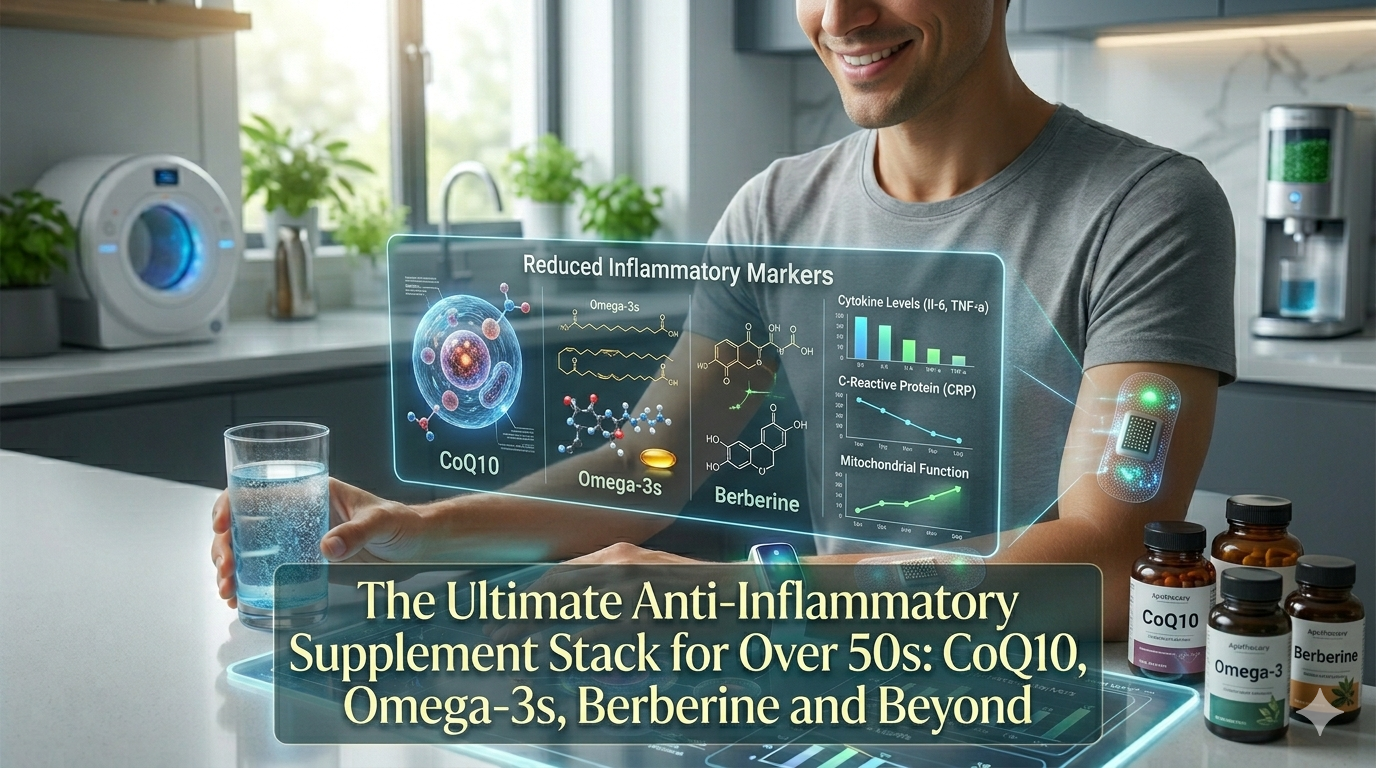
Looking for the best anti-inflammatory supplements for over 50s? Discover the ultimate evidence-backed supplement stack — including CoQ10, omega-3s, berberine, and more — to crush chronic inflammation, boost energy, and reclaim your health after 50.
Introduction
Did you know the global supplement industry is worth over $150 billion — and yet most people over 50 who are taking handfuls of pills every morning are still walking around with elevated inflammation markers, creaky joints, and energy levels that feel like a phone stuck at 12% battery? I was one of those people. I had a cabinet full of supplements, a drawer full of half-finished bottles, and absolutely no systematic understanding of what I was doing or why.
Here's the problem nobody talks about. The supplement industry is spectacularly good at marketing and spectacularly inconsistent at delivering actual results. The sheer volume of products, claims, and contradictory advice is enough to make anyone's head spin. And after 50, the stakes feel higher — you're not just trying to feel a little better, you're trying to genuinely address the chronic low-grade inflammation that's quietly driving joint pain, cognitive decline, cardiovascular risk, and accelerated biological aging.
I spent years doing this wrong before I started doing it right. I wasted money on cheap, poorly absorbed forms of things that could have actually helped me. I took things randomly without understanding how they worked together. I ignored the foundational supplements while chasing the flashy new ones. Sound familiar?
This article is the guide I wish I'd had. We're going to cut through the noise and focus on the supplements with the strongest evidence base for reducing inflammation after 50 — what they are, how they work, what forms actually matter, how to dose them, and how to build a stack that makes sense for your specific situation. We'll go from foundational to advanced, from budget-friendly to premium, and I'll be straight with you about what the research actually supports versus what's mostly hype. Let's get into it.
Why Inflammation Gets Harder to Control After 50 — And Why Supplements Can Help
If you've read anything about health and aging in the last few years, you've probably come across the term inflammaging. It's not just a clever portmanteau — it describes a very real, very well-documented phenomenon where chronic low-grade systemic inflammation becomes the default biological state as we age. And it's now understood to be a primary driver of virtually every major age-related disease — cardiovascular disease, type 2 diabetes, Alzheimer's, cancer, osteoarthritis, and more.
After 50, several things happen simultaneously that make inflammation harder to control. Your mitochondrial function declines, leading to more oxidative stress and more inflammatory signaling. Your gut microbiome diversity decreases, compromising the intestinal barrier and allowing inflammatory compounds to leak into the bloodstream. Your hormonal environment shifts — declining testosterone, estrogen, and DHEA all have anti-inflammatory properties, so their decline removes a natural brake on the inflammatory response. Your cellular repair systems slow down, allowing damaged and senescent cells to accumulate. These cells actively secrete inflammatory cytokines in a pattern researchers call the senescence-associated secretory phenotype, or SASP. It's a lot of fires breaking out at once.
Now, can diet and lifestyle address all of this? Absolutely — and they should be the foundation of any anti-inflammation strategy. But here's the honest reality after 50. Decades of accumulated cellular damage, nutritional depletion from modern diets, and the sheer speed of age-related biochemical changes mean that food alone often can't fully close the gaps. Certain nutrients become harder to absorb from food as gut function changes with age. Others are depleted by medications that many people over 50 take routinely. And some compounds — like NAD+ precursors or specific senolytic flavonoids — aren't realistically obtainable in therapeutic doses from diet at all.
That's where targeted supplementation comes in. Not as a replacement for a good diet and active lifestyle — never that — but as a precision tool for addressing specific biochemical gaps and mechanisms that are particularly active in aging physiology. The key word there is targeted. Random supplementation without understanding why you're taking something is expensive and largely ineffective. Strategic supplementation based on the mechanisms driving your inflammation is a completely different thing.
One more thing before we dive in. This article is not medical advice, and some of these supplements have meaningful interactions with common medications. Please run any new supplement protocol by your doctor, ideally one who's familiar with functional medicine and anti-aging approaches. With that said — let's build your stack.
CoQ10 (Ubiquinol) — The Non-Negotiable Foundation of Any Over-50 Stack
If there's one supplement I'd put on the absolute non-negotiable list for anyone over 50, it's CoQ10 in the ubiquinol form. Full stop. And yet the majority of people who are taking CoQ10 are taking the wrong form at the wrong dose and wondering why they don't feel any different. Let me fix that.
CoQ10 (coenzyme Q10) is a fat-soluble compound that lives inside your mitochondria and plays a starring role in the electron transport chain — the process by which your cells produce ATP, the energy currency your body runs on. It's also a potent antioxidant, particularly within the mitochondrial membrane, where it directly quenches the reactive oxygen species that trigger inflammatory cascades. Without adequate CoQ10, mitochondria run dirty, producing more oxidative byproduct and less usable energy — a combination that directly drives systemic inflammation.
Here's the problem. Your body's natural CoQ10 production peaks in your mid-twenties and declines by roughly 50% by the time you're 50. That's already a significant depletion. But if you're on a statin — and millions of people over 50 are — the decline is dramatically more severe. Statins work by inhibiting HMG-CoA reductase, the same enzyme your body uses to synthesize both cholesterol and CoQ10. The result is that statins reliably deplete CoQ10 levels, which ironically can contribute to the very cardiovascular and inflammatory issues they're meant to address. If you're on a statin and not supplementing CoQ10, this should be a priority conversation with your doctor.
Now about that form issue. CoQ10 exists in two forms in the body — ubiquinone (oxidized) and ubiquinol (reduced). Ubiquinol is the active, antioxidant form that your body actually uses in the mitochondria. The conversion from ubiquinone to ubiquinol happens naturally in younger people, but that conversion becomes significantly less efficient after 40. This means that cheap ubiquinone supplements — which make up the majority of CoQ10 products on the market — may deliver poor results in older adults simply because the body can no longer efficiently convert them. Ubiquinol is more expensive, but it's substantially better absorbed and more bioavailable in people over 50.
The research on CoQ10 and inflammation is solid. Multiple clinical trials have shown that CoQ10 supplementation reduces CRP and other inflammatory markers, improves endothelial function, reduces oxidative stress markers, and improves exercise tolerance. For dosing, most research on anti-inflammatory and mitochondrial benefits uses 200-400mg of ubiquinol daily. Take it with a meal containing fat, as it's fat-soluble and absorption is significantly better with food.
When buying CoQ10, look for the Kaneka QH brand of ubiquinol — this is the most research-backed form and many reputable supplement companies use it. Third-party testing certification (NSF, USP, or Informed Sport) is always worth looking for. Avoid dirt-cheap products, as CoQ10 quality varies enormously between manufacturers.
Omega-3 Fatty Acids — The Most Researched Anti-Inflammatory Supplement on Earth
The evidence base for omega-3 fatty acids and inflammation is deeper and wider than virtually any other supplement on this list. We're talking about decades of research, hundreds of clinical trials, and a mechanism of action that is exceptionally well understood. And yet most people over 50 are chronically deficient in the omega-3s that matter most — EPA (eicosapentaenoic acid) and DHA (docosahexaenoic acid).
Here's how omega-3s fight inflammation at the biochemical level. EPA and DHA are incorporated into cell membranes throughout the body, where they influence the production of signaling molecules called eicosanoids. Pro-inflammatory omega-6 fatty acids (which dominate most Western diets) produce pro-inflammatory eicosanoids. EPA and DHA produce anti-inflammatory resolvins and protectins instead — compounds that actively resolve inflammatory responses rather than just suppressing them. Omega-3s also directly inhibit the production of pro-inflammatory cytokines like TNF-α and IL-6, and they reduce the expression of inflammatory genes by inhibiting NF-κB signaling. This is inflammation management at the root cause level.
The ratio of omega-6 to omega-3 in the typical Western diet is approximately 15:1 to 20:1. The ratio we evolved with — and the one associated with minimal chronic inflammation — is closer to 4:1. That gap represents an enormous inflammatory burden that most people are carrying around every single day, and closing it with high-quality omega-3 supplementation makes a measurable difference.
Now, fish oil vs. krill oil vs. algae-based omega-3s. Fish oil is the most researched and generally the most cost-effective source of EPA and DHA. Krill oil contains omega-3s in phospholipid form, which some research suggests may be better absorbed — but it delivers lower absolute doses of EPA and DHA per capsule at a higher price point. Algae-based omega-3s are an excellent option for vegetarians or anyone concerned about ocean sustainability — they're the original source of EPA and DHA (fish get it from eating algae), and quality algae-based products deliver therapeutic doses effectively.
The most important quality factor with fish oil is oxidation. Rancid fish oil is not just ineffective — it may actually contribute to oxidative stress. High-quality fish oil should smell fresh and mild, not fishy. Look for products that are molecularly distilled, tested for heavy metals and PCBs, and that display the IFOS (International Fish Oil Standards) certification. For anti-inflammatory dosing, you're looking for 2-3 grams of combined EPA and DHA per day — not total fish oil, but the actual EPA+DHA content shown on the label. This often means taking more capsules than the standard serving size suggests.
Berberine — The Most Underrated Anti-Inflammatory Supplement After 50
Berberine might be the most underrated supplement on this entire list. It doesn't have the brand recognition of fish oil or turmeric, it's not particularly glamorous, and it's been somewhat overshadowed by the flashier longevity supplements. But for people over 50 dealing with metabolic inflammation — the kind driven by blood sugar dysregulation, visceral fat, and gut dysbiosis — berberine is genuinely remarkable.
Berberine is a plant alkaloid found in several herbs including barberry, goldenseal, and Oregon grape. Its primary mechanism of action in the context of inflammation is the activation of AMPK — adenosine monophosphate-activated protein kinase. AMPK is sometimes called the body's metabolic master switch. When activated, it improves insulin sensitivity, stimulates mitochondrial biogenesis, promotes fat burning, and — critically — suppresses several key inflammatory pathways including NF-κB and NLRP3. It essentially tells your cells to clean house and run more efficiently.
The comparison to metformin is worth addressing directly because it comes up constantly. Multiple studies have shown that berberine produces comparable effects to metformin in terms of blood glucose control and metabolic markers. A landmark meta-analysis published in the journal Evidence-Based Complementary and Alternative Medicine found that berberine was as effective as several oral hypoglycemic drugs for managing type 2 diabetes, with a comparable safety profile. For people over 50 with pre-diabetes or metabolic syndrome — both of which drive significant systemic inflammation — this is a meaningful finding.
Beyond blood sugar, berberine has been shown to reduce visceral fat (the metabolically active abdominal fat that is one of the most potent drivers of systemic inflammation), improve gut microbiome composition by selectively supporting beneficial bacteria, and directly reduce circulating levels of inflammatory cytokines including IL-6 and TNF-α. It addresses multiple inflammation drivers simultaneously, which is part of what makes it so useful as part of a comprehensive stack.
The drug interaction piece is genuinely important here. Berberine inhibits certain cytochrome P450 enzymes involved in drug metabolism, which means it can affect the blood levels of various medications including blood thinners, certain antibiotics, and immunosuppressants. It also lowers blood sugar, so combining it with diabetes medications requires medical supervision. Please don't skip this conversation with your doctor. The standard dosing protocol is 500mg two to three times daily with meals, and many practitioners recommend cycling it — eight weeks on, two weeks off — to maintain sensitivity.
Magnesium — The Master Mineral Most Over-50s Are Deficient In
Magnesium is not sexy. It doesn't have a compelling origin story or a celebrity endorser. It's just a mineral — one that your body uses in over 300 enzymatic reactions, that most people over 50 are significantly deficient in, and that has a direct and well-documented relationship with chronic inflammation. Boring? Maybe. Important? Absolutely.
Magnesium deficiency and inflammation have a bidirectional relationship. Low magnesium raises inflammatory markers — specifically CRP, IL-6, and TNF-α. And chronic inflammation depletes magnesium. So once you fall into deficiency, the inflammatory state itself makes it harder to replete. It's another one of those vicious cycles that's worth breaking intentionally.
Why are so many people over 50 deficient? Several reasons stack up. Modern soil depletion means that even magnesium-rich foods like leafy greens and nuts contain significantly less magnesium than they did fifty years ago. Gut absorption of magnesium declines with age as stomach acid production decreases. Common medications — including PPIs, diuretics, and certain antibiotics — actively deplete magnesium. Alcohol consumption impairs magnesium absorption and increases urinary excretion. And chronic stress increases magnesium demand while simultaneously depleting reserves through elevated cortisol. The deck is stacked against adequate magnesium status after 50.
The form of magnesium matters enormously — probably more than any other supplement on this list in terms of form variation. Magnesium glycinate is the gold standard for most people: highly bioavailable, gentle on the digestive system, and particularly good for sleep, anxiety, and muscle relaxation. Magnesium malate is excellent for energy production and particularly useful for people with fatigue or fibromyalgia. Magnesium threonate is the only form shown to cross the blood-brain barrier effectively, making it the preferred choice for cognitive inflammation and brain health. Magnesium citrate is widely available and reasonably well absorbed but has a laxative effect at higher doses. Avoid magnesium oxide — it's the most common form in cheap supplements and has roughly 4% absorption. It's basically useless.
For anti-inflammatory purposes, magnesium glycinate at 300-400mg in the evening is a solid starting point. Many people notice improved sleep quality within the first week, which itself has downstream anti-inflammatory effects. If cognitive support is a priority alongside inflammation, a combination of glycinate in the evening and threonate in the morning is a protocol worth considering.
Curcumin (Turmeric Extract) — Ancient Medicine With Modern Evidence
Turmeric has been used in Ayurvedic medicine for thousands of years, and modern research has spent the last few decades trying to understand exactly why it works. The answer is curcumin — the primary bioactive polyphenol in turmeric — and its ability to modulate inflammatory signaling at multiple points simultaneously. The catch? You can't get therapeutic doses of curcumin from cooking with turmeric, and most curcumin supplements have the same problem. Bioavailability is the whole ballgame here.
Curcumin's anti-inflammatory mechanisms are genuinely impressive. It inhibits NF-κB — one of the master transcription factors that regulates the expression of dozens of pro-inflammatory genes. It suppresses COX-2, the same enzyme targeted by NSAID pain relievers like ibuprofen. It reduces the production of pro-inflammatory cytokines including IL-1β, IL-6, and TNF-α. And it activates Nrf2, the master antioxidant pathway that upregulates the body's own antioxidant defenses. Few natural compounds touch so many inflammatory mechanisms simultaneously.
The bioavailability problem is real though. Standard curcumin is poorly absorbed from the gut and rapidly metabolized — meaning most of it never makes it into your bloodstream in meaningful concentrations. This is why so many people try turmeric supplements and feel nothing. The good news is that several delivery technologies have been developed to solve this problem, and the research on them is solid.
Piperine (black pepper extract) at a 20:1 ratio with curcumin increases bioavailability by approximately 2,000% by inhibiting the metabolic enzymes that break curcumin down. This is the most common and most affordable solution — look for supplements that specify “BioPerine” on the label. BCM-95 (also called Biocumin) is a curcumin complex combined with turmeric essential oils that achieves significantly better absorption without the need for piperine — useful for anyone taking blood thinners, as piperine can interact with certain medications. Meriva is a phosphatidylcholine-bound curcumin that achieves excellent absorption and has the most clinical trial data of any enhanced curcumin form. Theracurmin is a nano-particle form with very high bioavailability and good research support.
For anti-inflammatory dosing, look for products delivering 500-1000mg of curcumin (as extract, not turmeric powder) in one of the enhanced forms above, taken with meals. The research on joint inflammation, cardiovascular inflammation, and even neuroinflammation with well-absorbed curcumin is genuinely encouraging — but only if you're using a form that actually reaches your bloodstream.
NAD+ Precursors (NMN & NR) — Restoring the Fuel Your Mitochondria Are Starving For
NAD+ (nicotinamide adenine dinucleotide) might be the most talked-about longevity molecule of the last decade, and for good reason. It's not just about energy — it's about the fundamental repair and regulatory processes that keep inflammation in check and cellular function intact. And the fact that NAD+ levels drop by roughly 50% between the ages of 40 and 60 is one of the most significant and underappreciated facts about biological aging.
Here's why NAD+ matters so much for inflammation specifically. NAD+ is the essential fuel for a family of proteins called sirtuins — particularly SIRT1 and SIRT3 — that regulate mitochondrial function, cellular stress responses, and inflammatory gene expression. When NAD+ is abundant, sirtuins are active, mitochondria run efficiently, and inflammatory signaling is kept in check. When NAD+ is depleted — as it inevitably is after 50 — sirtuin activity drops, mitochondrial quality control suffers, and inflammatory pathways run hotter. NAD+ also fuels PARP enzymes that repair DNA damage, and unrepaired DNA damage is itself a trigger for inflammatory signaling. The connections run deep.
NMN (nicotinamide mononucleotide) and NR (nicotinamide riboside) are the two primary NAD+ precursors available as supplements. Both are converted to NAD+ in the body, but via slightly different pathways. NMN is one step closer to NAD+ in the biosynthetic pathway, and some researchers — most notably Dr. David Sinclair at Harvard — argue this gives it an advantage in terms of conversion efficiency. NR has more published human clinical trial data at this point, with several studies showing it reliably raises blood NAD+ levels. The honest answer is that the direct head-to-head comparison in humans is still limited, and both appear effective at raising NAD+ levels when taken at appropriate doses.
What can you realistically expect from NAD+ supplementation? Based on current evidence, improved mitochondrial function, better energy production, enhanced cellular repair capacity, and measurable reductions in some inflammatory markers are all within the realm of reasonable expectation. The dramatic anti-aging effects seen in mouse studies haven't been fully replicated in humans yet — though the human research is catching up quickly. For most people over 50, NAD+ precursors work best as part of a broader protocol rather than as a standalone miracle pill.
Dosing varies widely in the literature. Most human studies on NR have used 250-1000mg daily. NMN studies have used similar ranges, with 500mg daily being a commonly used dose in the biohacking community. Quality matters enormously here — look for third-party tested products from established manufacturers, and be skeptical of very cheap products, as NMN and NR are expensive to produce and price is often a quality signal.
Resveratrol, Quercetin & Fisetin — The Senolytic Trio for Inflammaging
This section gets into some of the more cutting-edge territory, but it's genuinely exciting science that I think every person over 50 should understand. Senescent cells — sometimes called zombie cells — are cells that have stopped dividing but refuse to die. They accumulate with age, and they're not quietly sitting there doing nothing. They're actively secreting a cocktail of pro-inflammatory cytokines, proteases, and growth factors that damage surrounding tissues and drive systemic inflammation. The technical term for this is the senescence-associated secretory phenotype, or SASP, and it's now recognized as one of the primary biological drivers of inflammaging.
Senolytics are compounds that selectively clear senescent cells. And three flavonoids — resveratrol, quercetin, and fisetin — have emerged as the most accessible and best-studied natural senolytics available. They work through complementary mechanisms, which is why stacking them makes sense.
Resveratrol is found in red wine, grapes, and certain berries — famously the compound behind the “French paradox.” Its primary mechanism for fighting inflammation is activation of SIRT1, the sirtuin that regulates inflammatory gene expression and mitochondrial biogenesis. Resveratrol also directly inhibits NF-κB and has been shown to reduce several circulating inflammatory markers in human trials. Bioavailability is a known issue — resveratrol is rapidly metabolized — so look for formulations using pterostilbene (a more bioavailable analog) or micronized resveratrol. Typical doses range from 150-500mg daily.
Quercetin is a flavonoid found in onions, apples, and capers that functions both as a direct anti-inflammatory and as a senolytic. It inhibits the anti-apoptotic pathways that allow senescent cells to evade normal cell death — essentially making zombie cells mortal again. It also directly suppresses histamine release, NLRP3 inflammasome activation, and several pro-inflammatory cytokines. Quercetin with phytosome delivery (as in Quercefit) shows significantly better absorption than standard quercetin. Doses of 500-1000mg daily are commonly used, and quercetin is often stacked with bromelain for enhanced absorption and anti-inflammatory synergy.
Fisetin is probably the least well-known of the three but may be the most potent senolytic of all the natural compounds currently being studied. Research from the Mayo Clinic has shown fisetin to be the most effective flavonoid at clearing senescent cells in animal models, and human clinical trials are currently underway. It also activates autophagy — the cellular cleanup process — and has demonstrated neuroprotective and anti-inflammatory effects across multiple studies. Doses of 100-500mg daily are common, with some protocols using higher intermittent doses (1-2g) a few days per month in what's called a senolytic pulse protocol.
Stacking these three makes sense because they hit slightly different senolytic and anti-inflammatory targets. A simple stack might be resveratrol 200mg + quercetin 500mg daily, with fisetin 200mg daily or pulsed at higher doses monthly. Run this by your doctor if you're on blood thinners, as all three have mild anticoagulant properties.
Vitamin D3 + K2 — The Overlooked Inflammatory Duo Almost Every Over-50 Needs
If there's a supplement combination that's simultaneously the most evidence-backed, most widely deficient, and most underutilized in the over-50 population, it's vitamin D3 paired with vitamin K2. These two fat-soluble vitamins work together in ways that are only recently being fully appreciated, and their combined impact on immune function, inflammation, and cardiovascular health is significant.
Vitamin D deficiency is genuinely epidemic. Studies consistently show that 40-70% of adults in developed countries are deficient or insufficient in vitamin D, with rates even higher in older adults due to reduced skin synthesis efficiency, less time outdoors, and lower dietary intake. And vitamin D deficiency isn't just a bone health issue — it's a profound immune and inflammatory issue. Vitamin D receptors are present on virtually every immune cell in the body. Vitamin D acts as an immunomodulator, essentially helping the immune system distinguish between appropriate inflammatory responses and runaway chronic inflammation. Deficiency is consistently associated with elevated CRP, higher rates of autoimmune conditions, and increased susceptibility to a range of inflammatory diseases.
The optimal blood level for vitamin D (measured as 25-hydroxyvitamin D) for anti-inflammatory purposes is generally considered to be 60-80 ng/mL — significantly higher than the conventional “sufficient” threshold of 30 ng/mL. Getting a baseline blood test before supplementing is genuinely important here, both to know your starting point and to guide dosing. Most adults need 4,000-8,000 IU of D3 daily to reach and maintain optimal levels, though individual variation is significant and the only way to know your dose is to test and retest.
This is where K2 comes in, and this pairing is critically important. High-dose vitamin D3 increases calcium absorption from the gut. That calcium needs to go somewhere useful — specifically into bones and teeth — and not somewhere harmful, like arterial walls and soft tissues. Vitamin K2 (specifically the MK-7 form) activates two proteins — osteocalcin, which directs calcium into bone, and matrix Gla protein, which actively removes calcium from arterial walls. Without adequate K2 alongside D3, the increased calcium from D3 supplementation can potentially contribute to arterial calcification. The MK-7 form of K2 is preferred for its longer half-life in the body compared to MK-4. A dose of 90-200mcg of MK-7 paired with your D3 is the standard recommendation.
Take D3 and K2 with your fattiest meal of the day — as fat-soluble vitamins, they're absorbed significantly better in the presence of dietary fat. And please get your D levels tested — it's one of the most actionable and inexpensive tests available and gives you real data to work with.
How to Build and Personalize Your Anti-Inflammatory Supplement Stack
Okay, we've covered a lot of ground. Let me now help you pull this together into an actual actionable protocol, because the last thing I want is for you to walk away from this article feeling overwhelmed and end up doing nothing. That's the worst outcome of all.
The foundational stack is where everyone should start. This is the non-negotiable baseline for anyone over 50 who's serious about managing inflammation: CoQ10 ubiquinol (200-400mg with breakfast), omega-3s (2-3g combined EPA/DHA with meals), magnesium glycinate (300-400mg at night), and vitamin D3 with K2 (4,000-6,000 IU D3 with 100-200mcg MK-7 K2, with your fattiest meal). These four cover your mitochondrial energy production, membrane integrity, cellular energy and sleep, immune modulation, and foundational antioxidant status. If you do nothing else from this article, do this. Give it 60-90 days and get your CRP retested.
The intermediate stack adds targeted support for the most common inflammation drivers after 50. If you have any signs of metabolic inflammation — blood sugar issues, visceral fat, sluggish energy, or markers like elevated fasting glucose or triglycerides — add berberine (500mg 2-3x daily with meals). If joint inflammation or pain is part of your picture, add a high-bioavailability curcumin (500-1000mg with meals). If fatigue and brain fog are prominent, add magnesium threonate (in the morning, alongside your glycinate at night). This stack addresses metabolic, structural, and cognitive inflammation specifically.
The advanced stack is for people who've had the foundational and intermediate stacks dialed in for several months and want to go deeper on the longevity and cellular repair side. Add NMN or NR (500mg in the morning), resveratrol (200mg with NMN for synergistic sirtuin activation), quercetin (500mg daily), and fisetin (200mg daily or pulsed higher monthly). This layer targets NAD+ restoration, sirtuin activation, and senolytic clearance of inflammatory zombie cells.
A few critical practical notes. Introduce supplements one at a time — ideally one new supplement per week — so you can actually identify what's helping and catch any reactions early. Track your progress with objective markers: get a baseline CRP before you start, retest at 90 days. Monitor your HRV if you have a wearable — it's a sensitive proxy for systemic inflammatory load and recovery capacity. Pay attention to subjective markers too: energy on waking, joint stiffness in the morning, cognitive clarity, sleep quality, and exercise recovery.
Budget is a real consideration. If you're working with limited funds, prioritize in this order: magnesium glycinate, vitamin D3/K2, omega-3s, and CoQ10 ubiquinol. These four give you the most evidence-backed inflammation benefit per dollar spent. Save the NMN, senolytics, and premium curcumin formulas for when your budget allows.
Finally — and I can't say this enough — work with a healthcare provider who understands this space. A functional medicine doctor or naturopath familiar with anti-aging protocols can help you prioritize based on your specific labs, health history, and medications. This article gives you the map, but a good practitioner helps you navigate it for your specific terrain.
Conclusion
Here's what I want you to take away from all of this. Chronic inflammation after 50 is not something you just have to accept. It's not an inevitable tax on getting older. It's a biological process — one driven by specific, identifiable mechanisms — and it responds to specific, well-chosen interventions. The supplement stack we've covered in this article addresses those mechanisms directly: mitochondrial dysfunction, oxidative stress, NAD+ depletion, metabolic inflammation, senescent cell accumulation, immune dysregulation, and nutritional deficiencies that widen with age.
But I want to be real with you about something. Supplements amplify a good foundation — they don't replace it. The most expensive, perfectly curated supplement stack in the world will underperform if it's sitting on top of chronic sleep deprivation, a diet full of ultra-processed food, and a sedentary lifestyle. Get the basics right first. Sleep. Move. Eat real food. Manage stress. Then use these supplements to fill the gaps and accelerate your progress.
Start where you are. If the full advanced stack feels overwhelming or financially out of reach right now, start with the foundational four and build from there. Small, strategic improvements in the right direction compound powerfully over time. Three months from now, six months from now, your inflammation markers, your energy, your joint comfort, and your cognitive clarity can look meaningfully different from where they are today. I've seen it in myself and in people I've pointed toward this information.
As always — please consult your doctor or a qualified healthcare provider before starting any new supplement protocol, especially if you're on medications. Some of these compounds have real interactions that matter.
Now I'd love to hear from you. What's already in your supplement stack? Have you tried any of the supplements we covered today? What's worked, what hasn't, and what questions do you still have? Drop it all in the comments below — real-world experience from real people over 50 is some of the most valuable information out there, and I read every single comment.