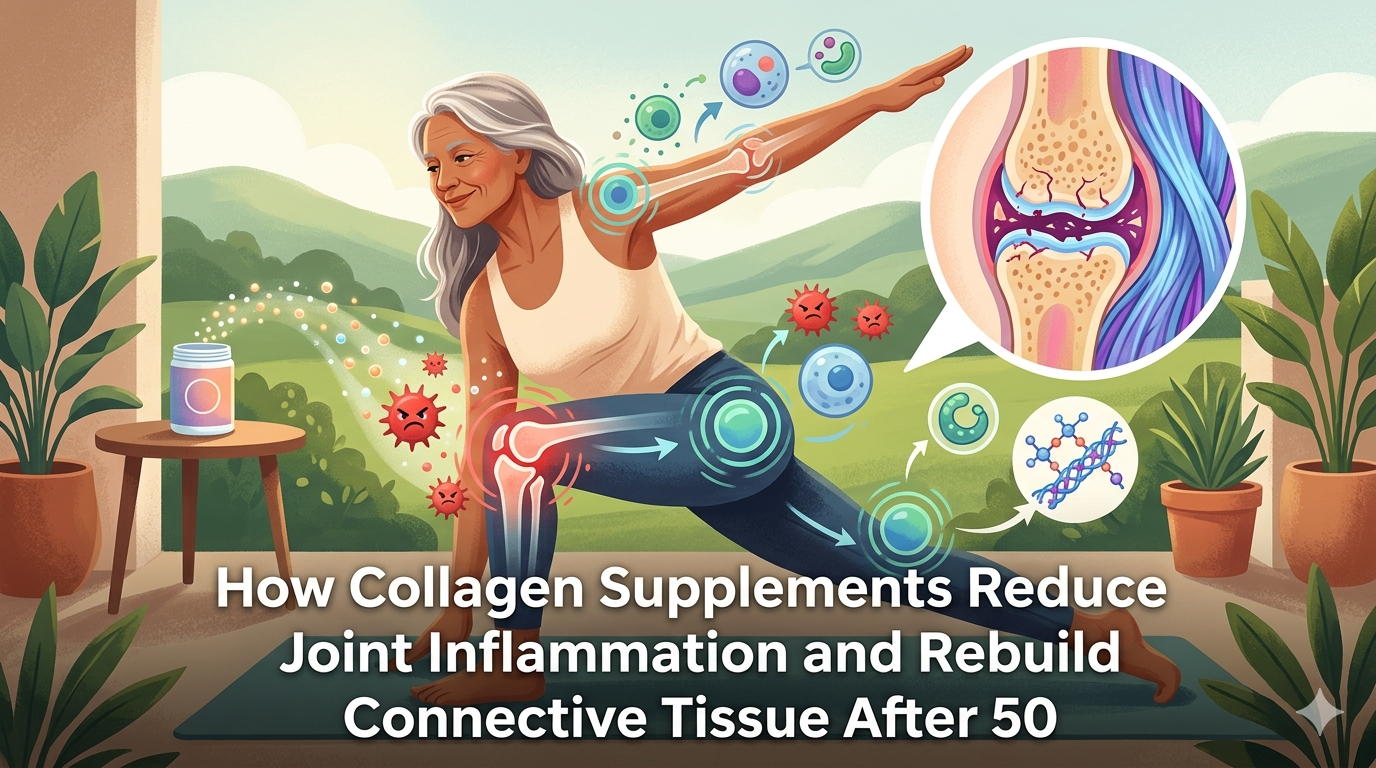
Joint inflammation and connective tissue breakdown accelerate after 50 — but collagen supplementation offers real, evidence-backed relief. Discover the best types, doses, and protocols to rebuild your joints and reduce inflammation naturally.
Introduction
Here’s a number worth sitting with. After the age of 25, your body produces approximately 1% less collagen every year. By the time you’re 50, you’ve lost roughly a quarter of your peak collagen production capacity. By 60, that loss is closer to 35-40%. And by the time most people start noticing the consequences — the creaking knees, the stiff hips in the morning, the tendons that take twice as long to recover from exertion, the joints that ache in cold weather — the structural damage to their connective tissue has been accumulating quietly for decades.
Joint pain and inflammation are among the most universal complaints I hear from people over 50. And the standard medical response — NSAIDs for the pain, maybe a cortisone injection, eventually joint replacement surgery — addresses the symptoms while doing nothing whatsoever about the underlying structural deterioration and inflammatory cascade driving those symptoms. I spent years in that cycle. Taking ibuprofen for my knees, icing my shoulder after exercise, accepting that this was just what getting older felt like. It wasn’t until I started understanding the collagen-joint-inflammation connection that I found a different approach.
Collagen supplementation has been somewhat unfairly categorized as a beauty trend — something for skin elasticity and reducing wrinkles — when the most robust clinical evidence for its benefits is actually in joint health and connective tissue repair. The research on collagen peptides for joint inflammation, cartilage preservation, and pain reduction is genuinely compelling, and it’s been building for over two decades in peer-reviewed journals. This isn’t wellness hype. It’s structural biology with practical clinical applications.
This article is going to walk you through exactly what collagen is, why its decline after 50 drives joint inflammation, how supplementation actually works at the cellular and tissue level, which types and forms of collagen matter for joint health specifically, and how to build a comprehensive collagen-centered joint inflammation protocol. Whether you’re dealing with osteoarthritis, exercise-related joint pain, tendon issues, or simply want to get ahead of the structural decline that comes with aging, this article has what you need. Let’s get into it.
Why Collagen Declines So Dramatically After 50 — And What It Costs You
Collagen is the most abundant protein in the human body, accounting for approximately 30% of total protein mass. It’s the structural scaffold that holds everything together — the framework upon which your body’s soft and hard tissues are built. Understanding what collagen does helps you understand exactly what you lose as its production declines.
In joints specifically, collagen is everywhere and everything. Articular cartilage — the smooth, shock-absorbing tissue that covers the ends of bones where they meet in joints — is approximately 60-70% collagen by dry weight, predominantly type II collagen. Tendons, which connect muscle to bone, are approximately 85% collagen, predominantly type I. Ligaments, which connect bone to bone and provide joint stability, are similarly collagen-dense. The synovial membrane that lines joint capsules and produces lubricating synovial fluid contains significant collagen. Even the subchondral bone beneath cartilage has a collagen framework. Lose collagen, and you lose the structural integrity of every one of these joint components simultaneously.
The 1% annual decline beginning in the mid-twenties sounds gradual until you compound it. But after 50, several additional factors accelerate the loss dramatically. Declining estrogen is one of the most significant — estrogen directly stimulates fibroblast activity and collagen synthesis, and its decline during perimenopause and menopause produces a measurable acceleration in collagen loss. Research has shown that women lose approximately 30% of their skin collagen in the first five years after menopause — and the same process occurs in joint and connective tissue. Declining testosterone in men similarly slows collagen synthesis in tendons and ligaments. Declining growth hormone reduces the anabolic signaling that drives collagen repair during sleep. And the accumulation of advanced glycation end products (AGEs) — from chronically elevated blood sugar — causes collagen cross-links to stiffen and become brittle rather than remaining flexible and resilient.
The consequences of this compounding collagen loss at the joint level are multiple and interconnected. Articular cartilage thins as the collagen framework deteriorates, reducing shock absorption and allowing bones to experience forces they’re not designed for. This physical stress triggers inflammatory responses within the joint — synovial inflammation, release of matrix metalloproteinases (MMPs) that further degrade cartilage, and production of pro-inflammatory cytokines that perpetuate the inflammatory cycle. Tendons become less elastic and more vulnerable to micro-tears — which is why tendon injuries become dramatically more common after 50 and heal much more slowly. Ligaments become less resilient, contributing to joint instability that further stresses cartilage.
Here’s the feedback loop that makes this so pernicious. Collagen loss leads to joint inflammation. Joint inflammation produces enzymes that destroy collagen. The destruction of collagen worsens the structural compromise of the joint, creating more inflammatory stimulus. Around and around it goes. Breaking this cycle — by providing the raw materials for collagen synthesis and actively stimulating repair — is exactly what strategic collagen supplementation aims to do.
The Science of How Collagen Supplements Actually Work
The skepticism about collagen supplementation — and it’s reasonable skepticism to have — goes something like this: you eat a protein, it gets digested into amino acids in the gut, those amino acids get distributed throughout the body according to the body’s priorities, and there’s no reason to assume they’d end up in your joints any more specifically than any other protein. That model is understandable but it turns out to be incorrect — and the reason it’s incorrect is fascinating.
Hydrolyzed collagen — the form used in virtually all therapeutic collagen supplements — is collagen that has been broken down through enzymatic hydrolysis into collagen peptides: short chains of amino acids, primarily dipeptides and tripeptides of hydroxyproline-containing sequences that are specific to collagen. The critical discovery that changed the understanding of collagen supplementation is that these specific peptide sequences — particularly hydroxyproline-proline (Hyp-Pro) and hydroxyproline-glycine (Hyp-Gly) — survive digestion and appear intact in the bloodstream after oral consumption. They are not fully broken down into individual amino acids. They circulate as intact bioactive peptides.
These circulating collagen-specific peptides then act as biological signals. They bind to receptors on fibroblasts — the cells responsible for collagen synthesis in connective tissues — and stimulate those fibroblasts to increase their production of new collagen, hyaluronic acid, and other extracellular matrix components. It’s essentially a feedback mechanism: the presence of collagen degradation fragments in the bloodstream signals to fibroblasts that repair is needed, and the exogenous collagen peptides mimic that signal powerfully. Research using radioactively labeled collagen peptides has confirmed that these peptides do accumulate preferentially in cartilage and skin tissue compared to other tissues — supporting the joint-specific benefit claim.
The vitamin C connection is mechanistically critical and practically important. Collagen synthesis requires vitamin C at two specific enzymatic steps — the hydroxylation of proline to hydroxyproline and the hydroxylation of lysine to hydroxylysine. These hydroxylation steps are what give collagen its characteristic triple-helix structure and tensile strength. Without adequate vitamin C, fibroblasts produce collagen that is structurally inferior and breaks down more rapidly. This is why scurvy — severe vitamin C deficiency — produces joint pain, wound healing failure, and connective tissue breakdown. Ensuring adequate vitamin C intake — ideally 200-500mg taken simultaneously with collagen supplements — is not optional if you want maximum collagen synthesis benefit.
The clinical research on collagen for joint health has grown substantially over the past two decades. A landmark study published in Current Medical Research and Opinion followed athletes with joint pain who supplemented with hydrolyzed collagen for 24 weeks, finding significant improvements in joint pain, mobility, and inflammation compared to placebo. A study published in Osteoarthritis and Cartilage showed that undenatured type II collagen (UC-II) reduced knee pain in osteoarthritis patients significantly better than a combination of glucosamine and chondroitin. Multiple additional trials have shown reductions in joint pain scores, improvements in functional mobility, and in some cases, imaging evidence of cartilage preservation in collagen-supplemented groups over 12-24 weeks.
The Different Types of Collagen — Which One Do You Actually Need?
The collagen supplement market is crowded and confusing, partly because there are at least 28 types of collagen in the human body and supplement products vary enormously in their source, type, processing, and quality. For joint inflammation and connective tissue repair after 50, the decision framework is actually simpler than the marketing suggests.
Type I collagen is the most abundant collagen in the human body and is found in skin, bones, tendons, ligaments, and the cornea. It’s the primary structural collagen of tendons and ligaments and the dominant collagen in bone. For people dealing with tendon issues, ligament laxity, bone density concerns, or general connective tissue support, type I collagen — which is what most bovine and marine collagen supplements primarily contain — is the appropriate choice. It’s also the primary collagen type in the gut lining, making it relevant for the gut-joint axis we’ll discuss shortly.
Type II collagen is the collagen of articular cartilage and is the most specifically relevant type for people dealing with osteoarthritis, joint cartilage thinning, and intra-articular joint inflammation. It makes up 90-95% of the collagen in articular cartilage and is the target of the autoimmune process in rheumatoid arthritis. There are two primary supplementation strategies for type II collagen, and they work through completely different mechanisms.
Hydrolyzed type II collagen — broken down into peptides like other hydrolyzed collagen products — works through the fibroblast stimulation mechanism described above, providing the building blocks and signaling peptides to support cartilage matrix repair. Undenatured type II collagen (UC-II) works through an entirely different and fascinating mechanism called oral tolerance. UC-II is native, non-denatured type II collagen from chicken sternum that reaches the gut intact, where it interacts with immune cells in Peyer’s patches — immune tissue in the small intestine. This interaction trains the immune system to stop attacking type II collagen in joint cartilage — a particularly relevant mechanism in inflammatory arthritis and the low-grade autoimmune component of osteoarthritis. UC-II is used at much lower doses (40mg daily) than hydrolyzed collagen (10-20g daily) because its mechanism is immunological rather than structural.
Type III collagen works in concert with type I collagen in skin, blood vessels, and gut tissue. Many multi-collagen products include both type I and III for comprehensive connective tissue support. For joint inflammation specifically, type III collagen’s gut healing role is relevant through the gut-joint axis.
Marine collagen — sourced from fish skin and scales — is primarily type I and is often cited for superior bioavailability due to its smaller peptide size. It’s an excellent choice for people avoiding bovine products or concerned about BSE risk. Bovine collagen — sourced from cowhide or bovine cartilage — provides both type I and III collagen and is typically the most cost-effective source for therapeutic doses. Chicken collagen — particularly from chicken sternum cartilage — is the primary source of both hydrolyzed type II and UC-II collagen and is the preferred source for cartilage-specific joint applications.
When reading collagen supplement labels, look for specificity about collagen type and source, the presence of a branded and clinically tested peptide ingredient (such as Peptan for hydrolyzed collagen or UC-II for undenatured type II), the amino acid profile showing hydroxyproline content, third-party testing for heavy metals and contaminants (particularly relevant for marine collagen), and clear dose information per serving.
The Anti-Inflammatory Mechanisms of Collagen Beyond Joint Repair
Most people think of collagen supplementation primarily in terms of structural repair — rebuilding cartilage, strengthening tendons, improving skin elasticity. These structural benefits are real and important. But collagen’s anti-inflammatory effects go significantly beyond structural support, and understanding them helps explain why collagen works for joint inflammation even in conditions where structural repair isn’t the primary mechanism.
Glycine — the most abundant amino acid in collagen, comprising approximately one-third of all collagen amino acid content — has direct and well-documented anti-inflammatory properties that are independent of its structural role. Glycine inhibits the activation of macrophages — the primary inflammatory immune cells that drive joint inflammation in osteoarthritis and inflammatory arthritis. It suppresses the production of pro-inflammatory cytokines including TNF-α, IL-1β, and IL-6 in activated immune cells through a glycine-gated chloride channel mechanism that hyperpolarizes and calms immune cell membranes. It also inhibits NF-κB activation and reduces the production of reactive oxygen species in inflammatory cells. The high glycine content of collagen supplements means that therapeutic doses deliver meaningful quantities of this anti-inflammatory amino acid — typically 3-5 grams of glycine per 15 grams of hydrolyzed collagen — alongside the structural benefits.
The gut-joint axis is one of the most clinically significant and least discussed aspects of collagen’s anti-inflammatory action. As established in our gut-inflammation article, intestinal hyperpermeability allows pro-inflammatory compounds including LPS and undigested food fragments to enter the bloodstream and drive systemic inflammatory responses. This systemic inflammation reaches joint tissue and contributes significantly to both osteoarthritic and inflammatory arthritic joint inflammation. Collagen peptides — particularly types I and III — directly support gut epithelial barrier integrity by providing the structural proteins that form the gut lining’s connective tissue scaffold and by stimulating the proliferation of intestinal epithelial cells. Healing the gut lining reduces the systemic inflammatory burden that reaches joints, addressing a root cause of joint inflammation that purely joint-focused interventions miss entirely.
The synovial membrane and synovial fluid deserve specific attention. The synovial membrane lines the inner surface of joint capsules and produces synovial fluid — the viscous lubricating fluid that reduces friction within joints and provides nutrients to avascular cartilage. In inflammatory joint conditions, the synovial membrane becomes inflamed (synovitis), producing excessive fluid with elevated inflammatory cytokine content that directly damages cartilage. Collagen peptides have been shown to support synovial membrane health and reduce synovitis markers in both animal and human studies. Hyaluronic acid — a key component of synovial fluid — is also stimulated by collagen peptide supplementation, supporting both the structural and lubricating function of synovial fluid.
The extracellular matrix (ECM) — the complex network of proteins and polysaccharides that surrounds cells in joint tissue — is increasingly recognized as an active participant in inflammatory signaling rather than just passive structural scaffolding. When ECM integrity is compromised — as it is with collagen loss — degraded ECM fragments act as danger-associated molecular patterns (DAMPs) that activate innate immune receptors and drive sterile inflammation within the joint. Restoring ECM integrity through collagen supplementation reduces the production of these inflammatory ECM fragments, addressing inflammation at its structural source.
Research measuring systemic inflammatory markers in collagen supplementation trials has shown reductions in circulating CRP, IL-6, and TNF-α over 12-24 weeks of supplementation. These systemic anti-inflammatory effects suggest that collagen’s impact extends beyond the joint tissue itself to the broader inflammatory environment — making it a genuinely systemic anti-inflammatory intervention, not just a structural joint supplement.
The Best Collagen Supplement Protocol for Joint Inflammation After 50
With a clear understanding of how collagen works, let’s build the most evidence-aligned supplementation protocol for joint inflammation and connective tissue repair after 50.
Dosing is where most people go wrong — primarily by underdosing. The clinical studies showing significant joint benefits have used doses ranging from 10 to 40 grams of hydrolyzed collagen daily for structural and anti-inflammatory effects. The sweet spot for most adults seeking joint inflammation benefits appears to be 15-20 grams of hydrolyzed collagen peptides daily. This is substantially more than the 5-10 gram doses in many commercial products, and understanding this gap helps explain why some people try collagen and report minimal benefit. For UC-II specifically, the therapeutic dose is much lower — 40mg daily of undenatured type II collagen — because its mechanism is immunological rather than structural.
Timing matters meaningfully for collagen, and this is one of the aspects of collagen supplementation that is most frequently ignored. Research suggests that consuming collagen peptides approximately 30-60 minutes before exercise — specifically before activities that load joint tissue — produces superior distribution of collagen peptides to tendons and cartilage compared to other timing windows. The mechanical loading of exercise during the period when collagen peptide blood levels are peaking appears to direct the peptides preferentially toward the loaded connective tissues. For people who don’t exercise at a specific time, consuming collagen in the morning on a relative empty stomach and then engaging in some form of joint-loading movement within the hour is a reasonable approximation.
Vitamin C co-administration is non-negotiable for maximum collagen synthesis benefit. Taking 200-500mg of vitamin C simultaneously with your collagen supplement ensures the hydroxylation enzymes required for collagen cross-linking have adequate cofactor. A squeeze of fresh lemon juice in water alongside collagen powder provides a natural source, or a simple vitamin C supplement taken together with collagen is the most reliable approach.
The complementary joint supplement stack that works most synergistically with collagen includes hyaluronic acid (100-200mg daily) for synovial fluid quality and joint lubrication — it works best when taken alongside collagen as both support the joint matrix simultaneously. Boron at 3-6mg daily has been shown to enhance collagen synthesis, improve joint pain scores, and is deficient in many adults over 50. Silica — from bamboo extract or horsetail — supports collagen cross-linking and is a cofactor in the enzymatic steps of collagen formation. Omega-3 fatty acids (2-3g EPA/DHA) reduce the inflammatory cytokine production in joint tissue that drives collagen degradation — making them excellent collagen partners by addressing both the inflammatory and structural sides of joint health simultaneously.
Realistic expectations are important. Collagen is not ibuprofen — it doesn’t reduce joint pain acutely within hours of taking it. Clinical trial data suggests that meaningful improvements in joint pain and inflammation markers typically emerge at the 8-12 week mark, with continued improvement through 24 weeks of consistent supplementation. The structural changes collagen supports — cartilage matrix remodeling, synovial membrane repair, tendon collagen content increase — are slow biological processes. Consistency over months is the key, and the rewards for that consistency are genuine and durable rather than symptomatic and temporary.
Quality markers to look for when buying collagen supplements: a clinically validated branded ingredient (Peptan, Naticol, Verisol for hydrolyzed collagen; UC-II for undenatured type II), third-party testing certification for purity and heavy metals, clear labeling of collagen source and type, hydroxyproline content listed on the amino acid profile (confirming actual collagen rather than generic protein), and ideally, references to published clinical research using the specific ingredient.
Dietary Sources and Lifestyle Factors That Support Collagen Production After 50
Supplementation works best alongside dietary and lifestyle strategies that support endogenous collagen synthesis — the collagen your body makes itself. These foundations amplify the benefits of supplementation significantly and address lifestyle factors that are actively destroying collagen at the same time you’re trying to build it.
Bone broth is the traditional whole-food collagen source and deserves an honest assessment. A properly made bone broth — simmered for 12-24 hours from grass-fed bones with a small amount of apple cider vinegar to draw minerals into the liquid — does contain meaningful amounts of collagen peptides, gelatin, glycine, proline, and joint-supportive minerals including calcium, magnesium, and phosphorus. The collagen content varies considerably between batches and preparation methods, which is why bone broth is best understood as a complementary dietary source rather than a reliable therapeutic dose source. For therapeutic joint benefits, supplemental hydrolyzed collagen at defined doses is more consistent and reliable — but bone broth as a daily dietary habit adds genuine nutritional value alongside supplementation.
Vitamin C from whole food sources is the single most important dietary collagen cofactor. Citrus fruits, kiwi, bell peppers (particularly red and yellow), strawberries, broccoli, and papaya are all excellent sources. The vitamin C in whole foods comes packaged with bioflavonoids that enhance its collagen-supporting activity. Aiming for multiple servings of vitamin C-rich foods daily provides a continuous supply of this critical synthesis cofactor throughout the day.
The minerals that support collagen cross-linking — the process that gives collagen its tensile strength — deserve dietary attention. Copper is required by the enzyme lysyl oxidase, which creates the cross-links between collagen chains that provide strength. Liver, shellfish (particularly oysters), nuts, and seeds are the best dietary copper sources. Zinc supports the MMP enzymes that remodel old collagen while supporting fibroblast activity — meat, shellfish, pumpkin seeds, and legumes are reliable zinc sources. Manganese is a cofactor in proline hydroxylation — nuts, whole grains, legumes, and leafy greens provide it. Silicon (found in oats, whole grains, green beans, and mineral waters) supports collagen cross-linking and has been shown in research to support both skin and joint collagen quality.
The collagen destroyers are as important to understand as the collagen builders. Sugar and refined carbohydrates drive collagen destruction through glycation — glucose molecules attach to collagen fibers, forming AGEs that make collagen stiff, brittle, and resistant to normal turnover and repair. This is one of the most direct dietary mechanisms by which high sugar intake drives joint degradation. Smoking is profoundly destructive to collagen — cigarette smoke contains compounds that directly degrade collagen, reduce vitamin C availability, impair circulation to connective tissues, and produce inflammatory signals that drive MMP-mediated collagen breakdown. UV radiation breaks down skin collagen directly through reactive oxygen species generation. Alcohol impairs collagen synthesis by depleting zinc, disrupting sleep (when most collagen repair occurs), and generating oxidative stress in connective tissue. Chronic psychological stress elevates cortisol, which directly suppresses collagen synthesis genes and promotes MMP-mediated collagen degradation.
Resistance training is a lifestyle factor with direct collagen synthesis benefits that is often overlooked in the collagen conversation. Mechanical loading of connective tissue — through resistance exercise — is a potent stimulus for fibroblast activity and collagen synthesis in tendons and ligaments. Research has shown that resistance training produces measurable increases in collagen content in trained tendons compared to untrained tendons, and that this effect is enhanced when resistance training is combined with collagen peptide supplementation consumed pre-exercise. The combination of supplemental collagen peptides and strategic resistance training targeting the specific joints of concern is significantly more effective than either intervention alone.
Sleep is where collagen repair actually happens. Growth hormone — released primarily during slow-wave deep sleep — is the primary anabolic signal that drives collagen synthesis during the overnight repair window. Poor sleep quality, insufficient sleep duration, and disrupted sleep architecture all reduce growth hormone release and impair overnight collagen repair. Prioritizing seven to nine hours of quality sleep, maintaining consistent sleep timing, and addressing sleep quality issues is therefore directly relevant to the effectiveness of your collagen supplementation protocol.
Combining Collagen With Other Biohacks for Maximum Joint Inflammation Relief
Collagen supplementation is most powerful as part of a comprehensive joint inflammation protocol that addresses the problem from multiple angles simultaneously. Here’s how to combine it with complementary biohacks for maximum effect.
Omega-3 fatty acids are the most important anti-inflammatory complement to collagen’s structural support. EPA and DHA reduce the production of pro-inflammatory cytokines — particularly IL-1β and TNF-α — that drive MMP enzyme production and collagen degradation in joint tissue. They also reduce synovial membrane inflammation and improve synovial fluid quality. When omega-3s suppress the inflammatory cytokines that destroy collagen while collagen supplementation simultaneously provides the building materials for collagen repair, the combined effect is significantly greater than either intervention alone. High-quality fish oil or algae-based omega-3s at 2-3 grams combined EPA/DHA daily is the appropriate dose for anti-inflammatory joint effects.
Curcumin in a highly bioavailable form targets joint inflammation through mechanisms that complement collagen’s structural approach beautifully. Curcumin inhibits NF-κB — the master transcription factor that controls the expression of most pro-inflammatory genes in joint tissue — and directly suppresses MMP-1, MMP-3, and MMP-13, the enzymes that degrade type II collagen in articular cartilage. It also reduces prostaglandin production through COX-2 inhibition, directly reducing joint pain and swelling. Combining curcumin (500-1000mg in a bioavailable form like BCM-95 or Meriva) with collagen supplementation addresses both the inflammatory environment that destroys cartilage and the structural repair of cartilage simultaneously — a genuinely complementary combination with growing clinical support.
Red light therapy has direct and well-documented effects on collagen synthesis that make it a particularly synergistic biohack for joint inflammation. Near-infrared wavelengths (800-850nm) penetrate deeply enough to reach joint tissue and directly stimulate fibroblast activity and collagen synthesis through mitochondrial activation. Research has shown that red light therapy increases collagen production in treated tissues, reduces inflammatory markers in joint tissue, improves joint pain scores in osteoarthritis, and reduces recovery time from connective tissue injuries. Applying a quality red light therapy panel to inflamed or injured joints for 10-15 minutes daily provides a complementary stimulus to collagen synthesis that works through an entirely different mechanism than oral supplementation — making them additive rather than redundant.
Cold and heat therapy are accessible anti-inflammatory joint management tools that work well alongside collagen supplementation. Cold application (ice packs, cold plunge) reduces acute joint inflammation by vasoconstricting local blood vessels, reducing inflammatory cell infiltration, and decreasing synovial fluid production in acutely inflamed joints. Heat application (hot packs, infrared sauna) improves circulation to joint tissue, enhances nutrient delivery to avascular cartilage, relaxes periarticular muscle tension, and activates heat shock proteins that protect connective tissue from oxidative damage. Alternating cold and heat — contrast therapy — creates a pumping action that moves nutrients and inflammatory byproducts through joint tissue more effectively than either alone. These modalities manage the inflammatory environment within joints while collagen supplementation supports the structural repair.
A complete joint inflammation biohacking protocol after 50 would look something like this. Foundation: 15-20g hydrolyzed collagen with 300mg vitamin C, taken 30-60 minutes before morning exercise or movement. Supplement stack: omega-3s (2-3g EPA/DHA) with meals, bioavailable curcumin (500-1000mg) with meals, magnesium glycinate (300-400mg) at night, hyaluronic acid (100-200mg) daily. Exercise: resistance training two to three times weekly targeting joint-loading movements, Zone 2 cardio three to four times weekly, daily post-meal walking. Biohacks: red light therapy on affected joints 10-15 minutes daily, contrast therapy (heat followed by cold) after exercise, sauna two to three times weekly for systemic anti-inflammatory effects.
Tracking joint inflammation progress objectively helps maintain motivation through the months-long collagen protocol. High-sensitivity CRP measured quarterly tracks systemic inflammatory burden. Joint-specific pain scoring using a simple 0-10 scale tracked weekly reveals gradual improvement trends. Range of motion measurements for affected joints tracked monthly. Functional performance — how many stairs you can climb without pain, how long you can walk before discomfort, how quickly you recover from exercise — tracked consistently over time. And if accessible, a DEXA scan at baseline and 12 months can sometimes reveal measurable changes in connective tissue density in people following comprehensive protocols.
Conclusion
Collagen supplementation for joint inflammation after 50 is not a wellness fad. It’s a mechanistically sound, clinically supported intervention that addresses both the structural deterioration and the inflammatory cascade that make joint pain one of the most prevalent and life-limiting consequences of aging. The decline of collagen production after 50 — accelerated by hormonal shifts, poor diet, inadequate sleep, chronic stress, and years of inflammatory lifestyle patterns — creates a self-reinforcing cycle of structural compromise and joint inflammation that conventional medicine rarely addresses at its root.
The evidence for hydrolyzed collagen peptides and undenatured type II collagen in joint health is stronger than most people realize. It’s not as dramatic as a cortisone injection in the short term. But it’s working toward something that a cortisone injection never does — actually rebuilding the structural integrity of the joint tissue while reducing the inflammatory environment that drives its degradation. That’s a fundamentally different and more hopeful approach.
The key principles to take away: dose matters — 15-20g of hydrolyzed collagen daily is therapeutic, not the 5g in most beauty products. Type matters — choose type II for cartilage, type I for tendons and ligaments, or both for comprehensive support. Vitamin C co-administration is essential. Timing relative to exercise optimizes distribution to joint tissue. And consistency over months is what separates people who get genuine results from those who conclude collagen doesn’t work.
Build your protocol progressively. Start with the collagen and vitamin C foundation. Add omega-3s and curcumin for the anti-inflammatory layer. Layer in red light therapy and the lifestyle factors — resistance training, quality sleep, sugar reduction — that support collagen synthesis while removing the factors that destroy it. Give it twelve weeks before judging the results. Track objectively. Adjust based on what you observe.
Please work with your doctor or a functional medicine practitioner, particularly if you have diagnosed joint conditions or are on medications that affect joint inflammation. And I genuinely want to hear from you in the comments — have you tried collagen supplementation for joint inflammation? What form, what dose, and what did you notice? Real-world experience from people over 50 navigating this is some of the most valuable information this community has.
Pingback: Best Collagen Supplements for Joint Pain and Inflammation After 50 Our Top Picks - The Prime Reset
Pingback: Nutrigenomics and Aging: The Complete Guide to Inflammation, Genes, and Longevity After 50 (2026) - The Prime Reset