How Visceral Fat Triggers Systemic Inflammation — And the Biohacks That Burn It
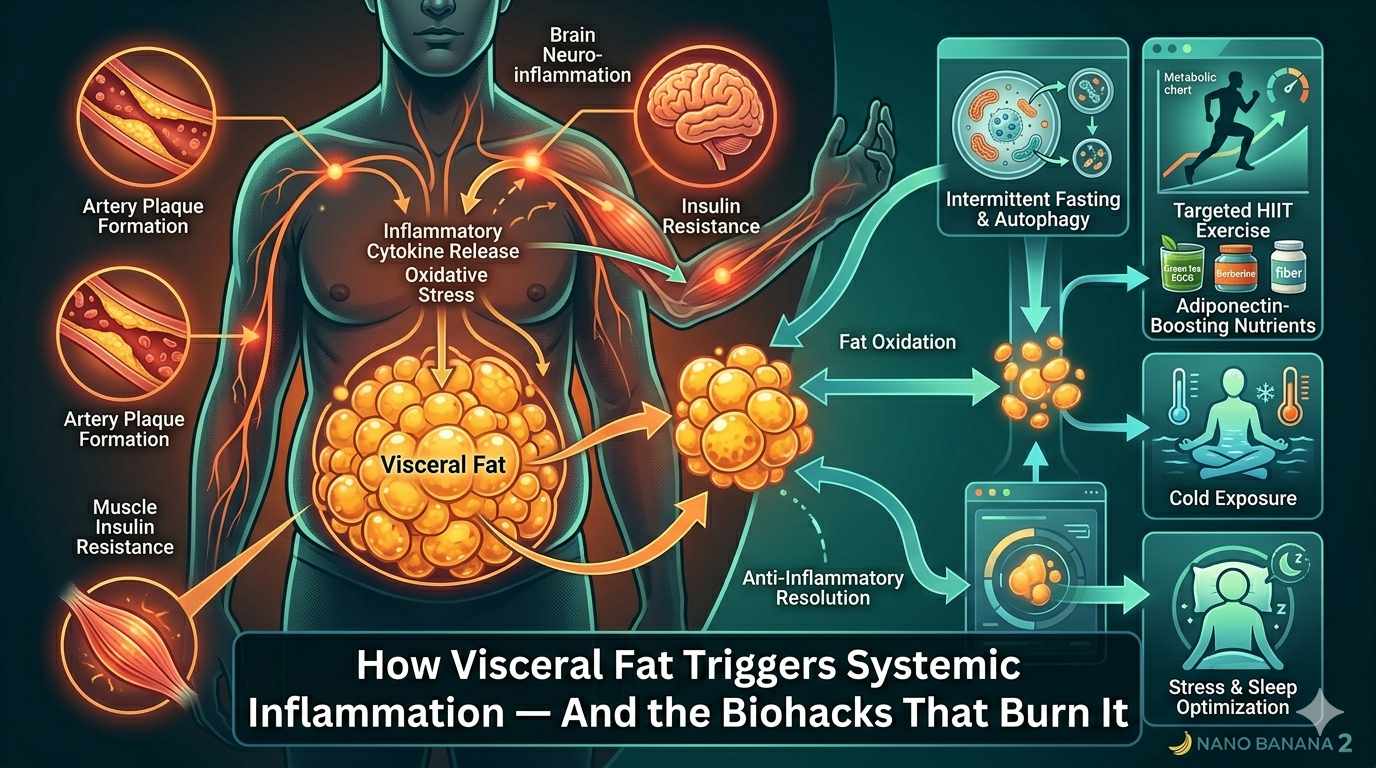
Visceral fat is far more dangerous than the fat you can pinch — it actively drives systemic inflammation after 50. Discover exactly how it works and the proven biohacks to burn it and reclaim your health.
Introduction
Here's the stat that reframed how I think about body fat entirely. Research published in the European Heart Journal found that people with normal BMI but high visceral fat — sometimes called TOFI, or “thin on the outside, fat on the inside” — had significantly higher rates of cardiovascular disease and metabolic dysfunction than people who were technically overweight by BMI but carried less visceral fat. The scale was lying to them. The BMI chart was lying to them. And meanwhile, the fat nobody could see was quietly running an inflammatory operation that was damaging their arteries, liver, brain, and joints every single day.
Most of us grew up thinking of body fat as inert storage — the biological equivalent of a spare tyre sitting in the boot of your car. You've got too much of it, you look a certain way, and if you lose it your health improves mostly because you weigh less. That model is wrong, and the consequences of getting it wrong are serious. Visceral fat — the fat stored deep in your abdominal cavity, surrounding your organs — is not inert storage. It is a metabolically active, hormonally productive tissue that functions as a relentless generator of pro-inflammatory signals. And after 50, it accumulates faster, responds less readily to standard fat loss approaches, and does more damage than at any earlier point in your life.
I remember a period in my mid-fifties when my weight was relatively stable but my waist was slowly expanding. My doctor wasn't particularly alarmed — my cholesterol was okay, my blood sugar was borderline but not diabetic, my blood pressure was a little elevated but manageable. What nobody was connecting was that my expanding waistline was the common driver behind all of those numbers trending in the wrong direction simultaneously. Once I understood what visceral fat was actually doing biochemically, the urgency of addressing it became very real.
This article is going to walk you through exactly what visceral fat is, why it becomes so dangerous after 50, how it generates systemic inflammation throughout the body, and — most importantly — the specific, evidence-backed biohacks that actually target and reduce it. We're covering diet, exercise, hormones, sleep, supplements, and some advanced tools. Let's get into it.
What Is Visceral Fat — And Why Is It So Different From Regular Body Fat?
Not all body fat is created equal. This is one of those statements that sounds like a wellness cliché but is actually a precise biological fact with profound health implications. Understanding why visceral fat is categorically different from other types of fat is the foundation for understanding why it's so dangerous and why it requires targeted strategies to address.
Your body stores fat in two primary locations. Subcutaneous fat sits just beneath the skin — the fat you can grab between your fingers on your belly, hips, or thighs. It's visible, it responds to diet and exercise in fairly predictable ways, and while excessive amounts aren't ideal, it's relatively metabolically benign. Visceral fat is an entirely different animal. It sits deep inside the abdominal cavity, packed around your liver, pancreas, intestines, kidneys, and other organs. You can't see it, you can't pinch it, and its presence isn't reliably indicated by how you look in the mirror — which is exactly what makes it so dangerous.
The metabolic differences between these two fat types are dramatic. Visceral fat has a much higher density of blood vessels and nerve endings than subcutaneous fat. It has more glucocorticoid receptors — meaning it's more responsive to cortisol and more likely to accumulate under stress. It has higher lipolytic activity, meaning it turns over its fat stores more rapidly and releases more free fatty acids into circulation. And critically, it has far more immune cells — particularly inflammatory macrophages — embedded within its tissue. These structural differences make visceral fat behave less like passive storage and more like an active metabolic and immune organ.
Why does visceral fat accumulate so aggressively after 50? Several converging factors. Declining testosterone in men directly promotes visceral fat deposition — testosterone normally suppresses visceral adiposity, so its decline removes a key brake on abdominal fat accumulation. Declining estrogen in women during and after menopause shifts the body's fat distribution pattern from peripheral (hips and thighs) to central (abdomen) — a shift driven by estrogen's normal role in promoting peripheral fat storage. Cortisol dysregulation, which becomes more common with age and chronic stress, specifically promotes visceral fat accumulation because visceral fat tissue has a high density of cortisol receptors. Declining growth hormone further promotes central fat deposition. And the progressive insulin resistance that develops with aging means more circulating insulin — a potent fat storage hormone — driving preferential fat storage in the visceral depot.
How do you actually measure visceral fat? Waist circumference is the most accessible proxy — a measurement at the level of the navel above 40 inches in men or 35 inches in women is associated with metabolically significant visceral fat accumulation. Waist-to-hip ratio adds additional discriminating power: above 0.90 in men or 0.85 in women indicates high visceral adiposity. For more precise measurement, DEXA (dual-energy X-ray absorptiometry) scans can distinguish between visceral and subcutaneous fat compartments and provide a quantitative assessment. MRI and CT scanning provide the most precise measurements but are typically reserved for research settings. For most people, waist circumference tracked over time is a practical and meaningful measure of visceral fat change.
How Visceral Fat Becomes an Inflammation Machine
This is the mechanistic core of why visceral fat is so dangerous, and it's genuinely fascinating biology once you understand it. Visceral fat doesn't just sit there passively causing problems by taking up space — it actively participates in the body's inflammatory signaling network in ways that drive disease throughout the entire organism.
Visceral fat tissue is packed with adipocytes — fat cells — and a substantial population of immune cells, including macrophages, T cells, and mast cells. As visceral fat expands, the adipocytes enlarge beyond their optimal size, and this adipocyte hypertrophy triggers a stress response within the fat tissue itself. Overgrown fat cells become hypoxic — they outgrow their blood supply and experience oxygen deprivation — and this hypoxia triggers the production of hypoxia-inducible factor (HIF-1α), which drives inflammatory gene expression within the fat tissue. The immune cells embedded in visceral fat respond to these stressed adipocytes by polarizing toward an inflammatory M1 macrophage phenotype and secreting a cascade of pro-inflammatory cytokines.
The specific inflammatory molecules secreted by dysfunctional visceral fat are worth naming because their effects are systemic. TNF-α (tumor necrosis factor-alpha) drives insulin resistance in muscle and liver cells, promotes endothelial inflammation in blood vessels, and activates NF-κB inflammatory signaling throughout the body. IL-6 (interleukin-6) drives acute phase inflammatory responses in the liver, promotes insulin resistance, and contributes to the chronic elevation of CRP seen in people with high visceral fat. Leptin — produced in proportion to fat mass — drives inflammatory signaling through its own receptor pathways when chronically elevated, and leptin resistance (analogous to insulin resistance) becomes a major problem as visceral fat accumulates. Resistin promotes insulin resistance and vascular inflammation. MCP-1 (monocyte chemoattractant protein-1) recruits more macrophages into fat tissue, amplifying the inflammatory response in a self-reinforcing cycle.
Equally important is what visceral fat destroys. Adiponectin is an anti-inflammatory hormone produced by fat cells that improves insulin sensitivity, reduces vascular inflammation, and has direct anti-inflammatory effects on the liver and other tissues. As visceral fat accumulates, adiponectin production paradoxically drops — removing one of the body's key natural anti-inflammatory brakes at exactly the moment it's most needed. Low adiponectin is now recognized as an independent predictor of cardiovascular disease, type 2 diabetes, and metabolic syndrome.
The portal vein connection is perhaps the most underappreciated aspect of visceral fat's inflammatory impact. Unlike subcutaneous fat, which drains its secretions into the general circulation, visceral fat drains directly through the portal vein into the liver. This means the liver receives the highest concentration of visceral fat's inflammatory cytokines and free fatty acids of any organ in the body. The result is hepatic inflammation, impaired insulin signaling in the liver, and the development of non-alcoholic fatty liver disease (NAFLD) — a condition now affecting approximately 25% of adults globally that dramatically amplifies systemic inflammatory output and metabolic dysfunction. The liver then releases its own inflammatory signals — including CRP, fibrinogen, and additional cytokines — into the general circulation, multiplying the inflammatory burden far beyond what the visceral fat alone would generate.
The feedback loop this creates is vicious. Visceral fat drives insulin resistance. Insulin resistance elevates circulating insulin. Elevated insulin promotes further visceral fat accumulation. More visceral fat means more inflammatory cytokines. More inflammatory cytokines worsen insulin resistance. The cycle spins faster the longer it runs, and it accelerates after 50 as the hormonal protections against visceral fat deposition decline.
The Health Consequences of Visceral Fat Inflammation After 50
Understanding the specific downstream consequences of visceral fat-driven inflammation matters because it transforms visceral fat from an aesthetic concern into an urgent health priority. The research connecting visceral fat to major disease is extensive and sobering.
Cardiovascular disease is the most well-documented consequence. Visceral fat drives arterial inflammation through multiple pathways — elevated TNF-α and IL-6 damage the endothelial lining of blood vessels, promoting the inflammatory process that underlies atherosclerotic plaque formation. Elevated free fatty acids from visceral fat promote dyslipidemia — specifically high triglycerides and small, dense LDL particles that are particularly prone to oxidation and arterial wall penetration. Low adiponectin removes a key protection against arterial inflammation. Research consistently shows that waist circumference and visceral fat volume are stronger predictors of cardiovascular events than BMI or total body weight — making visceral fat measurement a more clinically useful cardiovascular risk marker than the scale.
The type 2 diabetes and metabolic syndrome connection is equally direct. Visceral fat-driven insulin resistance in the liver, muscle, and peripheral tissues is one of the primary mechanisms driving the progression from normal glucose metabolism to pre-diabetes to type 2 diabetes. The inflammatory cytokines from visceral fat directly impair insulin receptor signaling, and the constant bombardment of the liver with pro-inflammatory free fatty acids drives hepatic insulin resistance that forces the pancreas to overproduce insulin — eventually exhausting its capacity for adequate insulin secretion.
The cognitive and neurological consequences of visceral fat are among the most alarming and least discussed. Multiple large population studies have shown that higher visceral fat volume in midlife is significantly associated with increased risk of cognitive decline and Alzheimer's disease in later life. The mechanisms include neuroinflammation driven by circulating inflammatory cytokines that cross the blood-brain barrier, insulin resistance in the brain (now sometimes called type 3 diabetes in the context of Alzheimer's research), and vascular inflammation that reduces cerebral blood flow. A study from the Framingham Heart Study cohort showed that higher visceral fat in midlife was associated with smaller brain volume — a structural measure of accelerated brain aging — even after controlling for other risk factors.
Joint inflammation is another underappreciated consequence. Visceral fat doesn't just make joints carry more weight — it directly promotes joint inflammation through circulating inflammatory cytokines that target synovial tissue. Research shows that people with high visceral fat have higher levels of inflammatory markers in synovial fluid independent of their BMI, and that visceral fat reduction produces improvements in joint pain and inflammatory markers beyond what weight loss alone would predict. The fat-inflammation-joint axis is increasingly recognized as a significant driver of osteoarthritis progression after 50.
Cancer risk deserves mention because the evidence here is substantial and growing. Chronic low-grade inflammation from visceral fat creates a pro-tumour microenvironment — elevated insulin and IGF-1, chronic NF-κB activation, elevated estrogen from aromatase activity in fat tissue, and suppressed immune surveillance all contribute to conditions that favor tumour initiation and growth. The World Cancer Research Fund identifies excess body fatness as a cause of at least twelve different cancers, with visceral fat the most biologically relevant fat compartment in this relationship.
The Dietary Biohacks That Target Visceral Fat Specifically
Diet is where visceral fat reduction begins, but the approach matters enormously. Simple caloric restriction without addressing the hormonal and metabolic drivers of visceral fat accumulation is a strategy that tends to produce modest, unsustainable results — particularly after 50. The more effective dietary approach targets insulin, inflammation, and the specific metabolic pathways that drive visceral fat accumulation simultaneously.
Insulin management is the dietary cornerstone of visceral fat reduction. Because visceral fat accumulation is so tightly linked to chronically elevated insulin — both as a cause and a consequence — dietary strategies that reduce insulin secretion and improve insulin sensitivity have a preferential effect on visceral fat compared to other fat depots. Low-glycaemic eating — prioritizing foods that produce modest, gradual glucose responses rather than rapid spikes — is the foundational principle. This means replacing refined carbohydrates, added sugars, and high-glycaemic processed foods with whole food carbohydrates from vegetables, legumes, and modest amounts of whole grains, prioritizing protein and healthy fats at every meal to blunt glucose responses, and eliminating sweetened beverages entirely. Research specifically examining visceral fat response to dietary interventions consistently shows that low-glycaemic approaches produce greater visceral fat reduction than standard low-fat diets matched for calories.
Time-restricted eating and intermittent fasting are particularly powerful tools for visceral fat specifically. Multiple studies examining the effects of TRE on body composition show preferential reduction in visceral fat compared to subcutaneous fat, likely because the extended fasting period reduces insulin levels sufficiently to allow fat mobilization from the visceral depot. A 2022 study published in the New England Journal of Medicine found that time-restricted eating combined with caloric restriction produced significantly greater visceral fat reduction than caloric restriction alone. Even a simple 16:8 approach — eating within an eight-hour window and fasting for sixteen hours — creates enough insulin reduction during the fasting period to meaningfully impact visceral fat over weeks to months of consistent practice.
Specific foods have research support for preferentially reducing visceral fat. Soluble fiber — particularly from oats, legumes, flaxseed, and vegetables — has been shown in multiple studies to specifically reduce visceral fat accumulation, likely through its effects on insulin sensitivity and gut microbiome composition. Green tea and its active polyphenol EGCG have been shown in meta-analyses to produce modest but meaningful reductions in visceral fat, primarily through effects on fat oxidation and thermogenesis. Extra virgin olive oil — rich in oleic acid and polyphenols — improves insulin sensitivity and has anti-inflammatory effects that target visceral adiposity. Fatty fish and omega-3s reduce visceral fat through effects on adipose tissue inflammation and fat oxidation pathways. Protein adequacy is critical — adequate dietary protein (1.2-1.6 grams per kilogram of body weight daily) preserves lean mass during fat loss and has a higher satiety-per-calorie ratio than carbohydrate or fat, naturally supporting reduced insulin secretion.
What actively promotes visceral fat and must be reduced or eliminated? Added sugars and particularly fructose — which is metabolized almost exclusively in the liver and directly promotes hepatic fat accumulation and visceral adiposity. Refined seed oils high in omega-6 linoleic acid promote adipose tissue inflammation. Alcohol drives visceral fat accumulation through multiple mechanisms including increased cortisol, impaired fat oxidation, and direct hepatic fat deposition. Trans fats, while less common than they used to be, remain visceral fat promoters wherever they appear. Ultra-processed foods combining refined carbohydrates, seed oils, and additives are collectively the most potent dietary driver of visceral fat accumulation in the modern food environment.
A practical daily eating framework for visceral fat reduction: break the fast with protein and healthy fat — eggs with avocado or Greek yogurt with nuts and berries — rather than carbohydrate-dominant breakfasts that spike insulin first thing. Lunch built around a large salad with protein and olive oil dressing, plenty of fiber-rich vegetables. Dinner with quality protein, non-starchy vegetables, and legumes or a small portion of whole grains. No eating after 7pm to allow the fasting window to do its work. This isn't a calorie-counting framework — it's a hormonal and inflammatory management framework that targets the mechanisms driving visceral fat accumulation.
The Exercise Biohacks Proven to Burn Visceral Fat After 50
Exercise is one of the most powerful tools available for visceral fat reduction — and here's something worth knowing that most people don't. Visceral fat is actually more responsive to exercise than subcutaneous fat. Studies comparing the body composition effects of exercise show that visceral fat volume decreases significantly more than subcutaneous fat volume for the same exercise dose. This is partly because visceral fat has higher lipolytic activity — it releases fatty acids more readily — and partly because exercise's effects on insulin sensitivity and cortisol regulation specifically target the hormonal drivers of visceral fat accumulation.
Zone 2 cardio is the foundational visceral fat burning tool after 50. At this low-to-moderate intensity, the body's primary fuel source is fat oxidation through the mitochondria — and visceral fat, with its high lipolytic activity, contributes disproportionately to this fuel supply. Regular Zone 2 training also dramatically improves mitochondrial efficiency, insulin sensitivity, and reduces circulating inflammatory markers — directly targeting the metabolic drivers of visceral fat accumulation. Research specifically examining Zone 2 exercise and visceral fat in older adults shows consistent reductions in visceral fat volume even without dietary changes, though the combination of Zone 2 with low-glycaemic eating produces significantly better results than either alone. Aim for 150-180 minutes per week of Zone 2 training — this can be walking, cycling, swimming, or any sustained aerobic activity at a conversational pace.
Resistance training is the essential complement and probably the most underutilized visceral fat tool in the over-50 population. Muscle tissue is the body's largest glucose disposal organ, and building and maintaining muscle mass through resistance training directly improves insulin sensitivity — removing one of the primary drivers of visceral fat accumulation. Research consistently shows that resistance training reduces visceral fat independently of cardiovascular exercise, and that combining resistance training with aerobic exercise produces greater visceral fat reduction than either alone. Two to three sessions per week of compound resistance exercises — squats, deadlifts, rows, presses — that challenge large muscle groups is the minimum effective dose.
HIIT is worth including but requires careful implementation after 50. Short bursts of high-intensity effort followed by recovery periods produce a significant metabolic stimulus that drives visceral fat mobilization through elevated growth hormone response, post-exercise fat oxidation, and improved insulin sensitivity. The research on HIIT and visceral fat reduction is compelling — multiple meta-analyses show HIIT produces greater visceral fat reduction per unit of exercise time than moderate-intensity continuous training. The caution after 50 is recovery — excessive HIIT without adequate rest elevates cortisol chronically, which counterproductively drives visceral fat accumulation. Once per week, with full recovery between sessions, is a sensible starting point.
Exercise order matters more than most people realize. Research has shown that performing resistance training before cardiovascular exercise produces greater fat oxidation during the subsequent cardio session than the reverse order. The mechanism involves glycogen depletion during resistance training that shifts the metabolic fuel preference toward fat oxidation during the subsequent aerobic work. For maximum visceral fat impact, do your strength work first, then follow with Zone 2 cardio in the same session or on the same day.
Post-meal walking is the simplest and most accessible visceral fat management tool available. A 10-15 minute walk after meals blunts post-meal glucose spikes by activating muscle glucose uptake independently of insulin — directly reducing the insulin secretion that drives visceral fat storage. Over time, consistently flattening post-meal glucose responses through walking reduces the chronic insulin elevation that is the primary hormonal driver of visceral fat accumulation. This one habit, done consistently after every meal, can make a meaningful difference to visceral fat trajectory over months.
A practical weekly protocol: Zone 2 cardio three to four times for 40-45 minutes, resistance training twice with compound movements, one HIIT session of 20-25 minutes total, and post-meal walks daily. This doesn't require a gym or expensive equipment. Brisk walking for Zone 2, bodyweight or resistance band exercises at home for strength, and sprint intervals in the park for HIIT — accessible, consistent, and specifically calibrated for visceral fat reduction after 50.
The Hormonal and Sleep Biohacks for Visceral Fat
Visceral fat is as much a hormonal problem as a dietary or exercise one — and ignoring the hormonal dimension is one of the most common reasons visceral fat reduction stalls despite good diet and exercise habits. Three hormonal axes deserve specific attention after 50: cortisol, sex hormones, and the sleep-hormone connection.
Cortisol is the most direct hormonal driver of visceral fat accumulation, and chronic cortisol elevation is essentially a prescription for abdominal fat gain. Visceral fat tissue has a much higher density of glucocorticoid receptors than subcutaneous fat, meaning it's exquisitely sensitive to cortisol's fat-storage signals. Chronic stress, whether from psychological pressure, poor sleep, overtraining, chronic illness, or inflammatory load, keeps cortisol elevated — and chronically elevated cortisol directly promotes visceral fat deposition, worsens insulin resistance, and drives the inflammation that further stresses the body. Breaking this cortisol-visceral fat cycle requires active stress management, not just diet and exercise.
Practical cortisol management strategies with direct visceral fat relevance include morning sunlight exposure within 30 minutes of waking (which anchors cortisol's natural morning peak and prevents the dysregulated pattern of chronic elevation), diaphragmatic breathing and mindfulness practice (both shown to measurably reduce cortisol within sessions and cumulatively over weeks of practice), avoiding excessive caffeine particularly after noon, limiting overtraining and prioritizing adequate recovery between exercise sessions, and maintaining consistent sleep-wake times that support healthy cortisol rhythm.
In men over 50, declining testosterone is a significant visceral fat driver that's worth assessing directly. Testosterone has direct lipolytic effects on visceral adipocytes and promotes lean mass maintenance — both of which oppose visceral fat accumulation. As testosterone declines, visceral fat tends to increase even without significant lifestyle changes, and the resulting visceral fat increase further suppresses testosterone production (because visceral fat contains aromatase enzyme that converts testosterone to estrogen) — creating another vicious cycle. Natural testosterone support strategies include resistance training (the single most evidence-backed natural testosterone stimulus), adequate sleep, zinc and vitamin D sufficiency, stress reduction, and maintaining healthy body weight. For men with significantly low testosterone confirmed by testing, hormone replacement therapy conversation with a knowledgeable physician is worth having.
In women, the menopause transition represents the most dramatic hormonal driver of visceral fat accumulation most will ever experience. Estrogen normally promotes fat storage in the hips and thighs (peripheral fat) and suppresses visceral fat accumulation. As estrogen declines during perimenopause and menopause, this protective fat distribution pattern disappears, and fat accumulates preferentially in the abdomen — even without changes in diet or exercise. This is not a personal failing. It's biology. Addressing it requires the more aggressive dietary and exercise strategies described in this article, with potentially meaningful support from hormone replacement therapy (HRT) if appropriate — research suggests HRT can help prevent menopausal visceral fat accumulation in suitable candidates.
Sleep is the visceral fat intervention that most people are sleeping on — pun intended. The evidence linking sleep deprivation to visceral fat accumulation is extensive and mechanistically clear. Short sleep duration increases cortisol, elevates ghrelin (hunger hormone), suppresses leptin (satiety hormone), impairs insulin sensitivity, reduces growth hormone release, and directly increases caloric intake — all of which drive visceral fat accumulation. A landmark study published in Sleep showed that adults sleeping five hours or less per night accumulated significantly more visceral fat over five years than those sleeping six to seven hours. The effect was specific to visceral fat — subcutaneous fat accumulation was not significantly different between groups.
Sleep optimization strategies with specific visceral fat relevance include maintaining a consistent sleep-wake schedule seven days a week (inconsistent sleep timing disrupts circadian cortisol rhythm in ways that promote visceral fat), keeping the bedroom cool (cooler temperatures activate brown adipose tissue and improve sleep quality simultaneously), blocking blue light after sunset (to support melatonin onset and improve sleep architecture), avoiding alcohol within three hours of sleep (alcohol dramatically suppresses deep slow-wave sleep where growth hormone is released), and addressing sleep apnea — which is both caused by and contributes to visceral fat accumulation through its effects on cortisol and insulin resistance.
Targeted Supplements and Advanced Biohacks for Visceral Fat
With diet, exercise, hormonal management, and sleep optimization moving in the right direction, these targeted supplements and advanced biohacks can meaningfully accelerate visceral fat reduction and the inflammatory improvements that come with it.
Berberine is the supplement most specifically relevant to visceral fat reduction. Its AMPK-activating mechanism improves insulin sensitivity, reduces hepatic fat production, activates fat oxidation pathways, and directly reduces adipose tissue inflammation — all of which target the primary drivers of visceral fat accumulation. Multiple clinical trials have shown berberine produces meaningful reductions in waist circumference and visceral fat volume alongside its well-documented effects on glucose, triglycerides, and LDL. The standard protocol of 500mg two to three times daily with meals, cycled eight weeks on and two weeks off, is appropriate for most adults. Check medication interactions carefully.
Omega-3 fatty acids at therapeutic doses (2-3 grams combined EPA and DHA daily) reduce visceral fat through several complementary mechanisms. EPA and DHA reduce adipose tissue inflammation by competing with pro-inflammatory omega-6 arachidonic acid for the enzymes that produce inflammatory eicosanoids. They activate PPAR-α and PPAR-γ receptors in fat tissue that promote fat oxidation and reduce inflammatory gene expression. And they directly reduce triglycerides — often dramatically, by 20-30% — removing one of the primary lipid drivers of visceral fat-associated cardiovascular risk. High-quality fish oil or algae-based omega-3s are the most practical delivery form.
Green tea extract standardized to EGCG content is one of the few supplements with reasonably robust clinical evidence for visceral fat reduction specifically. A meta-analysis of clinical trials found that green tea catechin consumption produced significant reductions in abdominal fat, with visceral fat showing greater response than subcutaneous fat. The mechanisms include inhibition of fat digestion and absorption, activation of fat oxidation, mild thermogenic effect, and direct effects on adipose tissue inflammation through polyphenol-receptor interactions. Doses of 400-800mg EGCG daily are used in most positive studies. Take with food to reduce the risk of nausea that some people experience with concentrated green tea extract on an empty stomach.
Magnesium rounds out the core visceral fat supplement stack for its critical roles in cortisol regulation, insulin receptor signaling, and inflammatory pathway modulation. Magnesium deficiency — extremely common in adults over 50 — impairs insulin sensitivity and elevates cortisol, both of which drive visceral fat accumulation. Magnesium glycinate at 300-400mg nightly addresses deficiency gently and also supports the sleep quality that is so critical for visceral fat management.
Cold exposure is the advanced biohack with the most direct mechanistic relevance to visceral fat. The human body contains two types of fat: white adipose tissue (which stores energy and, in excess, drives inflammation) and brown adipose tissue (BAT — metabolically active fat packed with mitochondria that generates heat by burning fat). Cold exposure activates BAT, increases BAT volume over time with repeated exposure, and has been shown in research to reduce visceral white fat accumulation through the metabolic demands of thermogenesis. Cold showers progressing from 30 seconds to several minutes, cold plunge immersion, or even sleeping in a slightly cooler room (around 18-19°C) all provide thermogenic stimulus that supports visceral fat reduction over time.
A continuous glucose monitor is the most powerful biohacking tool for personalizing your visceral fat reduction approach. Since visceral fat accumulation is so tightly linked to insulin — and insulin is driven by glucose responses to food — having real-time data on exactly which foods, meal combinations, stress events, and sleep quality shifts are driving glucose spikes gives you an extraordinary level of precision in managing the hormonal environment that drives visceral fat storage. Most people discover several specific foods they considered healthy that are producing significant glucose spikes — and eliminating or modifying those foods has an outsized impact on visceral fat trajectory. CGM use for 30-90 days while implementing dietary and lifestyle changes provides the feedback loop needed to genuinely optimize your personal visceral fat protocol.
Sauna use is an emerging but increasingly well-supported biohack for metabolic health and visceral fat. Regular sauna sessions improve insulin sensitivity, reduce inflammatory markers, activate heat shock proteins that improve metabolic function, and — in populations studied over years — are associated with significantly lower rates of metabolic syndrome and cardiovascular disease. The Finnish population studies on sauna use are among the most compelling in longevity research, showing dose-dependent reductions in cardiovascular mortality with three to four sessions per week. While the direct visceral fat data is still accumulating, the metabolic and inflammatory mechanisms strongly support sauna as a complementary visceral fat management tool.
Conclusion
Visceral fat is not just a cosmetic concern or a reflection of willpower. It's a biologically active, inflammatory tissue that — when accumulated in excess — functions as a disease-generating organ embedded in the centre of your body. The mechanisms by which it drives cardiovascular disease, metabolic dysfunction, cognitive decline, joint inflammation, and cancer risk are well understood and deeply concerning. And after 50, the hormonal, metabolic, and lifestyle changes that accelerate its accumulation all converge simultaneously, making targeted intervention not just beneficial but genuinely urgent.
The good news — and there is real good news here — is that visceral fat is more responsive to targeted intervention than subcutaneous fat. It mobilizes readily with the right combination of dietary insulin management, appropriate exercise selection, hormonal optimization, sleep prioritization, and targeted supplementation. People who implement a multi-pronged visceral fat reduction protocol consistently see measurable improvements in waist circumference within weeks and in metabolic and inflammatory markers within months.
Don't try to do everything at once. Pick your highest-leverage entry point — for most people that's diet, specifically eliminating added sugar and refined carbohydrates and implementing a basic time-restricted eating window. Build that foundation solidly before adding exercise protocols, supplements, and advanced biohacks. Stack interventions progressively and track your progress with objective measures — waist circumference monthly, blood markers quarterly, and a wearable for HRV and sleep quality continuously.
Please work with a healthcare provider — ideally one familiar with metabolic health and functional medicine — particularly if you have significant cardiovascular risk factors, are on medications, or are considering hormonal interventions. The information in this article gives you the map, but professional guidance helps you navigate it safely.
Now I'd love to hear from you. Have you noticed visceral fat accumulation after 50? Have you found specific strategies that moved your waist circumference in the right direction? Share your experience in the comments below — real-world experience from people actively working on this problem is invaluable to everyone in this community.