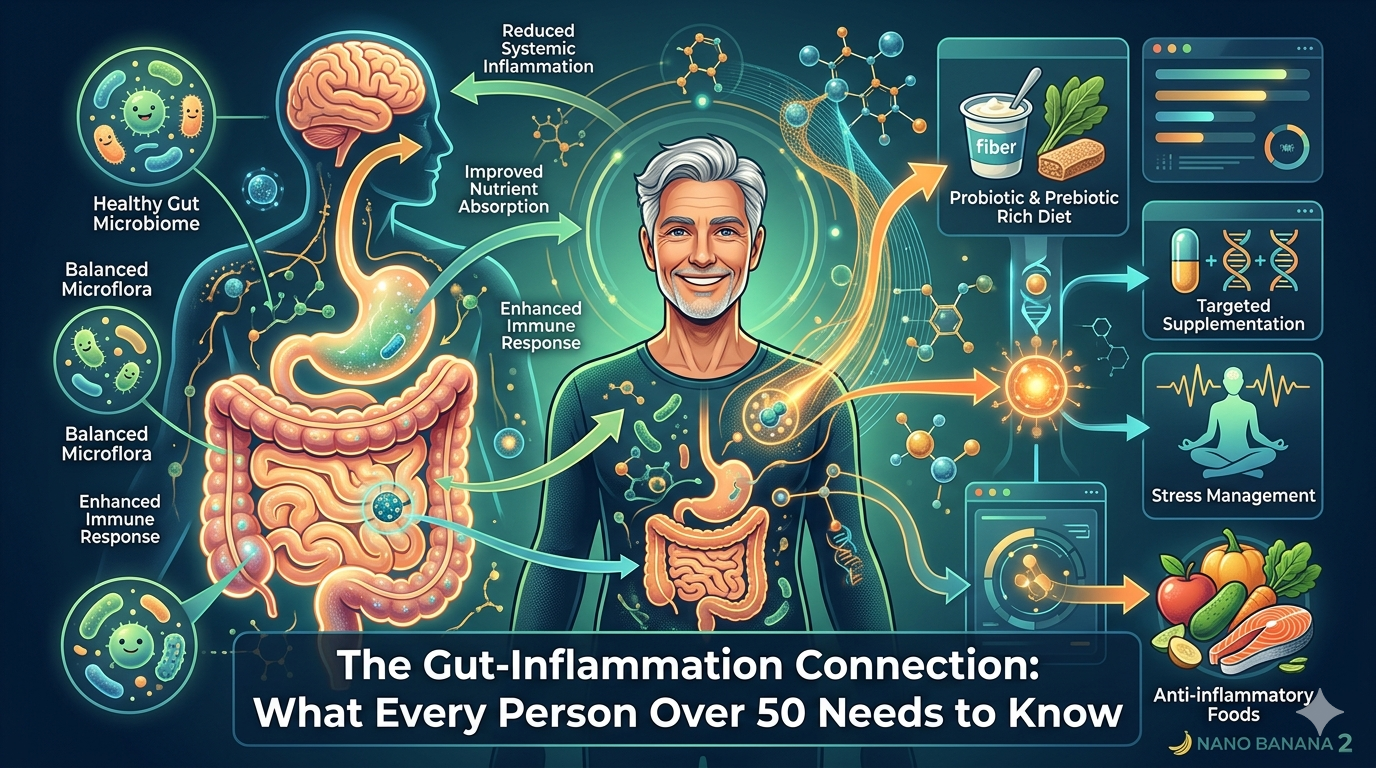
Your gut health and chronic inflammation are more connected than you think. Discover how a compromised gut drives systemic inflammation after 50 — and the proven strategies to heal your gut and reclaim your health.
Introduction
Let me hit you with a number that genuinely surprised me when I first encountered it. Researchers estimate that approximately 70% of your entire immune system lives in and around your gut. Seventy percent. That means the organ most people associate with digestion and the occasional bout of discomfort is actually the command center of your body’s inflammatory response. And after 50, that command center starts malfunctioning in ways that drive chronic inflammation throughout your entire body — your joints, your brain, your cardiovascular system, your metabolism — all of it.
Here’s what gets me. For decades, gut symptoms in older adults have been dismissed as an inevitable part of aging. Bloating? Just part of getting older. Irregular digestion? Take some fiber. Heartburn? Here’s a PPI prescription. Nobody was connecting these digestive changes to the rising tide of systemic inflammation that was quietly fueling joint pain, cognitive decline, fatigue, and a dozen other conditions that seemed completely unrelated to the gut. I certainly wasn’t making that connection until I started digging into the research.
The science on the gut-inflammation relationship has exploded in the last fifteen years. We now know that the gut microbiome — the trillions of bacteria, fungi, and other microorganisms that live in your digestive tract — is one of the most powerful regulators of inflammatory biology in the human body. We know that a compromised gut barrier allows inflammatory compounds to leak directly into the bloodstream. We know that the diversity and composition of your gut microbiome shifts dramatically after 50 in ways that favor inflammation over resolution. And we know that many of the most common lifestyle choices and medications used by people over 50 actively make all of this worse.
But here’s the genuinely hopeful part. The gut is also one of the most responsive systems in the body to targeted intervention. Diet, targeted supplements, lifestyle adjustments, and some smart biohacking tools can meaningfully shift the gut-inflammation equation — often within weeks. This article is going to walk you through exactly what’s happening in your gut after 50, why it matters so profoundly for systemic inflammation, and what you can actually do about it. Let’s get into it.
Why Your Gut Changes So Dramatically After 50
The gut you have at 55 is genuinely different from the gut you had at 35 — and not in a good way. The changes that accumulate in the gastrointestinal system after 50 are multiple, interconnected, and collectively create the conditions for chronic gut-driven inflammation. Understanding what’s changing and why helps you understand both the problem and the solution.
The most significant change is in the gut microbiome itself. Healthy gut microbiomes are characterized by diversity — a rich ecosystem of hundreds of different microbial species that perform complementary functions. With age, that diversity declines measurably. Research published in journals including Nature and Cell has consistently shown that microbiome diversity decreases after 50, with beneficial species like Bifidobacterium and Lactobacillus declining while potentially inflammatory species gain ground. This shift toward a less diverse, less balanced microbial community — a state called dysbiosis — is one of the primary mechanisms by which the aging gut becomes an inflammation generator.
Stomach acid production is another major age-related change that rarely gets the attention it deserves. The parietal cells that produce hydrochloric acid in the stomach naturally become less active with age, leading to a condition called hypochlorhydria. Adequate stomach acid is essential not just for protein digestion but for sterilizing incoming food and preventing pathogenic bacteria from colonizing the gut. When stomach acid is insufficient, bacteria that should be killed in the stomach survive to reach the intestines, disrupting the microbial balance and promoting gut inflammation. The irony is that heartburn and reflux — which are often treated with acid-suppressing proton pump inhibitors — frequently result from too little stomach acid rather than too much, and treating them with PPIs compounds the problem significantly.
Gut motility — the coordinated muscular movement that moves food and waste through the digestive tract — also slows with age, driven by changes in the enteric nervous system. Slower motility means food and waste spend more time in the gut, creating conditions that favor bacterial overgrowth and the fermentation of undigested food into inflammatory byproducts. The mucosal lining of the gut — the single-cell-thick barrier that separates gut contents from the bloodstream — becomes thinner and less resilient with age, and the tight junction proteins that seal the gaps between these cells become less effective.
Medications deserve a specific mention here because the over-50 population is disproportionately medicated in ways that directly damage gut health. PPIs dramatically reduce stomach acid and alter microbiome composition. NSAIDs like ibuprofen directly damage the mucosal lining of the gut, causing increased intestinal permeability with even short-term use. Antibiotics — while sometimes medically necessary — cause significant and sometimes long-lasting disruption to microbiome diversity that accumulates with repeated courses over a lifetime. Statins, antidepressants, and certain blood pressure medications have also been shown to alter gut microbiome composition in ways that aren’t always beneficial. This medication burden compounds the natural age-related gut changes, making the gut a particularly significant inflammation driver in older adults.
What Is Leaky Gut — And Why It Matters More After 50
Leaky gut — or intestinal hyperpermeability, to use its clinical name — is one of those concepts that’s been simultaneously overhyped in wellness circles and underdiscussed in conventional medicine. The truth sits somewhere in between, and the research on it has become increasingly compelling and mainstream in the last decade.
Here’s the basic anatomy. Your gut lining is a single layer of epithelial cells connected by structures called tight junctions — essentially molecular zippers that control what passes between the gut and the bloodstream. Under normal circumstances, these tight junctions allow nutrients, water, and certain molecules to pass through in a carefully regulated way while blocking larger particles, undigested food proteins, and bacterial components from entering the bloodstream. When tight junctions become compromised — loosened by inflammatory triggers, dietary insults, or the age-related changes discussed above — the gut lining becomes permeable to things that shouldn’t be crossing over.
The most significant of these inflammatory hitchhikers are lipopolysaccharides, or LPS. LPS are fragments of the outer membrane of gram-negative bacteria that normally live harmlessly in the gut. When they breach the gut barrier and enter the bloodstream, the immune system recognizes them as a severe threat — because in the context of a systemic infection, LPS in the blood is a hallmark of dangerous bacterial invasion. The immune response is immediate and powerful: a cascade of pro-inflammatory cytokines including TNF-α, IL-1β, and IL-6 flood the system. When this happens occasionally due to acute gut disruption, it’s manageable. When LPS is chronically leaking through a persistently permeable gut — as happens in many adults over 50 — the result is the chronic low-grade systemic inflammation that characterizes so many age-related conditions.
The connection between leaky gut and specific inflammatory conditions has been documented in research on rheumatoid arthritis, inflammatory bowel disease, type 2 diabetes, obesity, non-alcoholic fatty liver disease, Alzheimer’s disease, Parkinson’s disease, depression, and cardiovascular disease. This is not a fringe claim — it’s a rapidly expanding area of mainstream research, with LPS endotoxemia now recognized as a significant contributing mechanism in multiple chronic diseases.
Testing for leaky gut has improved significantly. Zonulin — a protein that regulates tight junction permeability — can be measured in blood or stool and serves as a reliable marker of gut barrier compromise. Lactulose/mannitol ratio testing measures the relative permeability of the gut to these two sugar molecules and gives a direct measure of intestinal permeability. LPS antibody testing reveals immune activation to bacterial endotoxins. These tests are available through functional medicine practitioners and increasingly through direct-to-consumer labs. They won’t be ordered at your standard annual physical, but asking about them is a reasonable step if gut-driven inflammation is a concern.
The Gut Microbiome and the Inflammatory Response
Your gut microbiome and your immune system have co-evolved over millions of years into an extraordinarily sophisticated partnership. The 38 trillion microorganisms in your gut don’t just passively digest food — they actively train, regulate, and modulate your immune system’s inflammatory response. When that microbial community is healthy and diverse, inflammation is carefully calibrated. When it’s disrupted — as it increasingly is after 50 — the inflammatory regulation breaks down.
A healthy gut microbiome is characterized by high species diversity and the dominance of beneficial species that produce compounds your body needs to control inflammation. The most important of these compounds are short-chain fatty acids (SCFAs) — particularly butyrate, propionate, and acetate — produced when beneficial bacteria ferment dietary fiber. Butyrate is the primary fuel source for colonocytes (the cells lining your colon) and is one of the most potent anti-inflammatory compounds produced in the human body. It directly inhibits NF-κB signaling, strengthens tight junction proteins, stimulates regulatory T-cell production, and maintains the mucus layer that protects the gut lining. When fiber intake is low and beneficial bacteria decline with age, SCFA production drops — and the loss of butyrate’s protective effects is felt throughout the gut and beyond.
Dysbiosis — the state of microbial imbalance — drives inflammation through multiple mechanisms simultaneously. Overgrowth of gram-negative bacteria increases LPS production and leakage. Reduction of beneficial Bifidobacterium and Lactobacillus species removes natural anti-inflammatory microbial signals. Overgrowth of pathogenic species can trigger direct immune activation. And the altered fermentation patterns of a dysbiotic microbiome produce more inflammatory metabolites like secondary bile acids and trimethylamine N-oxide (TMAO), both of which have been linked to cardiovascular inflammation and metabolic disease.
The gut-brain axis adds another dimension to this story that’s particularly relevant after 50. The gut and brain are in constant bidirectional communication via the vagus nerve, the enteric nervous system, and circulating microbial metabolites. Gut bacteria produce or influence the production of neurotransmitters including serotonin (approximately 95% of which is produced in the gut), dopamine, GABA, and brain-derived neurotrophic factor (BDNF). Dysbiosis and leaky gut have been directly linked to neuroinflammation — inflammation within the brain — and are now implicated in the development of cognitive decline, depression, anxiety, and neurodegenerative conditions including Alzheimer’s disease. The gut-brain axis means that healing your gut is not just about digestive health — it’s directly about protecting your brain after 50.
The gut also communicates extensively with the immune system through gut-associated lymphoid tissue (GALT) — the largest collection of immune tissue in the body, making up approximately 70% of total immune activity. The microbiome continuously educates and calibrates this immune tissue, helping it distinguish between harmless food proteins and genuine pathogens, between appropriate inflammatory responses and runaway autoimmune reactions. When dysbiosis disrupts this calibration, immune regulation breaks down — contributing to food sensitivities, autoimmune conditions, and the chronic low-grade immune activation that characterizes systemic inflammation after 50.
The Hidden Lifestyle Drivers of Gut Inflammation After 50
Just as with mitochondrial dysfunction and metabolic syndrome, understanding what’s driving the problem is as important as knowing it exists. Several lifestyle factors hit the gut particularly hard after 50, and most of them are both underrecognized and highly addressable.
Ultra-processed food is probably the most impactful gut disruptor in the modern environment. These foods are typically low in fiber (removing the raw material for SCFA production), high in refined seed oils (which disrupt the gut barrier and alter microbial composition), loaded with emulsifiers like carboxymethylcellulose and polysorbate 80 (which have been shown in research to directly disrupt the gut mucus layer and drive dysbiosis), and packed with artificial sweeteners that alter gut microbiome composition in ways that promote insulin resistance and inflammation. The relationship between ultra-processed food consumption and gut microbiome destruction is now well documented, and it’s one of the most important dietary changes anyone over 50 can make.
Chronic stress is a gut disruptor that most people completely underestimate. The gut has its own nervous system — the enteric nervous system — and is exquisitely sensitive to psychological and physiological stress. Chronic stress increases gut permeability directly by triggering the release of corticotropin-releasing hormone (CRH), which loosens tight junctions. It also alters gut motility, reduces stomach acid production, and shifts the microbiome toward dysbiosis by changing the gut environment. The stress-gut-inflammation triangle is particularly vicious because gut dysbiosis itself produces inflammatory signals that activate the stress response — making the cycle self-reinforcing.
Sleep deprivation deserves emphasis here because its gut effects are immediate and measurable. Research has shown that even short periods of sleep restriction alter gut microbiome composition, reduce microbiome diversity, and increase intestinal permeability. The gut microbiome has its own circadian rhythm — it follows daily patterns of activity and rest that are synchronized with the sleep-wake cycle. When sleep is disrupted, this microbial circadian rhythm is disrupted too, producing a shift toward inflammatory microbial patterns. Consistently poor sleep is associated with increased gut permeability, higher LPS levels, and elevated systemic inflammatory markers.
Antibiotic use is a cumulative gut disruptor whose effects compound over a lifetime. A single course of broad-spectrum antibiotics can reduce gut microbiome diversity by 30-50%, and while some recovery occurs, research suggests that full restoration to pre-antibiotic diversity may never happen — particularly after multiple courses over many years. By the time most people reach their fifties, they’ve had multiple antibiotic courses, and the cumulative microbiome disruption is significant. This doesn’t mean antibiotics should never be used — sometimes they’re genuinely lifesaving — but it underscores the importance of proactively rebuilding the microbiome after any antibiotic course.
Physical inactivity is the final major gut driver that deserves attention. Exercise has been shown to directly increase gut microbiome diversity and promote the growth of beneficial SCFA-producing species. Sedentary behavior, conversely, is associated with reduced microbial diversity, lower butyrate production, and increased gut permeability. Even moderate regular exercise — walking, cycling, resistance training — produces measurable improvements in microbiome composition and gut barrier integrity. The mechanisms include improved gut motility, reduced cortisol, better blood flow to the gut, and direct effects of exercise metabolites on microbial growth patterns.
The Anti-Inflammatory Gut Healing Diet for Over 50s
Food is where the gut healing journey begins, and the evidence on what works is clearer than it’s ever been. The dietary framework for healing the gut and reducing gut-driven inflammation after 50 is built around several non-negotiable principles.
The foundation is fiber — and most people over 50 are getting dramatically less than they need. Dietary fiber is the primary fuel source for the beneficial bacteria that produce butyrate and other anti-inflammatory SCFAs. Without adequate fiber — particularly diverse fiber from a variety of plant sources — these bacteria starve, SCFA production drops, and the protective effects disappear. The recommended intake is 25-38 grams per day, but the average adult consumes roughly half that. More importantly, it’s not just the quantity of fiber that matters but the diversity. Different gut bacteria specialize in fermenting different types of fiber, so eating a wide variety of fiber-rich plant foods — vegetables, legumes, fruits, whole grains, nuts, seeds — feeds a wider range of beneficial species. Aim for 30 different plant foods per week — a target from the American Gut Project research that’s associated with significantly higher microbiome diversity.
Fermented foods are among the most powerful tools available for rebuilding gut microbiome diversity. A landmark 2021 Stanford study published in Cell showed that a diet high in fermented foods increased microbiome diversity and reduced 19 inflammatory markers more effectively than a high-fiber diet alone — even in people who already ate a lot of fiber. Kefir, yogurt (with live cultures), kimchi, sauerkraut, miso, tempeh, and kombucha all deliver live beneficial bacteria directly to the gut. Daily consumption of two to three servings of fermented foods is a practice I’ve personally seen make a meaningful difference in gut symptoms and energy within a few weeks.
Prebiotic foods specifically feed the beneficial bacteria already in your gut. These are foods high in specific types of fiber and resistant starch that beneficial bacteria preferentially ferment. Top prebiotic foods include garlic, onions, leeks, asparagus, Jerusalem artichokes, green bananas, cooked and cooled potatoes, oats, and flaxseed. Including several of these daily provides the substrate your gut bacteria need to produce anti-inflammatory SCFAs in meaningful quantities.
Polyphenols deserve their own mention because they function as both antioxidants and prebiotics — they directly feed beneficial gut bacteria while also protecting the gut lining from oxidative damage. Berries, dark chocolate, extra virgin olive oil, green tea, pomegranate, and colorful vegetables are all rich in polyphenols. Research consistently shows that high polyphenol intake is associated with greater microbiome diversity and lower inflammatory markers.
What needs to go? Ultra-processed foods, refined seed oils, added sugars, artificial sweeteners, and excessive alcohol are the primary gut disruptors that need to be reduced or eliminated. Gluten and dairy are worth a personalized assessment — for many people over 50 with compromised gut barriers, these proteins can trigger immune responses that compound gut inflammation, even in people without celiac disease or clinical dairy intolerance. An elimination and reintroduction protocol is the most reliable way to assess personal sensitivity.
A simple daily eating framework: start the day with kefir or yogurt plus berries and ground flaxseed. Eat a large, diverse salad with extra virgin olive oil and a variety of vegetables at lunch. Include fermented vegetables like kimchi or sauerkraut as a side. Dinner built around quality protein, cooked vegetables, and a serving of legumes. Snack on nuts, seeds, and fruit. This isn’t a rigid prescription — it’s a template that covers fiber diversity, fermented foods, polyphenols, and prebiotic substrates in a practical, sustainable way.
The Best Supplements for Gut Healing and Inflammation Control After 50
Once the dietary foundation is moving in the right direction, targeted supplementation can significantly accelerate gut healing and bring down inflammatory load. Here’s what the evidence supports most strongly for the over-50 gut.
Probiotics are the obvious starting point, but strain selection matters enormously. Not all probiotics do the same thing, and the generic multi-strain products that fill pharmacy shelves often don’t deliver meaningful therapeutic benefit for inflammation specifically. For gut-driven inflammation after 50, the strains with the strongest evidence include Lactobacillus rhamnosus GG (the most studied probiotic strain in the world, with documented effects on gut barrier integrity and immune modulation), Bifidobacterium longum (which declines significantly with age and has direct anti-inflammatory effects), Lactobacillus plantarum (shown to reduce intestinal permeability and LPS translocation), and Bifidobacterium infantis (with documented effects on reducing inflammatory cytokines including IL-6 and TNF-α). Look for products that specify strains by full name, guarantee CFU counts at expiration rather than manufacture, and use enteric coating or spore-forming strains for survival through the gastric environment.
L-glutamine is the amino acid that serves as the primary fuel source for enterocytes — the epithelial cells that form the gut lining. During periods of gut stress, damage, or disease, glutamine demand increases significantly and the gut becomes glutamine-depleted. Supplementing L-glutamine at 5-10 grams per day has been shown to directly support tight junction protein expression, reduce intestinal permeability, and accelerate gut lining repair. It’s one of the most evidence-backed supplements specifically for leaky gut, and it’s gentle enough for long-term use. Mix it into water or a smoothie — it’s virtually tasteless.
Collagen peptides contribute to gut healing through their high content of glycine, proline, and hydroxyproline — amino acids that are the primary building blocks of the connective tissue that supports the gut lining. Research suggests that collagen supplementation supports mucosal integrity and may help repair a damaged gut barrier. The additional benefits for joint inflammation and skin integrity make it a particularly useful addition to any over-50 protocol. 10-20 grams daily in a hot beverage or smoothie is the typical therapeutic dose.
Zinc carnosine is a compound formed by binding zinc and L-carnosine that has remarkable specificity for the gut mucosa. Research — primarily from Japan where it’s used clinically — shows that zinc carnosine stabilizes gut mucosa, promotes healing of the gut lining, reduces H. pylori adhesion, and has direct anti-inflammatory effects within the gut wall. It’s one of the most targeted gut mucosal healing supplements available. Typical doses are 75-150mg daily.
Digestive enzyme supplements address the age-related decline in digestive enzyme production that contributes to gut inflammation. When food is inadequately digested, undigested protein and carbohydrate fragments reach the colon where they feed pathogenic bacteria and generate inflammatory fermentation byproducts. A broad-spectrum digestive enzyme taken with meals — containing protease, lipase, amylase, and ideally HCl (betaine hydrochloride) to address low stomach acid — can significantly reduce this inflammatory burden. This is particularly important for people over 55 and those who’ve been on PPIs.
Prebiotic supplements — specifically partially hydrolyzed guar gum (PHGG), inulin, or fructooligosaccharides (FOS) — can usefully supplement dietary prebiotic intake, particularly in people transitioning to a higher-fiber diet who need to build up gut bacterial capacity gradually. Start low and increase slowly to avoid the bloating and gas that comes with rapidly increasing prebiotic intake in a microbiome that’s not yet adapted to processing it.
Advanced Biohacks for Gut Health and Systemic Inflammation After 50
With the dietary and supplement foundation in place, these advanced strategies can meaningfully accelerate gut healing and provide real-time data on how your gut is influencing your inflammatory status.
Time-restricted eating has emerged as one of the most powerful tools for gut microbiome health beyond its metabolic benefits. Research shows that aligning food intake with circadian rhythms — eating within a consistent 8-10 hour window during daylight hours — allows the gut microbiome to follow its natural circadian pattern of activity and rest. During the fasting period, the gut undergoes a cleansing process called the migrating motor complex (MMC), which sweeps residual food debris and bacteria through the intestines. Regular MMC activity is critical for preventing small intestinal bacterial overgrowth (SIBO) — a condition increasingly common after 50 that drives significant gut inflammation. A simple 16:8 eating window, consistently maintained, supports MMC function, improves microbiome diversity, and reduces intestinal permeability over time.
Exercise is one of the most evidence-backed gut microbiome interventions available. Multiple studies have shown that regular aerobic exercise — particularly Zone 2 cardio — directly increases the abundance of butyrate-producing bacteria, improves gut barrier function, and reduces gut permeability. A fascinating study from the University of Illinois showed that previously sedentary adults who began an exercise program significantly increased their populations of butyrate-producing Faecalibacterium prausnitzii and Roseburia hominis — two of the most important anti-inflammatory gut bacteria — and these changes reversed when exercise stopped. The message is clear: exercise is a gut microbiome intervention as much as a cardiovascular one.
Stress management has direct and specific effects on gut health that go beyond general wellbeing. Practices that activate the parasympathetic nervous system — the rest-and-digest state — directly support gut barrier integrity, improve gut motility, and shift the microbiome toward a less inflammatory composition. Diaphragmatic breathing before meals activates the vagus nerve and prepares the gut for optimal digestive function. Mindfulness meditation has been shown in clinical trials to reduce gut permeability markers and lower inflammatory cytokines in people with irritable bowel conditions. Even five minutes of slow, deep breathing before eating is a meaningful gut intervention.
Gut testing is where the biohacking element becomes genuinely exciting. Comprehensive gut microbiome testing — through services like Viome, Genova Diagnostics GI Effects, or Doctor’s Data Comprehensive Stool Analysis — can reveal your specific microbial landscape: which beneficial species are deficient, which potentially pathogenic species are overgrown, what your SCFA production capacity looks like, and whether inflammatory markers are elevated in the gut itself. This data allows you to target your probiotic and prebiotic choices with precision rather than guessing. Combined with a leaky gut panel (zonulin, LPS antibodies, occludin antibodies) and food sensitivity testing, you get a comprehensive picture of your gut’s inflammatory contribution to your overall health.
A continuous glucose monitor (CGM) provides a surprisingly useful window into gut health, because blood sugar responses to food are profoundly influenced by gut microbiome composition. Research published in Cell showed that different people have dramatically different glucose responses to the same foods, and that these differences are largely explained by gut microbiome differences. Watching your CGM data while changing your diet and introducing gut-healing interventions can reveal which foods are causing inflammatory glucose spikes and track the improvement in glucose regulation as your gut microbiome heals — a genuinely motivating feedback loop.
HRV tracking is the final biohacking tool worth integrating into your gut health protocol. Heart rate variability is regulated partly by the vagus nerve — the primary communication highway of the gut-brain axis. A healthy, diverse gut microbiome is associated with higher HRV, and gut dysbiosis and leaky gut are associated with reduced HRV through their effects on vagal tone and systemic inflammation. Tracking HRV daily gives you a sensitive real-time marker of how your gut and inflammatory status are responding to your interventions, allowing you to adjust your protocol based on objective data rather than symptoms alone.
Conclusion
The gut-inflammation connection is one of the most important and most underappreciated relationships in human biology — and it becomes more consequential with every decade after 50. Your gut is not just where you digest food. It’s where 70% of your immune system lives, where the majority of your serotonin is produced, where the microorganisms that regulate your inflammatory biology reside, and where a compromised barrier can turn a healthy digestive tract into a systemic inflammation machine.
The encouraging truth is that the gut responds to intervention faster than almost any other system in the body. Dietary changes alone can produce measurable shifts in microbiome composition within 48-72 hours. Add targeted supplements, stress management, better sleep, and regular exercise, and you can meaningfully change your gut-inflammation trajectory within weeks to months. The biology is genuinely plastic here — far more so than many people realize.
Gut healing is a process though, not a switch you flip. Decades of dietary patterns, medication use, stress exposure, and lifestyle habits have shaped your current gut ecosystem, and rebuilding it takes consistent effort over time. Don’t try to change everything at once. Start with one or two of the dietary changes — adding fermented foods, increasing fiber diversity, removing ultra-processed food. Build from there. Track how you feel. Be patient with the process.
As always, please work with a healthcare provider — ideally a functional medicine practitioner familiar with gut health — especially if you have diagnosed gut conditions, are on medications, or have significant inflammatory health issues. Some of the testing and interventions discussed here are best navigated with professional guidance.
Now I want to hear from you. Have you noticed connections between your gut health and your energy, joint pain, brain fog, or mood? Have you tried any gut healing protocols that moved the needle? Share your experience in the comments below — this is exactly the kind of real-world information that helps everyone in this community make better decisions about their health.
Pingback: How Leaky Gut Testing Could Explain Your Chronic Inflammation — And What to Do Next - The Prime Reset
Pingback: Best Knee Braces for Arthritis Pain Relief - The Prime Reset