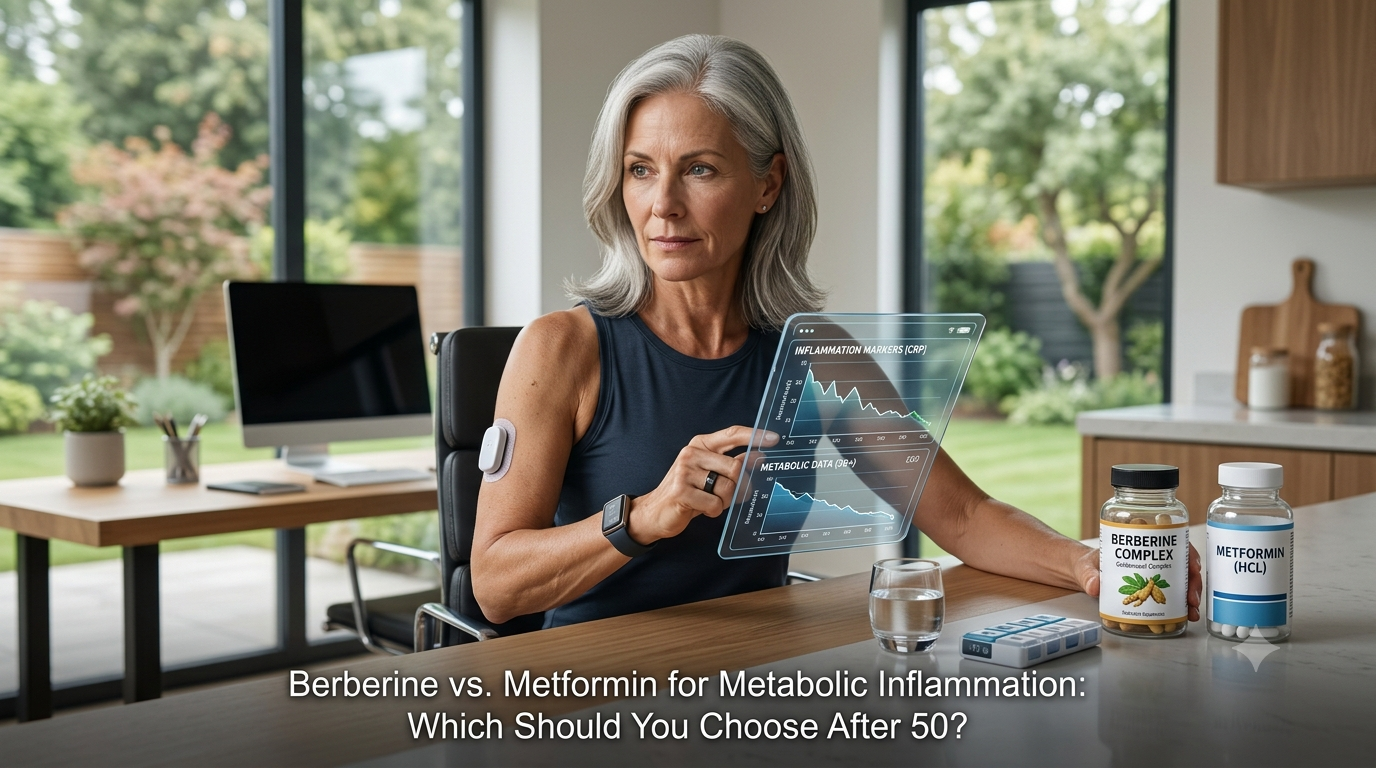
Berberine and metformin are both used for metabolic inflammation after 50 — but they work differently, have different side effect profiles, and suit different situations. Here’s the honest, evidence-based comparison you need.
Introduction
Here’s a statistic that frames the central question of this article. Approximately 88% of American adults over 50 are metabolically unhealthy by at least one measurable criterion — elevated fasting glucose, insulin resistance, visceral fat accumulation, dyslipidemia, or elevated blood pressure. Eighty-eight percent. And each of these metabolic abnormalities drives chronic systemic inflammation through the mechanisms we’ve explored throughout this series — NF-κB activation, NLRP3 inflammasome stimulation, visceral fat cytokine production, and the progressive insulin signaling dysfunction that turns metabolic syndrome into a systemic inflammatory condition.
Two compounds — one pharmaceutical, one natural — have emerged as the most discussed interventions for this metabolic inflammation crisis after 50. Metformin, the most widely prescribed diabetes medication in the world, has been used for decades to manage blood glucose and is now being investigated as an anti-aging drug in its own right through the landmark TAME (Targeting Aging with Metformin) trial. Berberine, a plant alkaloid found in several traditional medicinal herbs, has generated extraordinary scientific interest over the past decade for its remarkably similar mechanisms to metformin — leading to widespread labeling as “nature’s metformin” — alongside additional benefits for lipid profiles and gut microbiome composition that metformin doesn’t share.
The comparison between these two compounds is one of the most frequently asked questions I receive from adults over 50 who have identified metabolic inflammation as a primary driver of their inflammatory health picture. And it’s a comparison that deserves a genuinely honest, evidence-based answer rather than either reflexive dismissal of the natural option or uncritical enthusiasm that ignores metformin’s legitimate advantages in specific contexts. Both compounds have real evidence behind them. Both have real limitations. And choosing between them — or deciding whether to use both under appropriate supervision — depends on your specific metabolic status, your medication situation, and your goals.
This article is that honest comparison. We’re going to cover both compounds mechanistically, examine the head-to-head clinical evidence, and give you the clearest framework I can for making an informed decision in consultation with your healthcare provider. Let’s start with the metabolic inflammation problem they’re both trying to solve.
Understanding Metabolic Inflammation — Why This Is the Battle Worth Fighting After 50
Metabolic inflammation — the chronic systemic inflammatory state driven by metabolic dysfunction — is one of the most consequential and most reversible inflammatory processes affecting adults over 50. We covered it in depth in article three of this series, but a targeted recap establishes the context for understanding why both berberine and metformin matter as interventions.
The connection between metabolic dysfunction and inflammation operates through five primary mechanisms that converge on the same pro-inflammatory outcome through different biological routes. First, insulin resistance drives chronic NF-κB activation — because the impaired insulin signaling pathway that defines insulin resistance removes one of insulin’s normal anti-inflammatory effects while simultaneously activating inflammatory kinase cascades as a compensatory response. Second, hyperinsulinemia — the chronically elevated insulin that compensates for insulin resistance — directly promotes visceral fat accumulation, removing adiponectin’s anti-inflammatory protection and flooding the circulation with pro-inflammatory adipokines. Third, post-meal glucose spikes drive glycation and oxidative stress — the AGE (advanced glycation end product) formation that activates RAGE receptors on immune cells and triggers inflammatory signaling. Fourth, elevated triglycerides from impaired fat metabolism promote endothelial inflammation and small, dense, oxidation-prone LDL particles that drive arterial inflammatory plaque. Fifth, gut dysbiosis — which is both a cause and consequence of insulin resistance — generates the LPS endotoxemia that drives systemic low-grade inflammation through TLR4 receptor activation.
After 50, all five of these mechanisms accelerate simultaneously due to the hormonal, mitochondrial, and microbiome changes we’ve documented throughout this series. Declining sex hormones remove metabolic protective effects. Declining mitochondrial function reduces cellular energy efficiency, promoting insulin resistance. Microbiome diversity loss removes the gut-derived insulin sensitizing effects of SCFA production. And decades of cumulative dietary, lifestyle, and inflammatory exposure compound into a metabolic inflammatory trajectory that most conventional medicine approaches address reactively and symptomatically rather than preventively and mechanistically.
The consequences of unaddressed metabolic inflammation after 50 are the full range of major chronic diseases — cardiovascular disease driven by endothelial inflammation and dyslipidemia, Alzheimer’s disease through the insulin resistance-neuroinflammation pathway now sometimes called type 3 diabetes, osteoarthritis through the adipokine-mediated joint inflammation we examined in our joint health articles, and cancer through the chronic NF-κB activation and immune surveillance suppression that metabolic inflammation produces. Addressing metabolic inflammation is not a peripheral health optimization goal. It is arguably the single most impactful systemic intervention available to a person over 50 concerned about long-term health outcomes.
Metformin — What It Does, What the Research Shows, and Its Limitations
Metformin has been in clinical use since the 1950s and is the most widely prescribed glucose-lowering medication in the world — prescribed to hundreds of millions of people annually. Its longevity in clinical use has generated an evidence base that few medications can match, and its mechanisms extend well beyond simple glucose control in ways that make it increasingly relevant to the anti-aging and anti-inflammation community.
Metformin’s primary mechanism of action is inhibition of complex I of the mitochondrial electron transport chain in hepatic cells — producing a mild energetic stress that activates AMPK, the metabolic master switch we’ve discussed throughout this series. Through AMPK activation, metformin suppresses hepatic glucose production (the primary pharmacological mechanism exploited for diabetes management), improves peripheral insulin sensitivity, and activates a range of downstream anti-inflammatory and anti-aging pathways including autophagy induction, mTOR inhibition, and NF-κB suppression. The AMPK activation mechanism explains why metformin shares significant mechanistic overlap with caloric restriction and fasting — it essentially mimics some of the cellular signaling of an energy-deficient state without requiring actual caloric reduction.
The anti-inflammatory effects of metformin beyond glucose control are increasingly well-documented. Multiple studies have shown that metformin reduces CRP, IL-6, and TNF-α independently of its effects on blood glucose — suggesting that AMPK-mediated anti-inflammatory signaling contributes to its benefits beyond the secondary reduction in glucose-driven inflammation. Research has also documented metformin’s effects on NF-κB directly — reducing its transcriptional activity through AMPK-mediated phosphorylation of upstream IKK kinases — producing anti-inflammatory gene expression changes in inflammatory tissues including adipose and vascular endothelium.
The TAME (Targeting Aging with Metformin) trial represents the most significant current investigation of metformin as an anti-aging intervention rather than purely a diabetes drug. This landmark study — funded by the American Federation for Aging Research and involving over 3,000 participants aged 65-79 without diabetes — is examining whether metformin can delay the onset of age-related diseases including cardiovascular disease, cancer, cognitive decline, and death in non-diabetic older adults. The mechanistic rationale is compelling — metformin’s AMPK-mTOR-autophagy effects address several hallmarks of biological aging directly. Results from the full trial are eagerly anticipated by the longevity research community, though preliminary data from pilot studies have been encouraging.
Metformin’s side effects and limitations deserve honest discussion because they influence who is most and least suited for its use. Gastrointestinal side effects — nausea, diarrhea, abdominal discomfort — affect a significant minority of users, particularly during initiation and dose escalation. Extended-release formulations substantially reduce GI side effects compared to immediate-release and are the preferred form for most adults. The most clinically significant nutritional depletion associated with metformin is vitamin B12 — metformin impairs B12 absorption from the ileum through calcium-dependent mechanisms, and chronic metformin use without B12 monitoring and supplementation can produce B12 deficiency with neurological consequences. CoQ10 depletion is also associated with metformin use, though through less direct mechanisms than statin-induced depletion. Lactic acidosis — the most serious metformin adverse effect — is rare but requires medical screening, particularly for people with renal impairment. Metformin requires physician prescription and monitoring, which is appropriate given these considerations.
Berberine — The Natural AMPK Activator With Remarkable Research
Berberine is a plant alkaloid — bright yellow in color, with a distinctive bitter taste — found in several traditionally medicinal plants including barberry (Berberis vulgaris), goldenseal (Hydrastis canadensis), Oregon grape (Berberis aquifolium), and Chinese goldthread (Coptis chinensis). It has been used in traditional Chinese and Ayurvedic medicine for centuries, primarily for infections and digestive disorders, but its modern research application has focused almost entirely on metabolic health — driven by the discovery that berberine activates AMPK through a mechanism remarkably similar to metformin.
Berberine’s AMPK activation mechanism is slightly different from metformin’s at the molecular level — berberine inhibits mitochondrial complex I as metformin does, but also activates AMPK through additional upstream pathways including SIRT1 activation and direct AMP kinase phosphorylation — producing AMPK activation that may be somewhat more robust and through more diverse signaling routes than metformin alone achieves. The downstream consequences of berberine’s AMPK activation are effectively identical to metformin’s for metabolic inflammation: suppression of hepatic glucose production, improved peripheral insulin sensitivity, NF-κB inhibition, mTOR suppression, and autophagy induction.
The head-to-head research comparing berberine to metformin is what elevated berberine from an interesting natural compound to a serious therapeutic candidate. The landmark 2008 meta-analysis published in the Journal of Clinical Endocrinology and Metabolism examined multiple randomized controlled trials comparing berberine to metformin in patients with type 2 diabetes and found that berberine produced comparable reductions in fasting blood glucose and HbA1c to metformin — with a statistically equivalent efficacy profile and a comparable tolerability profile. Subsequent research has replicated these findings across multiple study populations, consistently showing berberine achieves blood glucose improvements in the range of 20% fasting glucose reduction and 0.5-1.5% HbA1c reduction in pre-diabetic and early diabetic populations — comparable to metformin’s typical clinical effect size.
Where berberine demonstrates documented advantages over metformin is in lipid metabolism and gut microbiome effects. Berberine produces significant improvements in the full lipid panel — reducing total cholesterol, LDL, and most impressively triglycerides (by 20-30% in multiple studies) — through PCSK9 inhibition, LDL receptor upregulation, and inhibition of hepatic lipid synthesis pathways that metformin doesn’t directly address with the same potency. For adults over 50 with the dyslipidemia component of metabolic syndrome, berberine’s lipid effects represent a meaningful clinical advantage. The gut microbiome effects diverge interestingly: metformin has been shown to alter gut microbiome composition in ways that some research suggests may reduce short-chain fatty acid producing bacteria — a concern for the gut-inflammation connection central to this series. Berberine, by contrast, has been shown to increase beneficial Bifidobacterium and Lactobacillus species and reduce pathogenic gram-negative bacteria — producing gut microbiome changes that support rather than counteract the gut-based anti-inflammatory strategies we’ve built throughout this series.
Bioavailability is berberine’s primary pharmacological limitation and the most important quality consideration in product selection. Standard berberine has poor oral bioavailability — estimated at less than 5% in some studies — due to rapid metabolism in the gut wall and first-pass hepatic clearance. This limitation is partly addressed by the high doses used therapeutically (typically 1,500mg daily in divided doses) and by the fact that some berberine metabolites retain biological activity. Dihydroberberine — a reduced form of berberine produced by gut bacteria from standard berberine — has approximately five times the oral bioavailability of standard berberine and produces equivalent or superior metabolic effects at substantially lower doses. Several manufacturers now produce dihydroberberine supplements directly, allowing lower-dose, higher-bioavailability berberine supplementation that may produce fewer GI side effects alongside improved efficacy.
Direct Comparison — Berberine vs. Metformin Across Key Metabolic Inflammation Markers
Moving from mechanism to clinical outcomes, the head-to-head comparison across the specific markers most relevant to metabolic inflammation after 50 reveals a nuanced picture where neither compound dominates universally.
For blood glucose and HbA1c reduction — the primary metabolic markers — the clinical evidence is genuinely comparable. Multiple head-to-head trials have found no statistically significant difference between berberine and metformin for fasting blood glucose and HbA1c reduction in pre-diabetic and early type 2 diabetic populations. Both compounds produce clinically meaningful glucose reductions through AMPK-mediated hepatic glucose production suppression and peripheral insulin sensitization. For people with significantly elevated glucose requiring pharmacological management, this equivalence is clinically meaningful — it means berberine represents a legitimate alternative to metformin for metabolic glucose management, not merely a supplement that produces modest supporting effects.
For triglycerides and lipid panel improvement, berberine has a documented and consistent advantage. Metformin produces modest triglyceride reductions and minimal changes in LDL or HDL. Berberine produces substantial triglyceride reductions (20-30% in multiple trials), meaningful LDL reduction through PCSK9 inhibition and LDL receptor upregulation, and modest HDL improvement. For adults over 50 with the dyslipidemia component of metabolic syndrome — high triglycerides, low HDL, elevated small dense LDL — berberine’s lipid effects represent a clinically meaningful advantage over metformin that addresses an inflammation-driving metabolic abnormality that metformin largely doesn’t touch.
For CRP and systemic inflammatory markers, the direct comparison evidence is less extensive but generally suggests comparable anti-inflammatory effects through their shared AMPK-NF-κB suppression mechanism, with berberine’s additional gut microbiome benefits potentially providing superior long-term systemic anti-inflammatory outcomes through the gut-inflammation axis. Studies measuring CRP alongside metabolic markers have shown berberine producing significant CRP reductions comparable to those documented with metformin in equivalent metabolic populations.
For visceral fat reduction — arguably the most important single metabolic inflammation target for adults over 50 — both compounds produce meaningful reduction through insulin sensitization and the consequent reduction in insulin-driven visceral fat accumulation. Berberine’s additional triglyceride-lowering effects and gut microbiome improvements provide complementary mechanisms for visceral fat reduction that may give it a modest advantage in this domain, though direct imaging-confirmed head-to-head comparisons are limited.
The gut microbiome comparison is where the compounds diverge most clearly and most consequentially for the comprehensive anti-inflammaging protocol we’ve built across this series. Research has found that metformin consistently alters gut microbiome composition — it significantly increases Akkermansia muciniphila (a positive effect consistent with its metabolic benefits) but also alters Bifidobacterium and short-chain fatty acid producing bacteria in ways that some researchers view with concern for overall gut microbiome health. Berberine produces microbiome changes that are consistently viewed more favorably in the gut-inflammation context — increasing Bifidobacterium species, reducing pathogenic gram-negative Proteobacteria, and supporting the SCFA-producing bacterial populations that maintain gut barrier integrity. For anyone who has invested significantly in the gut health strategies from our earlier articles, berberine’s gut microbiome effects are more complementary to that investment than metformin’s.
The side effect comparison reveals meaningful differences in tolerability and safety profile. Both compounds share gastrointestinal side effects as the most common adverse effects — nausea, diarrhea, and abdominal discomfort — though metformin’s GI effects are generally more severe and more commonly treatment-limiting. Metformin’s B12 depletion is a significant long-term concern requiring monitoring and supplementation. Berberine’s most clinically important safety consideration is drug interaction through cytochrome P450 enzyme inhibition — it inhibits CYP3A4 and CYP2C9, which metabolize multiple common medications. Metformin’s lactic acidosis risk, while rare, requires renal function screening that berberine does not. Both require physician discussion when used alongside blood glucose lowering medications due to hypoglycemia risk.
Who Should Choose Berberine, Who Should Choose Metformin, and Who Might Use Both
The clinical picture that emerges from the evidence suggests specific situations where each compound is most appropriate — and some situations where both might be used under appropriate medical supervision.
The case for berberine is strongest in several common over-50 scenarios. Pre-diabetic adults with metabolic syndrome components who want to address metabolic inflammation through a natural intervention before pharmacological management becomes necessary — berberine at 1,500mg daily in divided doses with meals is the most evidence-backed natural intervention available for this situation. Adults over 50 with significant dyslipidemia alongside insulin resistance — where berberine’s triglyceride and LDL benefits are clinically meaningful in ways metformin’s don’t match. People who have prioritized gut microbiome restoration as a central anti-inflammaging strategy — where berberine’s microbiome effects complement rather than potentially counteract that investment. And adults who prefer to exhaust evidence-backed natural interventions before pursuing pharmaceutical options — a legitimate preference that berberine supports with a genuine evidence base rather than wishful thinking.
The case for metformin is clearest for people with established type 2 diabetes being managed under physician care — where metformin remains the first-line pharmaceutical recommendation with decades of safety data and outcome evidence. People specifically interested in metformin’s longevity applications through the TAME trial rationale — particularly those aged 65-79 without diabetes who want the specific AMPK-mTOR-autophagy anti-aging profile metformin has been studied for in that context. And people whose physicians have recommended metformin based on their specific metabolic picture and risk profile — where the prescription exists for good clinical reasons that should not be casually overridden by supplement enthusiasm.
The combination approach — berberine and metformin used simultaneously — has been studied in clinical trials and shows additive glycemic benefits. However, the combination significantly increases hypoglycemia risk in people whose baseline glucose is already well-controlled, and the drug interaction concerns with berberine become more clinically significant when combined with prescription medications. This combination should only be pursued under active physician supervision with regular glucose monitoring — not as a self-directed supplement stack.
Drug interactions make the choice clear in several specific situations. People on warfarin or other anticoagulants should approach berberine with caution due to its CYP2C9 inhibition affecting warfarin metabolism — requiring either avoidance or very careful INR monitoring under physician supervision. People on immunosuppressants metabolized by CYP3A4 face significant interaction risk with berberine. For these individuals, metformin may be the more appropriate intervention if their physician confirms suitability.
Choosing the Best Berberine Supplement — Quality, Form, and Dosing
For those choosing berberine — either as a standalone intervention or as part of a broader metabolic inflammation protocol — the quality and form considerations that separate therapeutic products from ineffective ones follow the same principles we’ve applied throughout this review series.
Dihydroberberine versus standard berberine is the most important formulation decision — paralleling the ubiquinol versus ubiquinone decision in CoQ10. Dihydroberberine’s five-fold superior bioavailability means that 100-200mg of dihydroberberine daily can achieve plasma concentrations comparable to 1,000-1,500mg of standard berberine — with the additional advantages of lower dose burden, fewer GI side effects (since less unabsorbed berberine reaches the large intestine where it causes much of the GI distress), and potentially more consistent plasma levels. Products containing dihydroberberine — sometimes labeled as GlucoVantage, a branded dihydroberberine ingredient — represent the current bioavailability frontier for berberine supplementation. The trade-off is cost — dihydroberberine products are more expensive per serving than standard berberine — but for people who have experienced GI issues with standard berberine or want maximum efficacy at minimum dose burden, dihydroberberine is worth the additional investment.
Standard berberine — used at the 1,500mg daily dose validated in clinical trials — remains a legitimate and well-researched option when purchased from quality manufacturers. The optimal dosing protocol is 500mg three times daily with meals — distributing the dose across mealtimes both reduces GI side effects by avoiding high single-dose GI concentrations and maintains more consistent plasma berberine levels throughout the day than twice-daily dosing. For dihydroberberine, 100-200mg twice daily with meals is the typical protocol used in published research, reflecting its superior bioavailability.
Cycling is a meaningful consideration for berberine that distinguishes it from supplements where continuous daily use is straightforwardly optimal. Some practitioners recommend an eight-weeks-on, two-weeks-off cycling protocol for berberine — the rationale being that continuous AMPK activation may blunt the adaptive responses that make AMPK activity beneficial. The research on cycling versus continuous use is not definitive, but the cycling protocol has biological plausibility and is commonly used in functional medicine contexts. At minimum, periodic breaks from berberine allow assessment of whether continued supplementation is producing ongoing benefit — which is valuable feedback for any supplement protocol.
Quality markers for berberine supplements include standardization — the percentage of berberine hydrochloride or berberine base as a percentage of the extract, which should be clearly specified on the label. Third-party testing for identity, potency, and contaminant testing is critical for berberine specifically because the raw material is imported from Asia where quality controls in supply chains vary considerably. Certified analysis documents showing berberine content verification alongside heavy metal and pesticide testing are the gold standard. Avoid proprietary blend products that don’t disclose berberine content within the blend, and be skeptical of very low-priced berberine products that don’t provide quality documentation.
Within the complete anti-inflammatory supplement stack built across this series, berberine slots most naturally between the foundational supplements (CoQ10, omega-3s, magnesium, vitamin D3/K2) and the advanced interventions (NAD+ precursors, senolytics). It pairs particularly well with magnesium — which complements berberine’s insulin sensitization through its role as a cofactor in insulin receptor signaling — and with omega-3 fatty acids that address the lipid inflammation berberine’s triglyceride-lowering effect complements structurally. The combination of berberine, magnesium, and omega-3s represents a cost-effective and evidence-backed foundation for metabolic inflammation management that addresses glucose metabolism, lipid inflammation, and cellular energy production simultaneously.
Conclusion
The berberine versus metformin comparison, when viewed honestly through the clinical evidence, doesn’t produce a clean winner — it produces a nuanced clinical picture where the right choice depends on your specific metabolic status, medication situation, health goals, and preferences. Metformin has a deeper pharmaceutical evidence base, specific clinical indications where it’s the standard of care, and the exciting longevity research of the TAME trial behind it. Berberine has comparable efficacy evidence for metabolic glucose control, meaningful advantages for lipid inflammation and gut microbiome effects, and a safety profile appropriate for self-directed supplementation in pre-diabetic and metabolic syndrome populations without the prescription requirement and monitoring burden of metformin.
For most adults over 50 with metabolic inflammation markers but without established type 2 diabetes requiring pharmacological management, berberine — particularly in the dihydroberberine form for maximum bioavailability — is the starting point that allows meaningful metabolic inflammation reduction through a natural intervention with a genuine evidence base, complementary gut microbiome effects, and appropriate self-management safety. For those with established diabetes under physician care, metformin remains the appropriate foundation, potentially with berberine added under medical supervision for additional lipid and gut microbiome benefits.
What both compounds share — and what matters most regardless of which you choose — is that neither works optimally in isolation. The metabolic inflammation they address is driven by lifestyle factors that no single supplement can fully overcome: dietary quality, physical activity, sleep, stress management, gut health, and the comprehensive anti-inflammaging protocol we’ve built across this entire series. Berberine or metformin deployed on a foundation of genuine lifestyle change amplifies its benefits dramatically. Either compound deployed as a replacement for lifestyle change produces modest and ultimately disappointing results. For a comprehensive, structured program that integrates berberine with the complete anti-inflammaging lifestyle protocol designed specifically for adults over 50, The Prime Reset provides the expert guidance and practical framework that makes sustained metabolic inflammation reversal achievable.
Please discuss both berberine and metformin with your healthcare provider before starting — particularly if you’re on any medications, have renal impairment, or have diagnosed metabolic conditions requiring medical management. This is not a decision to make in isolation from professional medical guidance.