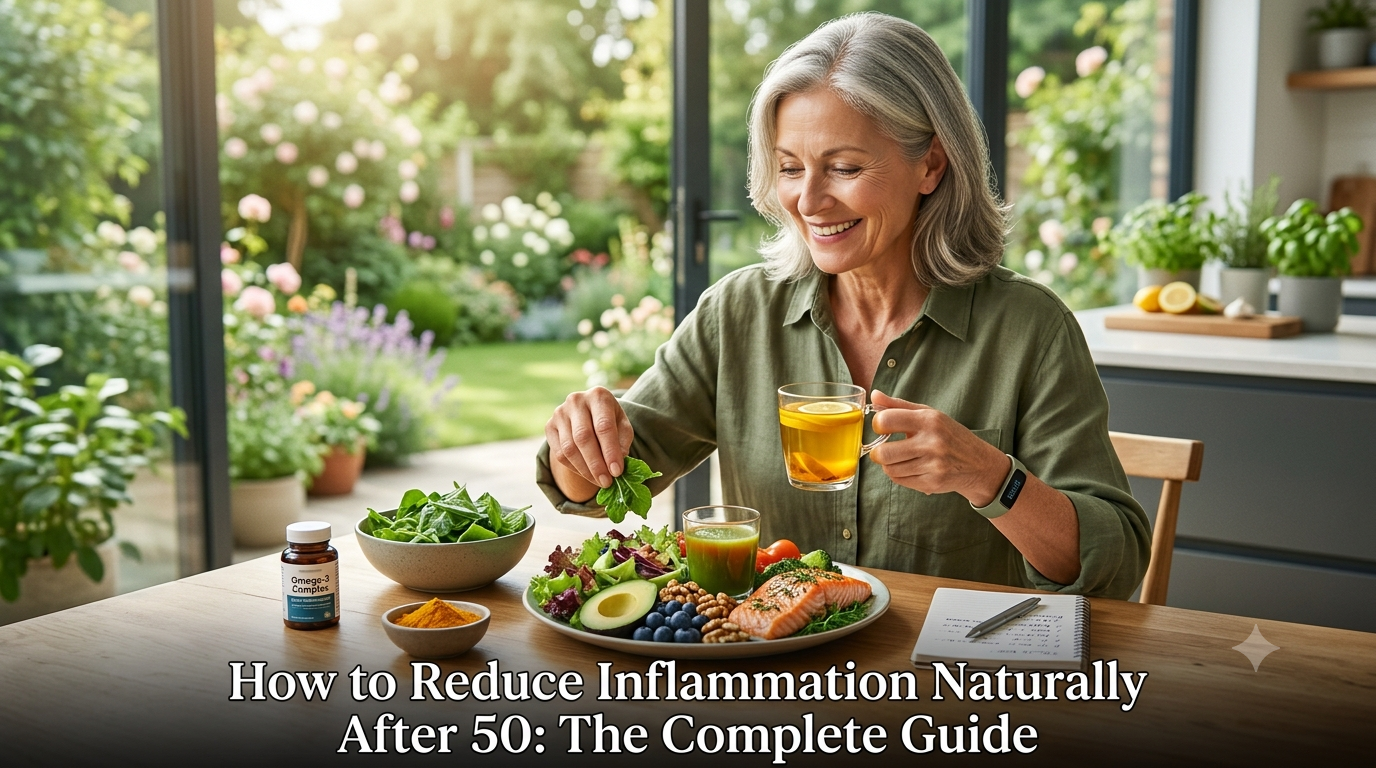
Learn how to reduce inflammation after 50 with real food swaps, exercise tips, sleep fixes, and daily habits that actually work — no fluff, just what helps.
Introduction
Did you know that nearly half of adults over 50 have at least one marker of chronic low-grade inflammation showing up in routine bloodwork, even when they feel “fine”? I didn’t know that either until my doctor sat me down a few years back and said the word “inflammation” like it was something I’d personally invited into my body. Which, in a way, I had.
Here’s the thing about inflammation after 50 — it’s sneaky. It’s not the kind of inflammation you get from stubbing your toe, all red and swollen and obvious. It’s the quiet kind. The kind that shows up as stiff knees in the morning, a little extra belly fat that won’t budge, brain fog that makes you walk into a room and forget why, and joints that ache for no good reason. I’ve been there. I’m still there, some days, honestly!
The good news is that a lot of what drives inflammation after 50 is stuff you can actually control. Not all of it — genetics play a role, and I’m not going to pretend otherwise — but a surprising amount comes down to daily choices. Food, movement, sleep, stress. Boring stuff. But boring stuff that works, if you actually do it.
I’m going to walk you through what’s actually helped me and what I’ve learned from digging into this topic for years now. This isn’t a magic pill situation. It’s more like a bunch of small adjustments that add up. Let’s get into it.
What Is Chronic Inflammation and Why It Increases After 50
Okay, quick biology lesson, and I promise I’ll keep it simple because honestly, I had to look half of this up myself the first time around. Inflammation is your body’s natural defense system. When you cut your finger or catch a cold, your immune system sends out inflammatory cells to fix the problem. That’s acute inflammation, and it’s actually a good thing. It’s your body doing its job.
Chronic inflammation is different. It’s when that same immune response sticks around long after it should’ve packed up and left. Instead of healing something and calming down, your body stays in this low-level “alert” mode for months or years. And that constant state of alert wears things down — joints, blood vessels, even your brain.
Here’s why this ramps up after 50:
- Cellular aging (sometimes called “inflammaging”) — as cells get older, they produce more inflammatory signals almost as a byproduct of aging itself
- Hormonal shifts — declining estrogen in women during menopause and declining testosterone in men both correlate with increased inflammatory markers
- Slower metabolism — this often leads to weight gain, and fat tissue itself (especially visceral fat around the belly) actively produces inflammatory compounds
- Accumulated wear and tear — decades of joint use, old injuries, and cumulative sun exposure or environmental stress add up
- Gut health changes — the diversity of good bacteria in your gut naturally declines with age, and that affects inflammation regulation
I remember when I first heard the term “inflammaging” I actually laughed a little, like, come on, is that a real word? Turns out yes, researchers use it constantly. It’s basically the idea that some inflammation is just baked into getting older. But — and this is important — baked in doesn’t mean unchangeable. You can absolutely turn the dial down even if you can’t turn it off completely.
The tricky part is that chronic inflammation doesn’t always come with obvious symptoms right away. Sometimes the only way you’d know is through a blood test checking markers like CRP (C-reactive protein). A lot of people don’t find out until it’s contributed to something bigger, like heart disease or joint damage. So if you’re over 50 and haven’t had inflammation markers checked in a while, it’s worth asking your doctor about it at your next physical.
I actually asked my doctor for a CRP test after reading about it online, and she seemed a little surprised I knew to ask. Turns out most routine physicals don’t automatically check it unless you specifically request it or you’ve got other risk factors flagged. Mine came back a little elevated, nothing alarming, but enough to be a wake-up call. That single number is honestly what got me to start paying attention to all this stuff in the first place.
It’s also worth saying that inflammation isn’t some enemy you’re supposed to eliminate completely. Your body needs some inflammatory response to heal injuries and fight off infections. The goal isn’t zero inflammation, it’s getting the chronic, low-grade, background kind under control so it’s not quietly working against you day after day. I had to reframe my thinking on that a bit, because at first I was treating inflammation like it was purely bad, full stop, which isn’t really accurate.
Anti-Inflammatory Foods to Eat Every Day After 50
Food is honestly where I saw the biggest difference, and it’s also the area where I made the most mistakes early on. I went through a phase where I thought “anti-inflammatory diet” meant buying every trendy superfood powder at the health store. Spent way too much money on stuff that just sat in my cabinet. Turns out the actual answer is way more boring and way cheaper.
The Mediterranean-style eating pattern has the most research behind it for reducing inflammation in older adults, and it’s not complicated. It’s mostly vegetables, fruit, whole grains, fish, olive oil, nuts, and legumes, with less red meat and fewer processed foods.
Foods I try to eat pretty much daily now:
- Fatty fish like salmon, sardines, and mackerel — the omega-3s in these are genuinely some of the best-studied anti-inflammatory compounds out there
- Leafy greens like spinach and kale, loaded with antioxidants
- Berries — blueberries especially, they’re small but mighty when it comes to anti-inflammatory compounds
- Extra virgin olive oil — I switched from vegetable oil to this a few years ago and it’s an easy swap
- Nuts, especially walnuts — a small handful a day, not a whole bag (learned that one the hard way, calories add up fast)
- Turmeric and ginger — I add these to soups, rice, even scrambled eggs sometimes
- Legumes like lentils and chickpeas — great fiber, great for gut health too
One thing I wish someone had told me sooner: it’s not about one “magic” food. I used to obsess over whether I was eating enough turmeric, like that one spice alone was going to fix everything. It’s really about the overall pattern over weeks and months, not any single meal.
I’ll be honest, I don’t eat perfectly every day. Some weeks are better than others. But the general direction matters more than perfection, and that took me a long time to accept. My doctor actually told me that once — “aim for 80% good, not 100% perfect” — and that stuck with me.
A practical tip: meal prep on Sundays. I chop up a big batch of vegetables and roast them, cook a batch of quinoa or brown rice, and portion out some salmon or chicken. Takes maybe 90 minutes and saves me from grabbing something processed during a busy week. Small thing, but it works.
I also started paying more attention to spices and herbs, which I used to completely ignore. Garlic, cinnamon, and even black pepper all have some research behind them for supporting a healthy inflammatory response. It’s not going to move the needle on its own, but when you’re already eating a decent diet, these little additions stack up. My grandmother used to load up her cooking with garlic and I always thought it was just a flavor thing. Turns out she might’ve been onto something without even knowing the science behind it.
Green tea is another one worth mentioning. I swapped my second afternoon coffee for green tea a while back, mostly because I read it’s got compounds called catechins that may help with inflammation. Can’t say I’ve noticed some dramatic before-and-after, but it’s an easy swap that isn’t hurting anything, and I genuinely like the taste now, which surprised me since I used to think green tea tasted like grass clippings.
Foods and Habits That Secretly Fuel Inflammation
Now for the flip side — the stuff that quietly makes inflammation worse. This part stung a little when I first learned about it because, well, some of my favorite foods were on the list.
The biggest offenders:
- Added sugars — sodas, pastries, most breakfast cereals. Sugar spikes blood glucose and that triggers inflammatory pathways
- Refined carbs — white bread, white rice, most crackers. These break down into sugar fast
- Fried foods — the high-heat oils used in frying create compounds linked to inflammation
- Processed and cured meats — bacon, deli meat, sausage. I still eat these occasionally, just way less than I used to
- Excess alcohol — even moderate drinking has been linked to increased inflammatory markers in some studies, and it definitely disrupts sleep, which loops back into more inflammation
- Trans fats — mostly found in some margarines and packaged baked goods, though these are less common now than they used to be
I used to have a bag of chips as my go-to afternoon snack. Every single day. Didn’t think much of it. When I finally swapped that habit out for something like a handful of almonds or some cut-up veggies with hummus, it took maybe three weeks before I noticed I wasn’t as achy in the mornings. Could be coincidence, could be real, I honestly don’t know for sure. But it was enough for me to stick with the swap.
Here’s a mistake I made early on: I cut out sugar cold turkey for like four days and felt absolutely miserable, cranky, headachy, the whole thing. Went right back to old habits out of frustration. What actually worked better for me was reducing gradually — one soda a day instead of three, then one every other day, that kind of thing. Slow and steady actually stuck long-term where the all-or-nothing approach didn’t.
It’s also worth mentioning that alcohol is a tricky one because so many of us over 50 have a glass of wine as part of our evening routine, and I’m not here to tell anyone to quit cold turkey. But being honest with yourself about how much you’re actually drinking, and maybe cutting back a night or two a week, can make a real difference over time.
Another sneaky one is snacking late at night, right before bed. I used to do this constantly, usually something salty, and I didn’t connect it to inflammation at all until I read that eating close to bedtime can mess with your body’s natural nighttime repair processes. Now I try to stop eating a couple hours before I turn in, and honestly my digestion feels better too, which is a nice side bonus.
I’ll also mention artificial sweeteners here, because a lot of people switch to “diet” versions of things thinking they’re doing themselves a favor. The research on artificial sweeteners and inflammation is honestly still a little mixed and I don’t want to overstate it, but some studies suggest they can mess with gut bacteria, and we already talked about how important gut health is for keeping inflammation in check. I don’t avoid them completely, but I don’t treat diet soda like a free pass either.
Best Low-Impact Exercises to Reduce Inflammation
Movement is huge for this, but I want to be upfront about something: more exercise isn’t automatically better when it comes to inflammation. I learned this one the hard way after a period where I was doing intense workouts almost every day, thinking I was being super healthy. Turns out overtraining without enough recovery can actually spike inflammatory markers temporarily. Oops.
The sweet spot for most people over 50 tends to be consistent, moderate movement with adequate recovery time built in.
Exercises that tend to work well:
- Walking — genuinely underrated. Just 30 minutes a day, most days of the week, has solid research behind it for reducing inflammatory markers
- Swimming or water aerobics — easy on the joints, great cardiovascular benefit
- Yoga — helps with flexibility and there’s decent evidence it lowers stress hormones too, which ties into inflammation
- Tai chi — slow, controlled movements, great for balance and it’s gentle on aging joints
- Light strength training — using resistance bands or light dumbbells two to three times a week helps maintain muscle mass, which actually helps regulate inflammation as you age
- Cycling — stationary or outdoor, low impact on the knees compared to running
I started walking my dog an extra loop around the block every morning, just fifteen extra minutes, and honestly that small change did more for my mood and my joints than any of the fancier workouts I tried. Sometimes the simple stuff really is the stuff that works.
A word of caution though: if you’ve been mostly sedentary, don’t go from zero to sixty overnight. Ease into it. I’ve seen people (myself included, once) jump straight into an intense program after years of inactivity and end up injured within two weeks, which obviously just creates more inflammation from the injury itself. Start with 10-15 minutes a day and build up gradually over a month or two.
Recovery matters just as much as the workout itself. Stretching after exercise, giving yourself rest days, and not pushing through sharp pain (soreness is fine, sharp pain is not) all help keep exercise working for you instead of against you.
I’ve also become a big believer in the “movement snack” idea, which is basically just getting up and moving for a couple minutes every hour instead of sitting still all day. Even if you do a great workout in the morning, sitting for eight hours straight afterward isn’t doing your joints any favors. I set a timer on my phone now to remind me to stand up, stretch, or walk to the mailbox and back every hour or so during the day. Feels a little silly at first, standing up just because a timer went off, but my knees genuinely thank me for it by evening.
Something else worth mentioning: warming up matters more the older you get. In my thirties I could roll out of bed and go for a run with zero warm-up and feel fine. These days, if I skip a proper warm-up, I definitely feel it in my hips and lower back later. Five to ten minutes of gentle movement, some light stretching, maybe a few bodyweight squats, before getting into the main workout has made a noticeable difference in how my joints feel afterward.
Sleep, Stress, and Cortisol: The Overlooked Inflammation Triggers
This is the section people skip over the most, and it’s honestly one of the most important ones. Sleep and stress don’t get nearly enough credit for how much they affect inflammation.
When you don’t sleep enough, your body produces more inflammatory markers, plain and simple. Research has shown that even a few nights of poor sleep can bump up inflammatory compounds in the blood. And after 50, sleep quality naturally tends to get a little more fragile anyway, thanks to hormonal shifts, more frequent bathroom trips, and sometimes conditions like sleep apnea that become more common with age.
A few things that helped me sleep better:
- Consistent sleep and wake times, even on weekends (this one was hard for me, I love a lazy Saturday morning)
- Cutting caffeine after early afternoon — I used to have coffee at 4pm and wonder why I was staring at the ceiling at midnight
- Dark, cool bedroom — dropped the thermostat a few degrees and it made a noticeable difference
- Limiting screens before bed — I’m still not great at this one, not going to lie
- Getting a sleep apnea screening if you snore heavily or wake up gasping — this is a real, common, and treatable issue that a lot of people over 50 don’t realize they have
Then there’s stress and cortisol. When you’re chronically stressed, your body pumps out cortisol, and over time that dysregulates your immune system in ways that actually increase inflammation rather than protect you. It’s kind of ironic — stress hormones are supposed to help you in short bursts, but when they’re constantly elevated, they backfire.
Retirement, believe it or not, can be a surprising source of stress for a lot of people, even though it sounds like it should be relaxing. Loss of routine, identity shifts, sometimes financial worry. I’ve talked to friends who went through this and didn’t even realize the low mood and achiness they felt after retiring was connected to stress and inflammation.
Simple stress-reduction tools worth trying:
- Deep breathing exercises — even five minutes of slow, deep breathing can lower cortisol measurably
- A short daily walk outside — sunlight and movement combined seem to help more than either alone
- Journaling — sounds a little woo-woo, I know, but writing down what’s stressing me out for even ten minutes has genuinely helped me sleep better
- Staying socially connected — isolation is linked with higher inflammation, so regular contact with friends and family actually matters physiologically, not just emotionally
I used to brush off the idea that loneliness could affect something as physical as inflammation, but the research on this is honestly pretty compelling. There’s something about consistent social connection, even just a weekly phone call with an old friend or a standing coffee date, that seems to buffer stress in a way that solo relaxation techniques don’t fully replace. I joined a small walking group at my local community center mostly for the exercise, but the social piece turned out to be just as valuable, maybe more.
Pets deserve a mention too. I know that’s a little unconventional for a health article, but there’s decent evidence that having a dog, in particular, is linked with lower stress markers, probably because it forces you to get outside and move regardless of how you’re feeling that day. On the mornings I really don’t want to get up, my dog does not care about my excuses, and honestly that accountability has been good for me.
Supplements and Natural Remedies Worth Considering
I want to be careful here because the supplement industry is full of big promises and not always a lot of proof to back them up. That said, there are a handful of supplements with reasonably solid research behind them for supporting a healthy inflammatory response.
- Omega-3 fish oil — probably the most well-researched option on this list, particularly for joint and cardiovascular health
- Turmeric/curcumin — some studies show benefit, though curcumin isn’t absorbed well on its own, so look for versions with black pepper extract (piperine) added
- Vitamin D — a lot of adults over 50 are actually deficient without realizing it, and low vitamin D is linked with higher inflammation
- Magnesium — involved in hundreds of processes in the body, and deficiency is linked to inflammatory markers
- Probiotics — given the gut-inflammation connection, a good quality probiotic may help some people, though results vary a lot person to person
- Collagen — commonly used for joint support, evidence is still developing but many people report feeling better joint comfort
Here’s my honest take: supplements can help fill gaps, but they’re not a replacement for the food and lifestyle stuff we already talked about. I tried going all-in on supplements for a while, taking like eight different pills every morning, and it got expensive fast without a clear sense of what was actually helping. Eventually I scaled back to just a fish oil and a vitamin D, based on what my bloodwork actually showed I was low in.
That’s probably the biggest tip I can give here — get bloodwork done first if you can, so you know what you’re actually deficient in, rather than guessing and buying everything on the shelf. And always check with your doctor before starting anything new, especially if you’re on other medications, since some supplements can interact with blood thinners or other prescriptions.
One more thing I’ve learned the hard way: quality varies a lot between supplement brands, and the supplement industry isn’t regulated nearly as tightly as prescription medication. Look for third-party testing seals on the label, things like USP or NSF certification, which at least confirm the product contains what it says it contains. I bought a cheap fish oil years ago that made me feel a little queasy every time I took it, and later found out it likely wasn’t stored or processed properly. Paying a bit more for a reputable brand made a real difference.
It’s also worth setting realistic expectations on timelines. Supplements aren’t like ibuprofen, where you feel a difference in an hour. Most of the research on things like omega-3s and curcumin shows benefits building up over weeks or months of consistent use. I gave up on fish oil after about ten days the first time around because I didn’t feel any different, which in hindsight was just way too short a trial period to know anything.
Building a Daily Anti-Inflammatory Routine That Sticks
All this information is only useful if it turns into actual habits, and that’s honestly the hardest part. I’ve started and abandoned more “health routines” than I’d like to admit. What finally worked for me was keeping it stupid simple.
Here’s roughly what a day looks like for me now:
- Morning: Glass of water first thing, then a walk with the dog before breakfast. Breakfast usually includes berries and some kind of protein.
- Midday: Lunch with vegetables and a lean protein, a short walk after eating if I can swing it.
- Afternoon: A handful of nuts instead of chips, water instead of soda.
- Evening: Dinner with fish or legumes a few times a week, screens off an hour before bed, consistent bedtime.
- Weekly: Two to three strength sessions, one or two yoga or stretching sessions, meal prep on Sunday.
None of this is glamorous. There’s no big transformation story here, just small repeated choices. Some weeks I do great, some weeks I don’t, and that’s honestly fine. Progress isn’t a straight line, and beating yourself up over an off day just adds more stress, which, ironically, adds more inflammation. Kind of a funny loop when you think about it.
The habits that made the biggest difference for me, if I had to rank them, were probably sleep consistency and cutting back on added sugar. Those two alone changed how my joints felt in the morning more than anything else on this list. But everyone’s different, and it might take some trial and error to figure out what moves the needle for you specifically.
One thing that helped me stick with this longer term was tracking, even informally. I kept a simple notebook for a couple months, just jotting down how my joints felt each morning on a scale of 1 to 5, along with a rough note on sleep and what I ate the day before. Patterns showed up faster than I expected. Turns out for me, poor sleep the night before was a much bigger predictor of a bad joint day than anything I ate. That was actually surprising, and it shifted where I put most of my energy going forward, toward protecting my sleep first and worrying about diet perfection second.
I’d also say, don’t try to change everything on this list all at once. I made that mistake early on, trying to overhaul my diet, start a new workout routine, fix my sleep, and cut back on alcohol all in the same week. Burned out on all of it within ten days. Picking one or two changes, giving them a few weeks to become automatic, and then adding the next one, worked so much better for me than the all-at-once approach. Slower, sure, but it actually stuck, and sticking with it is really the whole game here.
Conclusion
Reducing inflammation after 50 isn’t about chasing one miracle food or supplement. It’s really about a handful of daily habits working together over time: eating more whole foods and less processed junk, moving your body in ways that feel good rather than punishing, protecting your sleep, and managing stress in whatever way actually works for you.
I’d encourage you to take what applies to your life and skip what doesn’t. Not every tip here will fit your situation, and that’s completely normal. And if you have existing health conditions or you’re on medication, please talk to your doctor before making big changes to your diet or starting new supplements, just to be safe.
I’d love to hear what’s worked for you. Drop a comment below and share your own experience with reducing inflammation after 50 — sometimes the best tips come from people who’ve actually lived through it, not just read about it.