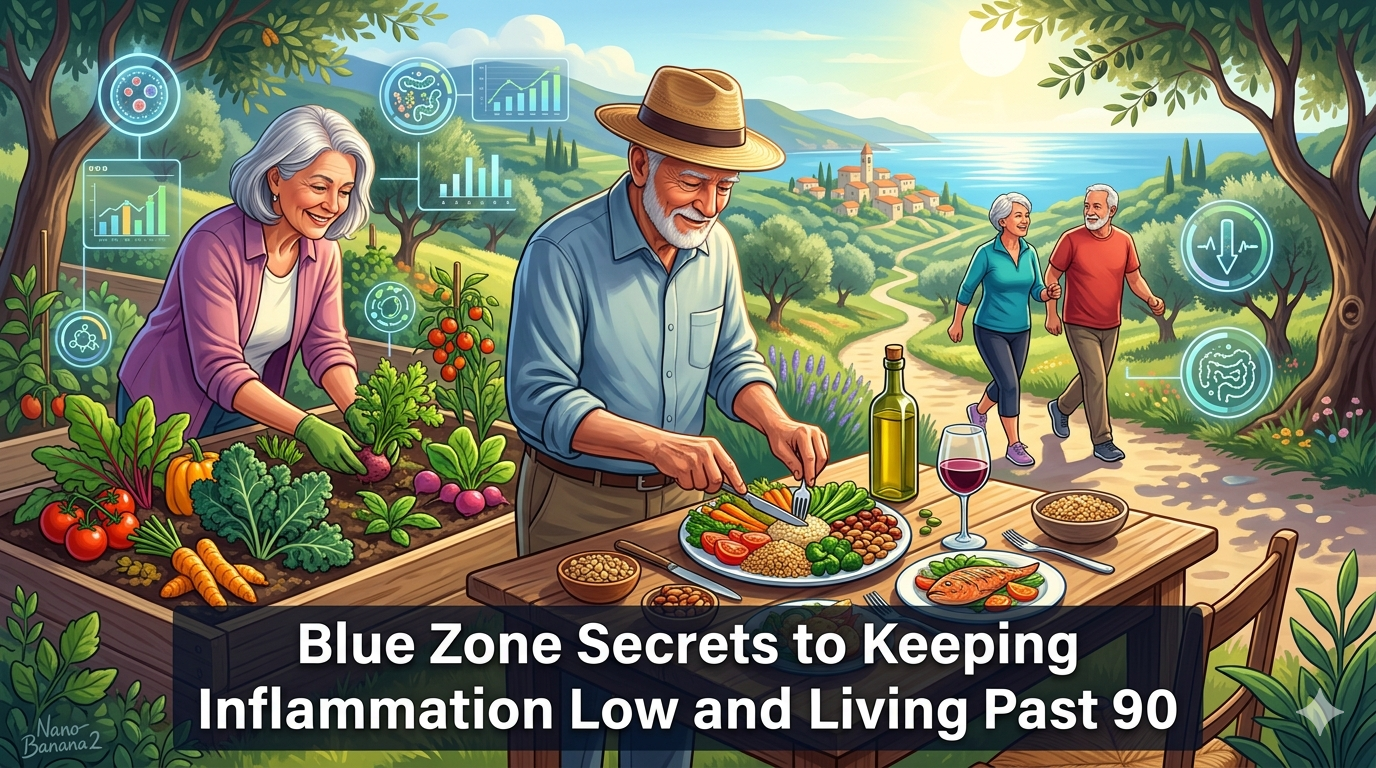
What do the world's longest-lived people know about inflammation that the rest of us don't? Discover the proven Blue Zone lifestyle secrets that keep chronic inflammation low — and how to apply them after 50.
Introduction
Here's something that genuinely stopped me when I first read it. In the Blue Zone region of Ikaria, Greece, people are roughly four times more likely to reach the age of 90 than Americans — and they do so with dramatically lower rates of dementia, cardiovascular disease, depression, and the chronic inflammatory conditions that rob so many Westerners of their final decades. They're not living longer in a nursing home. They're living longer in their gardens, their villages, at their dinner tables with three generations of family around them. Something is fundamentally different about their biology — and it's not their genes.
Blue Zones are the five regions of the world where people demonstrably live the longest and healthiest lives — Sardinia in Italy, Okinawa in Japan, Nicoya in Costa Rica, Ikaria in Greece, and Loma Linda in California. Researcher and National Geographic explorer Dan Buettner spent years studying these communities, identifying the lifestyle patterns that distinguish them from populations with average lifespans. What emerged wasn't a supplement stack or a cutting-edge medical protocol. It was a set of profoundly simple, deeply integrated lifestyle habits that, when examined through the lens of modern inflammation science, turn out to be among the most effective anti-inflammatory interventions ever documented.
When I started cross-referencing Blue Zone lifestyle patterns with what we know about the mechanisms of chronic inflammation, the alignment was striking. Every major feature of Blue Zone life — the diet, the movement patterns, the social structures, the relationship with stress, the sleep habits — directly addresses one or more of the primary drivers of systemic inflammation. These populations aren't taking curcumin capsules and tracking their HRV. They're living in ways that structurally prevent the lifestyle conditions that generate chronic inflammation in the first place.
This article is going to break down the key Blue Zone secrets through the lens of inflammation biology, explaining not just what these populations do but why it works at the biochemical level — and how you can translate these ancient, proven principles into your life after 50. Let's get into it.
What Are Blue Zones — And What Makes Them Biologically Remarkable?
The term Blue Zone was coined by Dan Buettner and his team of demographers and researchers who were mapping global longevity hotspots in the early 2000s. The name comes from the blue ink researchers used to circle regions with statistically anomalous concentrations of centenarians on their demographic maps. What started as a demographic curiosity became one of the most significant population health research projects of the modern era.
The five Blue Zones each have distinct cultures, geographies, cuisines, and histories — but they share a remarkable cluster of lifestyle characteristics that appear to be the common drivers of their exceptional longevity and health. Sardinia, specifically the mountainous Nuoro province, has the world's highest concentration of male centenarians. Okinawa — at least the traditional Okinawa of previous generations — had the world's highest life expectancy and some of the lowest rates of cardiovascular disease and cancer on the planet. Nicoya Peninsula in Costa Rica has a population with extraordinarily low rates of chronic disease and a life expectancy that rivals the wealthiest nations. Ikaria, a small Greek island, has rates of dementia roughly a quarter of American levels and significant numbers of residents living past 90 in good health. Loma Linda, California, home to a community of Seventh-day Adventists, has residents living 7-10 years longer than average Americans — the only Blue Zone in a high-income Western country.
From a biomarker perspective, what distinguishes Blue Zone populations is striking. Studies on Okinawan elders have found dramatically lower levels of circulating inflammatory markers — including CRP, IL-6, and TNF-α — compared to age-matched Western populations. Sardinian centenarians show remarkably preserved immune function and lower oxidative stress markers. Ikarian elders have lower rates of the metabolic syndrome components that drive systemic inflammation. These aren't just people who happen to live a long time — they're people whose inflammatory biology is functioning closer to that of people decades younger.
The genetics piece is important to address because it's the first objection most people raise. Research on Blue Zone populations consistently shows that genetics accounts for only approximately 20-25% of longevity variation. The remaining 75-80% is attributed to environment, lifestyle, and behavior. This is confirmed by studies of Blue Zone migrants — Okinawans who move to mainland Japan or the United States rapidly lose their longevity advantage, while Loma Linda Adventists maintain theirs even within the broader American food and lifestyle environment. The implication is both humbling and empowering: the lifestyle is doing the heavy lifting, and lifestyle is something we can choose.
Buettner synthesized the common characteristics of Blue Zone populations into what he called the Power 9 — nine lifestyle factors shared across all five Blue Zones. They include natural movement, purposeful living, stress downregulation, moderate caloric intake, plant-predominant diet, moderate alcohol consumption (in most zones), a sense of belonging, faith or spirituality, and strong social networks. Viewed through the lens of inflammation science, each of these factors maps directly onto a mechanism of inflammatory control. The rest of this article unpacks exactly how.
The Blue Zone Diet — An Anti-Inflammatory Masterclass
The dietary patterns of Blue Zone populations are simultaneously ancient and extraordinarily well-aligned with modern nutritional science on inflammation. There is no single Blue Zone diet — each population eats according to its own culture and geography — but the common threads across all five are striking and consistent.
Plant predominance is the most universal Blue Zone dietary characteristic. Across all five zones, plant foods make up approximately 90-95% of caloric intake. This is not strict veganism in most cases — Blue Zone populations typically eat small amounts of meat, fish, or dairy — but the proportion is dramatically higher than the typical Western diet. The anti-inflammatory mechanisms of this plant-predominant approach are multiple and well-documented. High polyphenol intake from diverse fruits, vegetables, herbs, and spices directly suppresses NF-κB inflammatory signaling and provides antioxidant protection against oxidative stress. High fiber intake from whole plant foods feeds the gut microbiome's SCFA-producing bacteria, generating butyrate and other anti-inflammatory compounds. Low saturated fat and virtually absent trans fat and refined seed oil intake removes major drivers of adipose tissue and vascular inflammation. And the high diversity of plant foods consumed provides a micronutrient density that supports every enzymatic pathway involved in inflammatory resolution.
Legumes are the single most consistent food across all five Blue Zones — and they deserve recognition as perhaps the most powerful anti-inflammatory food on the planet per calorie. Fava beans in Sardinia, black beans in Nicoya, soybeans and tofu in Okinawa, lentils and chickpeas in Ikaria, and a variety of beans in Loma Linda. Legumes provide an exceptional combination of soluble fiber (for SCFA production and gut microbiome health), plant protein (which supports muscle mass without the inflammatory burden of excess animal protein), resistant starch (a powerful prebiotic), polyphenols, and magnesium. Research specifically examining legume consumption and inflammatory markers consistently shows inverse relationships — more legumes, lower CRP and other inflammatory markers. A cup of legumes per day is one of the simplest and most evidence-backed anti-inflammatory dietary interventions available.
The Okinawan practice of Hara Hachi Bu — eating until you're 80% full rather than completely satiated — is another anti-inflammatory dietary principle with strong biological support. Moderate caloric restriction without malnutrition is one of the most reproducible longevity interventions known to science, and its anti-inflammatory mechanisms are well understood. Caloric restriction activates AMPK, promotes autophagy and cellular cleanup, reduces oxidative stress, lowers insulin and IGF-1 signaling, and directly reduces inflammatory marker levels. Traditional Okinawans consumed roughly 1,800 calories per day in their prime longevity years — significantly less than the Western average — and their inflammatory biomarkers reflected this caloric moderation.
Fermented foods appear consistently across Blue Zone diets, though in culturally specific forms. Ikarians consume large amounts of fermented goat's milk products. Okinawans eat miso and natto. Sardinians consume aged pecorino cheese made from grass-fed sheep. Nicoyan foods include traditionally fermented corn preparations. These fermented foods deliver live beneficial microorganisms that support gut microbiome diversity, strengthen the gut barrier, and reduce intestinal permeability-driven systemic inflammation — all consistent with the gut-inflammation mechanisms we discussed in the previous article.
The moderate wine consumption of Sardinians and Ikarians — specifically Sardinian Cannonau wine and Ikarian herbal teas — deserves a nuanced treatment. Cannonau wine contains two to three times the level of polyphenols, particularly resveratrol and procyanidins, of typical red wines due to the thick-skinned local Grenache grape variety. The anti-inflammatory and cardiovascular benefits associated with moderate consumption in these populations appear to be primarily polyphenol-mediated rather than alcohol-mediated — a distinction that matters, since the negative health effects of alcohol are dose-dependent and can easily outweigh polyphenol benefits at higher intakes. Ikarians also consume large quantities of wild herb teas — including rosemary, sage, and wild mint — that are extraordinarily rich in anti-inflammatory polyphenols and have mild diuretic and vasodilatory effects that may contribute to their low blood pressure rates.
What Blue Zone populations almost never eat is equally instructive. Refined sugars and sweetened beverages are conspicuously absent. Ultra-processed packaged foods are essentially nonexistent in traditional Blue Zone diets. Refined grains replace whole grains only in modernized versions of these diets — and the health statistics of younger Okinawans who adopted a more Western dietary pattern show the predictable inflammatory consequences of that shift. Excess animal protein — particularly processed meat — is rare. The modern Western dietary pattern is almost a perfect inversion of the Blue Zone dietary pattern, and the chronic inflammatory disease rates that follow are not coincidental.
Movement as Medicine — The Blue Zone Approach to Anti-Inflammatory Exercise
Blue Zone populations don't have gym memberships. They don't follow periodized training programs or track their macronutrient intake around their workouts. And yet their physical function, metabolic health, and inflammatory markers at 80 and 90 years old outperform those of the average 50-year-old in most Western countries. Understanding why requires reframing how we think about movement and inflammation.
The key concept is NEAT — non-exercise activity thermogenesis — the energy expended through all physical movement that isn't deliberate, structured exercise. Walking to the neighbor's house. Tending a garden. Preparing food from scratch. Climbing stairs instead of taking elevators. Carrying things. Moving through a physical environment that requires physical engagement. Blue Zone populations are extraordinarily high in NEAT because their environments and daily routines are built around physical engagement rather than convenience and automation. Sardinian shepherds walk significant distances over hilly terrain daily. Okinawan elders garden regularly. Ikarian villagers walk between homes on mountainous terrain. This constant low-level physical activity maintains insulin sensitivity, keeps inflammatory markers suppressed, supports gut microbiome diversity, regulates cortisol, and preserves lean muscle mass — without the recovery demands and cortisol spikes of intense structured exercise.
The anti-inflammatory advantage of this constant moderate movement over sporadic intense exercise is increasingly supported by research. Studies on sedentary behavior show that even in people who exercise regularly, prolonged unbroken sitting produces inflammatory and metabolic consequences that are not fully reversed by the exercise bout. The Blue Zone pattern — moving consistently throughout the day in low-intensity ways — keeps blood flowing, muscles intermittently contracting, glucose being cleared from the bloodstream, and inflammatory signaling suppressed throughout the waking hours rather than just during a 45-minute exercise window.
Gardening deserves specific recognition as a Blue Zone activity, because it provides an extraordinary combination of anti-inflammatory benefits. Moderate physical activity, exposure to natural sunlight (vitamin D synthesis), contact with soil microorganisms (emerging research suggests soil microbial exposure supports gut microbiome diversity), stress reduction through engagement with nature, and purposeful, productive activity — all simultaneously. The fact that gardening appears in virtually every Blue Zone culture as a central activity for older adults is not coincidental.
Walking is the most universal Blue Zone movement modality — and for good reason. Regular walking has been shown in hundreds of studies to reduce CRP, IL-6, and other inflammatory markers, improve insulin sensitivity, reduce visceral fat, support gut microbiome diversity, and improve cardiovascular function. The Blue Zone advantage is that walking is integrated into the fabric of daily life rather than treated as a scheduled exercise block — it happens naturally, consistently, and in social contexts that add their own anti-inflammatory benefit.
The sitting problem is worth addressing directly because it's so central to the contrast between Blue Zone and modern Western lifestyles. Research has established that prolonged sitting independently predicts elevated inflammatory markers, metabolic dysfunction, and all-cause mortality — even in physically active people. Blue Zone physical environments are simply not designed for prolonged sitting. Low tables that require floor sitting and standing, active daily routines, social engagement that involves movement, and the absence of many technologies that enable prolonged sedentary behavior all contribute to a movement pattern that keeps inflammation suppressed throughout the day.
Translating this into a modern life requires deliberate environmental engineering. Standing desks or sit-stand workstations. Walking meetings. Taking stairs reflexively. Parking farther away. Setting hourly movement reminders. Growing something — even on a balcony or windowsill. Walking to local destinations rather than driving. The specific activities matter less than the principle: make low-intensity movement the path of least resistance throughout your day.
Stress, Purpose and Downregulation — The Hidden Inflammation Controllers
If diet gets most of the attention in Blue Zone research, stress management and purpose get too little — despite being among the most biologically potent anti-inflammatory forces in the Blue Zone lifestyle. The relationship between psychological states and inflammatory biology is now well-established, and Blue Zone populations have developed remarkably effective cultural systems for managing this relationship.
Chronic psychological stress drives inflammation through multiple well-characterized pathways. Elevated cortisol suppresses regulatory immune function while activating pro-inflammatory cytokine production. Chronic sympathetic nervous system activation (the fight-or-flight response) promotes vascular inflammation and endothelial dysfunction. Psychological stress directly increases gut permeability, allowing LPS and other inflammatory triggers to enter the bloodstream. And the behavioral consequences of stress — poor sleep, worse dietary choices, reduced physical activity, social withdrawal — compound the direct biological effects. Chronic stress is genuinely an inflammatory condition in its own right.
Blue Zone populations don't experience less life stress than Westerners in an absolute sense — they experience illness, loss, financial hardship, and the full range of human difficulty. What's different is how their social and cultural structures buffer and process that stress. And one of the most powerful buffers is purpose.
The Okinawan concept of Ikigai — roughly translatable as “the reason you get up in the morning” — describes a clear sense of personal purpose that provides direction, motivation, and meaning to daily life. Research has shown that people with a strong sense of purpose have measurably lower inflammatory markers, lower cortisol levels, better immune regulation, and significantly lower rates of dementia and cardiovascular disease. A study published in JAMA Psychiatry found that greater sense of purpose was associated with lower levels of IL-6 and other inflammatory cytokines, independent of depression, anxiety, and other psychological variables. The Nicoyan equivalent — Plan de Vida, or life plan — produces similar outcomes. Having a clear answer to “why am I here and what am I contributing?” is not just philosophically satisfying. It is biologically protective against inflammation.
Blue Zone populations also have culturally embedded stress downregulation practices that are non-negotiable parts of daily rhythm. Ikarians and Sardinians take afternoon naps or rests as a matter of cultural practice — and research has confirmed that regular midday napping is associated with lower cortisol, reduced cardiovascular risk, and lower inflammatory markers compared to non-nappers. Sardinian men have strong traditions of social gathering and storytelling that provide regular emotional discharge and social support. Seventh-day Adventists in Loma Linda observe a weekly Sabbath — a full day of rest, spiritual practice, and community — that provides a regular, complete downregulation of the work and stress cycle. These aren't random cultural quirks. They're structural mechanisms for preventing the chronic cortisol elevation that drives inflammatory load.
How do you cultivate purpose as an anti-inflammatory practice after 50? The research suggests several practical approaches. Identifying activities that create a sense of meaning and contribution — whether through work, creative pursuits, community involvement, mentorship, or spiritual practice — and protecting time for them in your schedule. Connecting with a community or cause larger than yourself. Nurturing relationships with people younger than you who benefit from your experience and wisdom. And approaching the post-50 years not as decline but as a period of deepening contribution — which is precisely the attitude that characterizes Blue Zone elders in every region.
Sleep, Circadian Rhythm and the Blue Zone Rest Protocol
Modern sleep science and Blue Zone anthropology tell the same story from different angles: consistent, adequate, circadianly-aligned sleep is one of the most powerful anti-inflammatory behaviors available to human beings. And Blue Zone populations achieve this not through sleep tracking devices and blackout curtains but through lifestyles that are structurally synchronized with natural light-dark cycles.
Blue Zone populations rise with or near sunrise and wind down with darkness. They live in environments with minimal artificial light pollution at night, minimal screen-based entertainment that would delay sleep onset, and physical activity patterns that generate genuine physical fatigue that promotes deep, restorative sleep. The consistency of their sleep-wake timing — governed by natural rather than artificial light cycles — maintains robust circadian rhythms that regulate cortisol, melatonin, growth hormone, and the immune system's circadian inflammatory patterns.
The midday rest or nap practice common in Sardinia, Ikaria, and Nicoya is worth examining specifically through an inflammation lens. Research from the Harvard School of Public Health tracking Greek adults found that those who regularly napped at least three times per week for at least 30 minutes had a 37% lower risk of cardiovascular mortality than non-nappers. The anti-inflammatory mechanisms include cortisol reduction, blood pressure lowering, and recovery of immune regulatory function that can be compromised by incomplete overnight sleep. A 20-30 minute early afternoon nap — timed between 1-3pm to align with the natural post-lunch circadian dip — replicates this Blue Zone practice without compromising overnight sleep quality.
Circadian rhythm alignment is increasingly recognized as an independent regulator of inflammatory biology. The immune system operates on a circadian schedule — inflammatory cytokine production, immune cell activity, and inflammatory resolution processes all follow daily rhythms that are synchronized with the light-dark cycle. When circadian rhythms are disrupted — through shift work, irregular sleep timing, excessive artificial light at night, or blue light exposure after dark — this immune circadian regulation breaks down, and inflammatory markers elevate. Eating in alignment with circadian rhythms (not eating late at night), getting natural morning light exposure, and maintaining consistent sleep-wake timing are the three most impactful circadian alignment interventions.
Practical Blue Zone-inspired sleep strategies include prioritizing a consistent bedtime and wake time seven days a week, getting bright natural light exposure within 30 minutes of waking, shifting to warm dimmer lighting after sunset, eliminating screens in the hour before sleep or using blue-light-filtering glasses, keeping the bedroom cool and dark, and considering a brief midday rest if your schedule and culture permit. None of these require expensive technology. They require environmental engineering and behavioral consistency — exactly the kind of structural habit design that Blue Zone populations have embedded in their culture for generations.
Community, Belonging and the Social Inflammation Connection
Perhaps the most surprising finding in Blue Zone research — at least for those of us raised in cultures that prize individual achievement and independence — is the extraordinary role that social connection, community, and belonging play in inflammatory biology and longevity. The science here is as rigorous as the diet science and the effects are comparably large.
Loneliness and social isolation produce measurable increases in pro-inflammatory cytokines. Research from the University of Chicago found that lonely individuals had significantly higher circulating levels of IL-6, TNF-α, and other inflammatory markers than socially connected counterparts. A meta-analysis published in Perspectives on Psychological Science found that social isolation and loneliness were associated with a 26% increased risk of mortality — a risk comparable in magnitude to smoking 15 cigarettes a day. The biological mechanisms involve chronically elevated cortisol from the perceived threat that social isolation represents to a profoundly social species, disrupted sleep architecture, altered immune regulation, and the loss of the emotional buffering that close relationships provide against stress-induced inflammation.
Blue Zone cultures have structural — not optional — social connection built into the fabric of daily life. The Okinawan practice of Moai is perhaps the most studied example. Moai are lifelong social support groups of five people typically formed in childhood who commit to mutual support — financial, emotional, practical — throughout their lives. These tight-knit groups meet regularly, share meals, talk honestly about struggles, and provide a guaranteed social safety net that eliminates the chronic low-grade threat response that loneliness produces in the nervous system. The biological consequence is measurably lower cortisol, better sleep, lower inflammatory markers, and greater psychological resilience.
Sardinian village culture achieves a similar outcome through different mechanisms — multi-generational households, regular communal gatherings, strong gender-specific social groups for men (who tend to gather daily at the local bar or town square for conversation and cards), and the deep social integration of daily life in small, intact communities where everyone knows everyone. The sense of being known, valued, and embedded in a community that will notice if you're absent is a profound biological comfort — and one that activates the parasympathetic nervous system, suppresses threat-response cortisol, and maintains the regulatory immune balance that keeps inflammation in check.
Faith and spiritual practice appear in all five Blue Zones and deserve recognition as a social and biological phenomenon, not merely a personal one. Regular attendance at faith communities is consistently associated with lower inflammatory markers, lower rates of depression and anxiety, lower cortisol, and significantly longer life expectancy in large population studies. The mechanisms are likely multiple — reduced loneliness, structured stress downregulation through prayer and meditation, behavioral health norms within faith communities, and the profound sense of meaning and belonging that spiritual practice provides.
Building Blue Zone-inspired social infrastructure in modern life requires deliberate effort in cultures that have progressively privatized and digitized social connection. Joining or forming small, committed groups with shared purpose — whether a hiking group, a cooking club, a faith community, a volunteer organization, or a study group — creates the kind of repeated, meaningful, face-to-face social contact that the nervous system and immune system require. Prioritizing in-person social time over screen-mediated connection. Investing in multigenerational relationships. And approaching community-building with the same intentionality most people reserve for diet and exercise.
Applying Blue Zone Anti-Inflammatory Principles After 50 — A Practical Protocol
Understanding Blue Zone principles is one thing. Actually integrating them into a modern life — with its time pressures, food environment, social structures, and technological pulls — is another. Here's how to build a practical Blue Zone-inspired anti-inflammatory protocol that works after 50.
Start with an honest audit. Look at your current lifestyle against each of the Blue Zone Power 9 dimensions. Are you eating predominantly whole, plant-based foods with legumes daily? Are you moving consistently throughout the day or concentrating all your movement into a single exercise window? Do you have a clear sense of purpose that motivates you daily? Do you have reliable stress downregulation practices embedded in your daily routine? Is your sleep consistent and circadianly aligned? Do you have a small group of close relationships where you feel genuinely known and supported? Are you part of a community larger than yourself? Be honest. The gaps in your Blue Zone alignment are your highest-leverage anti-inflammatory opportunities.
The dietary transition is the most impactful starting point for most people. Increasing legume consumption to at least one cup daily, shifting toward 90% or more whole plant foods, eliminating ultra-processed food and refined sugars, reducing animal protein to a condiment-like role rather than the center of every plate, and adding fermented foods daily — these changes alone, implemented consistently over 60-90 days, will produce measurable reductions in inflammatory markers for most adults over 50. This doesn't require perfection or rigid dietary rules. It requires a genuine shift in the proportion and quality of what you eat.
Movement integration requires environmental and scheduling design rather than just gym membership. Set hourly movement reminders during sedentary work. Walk to destinations within reasonable distance. Take stairs reflexively. Start a garden — even container gardening. Walk with friends rather than sitting with them. Make movement the default rather than the exception. Thirty minutes of deliberate zone 2 walking daily plus consistent NEAT throughout the day produces the Blue Zone movement pattern more effectively than an intense 60-minute gym session bracketing eight hours of sitting.
Purpose cultivation is perhaps the most underrated anti-inflammatory intervention available after 50 — and one that requires reflection rather than money or physical effort. Take time to identify what genuinely matters to you, what contribution you want to make, what gets you out of bed with energy rather than obligation. Then build your schedule around protecting time for those things. Volunteering, mentoring, creative work, community leadership, and spiritual practice all emerge as powerful purpose vehicles in Blue Zone populations.
Combining Blue Zone wisdom with modern biohacking tools amplifies results. Use HRV tracking to measure how your social, sleep, dietary, and movement choices affect your nervous system's inflammatory balance in real time. Use a CGM to optimize your Blue Zone-inspired diet to your personal glucose response. Use red light therapy to support circadian rhythm alignment. Use a simple wearable to ensure your daily step count reflects genuine Blue Zone-level NEAT. Track CRP and other inflammatory markers quarterly to see the biological evidence of your Blue Zone lifestyle changes accumulating over time.
The minimum effective Blue Zone dose for meaningful anti-inflammatory impact: eat legumes daily, add fermented foods daily, walk 30 minutes or more every day, sit for no more than 45 minutes without a movement break, cultivate one close social group that meets regularly, identify and protect your purpose activities, maintain consistent sleep-wake timing, and practice 10 minutes of daily stress downregulation — breathing, meditation, prayer, or simply sitting quietly. These habits, implemented consistently, will meaningfully reduce your inflammatory burden and change the trajectory of your biological aging. They are not exotic. They are not expensive. They are ancient and proven — and they are available to you starting today.
Conclusion
The Blue Zones remind us of something profound and somewhat inconvenient for an industry built on selling complexity. The most effective anti-inflammatory lifestyle ever documented in human populations doesn't involve an expensive supplement protocol, a cutting-edge device, or a sophisticated periodized exercise program. It involves eating real, predominantly plant-based food in moderate amounts with other people. Moving throughout the day in ways that feel natural and purposeful. Sleeping consistently and in alignment with natural light cycles. Having a reason to get up in the morning that feels meaningful. And being genuinely known and loved by a small group of people who show up for you.
This doesn't mean modern biohacking tools and evidence-based supplements don't have value — they absolutely do, as a layer of optimization on top of these fundamentals. But they amplify a good foundation. They don't replace one. And the Blue Zone evidence is humbling in what it reveals about what the foundation actually needs to look like.
After 50, the inflammatory drivers of biological aging are real, measurable, and consequential. But so is the capacity to address them through the kind of consistent, integrated lifestyle choices that Blue Zone populations have been quietly demonstrating for centuries. You don't have to move to Sardinia or Okinawa. You have to bring the principles of how those people live into your daily reality — one meal, one walk, one meaningful conversation, one good night's sleep at a time.
Pick one Blue Zone principle that resonates most strongly with where you are right now. Maybe it's adding legumes to every meal this week. Maybe it's starting a daily morning walk. Maybe it's reaching out to build a small committed social group. Maybe it's spending ten minutes with the question of what your purpose is in this chapter of your life. Start there. Build from there. And share what you discover in the comments below — because the most Blue Zone thing any of us can do is learn from each other's experience.
Pingback: Best Nutrigenomic Supplements for Inflammation and Longevity After 50 (2026 Guide) - The Prime Reset