Site is Loading, Please wait...

Arthritis vs. Normal Aging Pain: How to Tell the Difference

Arthritis vs. Normal Aging Pain: How to Tell the Difference

Not sure if it's arthritis or just normal aging? Learn the key differences in symptoms, patterns, and warning signs so you know when to see a doctor.


Introduction

“Is this just getting older, or is something actually wrong with me?” I asked myself that question probably a hundred times before I finally brought it up to a doctor. My knees ached, my fingers felt weird some mornings, and I genuinely couldn't tell if this was just what turning 50-something feels like, or if I should actually be worried.

Turns out I'm far from alone in that confusion. A huge number of people over 50 experience some kind of joint discomfort, and most of them are stuck wondering the exact same thing I was: is this arthritis, or is this just… life now? The honest answer is that there are real, identifiable differences between typical age-related wear and actual arthritis, and knowing what to look for can save you a lot of unnecessary worry, or alternatively, get you treatment faster if something's actually going on.

I want to walk through what I've learned, both from research and from my own slightly bumpy path of figuring this out for myself, so you can get a clearer sense of which camp you might fall into.

I should say up front that this isn't a substitute for an actual diagnosis. What I'm hoping to do is give you the same kind of clarity I eventually got, so that if you decide to bring this up with a doctor, you're walking in with useful information instead of a vague sense that “something feels off.” That alone made a huge difference in how productive my own doctor's visit ended up being.

For those ready to go deeper into the difference between arthritis and normal aging pain. The Prime Reset offers comprehensive resources for anyone serious about addressing inflammation at its root.

Why It's Hard to Tell Arthritis From Normal Aging Pain

Here's the frustrating truth: normal aging pain and early arthritis can look almost identical at first. They both often show up as achiness, occasional stiffness, and joints that feel a little more “creaky” than they used to. Early on, there's a lot of overlap, which is exactly why so many people (me included) spend months or years just assuming it's nothing.

A few reasons this distinction is genuinely tricky:

  • Both conditions tend to start subtly. Neither typical aging nor early arthritis usually announces itself with a dramatic, unmistakable symptom. It's gradual, which makes it easy to dismiss or explain away.
  • Both can be intermittent. You might feel fine for two weeks and then have a rough few days, regardless of which category you're in, so a single “bad week” doesn't necessarily tell you much.
  • Pain tolerance and body awareness vary a lot from person to person. Some people notice minor changes immediately, others don't register anything until it's fairly significant, which means the same underlying condition can get flagged early by one person and ignored for years by another.
  • General wear and tear can eventually become arthritis anyway. Osteoarthritis, the most common type after 50, is essentially the long-term result of cumulative wear on cartilage, so the line between “normal aging” and “the early stages of osteoarthritis” isn't always a sharp one to begin with.

I remember describing my knee discomfort to my brother, who's a few years older than me, and he just said “oh yeah, that's just what happens,” like it was an obvious non-issue. And for him, maybe it genuinely was just normal aging. But that same dismissive response can also cause someone with actual early arthritis to put off getting checked out for years, which isn't great, because a lot of arthritis treatments work best when started early.

I think the key mental shift for me was realizing that “normal for my age” and “worth mentioning to a doctor” aren't mutually exclusive categories. Something can be common and still be worth a conversation, especially since the tools available to figure out which one you're dealing with are pretty simple.

There's also a generational habit at play here that I think is worth naming. A lot of people in their 50s and 60s grew up with a “don't complain, just deal with it” attitude toward minor aches and pains, myself somewhat included. That mindset served a purpose in some ways, but it also means a lot of people in this age group under-report symptoms that would actually be useful information for a doctor to have. I've had to actively work against my own instinct to just shrug things off, and I suspect I'm not the only one.

I'd also point out that online searching, which is probably how a lot of people end up reading an article like this one, tends to swing in one of two unhelpful directions. Either you land on something reassuring that undersells a symptom you should actually get checked out, or you land on something alarming that makes you convinced you have a rare, serious condition based on a single search. The goal here is to land somewhere more grounded in between those two extremes, using patterns rather than panic or dismissal.

What Normal Age-Related Joint Pain Usually Looks Like

Let's start with what typically falls into the “just aging” category, since honestly, this describes the majority of joint discomfort after 50.

Normal age-related joint changes usually:

  • Come on gradually over years, not weeks or months
  • Are mild to moderate in intensity, more of a dull ache or occasional stiffness than sharp or severe pain
  • Improve with movement and worsen with prolonged inactivity, similar to a rusty hinge that loosens up once you use it
  • Don't come with visible swelling, redness, or warmth in the joint
  • Affect joints somewhat randomly or asymmetrically, without a consistent, mirrored pattern
  • Don't significantly limit daily activities, even if they're mildly annoying
  • Correlate with activity level, meaning a more active day might mean a slightly achier evening, which is a fairly normal mechanical response

This kind of discomfort is basically your joints telling you they've done a lot of miles over the decades. Cartilage naturally thins, the cushioning fluid inside joints decreases a bit, and muscles supporting those joints often get a little weaker if you're not specifically working to maintain them. None of that is inherently a disease process, it's more just the expected wear that comes with decades of use.

I'll be honest, most of what I feel in my own knees and lower back falls squarely into this category. Achy after a long hike, a little stiff after sitting for a long car ride, better once I've moved around for a bit. Annoying, sure, but nothing that's stopped me from doing what I want to do, and nothing that comes with swelling or that mirrored, both-sides pattern that tends to signal something more specific going on.

I'll add one more thing that helped me feel more at ease with my own situation: normal age-related joint changes are, statistically, extremely common. Most people over 50 show some degree of cartilage wear on imaging if they were scanned, even if they have zero symptoms at all. That disconnect between what shows up on a scan and what a person actually feels is a good reminder that mild wear and tear is basically part of the standard aging process for nearly everyone, not a sign that something has gone wrong. It's really more a question of degree and specific pattern than a strict yes-or-no of “wear exists” or “wear doesn't exist.”

Key Warning Signs That Point to Arthritis

Now for the signs that suggest something beyond typical wear and tear might be happening. This isn't meant to scare anyone, just to give you a clearer picture of what's worth paying closer attention to.

Signs that lean more toward arthritis rather than normal aging:

  • Persistent swelling in a joint that doesn't go down, or comes back repeatedly
  • Warmth or redness over a joint, which suggests active inflammation rather than simple mechanical wear
  • Pain that's significant enough to limit activities you'd normally do without a second thought
  • Symmetrical symptoms — both hands, both wrists, both knees affected similarly at the same time, which is a hallmark of certain inflammatory types of arthritis
  • Morning stiffness lasting more than 30-60 minutes, rather than resolving within the first half hour of moving around
  • A grinding, clicking, or catching sensation during movement, sometimes called crepitus, which can indicate cartilage changes beyond typical mild wear
  • Progressive worsening over a relatively short period, like noticeable decline over a few months rather than a slow drift over years
  • Fatigue or feeling generally unwell alongside joint symptoms, which is common with inflammatory types of arthritis but not typical of simple mechanical wear
  • Joint deformity or visible changes in the shape of fingers, knuckles, or other joints over time

I want to pause on the symmetry point specifically, because it was actually the thing that eventually got a friend of mine to see a doctor. She'd noticed both her wrists were stiff and a little swollen most mornings, not just one, and something about that symmetrical pattern nagged at her enough to bring it up. Turned out to be early rheumatoid arthritis, caught early enough that treatment has kept it pretty well managed. If it had just been one wrist, she told me later, she probably would've assumed she'd slept on it wrong and let it go for a lot longer.

I also want to flag that these warning signs work better as a collective pattern than as individual checkboxes. Having one mild symptom from this list, on its own, isn't necessarily a red flag. It's really the combination and persistence of several of these signs together that tends to point more clearly toward something beyond typical wear. A single morning of mild swelling after an unusually active day, for instance, is a lot less concerning than repeated swelling that shows up regularly regardless of activity level.

Fatigue is one I initially underestimated the importance of. I assumed tiredness was just a separate, unrelated issue in my own life, something to do with sleep or stress, and not something connected to joint symptoms at all. It wasn't until I read more about inflammatory arthritis that I understood how commonly the two show up together, since the same immune activity driving joint inflammation can also produce a broader sense of fatigue and feeling unwell. That's part of why doctors ask about seemingly unrelated symptoms when you come in with joint complaints, they're looking at the whole picture, not just the joint itself.

Osteoarthritis vs. Inflammatory Arthritis: Two Very Different Conditions

It's worth breaking down “arthritis” a little further, because it's not one single condition, and the two most common categories behave pretty differently.

Osteoarthritis is by far the most common type after 50, and it's essentially a wear-and-tear condition:

  • Caused by gradual breakdown of cartilage over time
  • Usually affects weight-bearing joints (knees, hips, spine) or joints that have been previously injured or overused
  • Tends to worsen with activity and improve with rest, at least in earlier stages
  • Morning stiffness is typically brief, under 30 minutes
  • Progresses slowly, usually over years
  • Not considered an autoimmune condition, more a mechanical and age-related process

Inflammatory arthritis, which includes conditions like rheumatoid arthritis and psoriatic arthritis, works quite differently:

  • Caused by the immune system mistakenly attacking joint tissue
  • Often affects smaller joints first, like fingers, wrists, and toes, frequently in a symmetrical pattern
  • Tends to feel better with gentle movement and worse with prolonged rest, somewhat opposite to how osteoarthritis often behaves
  • Morning stiffness commonly lasts an hour or more
  • Can progress more quickly if untreated, sometimes over months rather than years
  • Often comes with systemic symptoms like fatigue, and can affect more than just the joints

I found this distinction genuinely clarifying once I understood it, because before that I was mentally lumping all “arthritis” into one vague, scary bucket. Knowing that osteoarthritis is common, generally slow-moving, and largely manageable with lifestyle changes took a lot of the anxiety out of my own situation once I confirmed that's likely what I'm dealing with. Meanwhile, understanding what inflammatory arthritis looks like helped me recognize it's a genuinely different animal that behaves differently and needs a different treatment approach, mostly centered on managing the immune response rather than just managing mechanical wear.

There are other, less common types too, like gout (caused by uric acid crystal buildup, often hitting suddenly and severely, classically in the big toe) and psoriatic arthritis (linked with the skin condition psoriasis). If your pattern doesn't fit neatly into either osteoarthritis or the classic rheumatoid arthritis picture, that's exactly the kind of thing worth bringing up to a doctor rather than trying to self-diagnose from an article.

Gout in particular deserves a slightly closer look because it presents so differently from the gradual patterns we've been discussing. It typically comes on suddenly, often overnight, with intense pain, swelling, and redness, most classically in the big toe, though it can affect other joints too. It's caused by uric acid crystals building up in the joint, often linked to diet, alcohol intake, certain medications, and genetics. Unlike the slow creep of osteoarthritis or the gradual onset of rheumatoid arthritis, gout flares tend to be sudden and severe enough that most people seek help right away rather than wondering if it's “just normal.” I mention it mainly because if your joint pain doesn't match the gradual patterns described elsewhere in this article, it's worth considering that a different, more acute condition might be at play.

I'll also mention that having one type of arthritis doesn't rule out also dealing with normal age-related wear elsewhere in your body at the same time. It's entirely possible to have osteoarthritis in your knees from years of wear while also developing early rheumatoid arthritis in your hands, completely independent conditions happening to show up in the same person. This is part of why a doctor's overall assessment matters more than trying to force all your symptoms into a single explanation.

Simple At-Home Checks You Can Do Before Seeing a Doctor

Before your appointment, doing a little informal self-assessment can help you communicate more clearly with your doctor and get more out of that visit.

  • Time your morning stiffness. Note roughly how long it takes before your joints feel “normal” after waking up. Under 30 minutes leans toward typical wear; over an hour leans toward inflammatory causes.
  • Check for symmetry. Look at both hands, both knees, both wrists side by side. Is one side clearly worse, or are they similarly affected?
  • Look for visible swelling or redness. Compare joints to their counterpart on the other side of your body, since subtle swelling can be hard to notice without a direct comparison.
  • Track activity patterns. Does the pain get better or worse with movement? Does it flare up after a long walk, or does gentle movement actually help it feel better?
  • Note any other symptoms. Fatigue, low-grade fevers, skin changes, or just a general sense of feeling unwell alongside the joint symptoms are worth mentioning, since they can point toward inflammatory or autoimmune causes.
  • Keep a simple log for two to four weeks. Even jotting down a quick note each morning about which joints, how bad, and how long it lasted can reveal patterns you wouldn't notice otherwise.

I did this exact tracking exercise for about three weeks before my own doctor's visit, and it was honestly kind of eye-opening. I'd assumed my discomfort was pretty random, but looking back at my notes, there was a clear pattern: worse after long car rides, better after my morning walk, no swelling I could detect, resolved within about 15 minutes each morning. That pattern lined up pretty cleanly with typical wear-related discomfort, and it gave my doctor a much clearer picture than “my knees just kind of hurt sometimes” would have.

Taking a couple of photos over a few weeks can also help, especially for tracking swelling in joints like knuckles or knees where subtle changes are easy to miss day to day but more obvious when you compare a photo from three weeks ago to how things look now. I didn't think to do this myself until after the fact, but a friend of mine who was tracking her own knee swelling found it genuinely useful for showing her doctor a visual trend rather than just a verbal description.

It's also worth paying attention to what specifically triggers or eases your symptoms, not just whether they're present. Does cold weather make things worse? Does a certain type of shoe change how your knees feel by the end of the day? Does symptom severity track with how much sleep you got the night before? These details might feel like overkill to track, but small triggers like this can sometimes point toward mechanical causes (like footwear or activity) versus more systemic causes (like inflammation or weather sensitivity, which is a real and fairly common phenomenon some people with arthritis report).

What Tests and Exams Doctors Use to Tell the Difference

Once you bring your symptoms to a doctor, there are some standard tools they typically use to sort out what's actually going on.

  • Physical exam — checking range of motion, feeling for swelling or warmth, checking joints on both sides for comparison
  • X-rays — can reveal cartilage loss, bone spurs, and joint space narrowing typical of osteoarthritis, though early inflammatory arthritis may not show up clearly on X-ray yet
  • Blood tests — rheumatoid factor and anti-CCP antibodies help identify rheumatoid arthritis specifically; inflammatory markers like CRP and ESR indicate general inflammation levels in the body, though they don't pinpoint a specific cause on their own
  • MRI or ultrasound — can pick up on soft tissue and early inflammatory changes that X-rays might miss, useful when symptoms suggest inflammatory arthritis but blood tests and X-rays aren't fully conclusive
  • Joint fluid analysis — occasionally used, particularly to rule out gout, by checking fluid drawn from an affected joint for crystals or infection

I went through the blood test and X-ray combination myself, and honestly the whole process was a lot less intimidating than I'd built it up to be in my head. Bloodwork was just a normal draw, and the X-ray took maybe ten minutes. Within about a week I had actual answers instead of just anxious guessing, which was worth the minor hassle of scheduling appointments around my work schedule.

It's worth knowing going in that a single test rarely gives a complete picture on its own. Doctors typically combine your reported symptoms, the physical exam findings, and test results together rather than relying on any one piece of information in isolation. That's part of why the detailed symptom tracking mentioned earlier is so useful, it adds real information to that combined picture rather than just leaving your doctor to work from test results alone.

I'll also mention that it's completely normal for this process to take more than one visit. My own path involved an initial appointment, a referral for bloodwork and X-rays, and then a follow-up a couple weeks later to actually go over results. It felt slow at the time, especially the waiting between appointments, but that pacing is pretty typical and doesn't necessarily mean anything is being missed or mishandled. If anything, a doctor moving methodically through exam, then targeted tests, then follow-up is usually a good sign they're being thorough rather than jumping to conclusions.

If your primary care doctor suspects something beyond typical wear and tear, don't be surprised if you get referred to a rheumatologist, who specializes specifically in inflammatory and autoimmune joint conditions. That referral isn't a sign of alarm on its own, it's just standard practice once symptoms suggest something outside the usual osteoarthritis pattern, and rheumatologists have more specialized tools and experience for pinning down exactly what's going on.

What Happens If You Wait Too Long to Get It Checked Out

I want to gently push on the “just tough it out” instinct, because waiting too long to get joint symptoms checked out can genuinely make a difference in outcomes, especially for inflammatory types of arthritis.

  • Inflammatory arthritis often responds best to early treatment. Conditions like rheumatoid arthritis can cause irreversible joint damage if the underlying immune response goes unmanaged for a long time. Catching it early and starting appropriate treatment can prevent damage that's much harder to address once it's occurred.
  • Osteoarthritis, while generally slower-moving, still benefits from early lifestyle interventions. Starting strength training, weight management, or activity modifications earlier tends to slow progression more effectively than waiting until symptoms are severe.
  • Compensating patterns can cause secondary problems. If one joint hurts and you unconsciously shift your weight or movement to favor it, that can eventually create strain and pain in other joints that weren't originally affected.
  • Chronic pain itself has downstream effects, including on sleep, mood, and activity levels, which can spiral into a broader decline in overall health and wellbeing if left unaddressed for years.
  • Peace of mind has real value. Even if it turns out to be nothing more than typical age-related wear, getting a clear answer removes the background anxiety of constantly wondering, which I underestimated the value of until I actually got my own answer.

I put off getting my own knees checked out for a couple years longer than I probably should have, mostly out of a mix of busyness and a vague fear that a doctor would tell me something I didn't want to hear. When I finally went, the answer was reassuringly mundane: normal wear consistent with my age and activity level, nothing alarming. But I also can't help but think about the version of that story where it wasn't mundane, where waiting those extra couple years actually mattered. That's really the risk calculation worth considering: the appointment itself is a small hassle, but the downside of skipping it, in the cases where something's actually going on, is a lot bigger.

I think about it now the same way I think about other routine health checks I used to put off, like dental cleanings or eye exams. None of them feel urgent in the moment, which is exactly why they're easy to delay indefinitely. But the cost of catching something early versus catching it late is rarely symmetrical, it's almost always cheaper, easier, and less painful to deal with something sooner rather than later. Joint symptoms are no different in that respect, even though they can feel easier to brush off than, say, a concerning mole or a toothache.

For those ready to go deeper into the difference between arthritis and normal aging pain. The Prime Reset offers comprehensive resources for anyone serious about addressing inflammation at its root.

Conclusion

Telling the difference between normal age-related joint pain and actual arthritis comes down to paying attention to a handful of specific patterns: how long morning stiffness lasts, whether swelling or symmetry is involved, how symptoms respond to activity versus rest, and whether things are staying stable or progressively getting worse.

For those ready to go deeper into the difference between arthritis and normal aging pain. The Prime Reset offers comprehensive resources for anyone serious about addressing inflammation at its root.

Most joint discomfort after 50 really is just typical wear, and that's genuinely reassuring news for most people reading this. But if your symptoms line up more with the warning signs we covered, especially swelling, symmetry, or stiffness lasting over an hour, it's worth an actual conversation with a doctor rather than continuing to guess on your own. It's a short appointment that can save you a lot of drawn-out uncertainty.

We recommend to read this next!

Continue ReadingArthritis vs. Normal Aging Pain: How to Tell the Difference

Morning Joint Stiffness After 50: Causes and Relief Tips

Morning Joint Stiffness After 50: Causes and Relief Tips

Wake up stiff every morning after 50? Learn the real causes of morning joint stiffness and simple, practical ways to loosen up faster and feel better all day.


Introduction

I remember the exact morning it hit me that something had changed. I rolled out of bed, went to walk to the kitchen, and my knees just… didn't want to cooperate. Not painful exactly, just stiff, like they'd been replaced overnight with someone else's rustier knees. I was in my early fifties. And when I mentioned it to a couple friends around the same age, almost every single one of them said “oh yeah, that's normal now.”

Here's the thing though — normal doesn't mean you have to just accept it and shuffle around for twenty minutes every morning until things loosen up. There's actual science behind why this happens, and there are real things you can do about it. I've spent a good chunk of time figuring this out for myself, partly out of frustration and partly because I really didn't want to become “the stiff old guy” in my own head before I even hit sixty.

So let's talk about why this happens after 50, what's normal versus what's worth getting checked out, and what's actually helped me (and a lot of other people) loosen up faster in the mornings.

Before we get into it, I think it's worth saying that this kind of stiffness sneaks up gradually for most people. It's not usually a sudden switch flip where one day you're fine and the next you're not. It's more like the stiffness creeps in a little more each year, and you adjust without really noticing, until one day you catch yourself groaning when you stand up and think, wait, when did this become a thing I do now? That was basically my experience, and I suspect it's a lot of people's experience too.

For those ready to go deeper into the reason behind waking with joint stiffness. The Prime Reset offers comprehensive resources for anyone serious about addressing inflammation at its root.

Why Morning Joint Stiffness Gets Worse After 50

Morning stiffness isn't random. There's a pretty logical explanation for why it happens, and honestly once I understood the mechanics it made me a lot less anxious about it.

While you sleep, you're not moving much for six to eight hours straight. Joints rely on movement to keep synovial fluid (the natural lubricant inside your joints) circulating properly. Less movement means less circulation of that fluid overnight, and cartilage itself gets some of its nutrients from that fluid moving around. Stay still long enough, and things get a little “gummed up,” for lack of a better term.

On top of that, after 50 a few things are working against you that weren't as much of an issue in your thirties:

  • Cartilage naturally thins with age, giving joints less cushioning to begin with
  • Synovial fluid production decreases, meaning there's simply less lubrication available
  • Muscle mass around joints tends to decline (a process called sarcopenia), and those muscles help stabilize and support joints, so less muscle means more strain showing up as stiffness
  • Low-grade inflammation increases with age, and inflammation is a huge contributor to that stiff, achy feeling
  • Old injuries catch up with you — that knee you tweaked playing softball in your twenties can absolutely come back to say hello decades later

I didn't realize how much the muscle mass piece mattered until a physical therapist explained it to me. I'd always thought of joint stiffness as purely a “joint problem,” but she pointed out that weak muscles around a joint mean the joint itself has to absorb more stress that the muscles should be handling. That reframed a lot of things for me, because it meant the fix wasn't just about the joint, it was about everything around it too.

There's also a hormonal piece that doesn't get talked about enough. For women, the drop in estrogen during menopause is linked with increased joint stiffness and achiness, sometimes called “menopausal arthralgia” in medical literature, which is a fancy way of saying hormone shifts can directly affect how your joints feel, independent of any actual joint damage. For men, declining testosterone plays a somewhat similar, if less pronounced, role in muscle mass and joint support. I only learned about the menopause connection after my wife mentioned her joints got noticeably stiffer around the same time she started going through it, and it turned out to be a well-documented pattern, not just her imagination. It made me realize how much of this topic gets treated as purely mechanical, wear-and-tear stuff, when really there's a whole hormonal layer that often gets overlooked in casual conversation about aging joints.

Circadian rhythm plays a role too, which I found genuinely interesting. Cortisol, one of your body's natural anti-inflammatory hormones, is at its lowest point in the early morning hours, right around when you wake up. Less natural anti-inflammatory hormone circulating means inflammation-related stiffness tends to be more noticeable first thing, before your cortisol ramps back up for the day. That's part of why stiffness that feels awful at 7am can feel almost gone by 10am for a lot of people.

Is It Just Aging, or Something Else? (Arthritis, Inactivity, Inflammation)

This is the part I get asked about most, and it's a fair question. Not all morning stiffness is created equal, and it helps to know the difference.

Normal age-related stiffness usually:

  • Lasts less than 30 minutes after waking
  • Improves steadily with movement
  • Doesn't come with significant swelling
  • Affects joints somewhat symmetrically or randomly, without a clear pattern

Osteoarthritis-related stiffness typically:

  • Also tends to resolve within 30 minutes, but returns after periods of inactivity during the day
  • Often affects weight-bearing joints like knees, hips, and the spine, or joints you've overused or injured before
  • May come with a grinding or clicking sensation
  • Tends to worsen gradually over months or years rather than appearing suddenly

Inflammatory arthritis (like rheumatoid arthritis) is a different animal:

  • Stiffness typically lasts much longer, often more than an hour, sometimes most of the morning
  • Frequently affects joints symmetrically (both hands, both knees, both wrists)
  • Usually comes with visible swelling, warmth, or redness
  • Can come with fatigue and a general “unwell” feeling, not just joint symptoms

Simple inactivity or deconditioning can also mimic arthritis symptoms:

  • If you've had a sedentary stretch, whether from an injury, illness, or just a busy season of life, stiffness can ramp up even without any actual joint damage
  • This type tends to improve fairly quickly once you get back to regular movement

I want to be really clear that I'm not a doctor, and this isn't meant to replace an actual diagnosis. But knowing these general patterns helped me have a much more useful conversation with my own doctor instead of just saying “my joints feel weird in the morning” and leaving it at that. Being able to say “it lasts about 20 minutes, mostly in my knees, no swelling that I can see” gave her way more to work with.

I'd also add that keeping a simple log for even two weeks before a doctor's visit can be incredibly useful. I didn't do this the first time I brought up my stiffness, and I ended up giving vague answers to her questions because I genuinely hadn't paid close attention. The second time around, after tracking things for a couple weeks, I could tell her exactly which joints, how long it lasted, and whether it was worse on days I'd been more sedentary. That level of detail helped her rule things out much faster than my vague first attempt ever could have.

It's also worth knowing that blood tests like rheumatoid factor, anti-CCP antibodies, and inflammatory markers such as CRP or ESR can help distinguish inflammatory arthritis from regular wear-and-tear stiffness. None of these tests are things you need to request by name necessarily, but knowing they exist means you won't be caught off guard if your doctor suggests them, and you'll understand why they're relevant to what you're describing.

Quick Morning Relief Techniques That Actually Work

Alright, the part everyone actually wants — what do you do about it right when you wake up and everything feels like it needs oiling.

  • Move before you get out of bed. Ankle circles, gentle knee bends, wrist rotations, even just wiggling your fingers and toes for a minute while still lying down gets some circulation going before you put weight on anything.
  • A warm shower first thing — heat increases blood flow and helps loosen tight tissue. I used to jump straight into my day and skip this, and honestly just adding a slightly longer, warmer shower made a noticeable difference in how fast I loosened up.
  • Gentle stretching, not aggressive stretching. Slow, controlled stretches for five to ten minutes, nothing bouncy or forceful. Think reaching for your toes slowly, not lunging into it.
  • A short walk, even just to the kitchen and back a few times, gets joints moving through their natural range of motion.
  • Heating pads or warm compresses on particularly stiff joints, like knees or lower back, for ten to fifteen minutes can help before you even attempt real movement.
  • Avoid sitting right back down after waking. I know the temptation is to sit at the kitchen table with coffee immediately, but staying upright and gently moving for the first 20-30 minutes helps a lot more than sitting still again right away.

Here's a mistake I made for a long time: I'd wake up stiff, immediately sit down for coffee and to check my phone, then be surprised twenty minutes later that I still felt awful. Sitting is basically just more inactivity, which is the opposite of what stiff joints need. Once I started forcing myself to putter around the kitchen, do a few stretches, maybe water a plant or two, instead of immediately sitting, my mornings genuinely got easier. It's a small shift, but it compounds surprisingly fast once it becomes automatic instead of something you have to remember to do.

One more thing that helped: I keep a lightweight resistance band on my nightstand now, and I do a few gentle band exercises for my legs before I even get dressed. Sounds a little much, I know, but it takes maybe three minutes and it's made a real difference in how fast the stiffness fades.

I've also started doing what I jokingly call “the slow shuffle” for the first few minutes I'm up, basically just walking slowly around the bedroom and hallway rather than trying to walk normally right away. It looks a little ridiculous if anyone were watching, but forcing a normal-speed walk on stiff joints first thing tends to make me overcompensate and walk awkwardly, which sometimes leads to tweaking something. Easing into normal walking speed over a few minutes has felt safer and honestly gotten me moving normally faster in the long run.

Timing your relief techniques matters too. I used to do a big stretching session right when I woke up, cold, and sometimes it felt more uncomfortable than helpful. Moving gently first, for even just five minutes, and then stretching once things have warmed up a bit, feels noticeably better than stretching cold muscles and joints straight out of bed.

Bedtime Habits That Affect How Stiff You Wake Up

What you do the night before actually has a lot more influence on your morning stiffness than most people realize. I definitely underestimated this for years.

  • Sleep position matters. Sleeping in a curled-up fetal position all night can leave hips and knees more locked up than sleeping in a more neutral position. A pillow between the knees, if you're a side sleeper, keeps your hips more aligned and reduces strain.
  • Mattress quality and firmness — too soft or too old a mattress can leave your spine and hips in awkward positions for hours, which shows up as stiffness the next morning. I replaced a mattress that was probably twelve years old and noticed a difference within about a week.
  • A warm bath or shower before bed can help relax muscles and may reduce next-morning stiffness for some people, similar to the morning shower trick but working the night before instead.
  • Gentle stretching before bed rather than only in the morning can help joints start the night in a better position.
  • Room temperature — a room that's too cold can make you tense up muscles overnight without realizing it, which contributes to stiffness. I keep my bedroom cool for sleep quality but not cold enough that I'm curling up tight all night.
  • Avoiding alcohol close to bedtime — alcohol can worsen sleep quality and increase inflammation, both of which feed into morning stiffness.

I also want to mention pillows and support in general. I didn't think a knee pillow was going to do much of anything, honestly figured it was one of those “as seen on TV” gimmick items. But my physical therapist recommended one for keeping my hips aligned while side sleeping, and I was surprised how much of a difference it made within just a few nights. Sometimes the simple, slightly embarrassing fixes are the ones that actually work.

Another bedtime factor I underestimated for years is stress and racing thoughts right before sleep. When I'm wound up about something at bedtime, I tend to sleep tenser, almost clenched, and I wake up feeling like I fought someone in my sleep. A short wind-down routine, even just ten minutes of quiet reading or some slow breathing exercises before turning off the light, seems to translate into a less tense sleep and noticeably less stiffness the next morning. It's not something I can prove with a study I've personally read, but the pattern has been consistent enough in my own experience that I keep doing it.

I'll also mention that consistency in bedtime itself matters, not just what you do right before bed. Going to sleep and waking up at wildly different times from day to day seems to throw off whatever internal rhythm helps manage overnight inflammation and repair processes. Weekends used to be my exception to any kind of schedule, staying up late and sleeping in, and I noticed Monday mornings were consistently my stiffest mornings of the week. Once I started keeping my sleep schedule more consistent across weekends too, that particular pattern mostly went away.

Foods and Hydration Habits That Influence Morning Stiffness

I was skeptical that food had much to do with morning stiffness specifically, as opposed to joint health in general, but there's a real connection worth talking about.

Dehydration is a bigger factor than people expect. Cartilage is largely made of water, and if you're mildly dehydrated (which a lot of us are without realizing it, especially overnight when you go six to eight hours without drinking anything), your joints simply have less cushioning available. I started keeping a glass of water on my nightstand and drinking it first thing before even getting up, and that small habit alone seemed to help take the edge off.

Beyond hydration, general anti-inflammatory eating habits play into this too:

  • Omega-3 rich foods like salmon, walnuts, and flaxseed may help reduce the inflammatory component of stiffness
  • Limiting late-night processed or sugary snacks — these can spike inflammation overnight, showing up as extra stiffness by morning
  • Consistent meal timing — erratic eating patterns seem to correlate with worse sleep quality for a lot of people, and poor sleep circles right back to worse morning stiffness
  • Moderate caffeine — helpful for a lot of people to get moving, but too much too early can sometimes increase muscle tension for sensitive folks

I noticed a pattern in my own informal tracking (I kept a little notebook for a while, nothing scientific) that on nights I ate a big greasy meal late, I woke up noticeably stiffer than nights I ate lighter and earlier. Could be coincidence for me specifically, but enough people report the same thing that I think there's something real there.

Salt intake is another thing worth a mention, mostly because it flew under my radar for a long time. Too much sodium can contribute to water retention and, indirectly, to inflammation for some people, especially with processed and restaurant foods where sodium content is often way higher than you'd guess. I'm not saying you need to go salt-free, that would be miserable and honestly not necessary for most people, but being aware of how much sodium is in your regular meals, especially dinner the night before a stiff morning, is worth paying attention to if you notice a pattern.

I also want to mention that everyone reacts a little differently to specific foods, and I think that gets lost sometimes in these general lists. Some people notice nightshade vegetables like tomatoes, peppers, and eggplant seem to correlate with worse joint symptoms, though the science on this is honestly pretty mixed and not something I'd call solidly proven. I don't personally notice a difference with nightshades, but a friend of mine swears cutting them out helped her knees significantly. My general take is, if you suspect a specific food is a trigger for you, an elimination and reintroduction approach with a food journal can help you figure out your own personal pattern, rather than assuming any general list applies perfectly to you.

Long-Term Fixes: Building Strength and Flexibility Over Time

Quick relief techniques help you get through the morning, but if you actually want mornings to get easier over months, not just minutes, you need to work on the underlying strength and flexibility.

  • Strength training two to three times a week, focusing on the muscles around your major joints (quads and hamstrings for knees, core and glutes for the lower back and hips) genuinely reduces the load your joints have to bear.
  • Consistent flexibility work, whether that's yoga, dedicated stretching sessions, or even a foam roller a few times a week, keeps tissue more pliable overall, not just first thing in the morning.
  • Low-impact cardio, like walking, swimming, or cycling, keeps joints moving through full range of motion regularly, which seems to reduce that “gummed up” overnight effect over time.
  • Weight management, if relevant, reduces direct mechanical load on weight-bearing joints like knees and hips. Even a modest amount of weight loss can meaningfully reduce joint stress.
  • Consistency over intensity. I cannot stress this enough after seeing it play out in my own life — a moderate routine done consistently for months beats an intense routine done for two weeks and then abandoned.

I started strength training specifically for my knees about two years ago after a physical therapist recommendation, focusing mostly on quad and glute exercises. It took a solid two to three months before I noticed real changes in my morning stiffness, which was honestly a little discouraging in the early weeks when nothing seemed to be happening. But it did eventually pay off, and now stiffness that used to take twenty minutes to work through takes more like five.

Patience is genuinely the hardest part of this whole long-term approach. It's not like popping a pain reliever where you feel different in thirty minutes. It's slow, unglamorous, and it requires trusting the process even when you don't see results right away.

I think it's also worth mentioning form and technique here, because doing strength exercises with poor form can actually make joint issues worse instead of better, especially around the knees and lower back. When I first started, I was a little too proud to ask for help and just copied exercises from videos online, and I ended up with some knee irritation that took a few weeks to calm down. Working with a physical therapist or trainer for even just a couple sessions to learn proper form for a handful of key exercises made a real difference in avoiding that kind of setback going forward. It felt like an unnecessary expense at the time, but looking back, it probably saved me months of frustration and possibly a real injury.

Flexibility work deserves its own mention beyond just general stretching. I started doing a proper ten-minute mobility routine most mornings, focused specifically on hips, ankles, and shoulders, since those are the joints that tend to get the stiffest and most restricted with age and inactivity. It's different from stretching in that it involves actively moving joints through their full range rather than holding a static position. This became one of the habits that made the single biggest difference for me, probably second only to consistent strength training.

When Morning Stiffness Is a Sign to See a Doctor

Most morning stiffness after 50 is manageable with the strategies above, but there are situations where it's worth getting checked out rather than just working through it on your own.

See a doctor if:

  • Stiffness regularly lasts longer than an hour
  • You notice visible swelling, warmth, or redness in a joint
  • Stiffness is affecting the same joints on both sides of your body symmetrically
  • You're experiencing significant fatigue or feeling generally unwell alongside the joint symptoms
  • Stiffness is progressively worsening over just weeks rather than a slow gradual change over years
  • You have a fever along with joint symptoms
  • The stiffness is significantly limiting your ability to do normal daily activities

I want to gently push back on the instinct a lot of us have (myself included) to just tough it out and assume it's “normal aging.” Sometimes it is. But sometimes it's something like rheumatoid arthritis or another inflammatory condition that responds really well to early treatment, and waiting years to get it checked out can mean missing a window where treatment works best. A simple blood test and joint exam can usually sort out which category you're in, and there's real peace of mind in just knowing.

I'd also encourage bringing up morning stiffness even if it seems minor, because doctors genuinely can't address what they don't know about. A lot of us, myself included at first, tend to mention it almost as an afterthought at the end of an appointment, or don't mention it at all because it doesn't feel “serious enough” to bring up. But joint symptoms are exactly the kind of thing that's much easier to manage or even reverse early on than after years of unchecked progression. If it's affecting your daily life at all, even in small ways, it's worth a real conversation rather than a passing comment on your way out the door.

It's also fair to ask your doctor directly what specific pattern would concern them versus what's likely just typical age-related change, since that answer can vary a little depending on your personal health history, family history, and any previous joint injuries. There's no shame in wanting a clearer picture instead of just guessing based on general articles like this one, mine included.

For those ready to go deeper into the reason behind waking with joint stiffness. The Prime Reset offers comprehensive resources for anyone serious about addressing inflammation at its root.

Conclusion

Morning joint stiffness after 50 is common, but common doesn't mean you're stuck with it exactly as it is right now. A combination of quick morning relief techniques, smarter bedtime habits, better hydration, and consistent long-term strength and flexibility work can genuinely change how your mornings feel.

Take what applies to your own situation and adjust from there, since what worked for me might need some tweaking for you. And if your stiffness feels different from the general patterns described here, especially if it's severe, symmetrical, or comes with swelling, please get it checked out by a doctor rather than guessing.

For those ready to go deeper into the reason behind waking with joint stiffness. The Prime Reset offers comprehensive resources for anyone serious about addressing inflammation at its root.

If you've found something that helps your morning stiffness that wasn't mentioned here, I'd genuinely love to hear about it in the comments. Sometimes the best tips come from someone who's actually lived through the same stiff, creaky mornings, not just read about them in an article, mine included. Here's hoping your mornings get a little easier, one small habit at a time.

We recommend to view this next!

Continue ReadingMorning Joint Stiffness After 50: Causes and Relief Tips

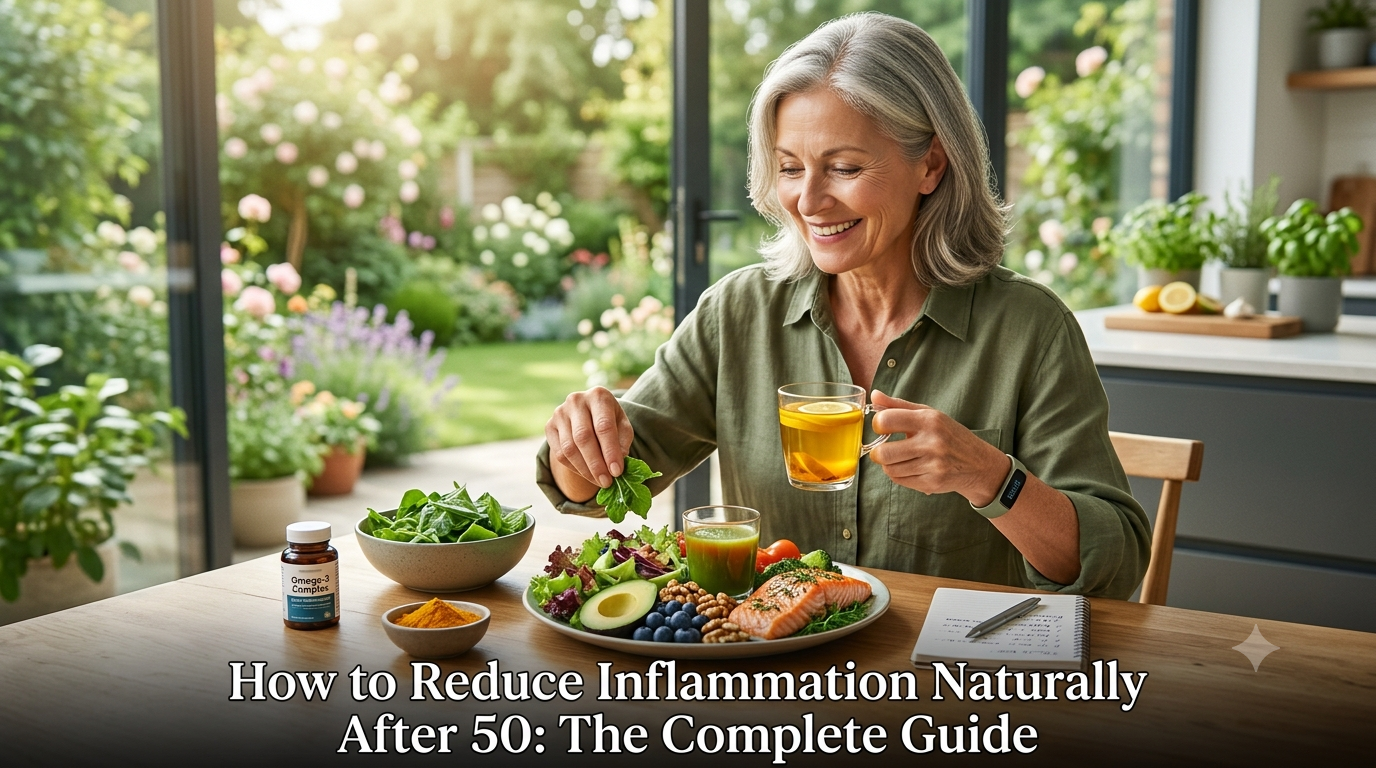
How to Reduce Inflammation Naturally After 50: The Complete Guide

How to Reduce Inflammation Naturally After 50: The Complete Guide

Learn how to reduce inflammation after 50 with real food swaps, exercise tips, sleep fixes, and daily habits that actually work — no fluff, just what helps.


Introduction

Did you know that nearly half of adults over 50 have at least one marker of chronic low-grade inflammation showing up in routine bloodwork, even when they feel “fine”? I didn't know that either until my doctor sat me down a few years back and said the word “inflammation” like it was something I'd personally invited into my body. Which, in a way, I had.

Here's the thing about inflammation after 50 — it's sneaky. It's not the kind of inflammation you get from stubbing your toe, all red and swollen and obvious. It's the quiet kind. The kind that shows up as stiff knees in the morning, a little extra belly fat that won't budge, brain fog that makes you walk into a room and forget why, and joints that ache for no good reason. I've been there. I'm still there, some days, honestly!

The good news is that a lot of what drives inflammation after 50 is stuff you can actually control. Not all of it — genetics play a role, and I'm not going to pretend otherwise — but a surprising amount comes down to daily choices. Food, movement, sleep, stress. Boring stuff. But boring stuff that works, if you actually do it.

I'm going to walk you through what's actually helped me and what I've learned from digging into this topic for years now. This isn't a magic pill situation. It's more like a bunch of small adjustments that add up. Let's get into it.

For those ready to go deeper and find out how to reduce inflammation naturally after 50. The Prime Reset offers comprehensive resources for anyone serious about addressing inflammation at its root.

What Is Chronic Inflammation and Why It Increases After 50

Okay, quick biology lesson, and I promise I'll keep it simple because honestly, I had to look half of this up myself the first time around. Inflammation is your body's natural defense system. When you cut your finger or catch a cold, your immune system sends out inflammatory cells to fix the problem. That's acute inflammation, and it's actually a good thing. It's your body doing its job.

Chronic inflammation is different. It's when that same immune response sticks around long after it should've packed up and left. Instead of healing something and calming down, your body stays in this low-level “alert” mode for months or years. And that constant state of alert wears things down — joints, blood vessels, even your brain.

Here's why this ramps up after 50:

  • Cellular aging (sometimes called “inflammaging”) — as cells get older, they produce more inflammatory signals almost as a byproduct of aging itself
  • Hormonal shifts — declining estrogen in women during menopause and declining testosterone in men both correlate with increased inflammatory markers
  • Slower metabolism — this often leads to weight gain, and fat tissue itself (especially visceral fat around the belly) actively produces inflammatory compounds
  • Accumulated wear and tear — decades of joint use, old injuries, and cumulative sun exposure or environmental stress add up
  • Gut health changes — the diversity of good bacteria in your gut naturally declines with age, and that affects inflammation regulation

I remember when I first heard the term “inflammaging” I actually laughed a little, like, come on, is that a real word? Turns out yes, researchers use it constantly. It's basically the idea that some inflammation is just baked into getting older. But — and this is important — baked in doesn't mean unchangeable. You can absolutely turn the dial down even if you can't turn it off completely.

The tricky part is that chronic inflammation doesn't always come with obvious symptoms right away. Sometimes the only way you'd know is through a blood test checking markers like CRP (C-reactive protein). A lot of people don't find out until it's contributed to something bigger, like heart disease or joint damage. So if you're over 50 and haven't had inflammation markers checked in a while, it's worth asking your doctor about it at your next physical.

I actually asked my doctor for a CRP test after reading about it online, and she seemed a little surprised I knew to ask. Turns out most routine physicals don't automatically check it unless you specifically request it or you've got other risk factors flagged. Mine came back a little elevated, nothing alarming, but enough to be a wake-up call. That single number is honestly what got me to start paying attention to all this stuff in the first place.

It's also worth saying that inflammation isn't some enemy you're supposed to eliminate completely. Your body needs some inflammatory response to heal injuries and fight off infections. The goal isn't zero inflammation, it's getting the chronic, low-grade, background kind under control so it's not quietly working against you day after day. I had to reframe my thinking on that a bit, because at first I was treating inflammation like it was purely bad, full stop, which isn't really accurate.

Anti-Inflammatory Foods to Eat Every Day After 50

Food is honestly where I saw the biggest difference, and it's also the area where I made the most mistakes early on. I went through a phase where I thought “anti-inflammatory diet” meant buying every trendy superfood powder at the health store. Spent way too much money on stuff that just sat in my cabinet. Turns out the actual answer is way more boring and way cheaper.

The Mediterranean-style eating pattern has the most research behind it for reducing inflammation in older adults, and it's not complicated. It's mostly vegetables, fruit, whole grains, fish, olive oil, nuts, and legumes, with less red meat and fewer processed foods.

Foods I try to eat pretty much daily now:

  • Fatty fish like salmon, sardines, and mackerel — the omega-3s in these are genuinely some of the best-studied anti-inflammatory compounds out there
  • Leafy greens like spinach and kale, loaded with antioxidants
  • Berries — blueberries especially, they're small but mighty when it comes to anti-inflammatory compounds
  • Extra virgin olive oil — I switched from vegetable oil to this a few years ago and it's an easy swap
  • Nuts, especially walnuts — a small handful a day, not a whole bag (learned that one the hard way, calories add up fast)
  • Turmeric and ginger — I add these to soups, rice, even scrambled eggs sometimes
  • Legumes like lentils and chickpeas — great fiber, great for gut health too

One thing I wish someone had told me sooner: it's not about one “magic” food. I used to obsess over whether I was eating enough turmeric, like that one spice alone was going to fix everything. It's really about the overall pattern over weeks and months, not any single meal.

I'll be honest, I don't eat perfectly every day. Some weeks are better than others. But the general direction matters more than perfection, and that took me a long time to accept. My doctor actually told me that once — “aim for 80% good, not 100% perfect” — and that stuck with me.

A practical tip: meal prep on Sundays. I chop up a big batch of vegetables and roast them, cook a batch of quinoa or brown rice, and portion out some salmon or chicken. Takes maybe 90 minutes and saves me from grabbing something processed during a busy week. Small thing, but it works.

I also started paying more attention to spices and herbs, which I used to completely ignore. Garlic, cinnamon, and even black pepper all have some research behind them for supporting a healthy inflammatory response. It's not going to move the needle on its own, but when you're already eating a decent diet, these little additions stack up. My grandmother used to load up her cooking with garlic and I always thought it was just a flavor thing. Turns out she might've been onto something without even knowing the science behind it.

Green tea is another one worth mentioning. I swapped my second afternoon coffee for green tea a while back, mostly because I read it's got compounds called catechins that may help with inflammation. Can't say I've noticed some dramatic before-and-after, but it's an easy swap that isn't hurting anything, and I genuinely like the taste now, which surprised me since I used to think green tea tasted like grass clippings.

Foods and Habits That Secretly Fuel Inflammation

Now for the flip side — the stuff that quietly makes inflammation worse. This part stung a little when I first learned about it because, well, some of my favorite foods were on the list.

The biggest offenders:

  • Added sugars — sodas, pastries, most breakfast cereals. Sugar spikes blood glucose and that triggers inflammatory pathways
  • Refined carbs — white bread, white rice, most crackers. These break down into sugar fast
  • Fried foods — the high-heat oils used in frying create compounds linked to inflammation
  • Processed and cured meats — bacon, deli meat, sausage. I still eat these occasionally, just way less than I used to
  • Excess alcohol — even moderate drinking has been linked to increased inflammatory markers in some studies, and it definitely disrupts sleep, which loops back into more inflammation
  • Trans fats — mostly found in some margarines and packaged baked goods, though these are less common now than they used to be

I used to have a bag of chips as my go-to afternoon snack. Every single day. Didn't think much of it. When I finally swapped that habit out for something like a handful of almonds or some cut-up veggies with hummus, it took maybe three weeks before I noticed I wasn't as achy in the mornings. Could be coincidence, could be real, I honestly don't know for sure. But it was enough for me to stick with the swap.

Here's a mistake I made early on: I cut out sugar cold turkey for like four days and felt absolutely miserable, cranky, headachy, the whole thing. Went right back to old habits out of frustration. What actually worked better for me was reducing gradually — one soda a day instead of three, then one every other day, that kind of thing. Slow and steady actually stuck long-term where the all-or-nothing approach didn't.

It's also worth mentioning that alcohol is a tricky one because so many of us over 50 have a glass of wine as part of our evening routine, and I'm not here to tell anyone to quit cold turkey. But being honest with yourself about how much you're actually drinking, and maybe cutting back a night or two a week, can make a real difference over time.

Another sneaky one is snacking late at night, right before bed. I used to do this constantly, usually something salty, and I didn't connect it to inflammation at all until I read that eating close to bedtime can mess with your body's natural nighttime repair processes. Now I try to stop eating a couple hours before I turn in, and honestly my digestion feels better too, which is a nice side bonus.

I'll also mention artificial sweeteners here, because a lot of people switch to “diet” versions of things thinking they're doing themselves a favor. The research on artificial sweeteners and inflammation is honestly still a little mixed and I don't want to overstate it, but some studies suggest they can mess with gut bacteria, and we already talked about how important gut health is for keeping inflammation in check. I don't avoid them completely, but I don't treat diet soda like a free pass either.

Best Low-Impact Exercises to Reduce Inflammation

Movement is huge for this, but I want to be upfront about something: more exercise isn't automatically better when it comes to inflammation. I learned this one the hard way after a period where I was doing intense workouts almost every day, thinking I was being super healthy. Turns out overtraining without enough recovery can actually spike inflammatory markers temporarily. Oops.

The sweet spot for most people over 50 tends to be consistent, moderate movement with adequate recovery time built in.

Exercises that tend to work well:

  • Walking — genuinely underrated. Just 30 minutes a day, most days of the week, has solid research behind it for reducing inflammatory markers
  • Swimming or water aerobics — easy on the joints, great cardiovascular benefit
  • Yoga — helps with flexibility and there's decent evidence it lowers stress hormones too, which ties into inflammation
  • Tai chi — slow, controlled movements, great for balance and it's gentle on aging joints
  • Light strength training — using resistance bands or light dumbbells two to three times a week helps maintain muscle mass, which actually helps regulate inflammation as you age
  • Cycling — stationary or outdoor, low impact on the knees compared to running

I started walking my dog an extra loop around the block every morning, just fifteen extra minutes, and honestly that small change did more for my mood and my joints than any of the fancier workouts I tried. Sometimes the simple stuff really is the stuff that works.

A word of caution though: if you've been mostly sedentary, don't go from zero to sixty overnight. Ease into it. I've seen people (myself included, once) jump straight into an intense program after years of inactivity and end up injured within two weeks, which obviously just creates more inflammation from the injury itself. Start with 10-15 minutes a day and build up gradually over a month or two.

Recovery matters just as much as the workout itself. Stretching after exercise, giving yourself rest days, and not pushing through sharp pain (soreness is fine, sharp pain is not) all help keep exercise working for you instead of against you.

I've also become a big believer in the “movement snack” idea, which is basically just getting up and moving for a couple minutes every hour instead of sitting still all day. Even if you do a great workout in the morning, sitting for eight hours straight afterward isn't doing your joints any favors. I set a timer on my phone now to remind me to stand up, stretch, or walk to the mailbox and back every hour or so during the day. Feels a little silly at first, standing up just because a timer went off, but my knees genuinely thank me for it by evening.

Something else worth mentioning: warming up matters more the older you get. In my thirties I could roll out of bed and go for a run with zero warm-up and feel fine. These days, if I skip a proper warm-up, I definitely feel it in my hips and lower back later. Five to ten minutes of gentle movement, some light stretching, maybe a few bodyweight squats, before getting into the main workout has made a noticeable difference in how my joints feel afterward.

Sleep, Stress, and Cortisol: The Overlooked Inflammation Triggers

This is the section people skip over the most, and it's honestly one of the most important ones. Sleep and stress don't get nearly enough credit for how much they affect inflammation.

When you don't sleep enough, your body produces more inflammatory markers, plain and simple. Research has shown that even a few nights of poor sleep can bump up inflammatory compounds in the blood. And after 50, sleep quality naturally tends to get a little more fragile anyway, thanks to hormonal shifts, more frequent bathroom trips, and sometimes conditions like sleep apnea that become more common with age.

A few things that helped me sleep better:

  • Consistent sleep and wake times, even on weekends (this one was hard for me, I love a lazy Saturday morning)
  • Cutting caffeine after early afternoon — I used to have coffee at 4pm and wonder why I was staring at the ceiling at midnight
  • Dark, cool bedroom — dropped the thermostat a few degrees and it made a noticeable difference
  • Limiting screens before bed — I'm still not great at this one, not going to lie
  • Getting a sleep apnea screening if you snore heavily or wake up gasping — this is a real, common, and treatable issue that a lot of people over 50 don't realize they have

Then there's stress and cortisol. When you're chronically stressed, your body pumps out cortisol, and over time that dysregulates your immune system in ways that actually increase inflammation rather than protect you. It's kind of ironic — stress hormones are supposed to help you in short bursts, but when they're constantly elevated, they backfire.

Retirement, believe it or not, can be a surprising source of stress for a lot of people, even though it sounds like it should be relaxing. Loss of routine, identity shifts, sometimes financial worry. I've talked to friends who went through this and didn't even realize the low mood and achiness they felt after retiring was connected to stress and inflammation.

Simple stress-reduction tools worth trying:

  • Deep breathing exercises — even five minutes of slow, deep breathing can lower cortisol measurably
  • A short daily walk outside — sunlight and movement combined seem to help more than either alone
  • Journaling — sounds a little woo-woo, I know, but writing down what's stressing me out for even ten minutes has genuinely helped me sleep better
  • Staying socially connected — isolation is linked with higher inflammation, so regular contact with friends and family actually matters physiologically, not just emotionally

I used to brush off the idea that loneliness could affect something as physical as inflammation, but the research on this is honestly pretty compelling. There's something about consistent social connection, even just a weekly phone call with an old friend or a standing coffee date, that seems to buffer stress in a way that solo relaxation techniques don't fully replace. I joined a small walking group at my local community center mostly for the exercise, but the social piece turned out to be just as valuable, maybe more.

Pets deserve a mention too. I know that's a little unconventional for a health article, but there's decent evidence that having a dog, in particular, is linked with lower stress markers, probably because it forces you to get outside and move regardless of how you're feeling that day. On the mornings I really don't want to get up, my dog does not care about my excuses, and honestly that accountability has been good for me.

Supplements and Natural Remedies Worth Considering

I want to be careful here because the supplement industry is full of big promises and not always a lot of proof to back them up. That said, there are a handful of supplements with reasonably solid research behind them for supporting a healthy inflammatory response.

  • Omega-3 fish oil — probably the most well-researched option on this list, particularly for joint and cardiovascular health
  • Turmeric/curcumin — some studies show benefit, though curcumin isn't absorbed well on its own, so look for versions with black pepper extract (piperine) added
  • Vitamin D — a lot of adults over 50 are actually deficient without realizing it, and low vitamin D is linked with higher inflammation
  • Magnesium — involved in hundreds of processes in the body, and deficiency is linked to inflammatory markers
  • Probiotics — given the gut-inflammation connection, a good quality probiotic may help some people, though results vary a lot person to person
  • Collagen — commonly used for joint support, evidence is still developing but many people report feeling better joint comfort

Here's my honest take: supplements can help fill gaps, but they're not a replacement for the food and lifestyle stuff we already talked about. I tried going all-in on supplements for a while, taking like eight different pills every morning, and it got expensive fast without a clear sense of what was actually helping. Eventually I scaled back to just a fish oil and a vitamin D, based on what my bloodwork actually showed I was low in.

That's probably the biggest tip I can give here — get bloodwork done first if you can, so you know what you're actually deficient in, rather than guessing and buying everything on the shelf. And always check with your doctor before starting anything new, especially if you're on other medications, since some supplements can interact with blood thinners or other prescriptions.

One more thing I've learned the hard way: quality varies a lot between supplement brands, and the supplement industry isn't regulated nearly as tightly as prescription medication. Look for third-party testing seals on the label, things like USP or NSF certification, which at least confirm the product contains what it says it contains. I bought a cheap fish oil years ago that made me feel a little queasy every time I took it, and later found out it likely wasn't stored or processed properly. Paying a bit more for a reputable brand made a real difference.

It's also worth setting realistic expectations on timelines. Supplements aren't like ibuprofen, where you feel a difference in an hour. Most of the research on things like omega-3s and curcumin shows benefits building up over weeks or months of consistent use. I gave up on fish oil after about ten days the first time around because I didn't feel any different, which in hindsight was just way too short a trial period to know anything.

Building a Daily Anti-Inflammatory Routine That Sticks

All this information is only useful if it turns into actual habits, and that's honestly the hardest part. I've started and abandoned more “health routines” than I'd like to admit. What finally worked for me was keeping it stupid simple.

Here's roughly what a day looks like for me now:

  • Morning: Glass of water first thing, then a walk with the dog before breakfast. Breakfast usually includes berries and some kind of protein.
  • Midday: Lunch with vegetables and a lean protein, a short walk after eating if I can swing it.
  • Afternoon: A handful of nuts instead of chips, water instead of soda.
  • Evening: Dinner with fish or legumes a few times a week, screens off an hour before bed, consistent bedtime.
  • Weekly: Two to three strength sessions, one or two yoga or stretching sessions, meal prep on Sunday.

None of this is glamorous. There's no big transformation story here, just small repeated choices. Some weeks I do great, some weeks I don't, and that's honestly fine. Progress isn't a straight line, and beating yourself up over an off day just adds more stress, which, ironically, adds more inflammation. Kind of a funny loop when you think about it.

The habits that made the biggest difference for me, if I had to rank them, were probably sleep consistency and cutting back on added sugar. Those two alone changed how my joints felt in the morning more than anything else on this list. But everyone's different, and it might take some trial and error to figure out what moves the needle for you specifically.

One thing that helped me stick with this longer term was tracking, even informally. I kept a simple notebook for a couple months, just jotting down how my joints felt each morning on a scale of 1 to 5, along with a rough note on sleep and what I ate the day before. Patterns showed up faster than I expected. Turns out for me, poor sleep the night before was a much bigger predictor of a bad joint day than anything I ate. That was actually surprising, and it shifted where I put most of my energy going forward, toward protecting my sleep first and worrying about diet perfection second.

I'd also say, don't try to change everything on this list all at once. I made that mistake early on, trying to overhaul my diet, start a new workout routine, fix my sleep, and cut back on alcohol all in the same week. Burned out on all of it within ten days. Picking one or two changes, giving them a few weeks to become automatic, and then adding the next one, worked so much better for me than the all-at-once approach. Slower, sure, but it actually stuck, and sticking with it is really the whole game here.

For those ready to go deeper and find out how to reduce inflammation naturally after 50. The Prime Reset offers comprehensive resources for anyone serious about addressing inflammation at its root.

Conclusion

Reducing inflammation after 50 isn't about chasing one miracle food or supplement. It's really about a handful of daily habits working together over time: eating more whole foods and less processed junk, moving your body in ways that feel good rather than punishing, protecting your sleep, and managing stress in whatever way actually works for you.

I'd encourage you to take what applies to your life and skip what doesn't. Not every tip here will fit your situation, and that's completely normal. And if you have existing health conditions or you're on medication, please talk to your doctor before making big changes to your diet or starting new supplements, just to be safe.

For those ready to go deeper and find out how to reduce inflammation naturally after 50. The Prime Reset offers comprehensive resources for anyone serious about addressing inflammation at its root.

I'd love to hear what's worked for you. Drop a comment below and share your own experience with reducing inflammation after 50 — sometimes the best tips come from people who've actually lived through it, not just read about it.

We recommend to read this next!

Continue ReadingHow to Reduce Inflammation Naturally After 50: The Complete Guide

Berberine vs. Metformin for Metabolic Inflammation Which Should You Choose After 50

Berberine vs. Metformin for Metabolic Inflammation: Which Should You Choose After 50?

Berberine and metformin are both used for metabolic inflammation after 50 — but they work differently, have different side effect profiles, and suit different situations. Here's the honest, evidence-based comparison you need.

Introduction

Here's a statistic that frames the central question of this article. Approximately 88% of American adults over 50 are metabolically unhealthy by at least one measurable criterion — elevated fasting glucose, insulin resistance, visceral fat accumulation, dyslipidemia, or elevated blood pressure. Eighty-eight percent. And each of these metabolic abnormalities drives chronic systemic inflammation through the mechanisms we've explored throughout this series — NF-κB activation, NLRP3 inflammasome stimulation, visceral fat cytokine production, and the progressive insulin signaling dysfunction that turns metabolic syndrome into a systemic inflammatory condition.

Two compounds — one pharmaceutical, one natural — have emerged as the most discussed interventions for this metabolic inflammation crisis after 50. Metformin, the most widely prescribed diabetes medication in the world, has been used for decades to manage blood glucose and is now being investigated as an anti-aging drug in its own right through the landmark TAME (Targeting Aging with Metformin) trial. Berberine, a plant alkaloid found in several traditional medicinal herbs, has generated extraordinary scientific interest over the past decade for its remarkably similar mechanisms to metformin — leading to widespread labeling as “nature's metformin” — alongside additional benefits for lipid profiles and gut microbiome composition that metformin doesn't share.

The comparison between these two compounds is one of the most frequently asked questions I receive from adults over 50 who have identified metabolic inflammation as a primary driver of their inflammatory health picture. And it's a comparison that deserves a genuinely honest, evidence-based answer rather than either reflexive dismissal of the natural option or uncritical enthusiasm that ignores metformin's legitimate advantages in specific contexts. Both compounds have real evidence behind them. Both have real limitations. And choosing between them — or deciding whether to use both under appropriate supervision — depends on your specific metabolic status, your medication situation, and your goals.

This article is that honest comparison. We're going to cover both compounds mechanistically, examine the head-to-head clinical evidence, and give you the clearest framework I can for making an informed decision in consultation with your healthcare provider. Let's start with the metabolic inflammation problem they're both trying to solve.


Understanding Metabolic Inflammation — Why This Is the Battle Worth Fighting After 50

Metabolic inflammation — the chronic systemic inflammatory state driven by metabolic dysfunction — is one of the most consequential and most reversible inflammatory processes affecting adults over 50. We covered it in depth in article three of this series, but a targeted recap establishes the context for understanding why both berberine and metformin matter as interventions.

The connection between metabolic dysfunction and inflammation operates through five primary mechanisms that converge on the same pro-inflammatory outcome through different biological routes. First, insulin resistance drives chronic NF-κB activation — because the impaired insulin signaling pathway that defines insulin resistance removes one of insulin's normal anti-inflammatory effects while simultaneously activating inflammatory kinase cascades as a compensatory response. Second, hyperinsulinemia — the chronically elevated insulin that compensates for insulin resistance — directly promotes visceral fat accumulation, removing adiponectin's anti-inflammatory protection and flooding the circulation with pro-inflammatory adipokines. Third, post-meal glucose spikes drive glycation and oxidative stress — the AGE (advanced glycation end product) formation that activates RAGE receptors on immune cells and triggers inflammatory signaling. Fourth, elevated triglycerides from impaired fat metabolism promote endothelial inflammation and small, dense, oxidation-prone LDL particles that drive arterial inflammatory plaque. Fifth, gut dysbiosis — which is both a cause and consequence of insulin resistance — generates the LPS endotoxemia that drives systemic low-grade inflammation through TLR4 receptor activation.

After 50, all five of these mechanisms accelerate simultaneously due to the hormonal, mitochondrial, and microbiome changes we've documented throughout this series. Declining sex hormones remove metabolic protective effects. Declining mitochondrial function reduces cellular energy efficiency, promoting insulin resistance. Microbiome diversity loss removes the gut-derived insulin sensitizing effects of SCFA production. And decades of cumulative dietary, lifestyle, and inflammatory exposure compound into a metabolic inflammatory trajectory that most conventional medicine approaches address reactively and symptomatically rather than preventively and mechanistically.

The consequences of unaddressed metabolic inflammation after 50 are the full range of major chronic diseases — cardiovascular disease driven by endothelial inflammation and dyslipidemia, Alzheimer's disease through the insulin resistance-neuroinflammation pathway now sometimes called type 3 diabetes, osteoarthritis through the adipokine-mediated joint inflammation we examined in our joint health articles, and cancer through the chronic NF-κB activation and immune surveillance suppression that metabolic inflammation produces. Addressing metabolic inflammation is not a peripheral health optimization goal. It is arguably the single most impactful systemic intervention available to a person over 50 concerned about long-term health outcomes.


Metformin — What It Does, What the Research Shows, and Its Limitations

Metformin has been in clinical use since the 1950s and is the most widely prescribed glucose-lowering medication in the world — prescribed to hundreds of millions of people annually. Its longevity in clinical use has generated an evidence base that few medications can match, and its mechanisms extend well beyond simple glucose control in ways that make it increasingly relevant to the anti-aging and anti-inflammation community.

Metformin's primary mechanism of action is inhibition of complex I of the mitochondrial electron transport chain in hepatic cells — producing a mild energetic stress that activates AMPK, the metabolic master switch we've discussed throughout this series. Through AMPK activation, metformin suppresses hepatic glucose production (the primary pharmacological mechanism exploited for diabetes management), improves peripheral insulin sensitivity, and activates a range of downstream anti-inflammatory and anti-aging pathways including autophagy induction, mTOR inhibition, and NF-κB suppression. The AMPK activation mechanism explains why metformin shares significant mechanistic overlap with caloric restriction and fasting — it essentially mimics some of the cellular signaling of an energy-deficient state without requiring actual caloric reduction.

The anti-inflammatory effects of metformin beyond glucose control are increasingly well-documented. Multiple studies have shown that metformin reduces CRP, IL-6, and TNF-α independently of its effects on blood glucose — suggesting that AMPK-mediated anti-inflammatory signaling contributes to its benefits beyond the secondary reduction in glucose-driven inflammation. Research has also documented metformin's effects on NF-κB directly — reducing its transcriptional activity through AMPK-mediated phosphorylation of upstream IKK kinases — producing anti-inflammatory gene expression changes in inflammatory tissues including adipose and vascular endothelium.

The TAME (Targeting Aging with Metformin) trial represents the most significant current investigation of metformin as an anti-aging intervention rather than purely a diabetes drug. This landmark study — funded by the American Federation for Aging Research and involving over 3,000 participants aged 65-79 without diabetes — is examining whether metformin can delay the onset of age-related diseases including cardiovascular disease, cancer, cognitive decline, and death in non-diabetic older adults. The mechanistic rationale is compelling — metformin's AMPK-mTOR-autophagy effects address several hallmarks of biological aging directly. Results from the full trial are eagerly anticipated by the longevity research community, though preliminary data from pilot studies have been encouraging.

Metformin's side effects and limitations deserve honest discussion because they influence who is most and least suited for its use. Gastrointestinal side effects — nausea, diarrhea, abdominal discomfort — affect a significant minority of users, particularly during initiation and dose escalation. Extended-release formulations substantially reduce GI side effects compared to immediate-release and are the preferred form for most adults. The most clinically significant nutritional depletion associated with metformin is vitamin B12 — metformin impairs B12 absorption from the ileum through calcium-dependent mechanisms, and chronic metformin use without B12 monitoring and supplementation can produce B12 deficiency with neurological consequences. CoQ10 depletion is also associated with metformin use, though through less direct mechanisms than statin-induced depletion. Lactic acidosis — the most serious metformin adverse effect — is rare but requires medical screening, particularly for people with renal impairment. Metformin requires physician prescription and monitoring, which is appropriate given these considerations.


Berberine — The Natural AMPK Activator With Remarkable Research

Berberine is a plant alkaloid — bright yellow in color, with a distinctive bitter taste — found in several traditionally medicinal plants including barberry (Berberis vulgaris), goldenseal (Hydrastis canadensis), Oregon grape (Berberis aquifolium), and Chinese goldthread (Coptis chinensis). It has been used in traditional Chinese and Ayurvedic medicine for centuries, primarily for infections and digestive disorders, but its modern research application has focused almost entirely on metabolic health — driven by the discovery that berberine activates AMPK through a mechanism remarkably similar to metformin.

Berberine's AMPK activation mechanism is slightly different from metformin's at the molecular level — berberine inhibits mitochondrial complex I as metformin does, but also activates AMPK through additional upstream pathways including SIRT1 activation and direct AMP kinase phosphorylation — producing AMPK activation that may be somewhat more robust and through more diverse signaling routes than metformin alone achieves. The downstream consequences of berberine's AMPK activation are effectively identical to metformin's for metabolic inflammation: suppression of hepatic glucose production, improved peripheral insulin sensitivity, NF-κB inhibition, mTOR suppression, and autophagy induction.

The head-to-head research comparing berberine to metformin is what elevated berberine from an interesting natural compound to a serious therapeutic candidate. The landmark 2008 meta-analysis published in the Journal of Clinical Endocrinology and Metabolism examined multiple randomized controlled trials comparing berberine to metformin in patients with type 2 diabetes and found that berberine produced comparable reductions in fasting blood glucose and HbA1c to metformin — with a statistically equivalent efficacy profile and a comparable tolerability profile. Subsequent research has replicated these findings across multiple study populations, consistently showing berberine achieves blood glucose improvements in the range of 20% fasting glucose reduction and 0.5-1.5% HbA1c reduction in pre-diabetic and early diabetic populations — comparable to metformin's typical clinical effect size.

Where berberine demonstrates documented advantages over metformin is in lipid metabolism and gut microbiome effects. Berberine produces significant improvements in the full lipid panel — reducing total cholesterol, LDL, and most impressively triglycerides (by 20-30% in multiple studies) — through PCSK9 inhibition, LDL receptor upregulation, and inhibition of hepatic lipid synthesis pathways that metformin doesn't directly address with the same potency. For adults over 50 with the dyslipidemia component of metabolic syndrome, berberine's lipid effects represent a meaningful clinical advantage. The gut microbiome effects diverge interestingly: metformin has been shown to alter gut microbiome composition in ways that some research suggests may reduce short-chain fatty acid producing bacteria — a concern for the gut-inflammation connection central to this series. Berberine, by contrast, has been shown to increase beneficial Bifidobacterium and Lactobacillus species and reduce pathogenic gram-negative bacteria — producing gut microbiome changes that support rather than counteract the gut-based anti-inflammatory strategies we've built throughout this series.

Bioavailability is berberine's primary pharmacological limitation and the most important quality consideration in product selection. Standard berberine has poor oral bioavailability — estimated at less than 5% in some studies — due to rapid metabolism in the gut wall and first-pass hepatic clearance. This limitation is partly addressed by the high doses used therapeutically (typically 1,500mg daily in divided doses) and by the fact that some berberine metabolites retain biological activity. Dihydroberberine — a reduced form of berberine produced by gut bacteria from standard berberine — has approximately five times the oral bioavailability of standard berberine and produces equivalent or superior metabolic effects at substantially lower doses. Several manufacturers now produce dihydroberberine supplements directly, allowing lower-dose, higher-bioavailability berberine supplementation that may produce fewer GI side effects alongside improved efficacy.


Direct Comparison — Berberine vs. Metformin Across Key Metabolic Inflammation Markers

Moving from mechanism to clinical outcomes, the head-to-head comparison across the specific markers most relevant to metabolic inflammation after 50 reveals a nuanced picture where neither compound dominates universally.

For blood glucose and HbA1c reduction — the primary metabolic markers — the clinical evidence is genuinely comparable. Multiple head-to-head trials have found no statistically significant difference between berberine and metformin for fasting blood glucose and HbA1c reduction in pre-diabetic and early type 2 diabetic populations. Both compounds produce clinically meaningful glucose reductions through AMPK-mediated hepatic glucose production suppression and peripheral insulin sensitization. For people with significantly elevated glucose requiring pharmacological management, this equivalence is clinically meaningful — it means berberine represents a legitimate alternative to metformin for metabolic glucose management, not merely a supplement that produces modest supporting effects.

For triglycerides and lipid panel improvement, berberine has a documented and consistent advantage. Metformin produces modest triglyceride reductions and minimal changes in LDL or HDL. Berberine produces substantial triglyceride reductions (20-30% in multiple trials), meaningful LDL reduction through PCSK9 inhibition and LDL receptor upregulation, and modest HDL improvement. For adults over 50 with the dyslipidemia component of metabolic syndrome — high triglycerides, low HDL, elevated small dense LDL — berberine's lipid effects represent a clinically meaningful advantage over metformin that addresses an inflammation-driving metabolic abnormality that metformin largely doesn't touch.

For CRP and systemic inflammatory markers, the direct comparison evidence is less extensive but generally suggests comparable anti-inflammatory effects through their shared AMPK-NF-κB suppression mechanism, with berberine's additional gut microbiome benefits potentially providing superior long-term systemic anti-inflammatory outcomes through the gut-inflammation axis. Studies measuring CRP alongside metabolic markers have shown berberine producing significant CRP reductions comparable to those documented with metformin in equivalent metabolic populations.

For visceral fat reduction — arguably the most important single metabolic inflammation target for adults over 50 — both compounds produce meaningful reduction through insulin sensitization and the consequent reduction in insulin-driven visceral fat accumulation. Berberine's additional triglyceride-lowering effects and gut microbiome improvements provide complementary mechanisms for visceral fat reduction that may give it a modest advantage in this domain, though direct imaging-confirmed head-to-head comparisons are limited.

The gut microbiome comparison is where the compounds diverge most clearly and most consequentially for the comprehensive anti-inflammaging protocol we've built across this series. Research has found that metformin consistently alters gut microbiome composition — it significantly increases Akkermansia muciniphila (a positive effect consistent with its metabolic benefits) but also alters Bifidobacterium and short-chain fatty acid producing bacteria in ways that some researchers view with concern for overall gut microbiome health. Berberine produces microbiome changes that are consistently viewed more favorably in the gut-inflammation context — increasing Bifidobacterium species, reducing pathogenic gram-negative Proteobacteria, and supporting the SCFA-producing bacterial populations that maintain gut barrier integrity. For anyone who has invested significantly in the gut health strategies from our earlier articles, berberine's gut microbiome effects are more complementary to that investment than metformin's.

The side effect comparison reveals meaningful differences in tolerability and safety profile. Both compounds share gastrointestinal side effects as the most common adverse effects — nausea, diarrhea, and abdominal discomfort — though metformin's GI effects are generally more severe and more commonly treatment-limiting. Metformin's B12 depletion is a significant long-term concern requiring monitoring and supplementation. Berberine's most clinically important safety consideration is drug interaction through cytochrome P450 enzyme inhibition — it inhibits CYP3A4 and CYP2C9, which metabolize multiple common medications. Metformin's lactic acidosis risk, while rare, requires renal function screening that berberine does not. Both require physician discussion when used alongside blood glucose lowering medications due to hypoglycemia risk.


Who Should Choose Berberine, Who Should Choose Metformin, and Who Might Use Both

The clinical picture that emerges from the evidence suggests specific situations where each compound is most appropriate — and some situations where both might be used under appropriate medical supervision.

The case for berberine is strongest in several common over-50 scenarios. Pre-diabetic adults with metabolic syndrome components who want to address metabolic inflammation through a natural intervention before pharmacological management becomes necessary — berberine at 1,500mg daily in divided doses with meals is the most evidence-backed natural intervention available for this situation. Adults over 50 with significant dyslipidemia alongside insulin resistance — where berberine's triglyceride and LDL benefits are clinically meaningful in ways metformin's don't match. People who have prioritized gut microbiome restoration as a central anti-inflammaging strategy — where berberine's microbiome effects complement rather than potentially counteract that investment. And adults who prefer to exhaust evidence-backed natural interventions before pursuing pharmaceutical options — a legitimate preference that berberine supports with a genuine evidence base rather than wishful thinking.

The case for metformin is clearest for people with established type 2 diabetes being managed under physician care — where metformin remains the first-line pharmaceutical recommendation with decades of safety data and outcome evidence. People specifically interested in metformin's longevity applications through the TAME trial rationale — particularly those aged 65-79 without diabetes who want the specific AMPK-mTOR-autophagy anti-aging profile metformin has been studied for in that context. And people whose physicians have recommended metformin based on their specific metabolic picture and risk profile — where the prescription exists for good clinical reasons that should not be casually overridden by supplement enthusiasm.

The combination approach — berberine and metformin used simultaneously — has been studied in clinical trials and shows additive glycemic benefits. However, the combination significantly increases hypoglycemia risk in people whose baseline glucose is already well-controlled, and the drug interaction concerns with berberine become more clinically significant when combined with prescription medications. This combination should only be pursued under active physician supervision with regular glucose monitoring — not as a self-directed supplement stack.

Drug interactions make the choice clear in several specific situations. People on warfarin or other anticoagulants should approach berberine with caution due to its CYP2C9 inhibition affecting warfarin metabolism — requiring either avoidance or very careful INR monitoring under physician supervision. People on immunosuppressants metabolized by CYP3A4 face significant interaction risk with berberine. For these individuals, metformin may be the more appropriate intervention if their physician confirms suitability.

For those ready to tackle metabolic inflammation as part of a comprehensive anti-inflammaging lifestyle, The Prime Reset provides a structured, expert-guided program that integrates dietary strategies, exercise protocols, targeted supplementation including berberine, and lifestyle optimization specifically designed for adults over 50. The metabolic inflammation battle is winnable — and having a comprehensive protocol rather than isolated supplement choices makes the difference.


Choosing the Best Berberine Supplement — Quality, Form, and Dosing

For those choosing berberine — either as a standalone intervention or as part of a broader metabolic inflammation protocol — the quality and form considerations that separate therapeutic products from ineffective ones follow the same principles we've applied throughout this review series.

Dihydroberberine versus standard berberine is the most important formulation decision — paralleling the ubiquinol versus ubiquinone decision in CoQ10. Dihydroberberine's five-fold superior bioavailability means that 100-200mg of dihydroberberine daily can achieve plasma concentrations comparable to 1,000-1,500mg of standard berberine — with the additional advantages of lower dose burden, fewer GI side effects (since less unabsorbed berberine reaches the large intestine where it causes much of the GI distress), and potentially more consistent plasma levels. Products containing dihydroberberine — sometimes labeled as GlucoVantage, a branded dihydroberberine ingredient — represent the current bioavailability frontier for berberine supplementation. The trade-off is cost — dihydroberberine products are more expensive per serving than standard berberine — but for people who have experienced GI issues with standard berberine or want maximum efficacy at minimum dose burden, dihydroberberine is worth the additional investment.

Standard berberine — used at the 1,500mg daily dose validated in clinical trials — remains a legitimate and well-researched option when purchased from quality manufacturers. The optimal dosing protocol is 500mg three times daily with meals — distributing the dose across mealtimes both reduces GI side effects by avoiding high single-dose GI concentrations and maintains more consistent plasma berberine levels throughout the day than twice-daily dosing. For dihydroberberine, 100-200mg twice daily with meals is the typical protocol used in published research, reflecting its superior bioavailability.

Cycling is a meaningful consideration for berberine that distinguishes it from supplements where continuous daily use is straightforwardly optimal. Some practitioners recommend an eight-weeks-on, two-weeks-off cycling protocol for berberine — the rationale being that continuous AMPK activation may blunt the adaptive responses that make AMPK activity beneficial. The research on cycling versus continuous use is not definitive, but the cycling protocol has biological plausibility and is commonly used in functional medicine contexts. At minimum, periodic breaks from berberine allow assessment of whether continued supplementation is producing ongoing benefit — which is valuable feedback for any supplement protocol.

Quality markers for berberine supplements include standardization — the percentage of berberine hydrochloride or berberine base as a percentage of the extract, which should be clearly specified on the label. Third-party testing for identity, potency, and contaminant testing is critical for berberine specifically because the raw material is imported from Asia where quality controls in supply chains vary considerably. Certified analysis documents showing berberine content verification alongside heavy metal and pesticide testing are the gold standard. Avoid proprietary blend products that don't disclose berberine content within the blend, and be skeptical of very low-priced berberine products that don't provide quality documentation.

Within the complete anti-inflammatory supplement stack built across this series, berberine slots most naturally between the foundational supplements (CoQ10, omega-3s, magnesium, vitamin D3/K2) and the advanced interventions (NAD+ precursors, senolytics). It pairs particularly well with magnesium — which complements berberine's insulin sensitization through its role as a cofactor in insulin receptor signaling — and with omega-3 fatty acids that address the lipid inflammation berberine's triglyceride-lowering effect complements structurally. The combination of berberine, magnesium, and omega-3s represents a cost-effective and evidence-backed foundation for metabolic inflammation management that addresses glucose metabolism, lipid inflammation, and cellular energy production simultaneously.


Conclusion

The berberine versus metformin comparison, when viewed honestly through the clinical evidence, doesn't produce a clean winner — it produces a nuanced clinical picture where the right choice depends on your specific metabolic status, medication situation, health goals, and preferences. Metformin has a deeper pharmaceutical evidence base, specific clinical indications where it's the standard of care, and the exciting longevity research of the TAME trial behind it. Berberine has comparable efficacy evidence for metabolic glucose control, meaningful advantages for lipid inflammation and gut microbiome effects, and a safety profile appropriate for self-directed supplementation in pre-diabetic and metabolic syndrome populations without the prescription requirement and monitoring burden of metformin.

For most adults over 50 with metabolic inflammation markers but without established type 2 diabetes requiring pharmacological management, berberine — particularly in the dihydroberberine form for maximum bioavailability — is the starting point that allows meaningful metabolic inflammation reduction through a natural intervention with a genuine evidence base, complementary gut microbiome effects, and appropriate self-management safety. For those with established diabetes under physician care, metformin remains the appropriate foundation, potentially with berberine added under medical supervision for additional lipid and gut microbiome benefits.

What both compounds share — and what matters most regardless of which you choose — is that neither works optimally in isolation. The metabolic inflammation they address is driven by lifestyle factors that no single supplement can fully overcome: dietary quality, physical activity, sleep, stress management, gut health, and the comprehensive anti-inflammaging protocol we've built across this entire series. Berberine or metformin deployed on a foundation of genuine lifestyle change amplifies its benefits dramatically. Either compound deployed as a replacement for lifestyle change produces modest and ultimately disappointing results. For a comprehensive, structured program that integrates berberine with the complete anti-inflammaging lifestyle protocol designed specifically for adults over 50, The Prime Reset provides the expert guidance and practical framework that makes sustained metabolic inflammation reversal achievable.

Please discuss both berberine and metformin with your healthcare provider before starting — particularly if you're on any medications, have renal impairment, or have diagnosed metabolic conditions requiring medical management. This is not a decision to make in isolation from professional medical guidance.

We recommend to read this next!

Continue ReadingBerberine vs. Metformin for Metabolic Inflammation Which Should You Choose After 50

Best Probiotics for Inflammation After 50 Top Strains, Brands, and What to Avoid

Best Probiotics for Inflammation After 50: Top Strains, Brands, and What to Avoid

Generic probiotics rarely move the needle on inflammation after 50. Discover the specific strains with the strongest clinical evidence for reducing inflammatory markers — and the quality markers that separate effective products from expensive placebos.

Introduction

The global probiotic supplement market is worth over $60 billion and growing rapidly — driven largely by genuinely compelling science about the gut-inflammation connection and an equally genuine gap between what the research shows and what most commercial probiotic products actually deliver. People over 50 are among the most motivated probiotic buyers — and among the most consistently disappointed with the results. The reason for that disappointment is almost always the same: generic probiotic selection based on CFU count and marketing claims rather than the strain-specific clinical evidence that actually predicts anti-inflammatory outcomes.

Here's the truth that the probiotic industry doesn't lead with. The vast majority of the clinical research showing meaningful reductions in inflammatory markers — CRP, IL-6, TNF-α, intestinal permeability markers — was conducted using specific, identified bacterial strains at specific doses in specific populations. Lactobacillus rhamnosus GG is not the same as Lactobacillus rhamnosus from a different producer. Bifidobacterium longum BB536 is not interchangeable with any other Bifidobacterium longum. The strain designation — the specific identifier after the species name — indicates the exact bacterial culture with its mapped genome, documented metabolic capabilities, and peer-reviewed evidence base. When you buy a product containing “Bifidobacterium longum” without specifying the strain, you're buying an unknown quantity that may or may not share the properties of the researched strain.

I spent the better part of three years taking probiotics that made no meaningful difference to my inflammatory markers or my gut symptoms — because I was choosing based on CFU count, species names that sounded impressive, and attractive packaging. When I finally dug into the strain-specific literature and rebuilt my probiotic protocol around the clinical evidence, the difference in digestive comfort, energy, and eventually in measured CRP and zonulin levels was significant enough to make me genuinely frustrated that nobody had explained this distinction clearly years earlier.

This review is the guide I wish I'd had. We're going to cover the specific strains with the strongest human clinical evidence for reducing inflammation after 50, the quality markers that distinguish genuinely therapeutic products from expensive placebos, practical category-based recommendations, and how to build a complete probiotic protocol that integrates with everything else we've built across this series. Let's start with why probiotic selection for inflammation is fundamentally different after 50.


Why Probiotic Selection for Inflammation Is Different After 50

The gut microbiome changes that occur after 50 — detailed extensively in our gut-inflammation article and our dedicated probiotics article — create a specific pattern of microbial deficit that demands a targeted rather than generic probiotic approach. Understanding these specific deficits helps you understand why certain strains are prioritized in this review and others, despite impressive marketing, aren't.

The most critical age-related microbiome deficit is the dramatic decline in Bifidobacterium species — a collapse that research has documented as approximately 1,000-fold between healthy young adults and adults over 65. Bifidobacterium species are the cornerstone of anti-inflammatory gut microbiome function: they produce short-chain fatty acids that fuel colonocyte repair and suppress NF-κB inflammatory signaling, they stimulate regulatory T-cell development in gut-associated lymphoid tissue, they produce bacteriocins that displace pathogenic LPS-producing gram-negative bacteria, and they maintain tight junction integrity through metabolic byproducts that upregulate occludin and claudin expression. No other bacterial genus performs this combination of anti-inflammatory functions, and no other genus declines as dramatically with age. Replenishing Bifidobacterium — specifically with clinically validated strains rather than generic species — is the single most important probiotic priority for over-50 inflammation management.

Immunosenescence — the aging of the immune system — changes what probiotics need to accomplish in ways that are rarely discussed in probiotic marketing. Young immune systems are primarily challenged by pathogens and require immune activation support. Aging immune systems have the opposite problem: they're chronically over-activated in a non-specific, inflammatory direction (inflammaging) while simultaneously losing adaptive precision and regulatory capacity. The probiotics most valuable after 50 are therefore not those that stimulate general immune activity — which could worsen inflammaging — but those that specifically promote regulatory immune function, IL-10 production, and suppression of the pro-inflammatory cytokine cascade that characterizes immunosenescence. This distinction eliminates several popular probiotic strains that are well-researched for acute immune support in younger populations but are less specifically relevant — and potentially counterproductive — for the inflammaging context.

The CFU count obsession — the tendency of both marketers and buyers to treat higher CFU numbers as the primary quality indicator — is perhaps the most widespread and consequential misconception in probiotic supplementation. CFU count tells you how many viable bacteria are theoretically present in a serving, but it tells you nothing about whether those bacteria are the strains that have evidence for your specific health goal, whether they survive gastric acid to reach the large intestine, whether they can colonize your specific gut environment, or whether their biological activity matches what you need. A product with 100 billion CFU of irrelevant strains in poor delivery formats will consistently underperform a product with 10 billion CFU of the right strains in an appropriate delivery system. Strain identity and clinical evidence are the primary selection criteria. CFU count is secondary.


The Strains With the Strongest Inflammation Evidence — A Research-Based Breakdown

These are the specific strains with the most robust human clinical evidence for anti-inflammatory effects relevant to the over-50 population. Each is identified by its full three-part designation — genus, species, strain — because that specificity is what connects the supplement to the research.

Lactobacillus rhamnosus GG (LGG) is the most extensively studied probiotic strain in the world with over 1,000 published clinical studies. For inflammation specifically, LGG has demonstrated consistent ability to strengthen tight junction protein expression — particularly occludin and ZO-1 — reducing intestinal permeability and the LPS translocation that drives systemic inflammaging. Multiple human trials have documented LGG's ability to reduce gut permeability markers including zonulin and LPS antibodies, with downstream reductions in CRP and other inflammatory markers in populations with elevated baseline inflammatory status. LGG also strongly promotes IL-10 production and regulatory T-cell development — directly addressing the regulatory immune deficit of immunosenescence. Its documented displacement of pathogenic gram-negative bacteria from gut epithelial attachment sites provides additional LPS-reduction benefit. For adults over 50 whose inflammatory picture is primarily driven by leaky gut-mediated endotoxemia, LGG should be in every foundational probiotic protocol.

Bifidobacterium longum BB536 addresses the most critical age-related microbial deficit — Bifidobacterium decline — with a specific strain that has documented human clinical evidence for inflammatory marker reduction. Multiple randomized controlled trials using BB536 have shown statistically significant reductions in CRP and IL-6 compared to placebo in adults with metabolic syndrome, elevated inflammatory markers, and gut dysbiosis. BB536's anti-inflammatory mechanisms include SCFA production that inhibits NF-κB in gut epithelial cells, specific stimulation of regulatory T-cell populations in gut-associated lymphoid tissue through Toll-like receptor 2 signaling, and production of specific cell wall components that directly suppress macrophage inflammatory cytokine production. For the dramatically Bifidobacterium-depleted gut of most adults over 50, BB536 represents the most specifically researched Bifidobacterium longum option available.

Bifidobacterium infantis 35624 — also known by the commercial name Bifantis and sold in the Align probiotic — has particularly impressive evidence for direct suppression of the cytokine triad most relevant to inflammaging. Multiple published human clinical trials, including studies in populations with irritable bowel syndrome and inflammatory bowel conditions, have documented significant reductions in circulating IL-6, TNF-α, and CRP with B. infantis 35624 supplementation. Its mechanism involves unusually potent stimulation of regulatory T-cell development through specific interactions with plasmacytoid dendritic cells in Peyer's patches — essentially training the immune system's most important regulatory axis to suppress inflammatory overactivation. For adults over 50 with elevated systemic cytokine levels and the immune dysregulation of immunosenescence, B. infantis 35624 is one of the most specifically targeted anti-inflammatory probiotic strains available.

Lactobacillus plantarum 299v is the strain with the strongest specific evidence for tight junction repair and LPS reduction — the gut barrier mechanisms most directly relevant to endotoxemia-driven systemic inflammation. Multiple human trials have shown that L. plantarum 299v measurably reduces intestinal permeability markers, lowers circulating LPS levels, and reduces downstream inflammatory marker elevation from gut-derived endotoxemia. Its mechanisms include direct upregulation of tight junction protein synthesis, competitive exclusion of pathogenic gram-negative bacteria from epithelial binding sites, production of specific bacteriocins that suppress LPS-producing species, and stimulation of mucus layer production that provides the physical barrier separating gut contents from the epithelial surface. For adults over 50 with confirmed leaky gut through testing (as described in article 13), L. plantarum 299v is the most specifically indicated strain for gut barrier repair.

Lactobacillus reuteri ATCC PTA 6475 — the specific strain used in the most clinically significant anti-inflammatory research on L. reuteri — has documented human clinical evidence for TNF-α suppression through a mechanism distinct from most other probiotic strains. Research has shown that L. reuteri ATCC PTA 6475 elevates mucosal prostaglandin E2 in ways that suppress TNF-α production from macrophages — producing direct systemic anti-inflammatory effects measurable in circulating cytokine levels. Additional research has documented this strain's specific effects on bone health through its ability to reduce the bone-resorbing effects of inflammatory TNF-α — particularly relevant for post-menopausal women experiencing simultaneous inflammatory and bone density challenges. The dose used in significant clinical research is relatively low — 100 million CFU daily — confirming that strain identity rather than dose magnitude drives L. reuteri's anti-inflammatory efficacy.

Akkermansia muciniphila represents a genuinely novel category in the probiotic space — an indigenous gut bacterium that cannot be cultured using standard probiotic production methods but that has become available as a pasteurized (heat-killed) supplemental strain following breakthrough research demonstrating that pasteurized Akkermansia retains significant metabolic and anti-inflammatory activity. Akkermansia lives in and feeds on the gut mucus layer, maintaining its thickness and integrity — providing the physical barrier separating luminal bacteria from the epithelial surface. Low Akkermansia abundance is consistently associated with metabolic syndrome, obesity, and elevated inflammatory markers. Research has shown that pasteurized Akkermansia muciniphila supplementation safely increases gut Akkermansia abundance and improves metabolic inflammatory markers in humans, making it one of the most innovative and exciting entries in the over-50 probiotic landscape.


Quality Markers That Separate Therapeutic Probiotics From Marketing Fiction

Even when you know which strains you need, navigating the probiotic market requires understanding the quality markers that distinguish products that actually deliver those strains in therapeutic form from products that merely print compelling strain names on a label without the quality behind them.

Full three-part strain designation on the label is the first and most important quality marker — and the one that immediately disqualifies a significant proportion of the probiotic market. A product that lists “Lactobacillus rhamnosus” without specifying the strain (GG, in this case) is selling an unidentified bacteria using a species name associated with research that was conducted on a completely different, specifically identified strain. The research benefit does not transfer. The full designation — genus, species, strain code — must be present on the label for you to connect the product to the published clinical evidence. This single criterion eliminates a large majority of mass-market probiotic products immediately.

CFU count guaranteed at expiration rather than at manufacture is the second critical quality marker that most probiotic buyers completely overlook. Probiotic bacteria die over time — the rate depending on strain, manufacturing quality, packaging, and storage conditions. A product with 50 billion CFU at manufacture that loses 80% of its viable bacteria over the shelf life delivers only 10 billion CFU by the time you consume it — potentially below the threshold dose shown to be effective in clinical research for that strain. Products that guarantee CFU count at the product's expiration date — rather than at manufacture — have built their formulation to account for die-off during storage and are providing meaningful viable bacteria counts throughout the product's shelf life. This guarantee should be explicitly stated on the label.

Gastric survival is the third dimension of probiotic quality that determines whether the bacteria on the label actually reach the large intestine where they need to exert their effects. Standard Lactobacillus and Bifidobacterium strains are acid-sensitive to varying degrees, and a meaningful proportion can be killed by gastric acid and bile during transit through the stomach and small intestine. Several strategies address this: enteric coating creates an acid-resistant shell around the probiotic capsule that dissolves only at the higher pH of the small intestine, protecting bacteria through the gastric environment. Spore-forming strains — particularly Bacillus coagulans and Bacillus subtilis — form protective endospores that survive stomach acid with near-perfect efficiency, germinating in the large intestine. Microencapsulation of bacterial cells in protective matrices provides intermediate protection for acid-sensitive strains. When evaluating a probiotic for its specific anti-inflammatory strains, consider whether the delivery technology is appropriate for those strains' acid sensitivity — and err toward enteric coating or spore-forming strains when the specific anti-inflammatory strain you need has documented acid sensitivity.

Third-party testing for probiotic products verifies two distinct things: that the stated strains are actually present in the product at the stated CFU counts, and that the product is free from contamination with pathogenic organisms or harmful substances. Both are relevant but distinct quality concerns. Potency verification matters because research has found that a significant percentage of commercial probiotics contain fewer viable bacteria than stated — sometimes dramatically fewer. Contamination testing matters because probiotic manufacturing involves growing large quantities of bacteria and ensuring that only the intended strains are present requires rigorous quality control. NSF International, USP, and Labdoor provide probiotic-specific testing and certification that addresses both quality dimensions.

Storage requirements reflect genuine biological characteristics of the specific strains — and mismatched storage is one of the most common causes of probiotic ineffectiveness. Lactobacillus and Bifidobacterium strains are temperature-sensitive and in most cases require refrigeration throughout their shelf life to maintain viable bacterial counts. Spore-forming Bacillus strains are inherently shelf-stable because spores are resistant to temperature variation. Products that claim refrigeration-sensitive strains are shelf-stable without sophisticated encapsulation technology should be viewed skeptically — the biology of acid-sensitive mesophilic bacteria doesn't change based on marketing claims.

Proprietary blends and underdosed strains are the probiotic equivalent of the supplement red flags we've identified throughout this review series. A proprietary blend lists all strains with a combined CFU count but doesn't specify how many CFU of each individual strain are present. This allows manufacturers to include tiny, therapeutically irrelevant amounts of impressive-sounding strains while meeting the total CFU count with cheap, generic, high-yield strains. Without knowing the per-strain CFU breakdown, you cannot assess whether any specific strain is present at the clinical trial dose shown to produce the anti-inflammatory effects you're targeting.


Top Probiotic Categories for Inflammation After 50

Category 1: Best Single-Strain Probiotic for Gut Barrier and Immune Modulation
For people beginning their targeted probiotic protocol or wanting to assess individual strain effects clearly, a single-strain product containing Lactobacillus rhamnosus GG at 10-50 billion CFU with enteric coating is the most evidence-backed starting point. The product should specify LGG by strain designation, guarantee CFU at expiration, use enteric coating for gastric protection, require refrigeration (consistent with LGG's temperature sensitivity), and carry third-party testing verification. Several established pharmaceutical-grade probiotic producers sell LGG-based products under both branded and generic labels — look for the Culturelle brand, which uses LGG and is among the most quality-verified LGG products commercially available.

Category 2: Best Multi-Strain Probiotic for Comprehensive Inflammatory Coverage
A well-designed multi-strain product targeting inflammation after 50 should contain at minimum LGG or L. plantarum 299v for gut barrier support, Bifidobacterium longum BB536 or B. infantis 35624 for cytokine modulation, and specify every strain by full three-part designation with individual CFU counts rather than in a proprietary blend. Each strain should be present at or near the CFU count used in the supporting clinical research — which means a high-quality multi-strain anti-inflammatory probiotic will typically have fewer strains at higher individual doses rather than ten to twenty strains at negligible doses each. Seeking products from manufacturers with published research on their specific formulations — rather than general strain literature — provides the strongest quality confidence.

Category 3: Best Probiotic Specifically for Metabolic Inflammation
For adults over 50 whose inflammatory picture includes significant metabolic syndrome components — insulin resistance, visceral fat, elevated triglycerides, and the downstream inflammatory markers these produce — Akkermansia muciniphila supplementation provides the most specifically targeted gut intervention for metabolic inflammation. Products in this category should use the pasteurized Akkermansia muciniphila MucT strain — the specific strain used in published human research showing safety and efficacy — specify pasteurized (not live) Akkermansia, provide third-party testing, and ideally be paired with a prebiotic substrate that specifically feeds Akkermansia — particularly pectin from apple or citrus sources that research has shown preferentially supports Akkermansia growth in the gut ecosystem.

Category 4: Best Spore-Forming Probiotic for Guaranteed Gastric Survival
For people who have tried standard Lactobacillus and Bifidobacterium probiotics without meaningful effect on their inflammatory markers — suggesting gastric survival may be a limiting factor — spore-forming Bacillus coagulans MTCC 5856 or Bacillus subtilis DE111 provide documented anti-inflammatory activity in human trials alongside near-perfect gastric survival due to their endospore structure. Products in this category should specify the full strain designation, are appropriately shelf-stable without refrigeration (reflecting their spore-forming nature), and should carry third-party testing for potency and contamination. B. coagulans MTCC 5856 has the strongest anti-inflammatory human trial evidence among spore-forming probiotics, with documented reductions in CRP and improvements in gut symptoms in randomized controlled trials.

Category 5: Best Akkermansia Muciniphila for Gut Lining and Metabolic Health
Standalone pasteurized Akkermansia muciniphila products have become increasingly available following the breakthrough clinical research at the University of Louvain demonstrating that pasteurized Akkermansia safely increases gut Akkermansia abundance and improves metabolic inflammatory markers in humans. Pendulum Therapeutics produces a clinically studied Akkermansia product that has the most specific research backing among commercially available options. Evaluation criteria for this category include confirmation of the MucT strain designation, pasteurization methodology that preserves the bioactive outer membrane proteins responsible for Akkermansia's biological effects, third-party testing, and clear dosing information aligned with the clinical research protocol.


Building Your Complete Probiotic Protocol for Inflammation After 50

Understanding which strains and products matter is valuable — but building a practical, progressive, well-integrated protocol that produces lasting anti-inflammatory gut microbiome change requires understanding how to implement this knowledge intelligently over time.

The three-phase protocol framework from our dedicated probiotics article provides the most practical implementation structure. Phase one — the foundational phase over four to six weeks — establishes LGG and B. longum BB536 as the anti-inflammatory backbone, introduces PHGG prebiotic support at 5-10 grams daily, and adds two to three daily servings of diverse fermented foods. This phase allows gut adaptation to increased beneficial bacterial populations and prebiotic substrate before adding additional interventions. Phase two — the therapeutic phase from weeks six to sixteen — adds the specific targeted strains most relevant to your individual inflammatory picture: L. plantarum 299v if leaky gut testing confirmed gut barrier compromise, B. infantis 35624 if systemic cytokine elevation is the primary concern, L. reuteri ATCC PTA 6475 if TNF-α elevation or bone health is a priority, and Akkermansia muciniphila if metabolic inflammation markers (visceral fat, insulin resistance, triglycerides) are predominant. Phase three — the maintenance phase — transitions to a rotation strategy cycling through different strain combinations monthly to maintain the diversity stimulus that produces ongoing microbiome improvement.

Stacking probiotics with prebiotics transforms supplemental probiotics into the synbiotic interventions that outperform either component alone in the clinical research. Specific prebiotic pairing with the strains above follows the substrate preferences of each strain: Bifidobacterium strains thrive on inulin-type fructans and resistant starch — taking your Bifidobacterium probiotic alongside a meal containing oats, legumes, or PHGG provides the preferred substrate. Akkermansia is specifically supported by pectin — consuming your Akkermansia supplement alongside an apple or adding pectin powder to water provides targeted substrate. L. plantarum strains are supported by arabinoxylan from whole grain sources alongside their typical prebiotic substrates.

The integration of targeted probiotic strains with the fermented food protocol from article 15 creates a layered approach that addresses microbiome diversity from multiple angles simultaneously. Fermented foods provide hundreds of species in complex living communities that drive diversity gains beyond what any supplement stack can achieve. Targeted probiotic strains provide specific, clinically validated bacterial activity at therapeutic doses for the specific anti-inflammatory mechanisms that general fermented food consumption doesn't guarantee. These approaches are complementary and genuinely additive — the optimal protocol uses both rather than treating them as alternatives.

Within the broader anti-inflammaging protocol built across this series, probiotic interventions synergize most directly with Zone 2 cardio — which directly increases Faecalibacterium prausnitzii and Roseburia intestinalis through its gut motility and blood flow effects, amplifying the butyrate production that probiotics support through prebiotic substrate provision. Collagen supplementation addresses the gut-joint axis from the structural side that probiotics address from the microbial side — combining both creates a comprehensive gut healing protocol that reduces both the microbial imbalance and the structural barrier compromise that together drive gut-mediated systemic inflammation.

Tracking probiotic effectiveness requires the same objective biomarker approach we've applied throughout this series. hsCRP measured quarterly tracks the systemic inflammatory improvement that successful gut microbiome restoration produces over months. Stool zonulin — tested at baseline and after twelve weeks of consistent probiotic and prebiotic protocol — confirms whether gut barrier repair is occurring. Comprehensive microbiome testing at baseline and six months reveals the actual compositional changes in your microbiome — showing whether the supplemented strains are detectable and whether broader ecosystem changes in diversity and SCFA-producing bacterial abundance are occurring. And HRV tracked daily through your wearable provides real-time sensitivity to the autonomic inflammatory changes that successful gut healing produces, often showing measurable improvement before conventional inflammatory biomarkers shift significantly.

If you're ready to take everything in this series and put it together into a structured, expert-guided protocol specifically built for adults over 50 who are serious about reversing inflammaging through gut health, targeted supplementation, and lifestyle optimization, The Prime Reset provides the comprehensive framework that makes consistent, effective implementation achievable. Strain-specific probiotic selection is the foundation — building the complete system around that foundation is what produces lasting results.


Conclusion

The single most important takeaway from this review is straightforward. Strain specificity is everything in probiotic supplementation for inflammation after 50 — and the vast majority of the probiotic market is selling you species names backed by strain-specific research that applies to a completely different bacterial culture than what's in the bottle. This isn't a minor technicality. It's the primary reason most people's probiotic experiences are disappointing despite genuine biological potential.

The strains with the strongest human clinical evidence for reducing the inflammatory markers most relevant to inflammaging after 50 are clear and consistent across the research: LGG for gut barrier and immune modulation, B. longum BB536 and B. infantis 35624 for cytokine reduction, L. plantarum 299v for tight junction repair and LPS reduction, L. reuteri ATCC PTA 6475 for TNF-α suppression, and Akkermansia muciniphila for metabolic inflammation and gut lining protection. These strains — identified by their full three-part designations, present at therapeutic CFU counts guaranteed at expiration, in appropriate delivery formats for gastric survival — are the foundation of an evidence-based anti-inflammatory probiotic protocol.

Build your protocol in phases. Start with the foundational strains. Add prebiotic support from the first day. Layer in targeted therapeutic strains based on your specific inflammatory picture. Support with diverse daily fermented foods. Track your results objectively with CRP, zonulin, and microbiome testing. And rotate strains quarterly to maintain the diversity stimulus that sustains ongoing microbiome improvement. Probiotics are not a quick fix — they are a long-term microbiome restoration strategy that, done correctly, produces lasting reductions in gut-driven inflammaging that compound in benefit over months and years of consistent practice.

We recommend to read this next!

Continue ReadingBest Probiotics for Inflammation After 50 Top Strains, Brands, and What to Avoid

Best Collagen Supplements for Joint Pain and Inflammation After 50 Our Top Picks

Best Collagen Supplements for Joint Pain and Inflammation After 50: Our Top Picks

Joint pain and inflammation after 50 respond powerfully to the right collagen supplement — but form, type, and dose matter enormously. Discover our top picks for joint pain relief, cartilage repair, and systemic inflammation reduction.

Introduction

Here's the joint inflammation reality that nobody prepares you for before you turn 50. Osteoarthritis — the most common joint condition in adults over 50 — affects an estimated 32.5 million Americans, and the primary underlying driver isn't simply mechanical wear and tear. It's the progressive loss of the collagen-rich cartilage framework that cushions, lubricates, and protects joints — combined with the chronic low-grade inflammation that accelerates that cartilage loss while simultaneously preventing the repair processes that could slow or reverse it. By the time most people notice joint symptoms, they've typically lost a significant portion of the collagen infrastructure that would have prevented those symptoms from developing.

What's changed dramatically in the last decade is our understanding of what collagen supplementation can actually do about this process — and the answer, based on an increasingly robust clinical research base, is considerably more than the beauty industry's skin-focused marketing might suggest. Hydrolyzed collagen peptides signal fibroblast repair in joint tissue, reduce inflammatory cytokine production in the synovial membrane, support gut barrier integrity in ways that reduce systemic joint inflammation, and provide the specific amino acids — particularly glycine, proline, and hydroxyproline — that are the structural building blocks of everything your joints are made of. This isn't beauty supplementation. It's targeted structural and anti-inflammatory medicine.

I've spent considerable time navigating the collagen supplement market — which is crowded, confusing, and populated by products ranging from genuinely effective to spectacularly overpriced protein powder. The decisions that matter most — type of collagen, form, dose, co-factors, and quality markers — are rarely explained clearly, and most buyers are making choices based on packaging and marketing rather than the clinical research that actually predicts efficacy. This review is designed to fix that. We're going to cover the science, the buying criteria, the product categories that matter for joint pain and inflammation specifically after 50, and how to build a complete joint inflammation protocol around your collagen foundation.

For those ready to address joint inflammation as part of a comprehensive anti-inflammaging protocol — not just as an isolated supplement choice — The Prime Reset offers a structured program that integrates collagen, targeted supplementation, exercise protocols, and dietary strategies specifically designed for adults over 50.Let's start with the science.


The Science Recap — Why Collagen Supplementation Works for Joint Inflammation

We covered the collagen-joint-inflammation connection in depth in article seven of this series, but a focused recap establishes the scientific credibility that makes this review meaningful rather than just another supplement endorsement.

The collagen decline timeline after 50 is more dramatic than most people realize. Collagen production declines at approximately 1% per year from the mid-twenties — meaning by 50, you've already lost roughly 25% of your peak collagen synthesis capacity. After 50, hormonal shifts dramatically accelerate this decline — declining estrogen in women during menopause directly suppresses fibroblast activity and collagen synthesis in ways that compound the age-related decline, while declining testosterone in men produces similar effects in tendons and ligaments. The joint consequences of this collagen deficit accumulate gradually — cartilage thinning, reduced synovial fluid viscosity, tendon fragility, ligament laxity — and then seem to arrive suddenly when the structural compromise reaches the threshold where the joint can no longer compensate.

The mechanism by which hydrolyzed collagen peptides address this isn't simply providing raw amino acid material — it's more sophisticated and more interesting than that. The specific dipeptides and tripeptides produced by hydrolysis of collagen — particularly hydroxyproline-proline (Hyp-Pro) and hydroxyproline-glycine (Hyp-Gly) sequences — survive digestion as intact bioactive peptides, appear in the bloodstream after oral consumption, and act as biological signals that bind to fibroblast receptors and directly stimulate collagen, hyaluronic acid, and extracellular matrix production. Research using radiolabeled collagen peptides has confirmed that these peptides accumulate preferentially in cartilage and joint tissue — supporting the joint-specific benefit claim with direct tissue distribution evidence.

The gut-joint axis — the indirect but profoundly important anti-inflammatory mechanism of collagen — deserves specific mention in a joint inflammation review because it explains benefits that go beyond structural joint repair. As established in our gut health articles, intestinal permeability allows LPS and other inflammatory triggers to enter systemic circulation and reach joint tissue, contributing significantly to synovial inflammation and cartilage-damaging cytokine production. Collagen peptides — particularly types I and III — directly support gut epithelial barrier integrity by providing structural proteins that form the gut lining's connective tissue scaffold. By healing the gut lining, collagen reduces the systemic inflammatory burden reaching joints — addressing a root cause of joint inflammation that purely joint-focused interventions completely miss.

Glycine's direct anti-inflammatory effects are an underappreciated but mechanistically significant contribution to collagen's joint benefits. Glycine — comprising approximately one-third of collagen's amino acid content and delivering roughly 3-5 grams per therapeutic serving — directly suppresses macrophage inflammatory activation through glycine-gated chloride channel hyperpolarization, inhibits NF-κB in immune cells, and reduces inflammatory cytokine production including TNF-α and IL-1β in joint tissue. This means that collagen supplementation is simultaneously providing structural repair material, gut barrier support, and direct anti-inflammatory activity through its glycine content.

The vitamin C requirement is mechanistically non-negotiable for anyone taking collagen for joint health. Two critical enzymatic steps in collagen synthesis — the hydroxylation of proline to hydroxyproline and the hydroxylation of lysine to hydroxylysine — require vitamin C as an enzyme cofactor. Without adequate vitamin C, fibroblasts produce structurally inferior collagen that breaks down more rapidly and provides less joint protection. Taking 200-500mg of vitamin C simultaneously with your collagen supplement ensures these hydroxylation steps proceed efficiently and that the collagen your fibroblasts produce has the structural integrity your joints require.


The Most Important Buying Decision — Type and Form of Collagen

The collagen supplement market offers an overwhelming array of options that differ in ways most buyers don't understand — and those differences matter enormously for joint inflammation outcomes specifically.

Type I collagen — the most abundant collagen in tendons, ligaments, bone, and the gut lining — is the primary collagen in bovine and marine collagen supplements. For people dealing with tendon issues, ligament problems, or bone density concerns alongside joint inflammation, type I collagen from bovine or marine sources is the appropriate primary choice. It's also the most relevant type for gut-joint axis benefits, given its predominance in the gut lining's connective tissue scaffold.

Type II collagen — comprising 90-95% of articular cartilage — is the most specifically relevant type for osteoarthritis and cartilage-targeted joint inflammation. There are two fundamentally different supplementation strategies for type II collagen that work through completely different mechanisms and should not be confused. Hydrolyzed type II collagen — produced from chicken cartilage and processed into bioactive peptides — works through the fibroblast stimulation mechanism, providing cartilage-specific structural signals at doses of 10-20 grams daily. Undenatured type II collagen (UC-II) — native, non-denatured type II collagen from chicken sternum — works through oral tolerance at very low doses (40mg daily), training the immune system to cease attacking type II collagen in joint cartilage. These two approaches are distinct and complementary — not interchangeable.

Marine collagen — sourced from fish skin and scales — is primarily type I and is frequently cited for superior bioavailability due to smaller average peptide size compared to bovine collagen. Research suggests that marine collagen peptides may achieve slightly higher plasma concentrations than bovine at equivalent doses, potentially providing marginally better distribution to joint tissue. Marine collagen is the preferred choice for people avoiding bovine products for dietary, religious, or BSE-concern reasons. The quality considerations specific to marine collagen include the importance of heavy metal testing — oceanic contamination can concentrate mercury, lead, and cadmium in fish-derived products — making third-party testing particularly critical for marine collagen.

Therapeutic dose requirements are where the majority of collagen buyers make their most significant mistake. The clinical studies showing meaningful joint inflammation and pain benefits have consistently used doses of 10-40 grams of hydrolyzed collagen daily — doses that are substantially higher than the 5-10 gram servings in most commercial products. A study published in Osteoarthritis and Cartilage used 10 grams of hydrolyzed collagen daily. The Shaw et al. trial showing improved joint comfort in athletes used 15 grams. For therapeutic joint inflammation benefit, 15-20 grams of hydrolyzed collagen daily is the evidence-aligned target. Products that provide 5 grams per serving and suggest this is therapeutically sufficient for joint health are significantly underdosing relative to what the research actually shows works.

Multi-collagen products — combining types I, II, III, V, and X from multiple animal sources — are a popular marketing format that deserves honest assessment. For general connective tissue support where multiple tissue types are the target, a well-formulated multi-collagen can provide useful coverage. For targeted joint inflammation specifically, a multi-collagen product that delivers comprehensive coverage of multiple types but at doses below the therapeutic threshold for any individual type is less effective than a single-type product at therapeutic dose. The research on joint inflammation has been conducted on specific single-type collagen sources at defined doses — multi-collagen products that spread the dose across multiple types haven't been studied in the same clinical contexts.


Quality Markers That Separate Effective Collagen From Expensive Protein Powder

The gap between a genuinely effective collagen supplement and an expensive, mislabeled protein powder can be enormous — and the difference isn't always obvious from packaging or price.

Third-party testing for collagen is critical for two distinct reasons: potency verification and contamination testing. Potency verification confirms that the product actually contains the collagen — specifically collagen-derived peptides with the hydroxyproline content that distinguishes collagen from generic protein — at the dose stated on the label. Studies examining the supplement market have found products containing significantly less collagen than claimed. For marine collagen specifically, heavy metal testing is the second critical safety function — verifying that mercury, lead, cadmium, and arsenic levels are within safe limits given oceanic contamination concerns. NSF International, USP, and Informed Sport are the most meaningful third-party certification organizations for collagen quality verification.

Branded collagen ingredients provide the clearest available signal of quality and research backing for collagen supplements. Peptan — produced by Rousselot — is the most extensively clinically researched hydrolyzed collagen ingredient in the world, with multiple published human trials specifically examining joint health outcomes. Naticol is a marine collagen peptide ingredient with its own clinical research base and strong quality controls. Verisol is a bovine collagen peptide branded ingredient specifically developed and researched for skin and connective tissue applications. UC-II from InterHealth (now Lonza) is the specific undenatured type II collagen ingredient used in the most significant clinical trials of UC-II for joint health. When any of these branded ingredients appear on a label, you have confidence that the clinical research conducted on that specific ingredient applies to what you're purchasing.

Hydroxyproline content is perhaps the most technically meaningful quality marker for collagen — and one that almost no supplement label prominently displays despite its importance. Hydroxyproline is an amino acid almost exclusively found in collagen — it's what the hydroxylation enzymes create from proline during collagen synthesis and is the defining molecular characteristic of collagen peptides versus generic protein. A high-quality hydrolyzed collagen product should contain approximately 12-14% hydroxyproline content by weight. Products with very low hydroxyproline content despite high stated collagen content may be using generic gelatin or low-quality collagen hydrolysate that lacks the specific bioactive peptide sequences responsible for joint health benefits. Some premium products display amino acid profiles on their labels from which hydroxyproline percentage can be calculated.

Unnecessary additives, artificial sweeteners, and fillers are red flags that appear with particular frequency in flavored collagen products marketed primarily to the beauty sector that are now also making joint health claims. Artificial sweeteners including sucralose and acesulfame potassium have documented negative effects on gut microbiome composition — counteracting the gut-joint axis healing effects that make collagen valuable for joint inflammation. High sugar content in sweetened powder products produces the post-meal glucose spikes that drive inflammatory glycation of collagen — the exact opposite of what joint collagen supplementation aims to achieve. Single-ingredient or simply formulated collagen products — collagen peptides, minimal natural flavoring if needed, and vitamin C as a co-factor — are the cleanest and most therapeutically focused options.


Top Collagen Supplement Categories for Joint Pain and Inflammation After 50

Category 1: Best Overall Hydrolyzed Collagen for Joint Inflammation
The foundation choice for most adults over 50 with joint inflammation concerns is a bovine hydrolyzed collagen peptide product using a clinically researched branded ingredient — ideally Peptan — at a serving that allows 15-20 grams daily intake. The product should be unflavored or minimally flavored without artificial sweeteners, dissolve easily in hot or cold liquid, specify the collagen source and type clearly, and carry third-party testing verification. Bovine hide-sourced collagen peptides provide primarily type I and III collagen in a clean, cost-effective format that allows dosing to the therapeutic threshold without excessive cost. This is the collagen type most directly relevant to gut-joint axis healing alongside structural joint support.

Category 2: Best UC-II Collagen for Osteoarthritis and Cartilage-Specific Inflammation
For people with diagnosed osteoarthritis or significant cartilage-specific joint inflammation where the autoimmune component of cartilage destruction is a significant factor, UC-II from the InterHealth/Lonza source at 40mg daily is the specifically appropriate choice. The mechanism — oral tolerance training that reduces immune attack on type II cartilage collagen — is completely distinct from hydrolyzed collagen and works at a dramatically lower dose. Products in this category should specify UC-II branded ingredient, provide exactly 40mg per serving (not more — the oral tolerance mechanism is dose-specific), and be tested by third parties. UC-II is most evidence-backed when taken on an empty stomach in the morning, unlike hydrolyzed collagen which benefits from pre-exercise timing. These two forms can be used simultaneously for complementary mechanisms.

Category 3: Best Marine Collagen for Bioavailability and Joint Health
Marine collagen products should specify fish source (skin and scales preferred over fish bones for peptide profile), use the Naticol branded ingredient where possible, provide certificates of analysis confirming heavy metal testing results, and deliver type I collagen peptides at doses allowing 15-20 gram daily intake. Marine collagen powder products often dissolve more completely in cold liquid than bovine collagen — making them a practical choice for people who prefer cold smoothies or beverages. The bioavailability advantage of marine collagen's smaller average peptide size makes it particularly suitable for people with digestive challenges that might limit absorption of larger bovine collagen peptides.

Category 4: Best Collagen With Vitamin C and Joint Support Co-Factors
Several well-formulated products combine hydrolyzed collagen peptides with vitamin C and additional joint-supporting co-factors in a single serving — providing genuine one-product convenience without compromising on ingredient quality or dose. The best products in this category provide at minimum 10-15 grams of collagen peptides per serving, 200-500mg of vitamin C from ascorbic acid or buffered vitamin C, and optionally hyaluronic acid (100-200mg) for synovial fluid support, boron (3-6mg) for collagen synthesis enhancement, and zinc (10-15mg) for MMP-regulatory activity. Evaluate these combination products by checking that each ingredient is provided at a functional dose rather than a token amount included for label appeal — many combination products underdose every component.

Category 5: Best Collagen and Bone Broth Combination for Comprehensive Joint Support
Genuine bone broth — produced from grass-fed bovine bones simmered for 12-24 hours — contains collagen peptides alongside glycosaminoglycans, minerals, and additional joint-supportive compounds not present in purified collagen peptides. Some products combine hydrolyzed collagen with bone broth powder to capture both the standardized peptide content of processed collagen and the broader nutritional profile of traditional bone broth. The best products in this category use actual slow-simmered bone broth powder rather than flavoring or bone broth extract at token amounts, alongside standardized collagen peptides at therapeutic doses. They represent the most comprehensive whole-food-aligned approach to collagen supplementation for joint support.


Building Your Complete Joint Inflammation Protocol Around Collagen

Collagen is most powerful as the structural foundation of a comprehensive joint inflammation protocol — synergizing with exercise, complementary supplements, and advanced biohacking tools to address joint inflammation from multiple angles simultaneously.

The timing of collagen consumption relative to exercise is one of the most evidence-backed and most consistently overlooked aspects of collagen supplementation for joint health. Research by Shaw and colleagues specifically demonstrated that consuming hydrolyzed collagen 30-60 minutes before exercise that loads the target joint tissue produces superior collagen accumulation in that tissue compared to other timing windows — because the combination of elevated collagen peptide blood levels and mechanical loading of the joint tissue during exercise appears to direct the peptides preferentially toward the loaded connective tissue. For knee joint inflammation, consume collagen before lower body resistance training or walking. For shoulder or elbow concerns, consume before upper body work. The timing window matters more than most people realize.

Omega-3 fatty acids and collagen together address joint inflammation from both inflammatory and structural angles in a genuinely complementary way. Omega-3 EPA and DHA reduce the production of the pro-inflammatory cytokines — IL-1β, TNF-α — that drive matrix metalloproteinase enzyme production and collagen degradation in joint tissue. By suppressing the inflammatory environment that destroys collagen, omega-3s protect the structural investment your collagen supplementation is making — extending the half-life of newly synthesized collagen in joint tissue. Taking both together with a fat-containing meal maximizes the absorption of both fat-soluble compounds while creating a joint-protective environment that addresses both the inflammatory and structural components of joint deterioration.

Curcumin in a bioavailable form — BCM-95 or Meriva specifically — targets joint inflammation through direct NF-κB suppression and MMP inhibition that are mechanistically distinct from and additive to collagen's fibroblast stimulation and glycine-mediated anti-inflammatory effects. Research has shown that curcumin specifically inhibits MMP-1, MMP-3, and MMP-13 — the matrix metalloproteinases most responsible for type II collagen degradation in osteoarthritic cartilage. Combining curcumin with collagen supplementation therefore simultaneously promotes collagen synthesis through collagen peptide signaling while suppressing the enzymatic degradation of that new collagen through curcumin's MMP inhibition. This is one of the most evidence-grounded supplement combinations available for osteoarthritis and joint inflammation management.

The gut-joint healing stack — collagen peptides, zinc carnosine, L-glutamine, and a targeted probiotic — represents the most comprehensive approach to addressing the gut-joint axis that contributes so significantly to joint inflammation in adults with compromised gut barrier function. As established across our gut health articles and our dedicated collagen article, leaky gut allows LPS and undigested food proteins to enter systemic circulation and reach joint tissue where they contribute to synovial inflammation. Collagen peptides support gut lining repair through structural amino acid provision. Zinc carnosine at 75-150mg daily provides targeted mucosal healing. L-glutamine at 5-10 grams provides enterocyte fuel for epithelial repair. And Lactobacillus plantarum 299v specifically reduces intestinal permeability and LPS translocation. Together, this stack addresses the gut-joint axis comprehensively — and the joint inflammation improvements from healing the gut are often among the most surprisingly significant that people implementing this protocol experience.

Red light therapy applied directly to inflamed joints provides a scientifically grounded complement to oral collagen supplementation. Near-infrared wavelengths at 800-850nm penetrate to joint depth and directly stimulate fibroblast activity and collagen synthesis through photobiomodulation of cytochrome c oxidase — the same enzyme that responds to mitochondrial red light stimulation discussed in our mitochondria article. Applied to the joint for 10-15 minutes daily, quality red light therapy panels provide a local collagen synthesis stimulus that works through a completely different mechanism than oral collagen supplementation — making them genuinely additive rather than redundant interventions.

Tracking joint inflammation progress objectively helps maintain motivation through the months-long collagen protocol that clinical evidence shows is required for full benefit. Joint-specific pain scoring on a 0-10 scale tracked weekly shows the gradual improvement trend that often isn't noticed day-to-day but becomes clearly visible on a four-to-eight-week timeline. Range of motion assessments for affected joints tracked monthly — with a simple goniometer or even a smartphone angle measurement app — provide functional evidence of joint tissue improvement. hsCRP tracked quarterly provides the systemic inflammatory marker evidence that confirms the gut-joint axis and glycine-mediated anti-inflammatory effects are reducing whole-body inflammatory burden. And if the investment is available, a repeat imaging study at twelve months provides the most definitive structural evidence of cartilage preservation or improvement from a comprehensive collagen protocol.


Conclusion

Collagen supplementation for joint pain and inflammation after 50 is one of the most clinically supported and mechanistically well-understood interventions in the entire anti-inflammaging toolkit. The research is clear: hydrolyzed collagen peptides at therapeutic doses — 15-20 grams daily — signal fibroblast repair in joint tissue, provide direct anti-inflammatory activity through glycine content, support gut barrier healing that reduces systemic joint inflammation through the gut-joint axis, and produce measurable improvements in joint pain, mobility, and inflammatory markers over consistent twelve-week protocols. UC-II collagen at 40mg daily adds the complementary mechanism of oral tolerance for osteoarthritis-specific cartilage immune protection.

The buying decisions that determine whether you experience these benefits or not are straightforward when you know what to look for. Choose the right type for your specific joint concern. Dose to the therapeutic threshold the research actually supports. Co-administer vitamin C without exception. Look for branded clinically researched ingredients. Verify third-party testing. Avoid artificial sweeteners and unnecessary additives. And give the protocol twelve consistent weeks before assessing outcomes — collagen's structural and anti-inflammatory benefits are real and meaningful, but they accumulate gradually over weeks and months rather than appearing acutely.

Joint pain and inflammation after 50 are not inevitable permanent features of your health landscape. They are biological processes — driven by specific, identifiable mechanisms including collagen loss, inflammatory cytokine activity, and gut barrier compromise — that respond to specific, targeted, evidence-backed intervention. Collagen is one of the most important tools in that intervention toolkit. For a complete protocol that integrates collagen with the full anti-inflammaging strategy built across this series — including Zone 2 exercise, gut healing, targeted supplementation, and dietary optimization — The Prime Reset provides the structured, expert-guided framework that makes comprehensive implementation achievable for adults over 50 who are serious about reclaiming their joint health and overall vitality.

We recommend to read this next!

Continue ReadingBest Collagen Supplements for Joint Pain and Inflammation After 50 Our Top Picks

Best CoQ10 Supplements for Over 50s Ranked and Reviewed for Mitochondrial and Heart Health

Best CoQ10 Supplements for Over 50s: Ranked and Reviewed for Mitochondrial and Heart Health

CoQ10 is non-negotiable after 50 — but form, dose, and quality vary enormously between products. Discover the best CoQ10 supplements for mitochondrial health, inflammation reduction, and heart protection, ranked and reviewed.

Introduction

Here's a number that should genuinely alarm anyone over 50 who isn't currently taking CoQ10. Research has shown that CoQ10 production in the human body peaks in the mid-twenties and declines by approximately 50% by the time you reach 70. That's a catastrophic reduction in one of the most critical molecules in your mitochondrial energy production system — and the consequences show up everywhere: declining energy, worsening exercise recovery, rising inflammatory markers, and a cardiovascular system that's operating with progressively less of the cellular fuel it needs to function optimally. If you're on a statin — and approximately 35% of adults over 50 in the United States are — that depletion is even more severe, because statins inhibit the same biological pathway your body uses to synthesize CoQ10.

CoQ10 is the supplement I discuss more than almost any other when someone over 50 asks me where to start with mitochondrial and anti-inflammatory supplementation. The evidence base is deep, the mechanism is well-understood, and the clinical research on its effects on inflammatory markers, cardiovascular function, and mitochondrial health is genuinely compelling. But — and this is the critical part that most people get catastrophically wrong — not all CoQ10 supplements are the same. The form, the dose, the delivery technology, and the quality of the raw ingredient vary so dramatically between products that two products both labelled “CoQ10 200mg” can have almost nothing in common in terms of actual biological effect.

I've been through the process of sorting the meaningful from the mediocre in CoQ10 supplementation, and this review distills what I've learned from the research and my own protocol into a practical buying guide specifically designed for adults over 50. We're going to cover the biochemistry you need to make an informed decision, the quality markers that distinguish genuinely effective products from expensive placebos, and clear category-based recommendations that make choosing the right CoQ10 for your specific situation as straightforward as possible.

If you're looking for a comprehensive approach to mitochondrial health, inflammation reduction, and anti-aging that goes beyond any single supplement, The Prime Reset provides a complete, structured protocol designed specifically for adults over 50 who are serious about addressing the root causes of inflammaging. For now — let's talk CoQ10.


Why CoQ10 Becomes Critical After 50 — The Science Recap

CoQ10 — coenzyme Q10, also called ubiquinone in its oxidized form or ubiquinol in its reduced form — is a fat-soluble molecule that serves as one of the most critical components of the mitochondrial electron transport chain. In simple terms, it shuttles electrons between the protein complexes that produce ATP — the cellular energy currency your heart, brain, muscles, and every other energy-demanding tissue runs on. Without adequate CoQ10, the electron transport chain runs inefficiently, ATP production drops, and the byproduct of inefficient electron transport — reactive oxygen species — increases dramatically.

This ROS increase is the direct link between CoQ10 depletion and chronic inflammation. As we established in our mitochondria article, dysfunctional mitochondria leak ROS that activate the NLRP3 inflammasome and trigger the release of pro-inflammatory cytokines including IL-1β, IL-6, and TNF-α. They also release mitochondrial DNA fragments that are recognized by innate immune sensors as danger signals, producing a chronic sterile inflammatory response that drives inflammaging. CoQ10 — in its reduced ubiquinol form — is one of the most potent antioxidants specifically within the mitochondrial membrane, where it directly quenches ROS before they can activate these inflammatory cascades. Depleting CoQ10 removes this critical mitochondrial antioxidant protection precisely when the mitochondria are under the most age-related stress.

The 50% decline between ages 40 and 70 is not a gentle gradient — research suggests the most significant decline occurs between 40 and 60, which is exactly when the metabolic consequences of mitochondrial dysfunction begin expressing themselves as chronic fatigue, exercise intolerance, rising inflammatory markers, and declining cardiovascular function. The heart muscle — which has the highest CoQ10 concentration of any tissue in the body due to its extraordinary energy demands — is particularly vulnerable to this decline. Research has consistently documented lower myocardial CoQ10 levels in adults with heart failure and cardiovascular disease compared to age-matched healthy controls, and clinical trials supplementing CoQ10 in heart failure patients have shown meaningful improvements in cardiac function.

The statin connection deserves specific emphasis because it's simultaneously one of the most significant clinical CoQ10 depletion mechanisms and one of the most underappreciated by both patients and prescribing physicians. Statins work by inhibiting HMG-CoA reductase — an enzyme in the mevalonate pathway that produces both cholesterol and CoQ10. By blocking this pathway, statins predictably deplete CoQ10, often dramatically. Research has documented CoQ10 declines of 40-50% in statin users compared to non-users. The muscle pain and weakness (myopathy) that affects a significant minority of statin users is now understood to be at least partly driven by statin-induced CoQ10 depletion impairing mitochondrial energy production in muscle tissue. If you're on a statin and experiencing muscle pain, fatigue, or exercise intolerance, CoQ10 supplementation should be an immediate priority — and a conversation with your prescribing physician.

Diet is unfortunately not a meaningful solution to age-related CoQ10 depletion. While CoQ10 is found in organ meats, fatty fish, and some nuts, the amounts are so small relative to the therapeutic supplemental doses that dietary intake contributes only marginally to CoQ10 status. A serving of beef heart — the richest dietary CoQ10 source — contains approximately 11mg of CoQ10, compared to the 200-400mg daily doses used in clinical trials for mitochondrial and anti-inflammatory benefit. Supplementation is the only practical route to therapeutic CoQ10 levels after 50.


Ubiquinol vs. Ubiquinone — Why This Is the Most Important CoQ10 Decision

The single most important decision you'll make when buying a CoQ10 supplement is which form to choose — and the majority of people who currently take CoQ10 are taking the wrong one for their age group. This isn't a subtle distinction. It can mean the difference between a supplement that meaningfully improves your mitochondrial function and inflammatory markers, and one that delivers minimal measurable benefit despite significant cost.

Ubiquinone is the oxidized form of CoQ10 — the form found in most CoQ10 supplements and the form that has been studied the longest. It's also the cheaper form to produce, which is why it dominates the market. In younger adults, ubiquinone is well utilized because the body readily converts it to ubiquinol — the active, reduced form that actually functions in the mitochondrial electron transport chain and performs the antioxidant role within mitochondrial membranes. The conversion from ubiquinone to ubiquinol is an enzymatic process that requires adequate cellular reducing capacity.

Here's the problem after 40. This ubiquinone-to-ubiquinol conversion becomes significantly less efficient as we age — driven by declining cellular antioxidant capacity, increasing oxidative stress, and reduced enzyme activity. Research published in the journal BioFactors has shown that ubiquinol achieves significantly higher plasma CoQ10 concentrations than equivalent doses of ubiquinone in older adults — with some studies documenting two to three times greater bioavailability from ubiquinol in adults over 50. The practical implication is clear: if you're over 50, ubiquinol is the form that actually reaches your mitochondria in meaningful concentrations. Ubiquinone is the cheaper option that may be largely wasted if your conversion capacity is impaired.

When might ubiquinone still be appropriate? For people under 40 with good general health, ubiquinone conversion is typically adequate and the cost savings may be meaningful. For adults over 50 on statins who need higher absolute doses, ubiquinol at the appropriate therapeutic dose is still the preferred form, but some practitioners use ubiquinone at higher doses as a cost-management strategy — though the evidence clearly favors ubiquinol for this age group. And for some specific clinical applications where the oxidized form has been specifically studied, ubiquinone may be the appropriate choice — but these exceptions are relatively rare in the over-50 general inflammation and mitochondrial health context.

Identifying which form you're buying from product labels sounds straightforward but can be surprisingly confusing given the marketing language used by some supplement companies. Ubiquinol will typically be labeled explicitly as “ubiquinol” or “CoQ10 as ubiquinol.” Products using the Kaneka QH branded ingredient — the most research-backed ubiquinol form — will specify this on the label. Products labeled simply as “CoQ10,” “coenzyme Q10,” or “ubiquinone CoQ10” are the oxidized form. Some products attempt to confuse by labeling ubiquinone as “enhanced CoQ10” or similar — if the label doesn't explicitly state ubiquinol, assume you're getting ubiquinone and factor this into your purchasing decision.


What to Look For When Buying CoQ10 — The Quality Markers That Matter

Beyond the ubiquinol vs. ubiquinone decision, several additional quality markers separate genuinely effective CoQ10 products from the crowded field of mediocre and misleading options.

The Kaneka QH branded ingredient is the gold standard ubiquinol raw material and the one with the most published research supporting it. Kaneka Corporation — a Japanese biotech company — developed the first commercially produced ubiquinol and has backed its ingredient with extensive clinical research. Many of the human trials on ubiquinol that show significant mitochondrial and anti-inflammatory benefits used Kaneka QH specifically. When a product label specifies Kaneka QH, you have the highest available confidence that the ubiquinol in the product is genuine, stable, and produced to pharmaceutical-grade standards. Not all effective products specify their CoQ10 source — some use high-quality ubiquinol from other producers — but Kaneka QH on the label is the clearest quality signal available.

Third-party testing certification provides independent verification that a product actually contains what the label claims, at the doses stated, without contamination. The most meaningful certifications for CoQ10 specifically are NSF International's NSF Certified for Sport or Contents Certified programs, USP Verified, and Informed Sport. These organizations independently test products and verify ingredient identity, potency, and purity — critical in a supplement market where studies have found that many CoQ10 products contain significantly less CoQ10 than stated on the label. If a product has no third-party certification, you're relying entirely on the manufacturer's self-reported quality claims.

Optimal dose ranges for the anti-inflammatory and mitochondrial health goals relevant to people over 50 are well-established in the clinical research. For general mitochondrial support and anti-inflammatory benefit, 200mg of ubiquinol daily is a reasonable and well-studied starting dose. For statin users, people with significant cardiovascular risk, or those with markedly elevated inflammatory markers, doses of 300-400mg daily are supported by research and commonly used in clinical practice. Very high doses (above 600mg daily) are occasionally used in specific clinical contexts but provide diminishing returns for general inflammaging management and significantly increase cost without proportional benefit.

Delivery format matters more for CoQ10 than for many other supplements because of its fat-solubility. Softgel capsules containing CoQ10 dissolved in a carrier oil — typically olive oil, MCT oil, or sunflower oil — provide the best absorption by pre-dissolving the CoQ10 in a lipid medium that facilitates uptake through the intestinal wall. Powder-filled hard capsules have lower absorption unless the CoQ10 has been specifically formulated for improved dispersion. The most innovative delivery systems — including micro-encapsulated and crystal-free ubiquinol formulations — can achieve further improved bioavailability compared to standard oil-based softgels, and these are worth considering particularly for people whose CoQ10 levels remain low despite standard softgel supplementation.

Taking CoQ10 with food is not optional — it's a requirement for adequate absorption. CoQ10 is fat-soluble, meaning its absorption from the gut depends on the presence of dietary fat to form the mixed micelles that carry fat-soluble compounds across the intestinal wall. Research has shown that CoQ10 absorption is two to three times higher when taken with a fat-containing meal compared to a fasted state. For most people, taking CoQ10 with breakfast — particularly if breakfast includes eggs, avocado, nuts, olive oil, or other fat sources — maximizes absorption and establishes a consistent daily habit. If your largest or fattiest meal is at lunch or dinner, that timing is equally appropriate.

Red flags that should prompt you to look elsewhere include: products priced significantly below market average for their stated dose (CoQ10 is expensive to produce and very cheap products often reflect very cheap ingredients), proprietary blend labeling that obscures the actual CoQ10 dose, marketing that makes dramatic claims about specific clinical outcomes without referencing actual clinical research, and products that combine CoQ10 with numerous other ingredients in a “comprehensive formula” that underdoses every component including the CoQ10 itself.


Top CoQ10 Supplement Categories for Over 50s

Rather than ranking specific branded products by name — which can change in availability and formulation — I'm going to identify the key categories that matter for over-50s and what each category should deliver, allowing you to evaluate any product you're considering against objective criteria.

Category 1: Best Overall Ubiquinol CoQ10
The gold standard choice for most adults over 50 is a straightforward ubiquinol softgel using Kaneka QH at 200-300mg per serving, with a minimal clean ingredient list (ubiquinol, carrier oil such as olive or MCT, softgel capsule). What to look for: Kaneka QH specified on the label, NSF or USP certification, softgel delivery in a carrier oil, no unnecessary additives or fillers, and a price point consistent with genuine ubiquinol quality (expect to pay more than standard ubiquinone products — this is appropriate and reflects genuine ingredient quality).

Category 2: Best CoQ10 for Statin Users
Statin users need higher doses and maximum absorption efficiency. The optimal product in this category delivers 300-400mg of Kaneka QH ubiquinol per serving in a high-quality carrier oil softgel, ideally with third-party testing certification. Some products in this category add vitamin E as a synergistic antioxidant that recycles ubiquinol within mitochondrial membranes — a scientifically grounded addition that can meaningfully enhance effectiveness. Statin users should discuss their CoQ10 supplementation with their prescribing physician, as CoQ10 can modestly affect the metabolism of certain medications.

Category 3: Best Budget-Conscious CoQ10 Option
For people who need to balance quality with cost constraints, the best approach is a ubiquinol product from a reputable manufacturer that may use a high-quality non-branded ubiquinol ingredient rather than the premium Kaneka QH. Third-party testing remains important even for budget options — this is where the investment in NSF or USP certification most matters, as it provides potency verification without the Kaneka QH premium. A quality budget ubiquinol product should deliver 200mg per serving in an oil-based softgel at a significantly lower price point than premium products while maintaining verifiable ingredient purity and potency.

Category 4: Best CoQ10 with PQQ Combination
The CoQ10 plus PQQ combination specifically targets mitochondrial biogenesis — the creation of new mitochondria — alongside mitochondrial efficiency improvement. PQQ (pyrroloquinoline quinone) is the only compound with evidence for actually stimulating the growth of new mitochondria, and it synergizes beautifully with CoQ10's role in optimizing the function of existing mitochondria. A quality combination product should deliver Kaneka QH ubiquinol at 200mg alongside PQQ at 10-20mg in an oil-based softgel — both fat-soluble compounds that absorb well together. This combination is particularly relevant for people whose primary complaint is persistent fatigue and energy deficit alongside inflammatory symptoms, where both mitochondrial quantity and quality improvement is the target.

Category 5: Best Water-Soluble CoQ10 — Enhanced Absorption Technology
Several manufacturers have developed CoQ10 formulations that dramatically improve bioavailability beyond oil-based softgels through water-soluble or micro-encapsulated delivery systems. Products using cyclodextrin complexing, colloidal dispersion technology, or nano-emulsification can achieve significantly higher plasma CoQ10 concentrations at equivalent doses compared to standard oil-based softgels. These products are particularly relevant for people who have been taking standard CoQ10 for three or more months without noticing meaningful improvement in energy, HRV, or other tracked outcomes — suggesting that absorption may be a limiting factor. Water-soluble CoQ10 products typically command a premium price reflecting their more sophisticated manufacturing process.


How CoQ10 Fits Into the Complete Anti-Inflammatory Protocol

CoQ10 doesn't operate in isolation — it's most powerful as part of the comprehensive mitochondrial and anti-inflammatory protocol we've built across this series. Understanding how it integrates with other interventions helps you time and stack it intelligently for maximum effect.

The CoQ10 and Zone 2 cardio combination is the mitochondrial performance stack that I consistently see producing the most noticeable improvements in energy and exercise capacity in adults over 50. Zone 2 training stimulates mitochondrial biogenesis through PGC-1α activation — creating new mitochondria. CoQ10 ensures those mitochondria have adequate electron transport chain support to function at optimal efficiency — maximizing the energy output of each mitochondrion that Zone 2 creates. Research has documented that supplemental CoQ10 combined with aerobic exercise training produces greater improvements in exercise capacity and inflammatory markers than either intervention alone — making this combination particularly compelling for people implementing the Zone 2 protocol from our dedicated exercise article.

The NMN or NR and CoQ10 synergy operates through complementary mitochondrial pathways. NAD+ precursors restore the NAD+ that fuels sirtuin activity and provides electrons to the electron transport chain. CoQ10 shuttles those electrons efficiently through the electron transport chain complexes to produce ATP. Together, they address both the substrate (NAD+) and the electron carrier (CoQ10) that mitochondrial energy production requires — a genuinely synergistic combination that produces greater mitochondrial function improvement than either supplement alone. Timing both in the morning with a fat-containing breakfast maximizes the practical convenience of this stack.

Omega-3 fatty acids and CoQ10 work together at the mitochondrial membrane level in a way that's mechanistically elegant. Omega-3s are incorporated into mitochondrial membranes and improve membrane fluidity — which is critical for the mobility of CoQ10 within the membrane during electron transport. CoQ10 performs its electron shuttling role within the mitochondrial inner membrane, and a membrane that's more fluid from adequate omega-3 incorporation allows CoQ10 to move more freely between the electron transport chain complexes, improving its functional efficiency. These two fat-soluble supplements are naturally complementary and absorb better when taken together with a fat-containing meal.

Magnesium and CoQ10 together form the foundation of mitochondrial energy production support. As discussed in our supplement article, magnesium is a cofactor in over 300 enzymatic reactions, many directly in the ATP synthesis pathway. Without adequate magnesium, ATP cannot be effectively produced or utilized even when CoQ10 is present and the electron transport chain is running efficiently — because ATP exists and functions in the cell primarily as a magnesium-ATP complex. Magnesium deficiency is nearly universal in adults over 50, and addressing it alongside CoQ10 ensures that the energy production improvements from CoQ10 supplementation can actually be captured and utilized at the cellular level.

How does CoQ10 supplementation show up in the objective tracking metrics we've established throughout this series? HRV typically improves measurably within four to eight weeks of therapeutic CoQ10 supplementation in people with depleted baseline CoQ10 — reflecting improved autonomic nervous system function from better mitochondrial energy support in cardiac and nervous tissue. hsCRP reductions from CoQ10 supplementation typically emerge over twelve to sixteen weeks and are most significant in people with elevated baseline CRP — consistent with CoQ10's mechanism of reducing the ROS-mediated inflammatory signaling from dysfunctional mitochondria. Energy and exercise recovery improvements are often the first subjective changes people notice — typically within two to four weeks — and provide meaningful early feedback that the supplementation is producing biological effect.

A realistic timeline for noticing CoQ10 benefits after 50 sets appropriate expectations and prevents premature discontinuation. Subjective energy improvements: two to four weeks at therapeutic dose. Exercise recovery improvement: three to six weeks. HRV improvement: four to eight weeks. Measurable reductions in CRP or other inflammatory markers: twelve to twenty weeks. These timelines reflect the gradual nature of mitochondrial adaptation and the slow turnover of the cellular and immune processes that determine inflammatory marker levels. Consistency over months — not days — is the key to experiencing CoQ10's full anti-inflammatory and mitochondrial benefit.


Conclusion

CoQ10 in the ubiquinol form is the supplement I'd prioritize above almost all others for adults over 50 concerned about mitochondrial function, chronic inflammation, and cardiovascular health. The evidence base is extensive, the mechanism is well-understood, the clinical research is compelling, and the consequences of chronic CoQ10 depletion — worsening mitochondrial dysfunction, rising inflammatory markers, declining cardiac function — are too significant to ignore after 50. The key messages from this review are simple: choose ubiquinol over ubiquinone, look for Kaneka QH on the label where possible, get third-party tested products, take it at 200-400mg with your fattiest meal, and give it at least three months before assessing its impact on your tracked outcomes.

Form and quality matter far more than price in the CoQ10 market. A cheap ubiquinone product at 100mg without quality verification is not a bargain — it's a false economy that delivers minimal mitochondrial benefit while giving you the illusion of doing something about your CoQ10 status. A quality ubiquinol product at the appropriate therapeutic dose, taken consistently with a fat-containing meal as part of the comprehensive anti-inflammatory stack built across this series, is one of the most impactful health investments available to an adult over 50.

CoQ10 is a cornerstone supplement — but it's most powerful as part of a complete anti-inflammaging protocol that addresses mitochondrial health, gut function, dietary quality, exercise strategy, sleep optimization, and stress management simultaneously. If you're ready to implement the full system that brings all of these elements together in a structured, step-by-step program built for adults over 50, The Prime Reset provides the comprehensive framework, the expert guidance, and the community support that makes consistent implementation possible. Start with ubiquinol CoQ10 today. Build your complete protocol from there.

We recommend to read this next!

Continue ReadingBest CoQ10 Supplements for Over 50s Ranked and Reviewed for Mitochondrial and Heart Health

How Caloric Restriction and Time-Restricted Eating Slow Inflammaging After 50

How Caloric Restriction and Time-Restricted Eating Slow Inflammaging After 50

Caloric restriction and time-restricted eating are two of the most powerful evidence-backed tools for slowing inflammaging after 50. Discover the science, the protocols, and exactly how to implement them for lasting anti-inflammatory results.

Introduction

Here's something the nutrition research community has known for decades but that rarely makes it into mainstream health conversations. Restricting caloric intake — without malnutrition — is one of the most reproducible longevity and anti-inflammation interventions ever identified across species. From yeast to worms to mice to primates, reducing caloric intake consistently extends lifespan and healthspan while dramatically reducing markers of chronic inflammation. And in humans, the evidence is increasingly compelling that both caloric restriction and its more accessible cousin — time-restricted eating — produce meaningful, measurable reductions in the inflammatory markers that drive every major age-related disease after 50.

What's particularly interesting is that caloric restriction and time-restricted eating work through overlapping but distinct mechanisms — both activating powerful anti-inflammaging biological pathways, but through different entry points that make them complementary rather than redundant. Caloric restriction works primarily by reducing the absolute metabolic load on cells and the inflammatory byproducts that accompany excessive energy processing. Time-restricted eating works additionally through circadian biology alignment — synchronizing your metabolic activity with your body's natural daily rhythms in ways that reduce the inflammatory consequences of metabolic-circadian mismatch.

Neither of these interventions requires exotic supplements or expensive equipment. They require understanding, planning, and consistency — which is why I want to spend time in this article making both the science and the practical implementation as clear as possible. After 50, when inflammaging is accelerating and the metabolic changes that come with hormonal shifts, muscle loss, and mitochondrial decline are making inflammation harder to control, the timing and quantity of what you eat become genuinely critical variables — not afterthoughts.

This article builds on everything we've established across this series — the mitochondrial biology, the gut health foundations, the Zone 2 exercise protocol, the supplement stack, and the senolytic interventions — and adds the temporal and caloric dimension that ties them all together into a coherent, comprehensive anti-inflammaging lifestyle. If you're ready to take your protocol to the next level, The Prime Reset offers a structured, step-by-step program built specifically for adults over 50 who are serious about reversing inflammaging through evidence-based lifestyle intervention. Let's get into the science.


What Caloric Restriction Actually Does to Inflammation Biology

Caloric restriction — defined in research as a sustained reduction in caloric intake of 15-40% below ad libitum (unrestricted) intake, without malnutrition — has a longer and more robust scientific evidence base for anti-inflammatory and anti-aging effects than almost any other nutritional intervention. Understanding its mechanisms helps clarify why it works and, importantly, why those mechanisms are relevant even at the more modest restriction levels achievable in real-world application.

The primary cellular sensor of caloric restriction is AMPK — adenosine monophosphate-activated protein kinase — the metabolic master switch we've discussed in multiple articles throughout this series. When caloric intake drops, the ratio of AMP to ATP inside cells rises, signaling an energy-deficient state that activates AMPK. Activated AMPK produces a cascade of downstream anti-inflammatory effects: it directly phosphorylates and inhibits NF-κB — reducing inflammatory gene expression across dozens of pro-inflammatory cytokines simultaneously. It activates PGC-1α, driving mitochondrial biogenesis and improving the mitochondrial function that, when compromised, is a primary source of the ROS-driven inflammatory signaling we covered in our mitochondria article. And it activates ULK1, the initiating kinase of autophagy — the cellular cleanup process that removes the damaged proteins, lipids, and organelles that act as endogenous inflammatory triggers.

Autophagy induction is arguably the most important anti-inflammatory mechanism of caloric restriction and the one most directly relevant to inflammaging reversal. Autophagy — literally “self-eating” — is the cellular process by which damaged or dysfunctional cellular components are tagged, enclosed in autophagosomes, and delivered to lysosomes for degradation and recycling. The cellular debris that autophagy clears — damaged mitochondria (cleared through mitophagy), aggregated and misfolded proteins, damaged lipid droplets, and even some senescent cells — are precisely the endogenous danger signals that activate NLRP3 inflammasome activity and drive the sterile inflammatory signaling that characterizes inflammaging. Caloric restriction, by robustly activating autophagy through AMPK and mTOR inhibition, directly addresses the accumulation of pro-inflammatory cellular damage that drives the aging inflammation cycle.

Sirtuin activation through caloric restriction provides another powerful anti-inflammatory mechanism through a completely different pathway. Caloric restriction raises intracellular NAD+ levels — because reduced glucose metabolism shifts the NAD+/NADH ratio toward NAD+ — and elevated NAD+ activates sirtuins, particularly SIRT1 and SIRT3. SIRT1 directly deacetylates and inactivates the p65 subunit of NF-κB, reducing inflammatory gene transcription. SIRT3 improves mitochondrial function and reduces ROS production. And SIRT6 regulates genomic stability and epigenetic aging — contributing to the biological age reversal effects of caloric restriction documented in our previous article.

The most compelling human evidence comes from the CALERIE trial — the Comprehensive Assessment of Long-term Effects of Reducing Intake of Energy — a large, multi-site randomized controlled trial that asked healthy non-obese adults to restrict caloric intake by 25% over two years. Participants achieved an average 12% caloric restriction and showed significant reductions in CRP, TNF-α, and multiple other inflammatory markers compared to controls. They also showed improvements in insulin sensitivity, reductions in visceral fat, and measurable improvements in cardiovascular risk markers — all consistent with the mechanistic predictions of the AMPK-autophagy-sirtuin anti-inflammatory cascade. This trial remains the most definitive human evidence that caloric restriction produces meaningful anti-inflammatory effects in non-obese adults — exactly the population most relevant to the over-50 inflammaging context.


Time-Restricted Eating — The Accessible Alternative to Caloric Restriction

Time-restricted eating — consuming all daily calories within a defined window of hours and fasting for the remainder — has emerged as the most practically accessible implementation of fasting-based anti-inflammatory intervention, and its evidence base has expanded rapidly over the past decade. While it shares significant mechanistic overlap with caloric restriction, TRE adds important dimensions related to circadian biology that make it distinctly valuable beyond calorie management alone.

The shared mechanisms between TRE and caloric restriction — AMPK activation, autophagy induction, sirtuin stimulation, mTOR inhibition — are activated during the fasting window of TRE even when total caloric intake isn't deliberately restricted. The key insight is that these cellular stress-response pathways are activated not just by reduced calories but by the metabolic state of low insulin, depleted glycogen, and reduced glucose availability that develops during an extended fasting period. A 16-hour overnight and morning fast — the most widely studied TRE protocol — creates this metabolic state reliably every day, regardless of total caloric intake during the eating window.

The circadian dimension of TRE is what makes it genuinely distinct from simple caloric restriction, and it's an aspect of the research that I find particularly compelling. Human physiology operates on a 24-hour circadian rhythm that regulates virtually every metabolic, hormonal, and immune process — including inflammatory signaling. Core body temperature peaks in the afternoon and declines overnight. Cortisol peaks in the morning and falls through the day. Insulin sensitivity is highest in the morning and significantly lower by evening. And the gut microbiome — which is one of the primary determinants of inflammatory status as established across multiple articles in this series — has its own circadian rhythm of activity and rest that is synchronized with the light-dark cycle and feeding-fasting cycle.

When eating occurs outside the body's metabolically optimal window — late at night, inconsistently timed, or spread across 14-16 waking hours as in typical modern eating patterns — these circadian metabolic rhythms are disrupted, producing what researchers call circadian metabolic inflammation. Late-night eating impairs glucose metabolism through evening insulin resistance, generates post-meal glucose spikes that produce oxidative stress and inflammatory signaling, disrupts the gut microbiome's circadian recovery patterns, and impairs the overnight inflammatory resolution processes that require a fasted metabolic state. TRE — particularly when the eating window is aligned with daytime and early evening rather than extending into late night — directly corrects this circadian metabolic inflammation by restoring the feeding-fasting rhythm that human metabolic biology is designed to operate within.

Key clinical trials have documented TRE's anti-inflammatory effects in adults specifically relevant to the over-50 context. A 2020 study published in Cell Metabolism examined the effects of 16:8 TRE in men with metabolic syndrome — finding significant reductions in CRP, IL-6, and TNF-α alongside improvements in blood pressure, fasting glucose, and triglycerides over 12 weeks. A trial from the University of Alabama found that early time-restricted eating — eating within a 6-hour window ending by 3pm — produced dramatic improvements in insulin sensitivity and reduced oxidative stress markers even without caloric restriction. Research specifically examining TRE in older adults has documented improvements in the metabolic syndrome components that drive visceral fat-mediated inflammation, consistent with the mechanisms established above.

The migrating motor complex connection is one of TRE's most underappreciated anti-inflammatory mechanisms. As discussed in our gut article, the MMC — the gut's housekeeping contractile cycle — activates primarily during fasting periods and sweeps residual bacteria and food debris from the small intestine, preventing the bacterial overgrowth that drives small intestinal inflammation. A 16-hour fasting window provides robust daily MMC activation that a continuous eating pattern completely suppresses, directly reducing the gut bacterial stagnation and inflammatory fermentation byproducts that contribute to systemic inflammaging through the gut-inflammation axis.


The Specific Inflammatory Pathways These Interventions Target

Understanding the specific molecular pathways through which caloric restriction and TRE reduce inflammation illuminates why these interventions are so broadly effective — touching virtually every major inflammaging mechanism simultaneously — and why they're synergistic rather than redundant with the supplement, exercise, and gut health interventions built across this series.

NF-κB suppression is the central inflammatory mechanism that both caloric restriction and TRE address through multiple converging pathways. AMPK activation directly phosphorylates IKKβ — the kinase that activates NF-κB — inhibiting it and reducing NF-κB nuclear translocation. SIRT1 activation directly deacetylates the p65 NF-κB subunit, preventing its transcriptional activity. Reduced insulin signaling decreases PI3K/AKT activity that normally contributes to NF-κB activation. And the ketones produced during extended fasting — particularly beta-hydroxybutyrate — have been shown to directly inhibit NLRP3 inflammasome activation, which sits upstream of some of the most important NF-κB-activating inflammatory signals. The convergent attack on NF-κB from multiple fasting-activated pathways is one of the primary reasons caloric restriction and TRE produce such broad anti-inflammatory effects across multiple tissue types simultaneously.

NLRP3 inflammasome inhibition deserves specific emphasis because it connects fasting and caloric restriction to the mitochondrial, senescent cell, and gut-derived inflammatory signals we've covered throughout this series. The NLRP3 inflammasome — the intracellular sensor that drives IL-1β and IL-18 production in response to endogenous danger signals — is activated by the very cellular damage products that accumulate with inflammaging: damaged mitochondrial fragments, uric acid crystals, cholesterol crystals, ATP released from damaged cells, and bacterial LPS from leaky gut. Autophagy, activated robustly by caloric restriction and fasting, directly clears many of these NLRP3 activating signals — damaged mitochondria through mitophagy, protein aggregates through selective autophagy — reducing the pool of endogenous danger signals that activate this primary inflammaging driver. Simultaneously, beta-hydroxybutyrate produced during ketogenic fasting directly inhibits NLRP3 through a specific binding interaction with the NACHT domain, providing an additional biochemical brake on this critical inflammatory sensor.

mTOR inhibition is another mechanistically significant anti-inflammatory effect of caloric restriction and TRE that connects directly to the biological aging interventions discussed throughout this series. mTOR — mechanistic target of rapamycin — is the cellular growth and anabolic signaling hub that, when chronically activated by excessive nutrient availability, promotes inflammatory gene expression, suppresses autophagy, and drives accelerated biological aging. The pharmacological mTOR inhibitor rapamycin is the most reliable lifespan-extending drug identified across multiple species, suggesting that chronic mTOR activation is genuinely one of the primary drivers of biological aging. Caloric restriction and TRE inhibit mTOR through AMPK-mediated signaling and reduced amino acid and glucose availability — producing many of the same anti-aging and anti-inflammatory effects as rapamycin without its immunosuppressive side effects.

Ketone production during extended fasting adds a unique anti-inflammatory dimension that pure caloric restriction without fasting doesn't fully replicate. Beta-hydroxybutyrate and acetoacetate — the primary ketone bodies produced from fat during hepatic ketogenesis during fasting — are not just alternative fuel sources. They are signaling molecules with direct epigenetic, anti-inflammatory, and neuroprotective effects. Beta-hydroxybutyrate inhibits histone deacetylases — producing anti-inflammatory epigenetic changes — activates the HCAR2 receptor on immune cells to suppress macrophage inflammatory activation, and directly inhibits NLRP3 as described above. These ketone-mediated anti-inflammatory effects develop progressively through the fasting window and are most robust in the 14-16 hour range — which is precisely why the 16:8 TRE protocol produces more consistent anti-inflammatory benefits than shorter fasting windows that don't reliably achieve ketogenic metabolic states.


Practical Protocols — Finding the Right Approach for Your Life After 50

The science is compelling. The practical implementation is where most people need the most help — because applying research protocols to real life after 50, with its specific metabolic, hormonal, and lifestyle considerations, requires more nuance than a simple “skip breakfast” instruction provides.

The 16:8 protocol — eating within an 8-hour window and fasting for 16 hours — is the most widely researched TRE protocol and the one with the strongest human evidence base for anti-inflammatory effects. For most people, a practical 16:8 implementation looks like eating between 10am and 6pm, or 11am and 7pm — allowing a substantial morning fast that extends through the early hours after waking before breaking the fast at late morning. This timing aligns reasonably well with circadian insulin sensitivity patterns while accommodating most social eating schedules. The key discipline is maintaining the eating window consistently — the same start and end times daily — to allow the circadian metabolic rhythms to synchronize with the feeding pattern.

The 14:10 protocol is the gentler entry point that I recommend as a starting place for people who are new to TRE, have significant metabolic dysfunction, are managing blood sugar issues, or find the 16:8 window too restrictive initially. Eating within a 10-hour window — for example between 8am and 6pm — still provides meaningful AMPK activation and autophagy induction during the 14-hour fasting window, delivers circadian alignment benefits, allows MMC activation during the overnight fast, and is substantially more sustainable for most people as a long-term daily practice. Research on 14:10 TRE specifically in older adults with metabolic syndrome has documented meaningful improvements in inflammatory markers, visceral fat, and glucose metabolism — confirming that significant caloric restriction isn't required to access the anti-inflammatory benefits of fasting-based intervention.

The 5:2 approach — eating normally five days per week and consuming approximately 500-600 calories on two non-consecutive days — provides an alternative structure for people who find daily window-based restriction difficult but can manage periodic modified fast days. Research has shown that 5:2 produces comparable metabolic and inflammatory improvements to daily 16:8 TRE when matched for total weekly caloric reduction, suggesting that the total fasting time and metabolic state achieved matter more than the specific daily vs. weekly structure. The 5:2 approach can be particularly useful for people with variable social schedules who struggle to maintain a consistent daily eating window.

Several special considerations for adults over 50 deserve direct address because they're frequently cited as barriers to TRE implementation. Muscle mass preservation is the most significant concern — because adequate dietary protein is critical for preventing the age-related muscle loss (sarcopenia) that compounds metabolic inflammation and reduces mitochondrial capacity. The solution is straightforward: prioritize protein intake within the eating window, targeting 1.2-1.6 grams per kilogram of body weight daily, and ensure at least one protein-rich meal within two hours of resistance training to maximize muscle protein synthesis during the eating window. Research examining TRE specifically in older adults with adequate protein intake shows no significant lean mass loss compared to unrestricted eating — it's inadequate protein within the eating window, not the fasting window itself, that drives muscle loss risk.

Hormonal context matters differently for men and women after 50. Post-menopausal women may find that very aggressive caloric restriction or very long fasting windows (18+ hours) can stress the HPA axis and elevate cortisol in ways that paradoxically worsen visceral fat accumulation and inflammatory markers — the opposite of the intended effect. Starting with 14:10, ensuring adequate caloric intake within the eating window, and monitoring HRV and energy levels for signs of excessive physiological stress are sensible precautions for women navigating TRE post-menopause. Men over 50 generally tolerate 16:8 well from the outset, though monitoring for excessively low energy during morning fasting periods and adjusting timing as needed is always appropriate.


Combining Caloric Restriction and TRE With the Anti-Inflammaging Protocol

The true power of caloric restriction and TRE in the anti-inflammaging context comes from their integration with the comprehensive protocol we've built across this series — because these interventions don't just work independently, they amplify and are amplified by virtually every other anti-inflammaging strategy we've covered.

The Zone 2 cardio and TRE combination is the most synergistic exercise-nutrition pairing in the entire anti-inflammaging toolkit. Performing Zone 2 sessions in the fasted state — typically in the morning before breaking the fast — combines AMPK activation from the overnight fast with AMPK activation from sustained aerobic exercise, producing additive mitochondrial biogenesis stimulation through dual PGC-1α activation that exceeds what either intervention alone achieves. The fat oxidation capacity benefits of Zone 2 are enhanced in the fasted state because glycogen depletion from the overnight fast forces greater reliance on fat oxidation during the Zone 2 session — accelerating the metabolic adaptation that makes Zone 2 increasingly effective for visceral fat reduction and inflammatory marker improvement over time. For practical implementation, a 45-minute Zone 2 session performed during the last two to three hours of the fasting window, immediately before breaking the fast, captures this synergy optimally.

Probiotic colonization and gut microbiome health are enhanced by consistent TRE through the MMC activation mechanism described above. The overnight fasting window allows full MMC cycling that prevents small intestinal bacterial overgrowth, creates a more favorable large intestinal environment for the beneficial bacteria introduced through probiotic supplementation and fermented food consumption, and allows the gut epithelial repair processes that depend on a fasted metabolic state to occur without the constant interruption of feeding. People implementing TRE alongside the probiotic and fermented food protocols from our gut articles consistently report faster and more durable improvements in digestive symptoms and, ultimately, in the inflammatory marker reductions that reflect genuine gut-driven inflammaging reversal.

The senolytic and TRE interaction is mechanistically fascinating and practically important for timing senolytic pulses. Fasting and caloric restriction independently reduce senescent cell burden through autophagy-mediated clearance of some senescent cells and through the reduced pro-senescence signaling that comes with lower insulin, lower IGF-1, and improved mitochondrial function. Performing senolytic pulses — the high-dose fisetin and quercetin protocol described in our senolytics article — during a period of consistent TRE likely enhances senolytic effectiveness by creating a cellular environment in which senescent cell anti-apoptotic defenses are somewhat compromised by the autophagy and AMPK activation of the fasted state. Specifically, timing the monthly senolytic pulse days to coincide with consistent 16:8 TRE rather than unrestricted eating may improve senolytic compound delivery to target tissues and enhance the apoptotic vulnerability of senescent cells.

Stacking TRE with the anti-inflammatory dietary protocol from our earlier articles produces combined inflammatory marker reductions that consistently exceed those from either intervention alone. The Mediterranean-pattern, polyphenol-rich, high-fiber, fermented food-inclusive diet that we've identified throughout this series as the optimal anti-inflammatory nutritional framework is, when consumed within a well-timed eating window, dramatically more effective than either the dietary pattern or the eating window alone. The dietary polyphenols activate the same AMPK and Nrf2 pathways that fasting activates, the fiber feeds the gut microbiome that the fasting window helps maintain, and the reduction of processed food and added sugar removes the inflammatory dietary signals that would otherwise counteract the fasting-mediated anti-inflammatory adaptations.

Tracking progress from TRE implementation is straightforward with the biomarker framework established across this series. HRV typically improves within two to three weeks of consistent TRE implementation — particularly in people whose previous eating pattern involved late-night meals that were disrupting their circadian autonomic recovery patterns. Fasting insulin and HOMA-IR typically improve meaningfully within four to six weeks of consistent TRE. Waist circumference — the proxy for visceral fat reduction — shows measurable change within eight to twelve weeks. hsCRP changes more slowly, typically requiring twelve weeks of consistent TRE plus the broader anti-inflammaging protocol to show meaningful reductions, with the most significant CRP improvements occurring when TRE is combined with Zone 2 exercise and the anti-inflammatory diet rather than implemented in isolation.


Conclusion

Caloric restriction and time-restricted eating are not trendy biohacks with questionable evidence. They are two of the most rigorously studied, mechanistically well-understood, and practically accessible anti-inflammaging interventions available — with a depth of evidence spanning decades of research across multiple species and increasingly compelling human clinical trial data. The inflammatory pathways they target — NF-κB suppression through AMPK and sirtuin activation, NLRP3 inhibition through autophagy and ketone production, mTOR inhibition through nutrient sensing pathways, circadian metabolic alignment through consistent feeding timing — sit at the absolute core of the inflammaging biology we've mapped across this entire article series.

The practical message is simple and sustainable. You don't need to aggressively restrict calories or fast for 24 hours to access meaningful anti-inflammaging benefits from these interventions. Starting with a consistent 14:10 eating window — same timing every day, quality food within the window, no eating after 7pm — is enough to begin activating the AMPK, autophagy, and circadian alignment mechanisms that reduce inflammatory markers, improve insulin sensitivity, support gut health, and contribute to the biological age reversal that's the ultimate goal of this entire protocol.

Build from there. When 14:10 feels natural and your HRV and energy confirm your system is adapting well, extend to 16:8. Add fasted Zone 2 sessions. Time your senolytic pulses within your TRE practice. Align your anti-inflammatory food choices within the eating window. And track your progress with the inflammatory biomarkers and HRV monitoring that give you real feedback on whether the biology is responding to your efforts.

The consistency and integration of these interventions — not the perfection of any single one — is what drives genuine, durable inflammaging reversal. Every article in this series has built toward exactly this kind of comprehensive, mutually reinforcing protocol, and caloric restriction and TRE are the temporal framework that ties it all together. If you're ready to implement this complete anti-inflammaging system with expert guidance and a structured step-by-step protocol built specifically for adults over 50, The Prime Reset is the program that brings everything in this series together into a coherent, actionable plan. Start where you are. Build consistently. Measure objectively. And share your TRE experiences in the comments below — what protocol you're using, what's working, and what's surprised you most about the results.

We recommend to read this next!

Continue ReadingHow Caloric Restriction and Time-Restricted Eating Slow Inflammaging After 50

How Fermented Foods Like Kefir, Kimchi, and Sauerkraut Rewire Your Gut to Fight Inflammation

How Fermented Foods Like Kefir, Kimchi, and Sauerkraut Rewire Your Gut to Fight Inflammation

Fermented foods are among the most powerful tools for reducing chronic inflammation after 50. Discover the science behind kefir, kimchi, sauerkraut, and more — and how to use them to rewire your gut and fight inflammaging.

Introduction

Here's a finding from population research that sets the stage for everything in this article. Populations that traditionally consume fermented foods daily — Korean adults eating kimchi, Eastern European populations raised on kefir and sauerkraut, Japanese communities eating miso and natto regularly — consistently show lower rates of the chronic inflammatory diseases that devastate health in Western populations where fermented food consumption has nearly disappeared. This correlation isn't coincidental, and it isn't explained by genetics alone. It's now understood to reflect specific, measurable effects of regular fermented food consumption on gut microbiome composition, gut barrier integrity, and the systemic inflammatory signaling that drives every major chronic disease after 50.

The study that really changed how researchers think about this was a landmark 2021 randomized controlled trial from Stanford University published in the journal Cell. Researchers directly compared a high-fiber diet with a high-fermented-food diet in healthy adults over ten weeks and measured the effects on gut microbiome diversity and inflammatory markers. The fermented food group showed significant increases in microbiome diversity — one of the most important markers of gut health — and measurable reductions in 19 different inflammatory proteins including IL-6, IL-12p70, and IL-10. Remarkably, the high-fiber diet alone didn't produce the same inflammatory reductions without fermented foods alongside it. This finding challenged the assumption that fiber is the primary dietary driver of gut anti-inflammation and elevated fermented foods to a position of central importance in gut-based inflammation management.

I'll be honest about my own fermented food journey. I spent years taking probiotic supplements and getting mediocre results while virtually ignoring fermented foods, because they seemed inconvenient, unfamiliar, or — in the case of things like natto — frankly intimidating. When I finally started adding two to three servings of diverse fermented foods daily alongside my broader anti-inflammation protocol, the shift in my energy, digestive comfort, and eventually my inflammatory markers was more noticeable than almost anything else I'd tried. The simplicity and accessibility of these foods makes their power genuinely surprising. You don't need a prescription or a fancy device. You need a bottle of quality kefir and a jar of authentic kimchi.

This article is going to walk you through the specific science of why fermented foods are so powerful for gut-driven inflammation after 50, give you the research on each major fermented food specifically, explain the mechanisms by which they rewire your gut's inflammatory biology, and help you build a practical daily fermented food protocol that's sustainable and genuinely effective. For those ready to go deeper on the connection between gut health and systemic inflammation, The Prime Reset offers comprehensive resources for anyone serious about addressing inflammation at its root. Let's get into it.


Why Fermented Foods Are Uniquely Powerful for Gut Inflammation After 50

To understand why fermented foods occupy such a special position in gut health and inflammation management, it helps to understand precisely how they differ from probiotic supplements — because the differences are more significant than most people realize, and they explain why fermented foods consistently outperform capsule-based probiotics in microbiome diversity research.

A standard probiotic supplement typically contains one to ten bacterial strains at defined CFU counts. A serving of authentic fermented food contains dozens to hundreds of different bacterial and often yeast species in a complex, interdependent living ecosystem. Authentic kefir made from kefir grains, for example, contains a community of 30-50 different microbial species — Lactobacillus, Lactococcus, Leuconostoc, Acetobacter, and various wild yeasts — all living in metabolic relationship with each other in ways that influence their behavior and functionality in ways isolated strains in a capsule cannot replicate. This microbial complexity is one of the primary reasons fermented foods drive microbiome diversity gains that probiotic supplements rarely match.

Fermented foods also function simultaneously as both probiotics and prebiotics — making them natural synbiotics as discussed in our dedicated probiotics article. The fermentation process partially breaks down the carbohydrate and protein substrate of the original food into compounds that serve as preferred substrates for beneficial gut bacteria, while simultaneously delivering the live bacteria that fermented those compounds. When you consume kefir, you're getting beneficial bacteria alongside the partially fermented milk oligosaccharides those bacteria thrive on. When you eat kimchi, you're getting Lactobacillus species alongside the partially fermented vegetable fibers that feed them. This built-in synbiotic effect is something no capsule-based probiotic can replicate without careful formulation.

The postbiotic dimension of fermented foods adds another layer of benefit beyond the living bacteria themselves. Fermentation produces a rich array of bioactive compounds — organic acids including lactic acid and acetic acid that directly suppress pathogenic bacterial growth, bacteriocins that selectively kill inflammatory bacterial species, bioactive peptides released by bacterial enzymatic activity that have their own anti-inflammatory properties, short-chain fatty acids produced during fermentation, and dramatically enhanced bioavailability of nutrients in the original food through fermentation-mediated breakdown of anti-nutritional factors like phytates and lectins. These postbiotic compounds confer benefit even if the live bacteria don't fully survive gastric transit — adding a resilience to fermented food benefits that pure probiotic supplementation lacks.

The Stanford Cell study deserves more detailed attention because its findings were genuinely groundbreaking. The trial randomized 36 healthy adults to either a high-fiber diet or a high-fermented-food diet for ten weeks. The fermented food group consumed an average of 6.3 servings of fermented foods daily — including yogurt, kefir, fermented cottage cheese, kimchi, vegetable brine drinks, kombucha, and other fermented foods. At the end of ten weeks, the fermented food group showed significant increases in microbiome diversity that persisted throughout the study period, alongside reductions in 19 inflammatory proteins measured through proteomics analysis. The high-fiber group showed no consistent increases in microbiome diversity and less consistent inflammatory improvements — partly because a dysbiotic microbiome may lack the bacterial diversity needed to ferment and benefit from increased fiber without the microbiome rescue that fermented foods provide first. This finding suggests that fermented foods may need to come before or alongside fiber increases for maximum anti-inflammatory gut benefit — a clinically important practical implication.


Kefir — The Most Researched Fermented Food for Inflammation

Kefir has the deepest and most consistent human clinical research base of any fermented food for inflammatory outcomes, which is partly why it appears first on this list and partly why it's the fermented food I most consistently recommend as a starting point for people building a fermented food protocol.

Authentic kefir is made by fermenting milk — cow, goat, sheep, or non-dairy alternatives — with kefir grains: complex, cauliflower-like colonies of bacteria and yeasts held together in a polysaccharide matrix. The fermentation process produces a slightly tart, effervescent drink containing a diverse community of Lactobacillus, Lactococcus, Leuconostoc, Acetobacter, and yeast species including Saccharomyces cerevisiae and Kluyveromyces marxianus. This microbial complexity is far greater than any commercial probiotic supplement and produces a correspondingly complex array of bioactive fermentation products in the final drink.

The clinical research on kefir and inflammatory markers is impressive across multiple populations and study designs. A randomized controlled trial published in the Journal of the American College of Nutrition found that daily kefir consumption significantly reduced CRP levels compared to control milk over eight weeks. Research from Iran — where fermented dairy products are deeply embedded in traditional diet — has documented consistent reductions in IL-6 and TNF-α with regular kefir consumption in adults with metabolic syndrome. A particularly interesting study published in Nutrition Research found that kefir supplementation reduced the expression of NF-κB — the master inflammatory transcription factor we've discussed throughout this series — in peripheral blood mononuclear cells, suggesting direct systemic anti-inflammatory effects of kefir-derived compounds on immune cell inflammatory signaling.

Kefir's effects on gut permeability are among its most important anti-inflammatory mechanisms, particularly for the over-50 population where gut barrier compromise is so prevalent. Multiple studies have documented that regular kefir consumption reduces markers of intestinal permeability — including zonulin — and reduces circulating LPS levels in adults with elevated baseline gut permeability. This gut barrier-strengthening effect directly addresses one of the primary drivers of the systemic inflammation we've tracked through this series, making kefir particularly valuable for people who've identified leaky gut as a component of their inflammatory picture through the testing approaches discussed in article 13.

Milk kefir and water kefir offer different applications for different situations. Milk kefir — made from dairy milk — provides the richest microbial diversity and the highest research evidence base, alongside the nutritional benefits of dairy including calcium, protein, and fat-soluble vitamins. The lactose content is significantly reduced through fermentation, making it tolerable for many people with mild lactose sensitivity. Water kefir — made by fermenting sugar water or fruit juice with water kefir grains — provides a dairy-free alternative with a different but still diverse microbial community, suitable for vegans or those with dairy intolerance. Coconut milk kefir represents a third option that combines the fat content of coconut with the microbial benefits of kefir fermentation.

A practical daily kefir protocol for anti-inflammatory benefit: start with 100-150ml daily in the first week to allow gut adaptation, then build to 200-300ml daily — ideally taken at the start of the eating window with a meal containing prebiotic fiber to maximize the synbiotic effect. Choose kefir made from kefir grains rather than commercial starter cultures wherever possible — grain-based kefir produces dramatically more microbial diversity than starter-culture versions. Store in the refrigerator and consume within two weeks of production for maximum live bacterial content.


Kimchi — The Anti-Inflammatory Fermented Vegetable Powerhouse

Kimchi occupies a unique position among fermented foods because it combines the probiotic benefits of fermentation with the direct anti-inflammatory benefits of its vegetable ingredients — making it a genuinely synergistic anti-inflammatory package that no other single food quite replicates.

Traditional kimchi is made by fermenting napa cabbage (baechu kimchi) or other vegetables with a paste typically containing gochugaru (Korean chili flakes), garlic, ginger, green onions, and Korean fish sauce or its vegan equivalent. The lacto-fermentation process, driven primarily by naturally occurring Lactobacillus species on the vegetables, produces a complex, tangy, spicy fermented product with a microbial community dominated by Lactobacillus plantarum, Lactobacillus brevis, Leuconostoc mesenteroides, and Weissella confusa — all species with documented anti-inflammatory properties.

The specific Lactobacillus strains dominant in well-fermented kimchi are worth examining because their anti-inflammatory credentials are substantial. L. plantarum — the strain with the strongest gut permeability and LPS-reduction evidence we discussed in our probiotic article — is the most abundant Lactobacillus species in mature kimchi and contributes directly to tight junction strengthening, LPS displacement from gut epithelial binding sites, and NF-κB suppression in gut immune tissue. Leuconostoc mesenteroides contributes additional bacteriocin production that suppresses inflammatory bacterial species and produces a specific polysaccharide — dextran — that has prebiotic activity supporting further beneficial bacterial growth.

Research on kimchi and systemic inflammatory markers has been growing rapidly in Korean research institutions with some compelling findings. A study published in the Journal of Medicinal Food found that kimchi consumption for four weeks significantly reduced CRP and total cholesterol in overweight adults. Research examining kimchi's effects on gut microbiome composition has documented consistent increases in microbial diversity and Lactobacillus abundance alongside reductions in potentially inflammatory Proteobacteria species. A fascinating study published in Nutrients found that regular kimchi consumption modified the gut microbiome in ways associated with improved metabolic health markers — connecting the gut microbiome changes to the downstream metabolic inflammation pathways we covered in our metabolic syndrome and visceral fat articles.

What makes kimchi uniquely valuable beyond its fermentation-derived probiotic benefits is the direct anti-inflammatory activity of its vegetable components. Garlic contributes allicin and quercetin — both with documented NF-κB suppression activity. Ginger provides gingerols and shogaols — anti-inflammatory compounds that inhibit COX-2 and prostaglandin production. Gochugaru (Korean chili) contributes capsaicin — which has documented anti-inflammatory effects through TRPV1 receptor-mediated mechanisms. Green onions provide quercetin and other flavonoids. The fermentation process actually enhances the bioavailability of many of these anti-inflammatory phytocompounds by breaking down the plant cell wall structures that would otherwise limit their absorption.

Choosing quality kimchi matters enormously for anti-inflammatory benefit. Look for kimchi sold refrigerated rather than shelf-stable — refrigeration preserves live bacteria while pasteurized or high-heat processed kimchi kills them. The ingredient list should show real fermentation ingredients without added vinegar — vinegar is sometimes added to commercial kimchi to simulate the sour flavor of fermentation without actual fermentation occurring, producing a product with the taste but none of the live bacterial benefit. Korean-made kimchi and kimchi from authentic Korean producers typically offers the highest quality and most genuine fermentation. Aim for one to two servings of approximately 50-100g daily as a side dish alongside meals.


Sauerkraut, Miso, Tempeh, and Beyond — The Full Fermented Food Arsenal

Diversifying beyond kefir and kimchi is where the real microbiome diversity gains come from — because different fermented foods deliver different bacterial species, different fermentation metabolites, and different prebiotic substrates that collectively build a more resilient, more anti-inflammatory gut ecosystem than any single fermented food can achieve.

Sauerkraut — fermented cabbage — is the European analogue to kimchi and shares many of its microbiome benefits while offering a different flavor profile and a different bacterial community dominated by Lactobacillus plantarum and Leuconostoc species. Traditional sauerkraut made through genuine lacto-fermentation — simply cabbage and salt, fermented at room temperature for one to four weeks — is one of the simplest and most affordable fermented foods available. Research has documented that authentic raw sauerkraut contains billions of colony-forming units per gram of diverse Lactobacillus species, alongside significant quantities of vitamin C, vitamin K, and glucosinolate compounds derived from cabbage that have their own anti-inflammatory properties. The fiber content of sauerkraut — approximately 2-3g per serving — adds a prebiotic dimension that feeds the beneficial bacteria the fermentation delivers. As with kimchi, the critical purchasing distinction is refrigerated, unpasteurized sauerkraut versus the shelf-stable pasteurized version that's essentially dead bacteria in vinegary cabbage — beneficial only for the fiber, not for live microbiome support.

Miso — traditional Japanese fermented soybean paste — occupies a different and complementary niche in the fermented food spectrum. Made by fermenting soybeans with koji (Aspergillus oryzae mold) and salt for months to years, miso delivers a rich, complex flavor alongside Lactobacillus species, beneficial fungi, and an extraordinary array of fermentation-derived bioactive compounds. Research on miso and inflammatory outcomes has documented reductions in IL-6 and improvements in gut barrier markers, alongside evidence for miso's specific benefits for gastric health and mucosal healing. Miso is also one of the richest dietary sources of bioavailable isoflavones — including genistein and daidzein — that have documented anti-inflammatory and estrogen-modulating effects particularly relevant for post-menopausal women experiencing menopause-driven visceral fat accumulation and inflammatory shifts. The practical application is simple — miso dissolved in warm but not boiling water (to preserve live bacteria and enzymes) as a daily soup, dressing, or marinade provides therapeutic quantities at minimal cost.

Tempeh — fermented whole soybeans — is a firm, nutty fermented food from Indonesia that provides a unique combination of probiotic activity from Rhizopus oligosporus fermentation, exceptional protein content (approximately 19g per 100g serving), and the gut-healing benefits of the fermentation process. The fermentation of soybeans into tempeh dramatically reduces their phytate content and improves mineral bioavailability — making the zinc, magnesium, and iron in soybeans genuinely accessible in a way unfermented soy is not. The dense fiber content of whole soybeans in tempeh — approximately 9g per 100g — feeds butyrate-producing bacteria in the large intestine, providing meaningful prebiotic activity alongside the probiotic benefit of the fermentation.

Kombucha — fermented sweet tea — provides a more accessible and palatable introduction to fermented beverages for people who find kefir's dairy nature unappealing. Made by fermenting sweetened tea with a SCOBY (symbiotic culture of bacteria and yeast), kombucha delivers a diverse community of acetic acid bacteria, Lactobacillus species, and wild yeasts alongside organic acids, B vitamins, and polyphenols from the tea base. The anti-inflammatory research on kombucha is less developed than for kefir or kimchi, but animal research and preliminary human data suggest benefits for gut barrier integrity and antioxidant status. Sugar content varies considerably between products — choose kombucha with less than 4g sugar per 100ml to avoid the paradox of a fermented product that significantly raises blood glucose.

Natto — Japanese fermented soybeans — is the most nutritionally extreme fermented food on this list and the most challenging for Western palates given its distinctive stringy, pungent character. But its nutritional profile is genuinely extraordinary. Natto is the richest dietary source of vitamin K2 in the MK-7 form — the most bioavailable and longest-lasting K2 form, critical for calcium routing and arterial health as discussed in our supplement article. It also contains nattokinase — a fibrinolytic enzyme produced by Bacillus subtilis fermentation that has evidence for reducing blood clot risk and improving cardiovascular inflammatory markers. Even a small serving of natto (50-100g) two to three times weekly provides therapeutic K2 quantities that would require large supplement doses to replicate, alongside the probiotic benefits of Bacillus subtilis — a spore-forming probiotic with excellent gastric survival.


The Mechanisms — How Fermented Foods Rewire Your Gut to Fight Inflammation

Understanding the biological mechanisms by which fermented foods reduce systemic inflammation — beyond simply “they're good for your gut” — helps you make more informed choices about which fermented foods to prioritize and how to use them most effectively as part of your broader anti-inflammaging protocol.

The microbiome diversity restoration mechanism is the most fundamental. As the Stanford Cell study demonstrated, regular diverse fermented food consumption consistently increases alpha diversity — the richness and evenness of species within your gut microbial community — in ways that probiotic supplements and dietary fiber alone typically don't match. This diversity increase matters for inflammation because high-diversity microbiomes are more functionally resilient, produce a broader array of anti-inflammatory metabolites, are more resistant to colonization by pathogenic inflammatory species, and maintain more robust immune regulatory function through the gut-associated lymphoid tissue. Each different fermented food contributes different bacterial species and metabolites — which is precisely why rotating through kefir, kimchi, sauerkraut, miso, and tempeh produces greater diversity gains than relying on any one fermented food.

The SCFA production amplification mechanism connects fermented food consumption to the butyrate-driven anti-inflammatory effects we've tracked throughout this series. Fermented foods increase the abundance of bacteria that produce SCFAs both directly — by introducing SCFA-producing species from the fermented food — and indirectly — by improving the gut environment (pH, microbial diversity, substrate availability) in ways that favor SCFA-producing bacteria already in the resident microbiome. Research has documented that regular fermented food consumers show higher fecal butyrate concentrations than non-consumers, correlating with the lower intestinal permeability and lower systemic inflammatory markers seen in these populations.

Tight junction strengthening and LPS reduction are the gut barrier mechanisms most directly relevant to the systemic inflammatory effects of fermented foods. Multiple fermented food-derived Lactobacillus and Leuconostoc species have been shown to upregulate tight junction protein expression — particularly occludin, claudin-3, and ZO-1 — in gut epithelial cell research. The displacement of gram-negative LPS-producing bacteria by acid-producing Lactobacillus species reduces the microbial source of LPS in the gut, while improved tight junction integrity reduces LPS translocation into the bloodstream even when gram-negative bacteria are present. The combination of reduced LPS production and reduced LPS translocation substantially lowers the chronic endotoxemia that is one of the most significant drivers of systemic inflammaging in adults over 50.

The postbiotic dimension — the bioactive compounds produced during fermentation that exert anti-inflammatory effects independently of living bacteria — represents one of the most underappreciated aspects of fermented food therapeutics. Lactic acid, acetic acid, and other organic acids produced during fermentation directly suppress the growth and toxin production of pathogenic gut bacteria. Bacteriocins — antimicrobial proteins produced by Lactobacillus species — selectively kill or inhibit inflammatory bacterial species without disturbing beneficial ones. Bioactive peptides released from food proteins during fermentation — particularly from milk proteins during kefir and yogurt fermentation — have documented ACE-inhibitory, antioxidant, and direct anti-inflammatory activities. These postbiotic compounds contribute to anti-inflammatory benefit even in people whose gastric acid kills most of the live bacteria before they reach the large intestine — a resilience advantage unique to fermented foods.

The immune modulation mechanism connects fermented food consumption to the systemic inflammatory marker reductions documented in clinical research. Gut-associated lymphoid tissue — which houses approximately 70% of the body's total immune activity — is in continuous interaction with the gut microbiome, and fermented food-derived bacteria influence GALT immune programming toward regulatory, anti-inflammatory patterns. Specifically, fermented food-associated Lactobacillus and Bifidobacterium species promote IL-10 production, regulatory T-cell development, and suppression of NF-κB-driven pro-inflammatory cytokine expression from gut macrophages and dendritic cells. These GALT-level immune changes don't stay local — they propagate systemically through circulating regulatory immune cells, producing the reductions in circulating IL-6, IL-12, and CRP documented in the Stanford study and multiple clinical trials.


Building Your Daily Fermented Food Protocol for Maximum Anti-Inflammatory Effect

Knowing which fermented foods exist and what their mechanisms are is one thing. Building a practical, sustainable daily protocol that delivers genuine anti-inflammatory benefit without overwhelming your digestive system or your schedule is where the rubber meets the road.

The therapeutic dose question is where most people need clarity. The Stanford study that produced the most impressive inflammatory marker reductions used an average of 6.3 servings of fermented foods daily — a level that might seem daunting but is readily achievable with planning. A serving is approximately 100-150ml of kefir, 50-100g of kimchi or sauerkraut, 200ml of kombucha, or a tablespoon of miso dissolved in soup. Getting to six servings daily doesn't mean eating six separate fermented food meals — it means incorporating fermented foods into every eating occasion. Kefir with breakfast, kimchi or sauerkraut as a condiment with lunch, miso soup mid-afternoon, kombucha as a between-meal drink, sauerkraut alongside dinner, and tempeh or yogurt incorporated into the evening meal adds up to six servings without dramatic lifestyle disruption.

The diversity principle is as important as the dose. Research consistently shows that diversity of fermented food types — not just quantity of any single fermented food — is what drives the most significant microbiome diversity gains and inflammatory marker reductions. Eating 6 servings of kefir daily is less beneficial than eating 2 servings each of kefir, kimchi, and sauerkraut — because different fermented foods deliver different bacterial species, different metabolites, and feed different sections of the gut ecosystem. Building a rotation that includes at least three to four different fermented food types weekly is the diversity target to aim for.

Introducing fermented foods without causing digestive upset requires a gradual approach — particularly for people coming from a low-fermented-food baseline with significant dysbiosis. Starting with one small serving daily — perhaps 100ml of kefir or a tablespoon of sauerkraut — and building by one additional serving every four to five days allows the gut microbiome to adapt progressively. The gas, bloating, and digestive changes that sometimes accompany rapid fermented food introduction are a sign of active microbial shift in the gut ecosystem — they're not dangerous, but they're uncomfortable enough to make most people abandon their fermented food protocol prematurely if not anticipated and managed through gradual introduction.

Combining fermented foods with prebiotic-rich foods at the same meal creates the synbiotic effect that amplifies fermented food benefits — as discussed in our probiotics article. Adding ground flaxseed to kefir, serving kimchi alongside a bean-based dish, eating sauerkraut with a meal containing legumes or resistant starch-containing foods, or dissolving miso into a vegetable-rich soup provides the prebiotic substrate that the fermented food bacteria thrive on, improving their colonization and functional activity beyond what the fermented food alone achieves.

The fermented foods versus probiotic supplements question has a nuanced answer that depends on your specific situation. For general microbiome diversity restoration and maintenance — which is what most people over 50 need as their primary gut health goal — fermented foods are more effective and more cost-efficient than broad-spectrum probiotic supplements. For targeted therapeutic applications requiring specific clinically validated strains at defined doses — such as the strain-specific interventions discussed in our probiotic article for particular inflammatory conditions — supplements targeting those specific strains alongside fermented foods provides the best of both approaches. The optimal protocol for most people over 50 is daily diverse fermented foods as the foundation, supplemented with targeted probiotic strains during specific therapeutic phases, rather than choosing one approach over the other.

For those looking to deepen their anti-inflammation approach beyond diet and fermented foods, The Prime Reset provides structured protocols specifically designed for adults over 50 who are serious about addressing the root causes of chronic inflammation through a comprehensive lifestyle framework.


Making Your Own Fermented Foods — Quality, Safety, and Getting Started

Home fermentation is one of the most empowering steps you can take in your anti-inflammation journey — both because homemade fermented foods consistently outperform commercial products in live bacterial diversity and count, and because the cost economics are dramatically more favorable when you're targeting six or more servings daily.

The bacterial diversity advantage of homemade fermented foods over commercial products is substantial. Commercial kefir made with starter cultures rather than genuine kefir grains contains dramatically fewer bacterial species — often just three to five defined strains — compared to the 30-50 species community of grain-based kefir. Commercial sauerkraut is frequently pasteurized to extend shelf life, killing most of its live bacteria. Commercial kimchi varies enormously in fermentation authenticity and live bacterial content. Making your own — with genuine kefir grains, whole cabbage and salt, or authentic kimchi ingredients — produces the richest, most diverse fermented product available, typically at a fraction of the commercial product cost.

Home fermentation is far simpler and safer than most people assume. The key safety principles are straightforward: lacto-fermented vegetables (sauerkraut, kimchi) rely on an anaerobic salt brine environment that is inhospitable to pathogenic organisms while favoring Lactobacillus species. The acidification produced by Lactobacillus fermentation — the pH dropping below 4 within the first few days — provides a natural safety mechanism that prevents pathogenic bacterial growth. Mold on the surface of brine ferments (which can occasionally occur if vegetables aren't kept below the brine level) is simply skimmed off without compromising the ferment beneath. Dairy ferments like kefir have the additional protection of lactic acid and bacteriocins produced by the kefir grain community.

A simple sauerkraut recipe to get started: shred one medium head of napa or green cabbage finely, toss with two percent of its weight in non-iodized salt (approximately one tablespoon per kilogram of cabbage), and massage vigorously for five to ten minutes until the cabbage releases its liquid. Pack tightly into a clean glass jar, pressing down firmly until the brine covers the cabbage completely — keeping the cabbage submerged below brine is the critical safety step. Cover loosely (to allow gas escape) and ferment at room temperature (18-22°C) for one to four weeks depending on desired sourness, tasting every few days. Transfer to refrigerator when it reaches your preferred flavor. This process produces authentic, live-bacteria sauerkraut for a fraction of commercial product cost.

When buying commercial fermented foods because home production isn't practical, several label markers confirm genuine fermentation and live bacterial content. The product must be refrigerated — shelf-stable fermented products have been heat-treated in ways that kill live bacteria. The ingredient list should not include vinegar as a primary ingredient in products that are supposed to be lacto-fermented — vinegar creates acidic flavor without actual fermentation. Look for labels stating “contains live and active cultures,” “raw,” or “unpasteurized.” For kefir specifically, look for products specifying kefir grain fermentation rather than direct-set starter cultures. For miso, choose traditionally brewed varieties aged for at least three to six months over quick-brew commercial products.

The pasteurization problem deserves specific emphasis because it's the most common reason people try commercial fermented foods and get minimal microbiome benefit. Heat treatment above approximately 60°C kills most Lactobacillus species and other beneficial fermentation bacteria. A significant proportion of commercially available fermented products — including most shelf-stable sauerkraut, most bottled kombucha, and some commercial kefir products — have been heat-treated at some point in production. This makes them safe and flavorful but not genuinely probiotic. Reading labels carefully, buying from the refrigerated section, and looking for raw or unpasteurized designations is the most reliable way to ensure you're getting the live bacterial content your gut and inflammation biology actually needs.


Conclusion

Fermented foods represent one of the most accessible, most ancient, most evidence-backed, and most genuinely powerful interventions available for gut-driven inflammation after 50. The Stanford Cell study's finding that diverse fermented food consumption reduces 19 different inflammatory proteins while dramatically improving microbiome diversity — more effectively than high-fiber diet alone — should be one of the most widely cited pieces of nutrition research in mainstream health conversation. Instead, fermented foods remain underutilized while people spend significantly more money on probiotic supplements that deliver a fraction of the microbiome diversity benefit.

The practical message from everything we've covered is simple. Diversity and consistency are the two non-negotiable principles of therapeutic fermented food use. Rotating through kefir, kimchi, sauerkraut, miso, tempeh, and other authentic fermented foods daily — building to six or more servings from diverse sources — provides the microbiome diversity restoration, SCFA amplification, gut barrier strengthening, LPS reduction, and immune modulation that drive meaningful, measurable reductions in the chronic inflammatory markers that define inflammaging after 50.

Start this week with one fermented food you'll actually enjoy. Kefir in your morning smoothie. Kimchi alongside your lunch. A tablespoon of sauerkraut with dinner. Build from there, adding variety as your gut adapts and your palate adjusts. The biology responds faster than most people expect — many people notice meaningful improvements in digestive comfort and energy within two to four weeks of consistent fermented food addition, with inflammatory biomarker changes accumulating over the months that follow.

One important safety note: people who are significantly immunocompromised — whether from medical conditions or immunosuppressant medications — should discuss fermented food introduction with their healthcare provider before significantly increasing consumption, as live bacteria in fermented foods can occasionally cause complications in severely immunocompromised individuals. For everyone else, these foods are safe, delicious, and genuinely transformative for gut health and inflammation.

For a comprehensive framework that integrates fermented foods into a complete anti-inflammation lifestyle protocol specifically designed for adults over 50, The Prime Reset offers the structured guidance and community support that makes the difference between knowing what to do and actually doing it consistently. Share your fermented food experiences in the comments below — which fermented foods you've tried, what surprised you most, and what results you've noticed. This community's real-world experience is genuinely one of the most valuable resources we have.

We recommend to read this next!

Continue ReadingHow Fermented Foods Like Kefir, Kimchi, and Sauerkraut Rewire Your Gut to Fight Inflammation

Biological Age Testing: What It Reveals About Your Inflammation — And How to Turn Back the Clock

Biological Age Testing: What It Reveals About Your Inflammation — And How to Turn Back the Clock

Biological age testing reveals the true impact of inflammation on your cellular aging. Discover the best tests available, what they measure, and the proven strategies to reverse your biological age after 50.

Introduction

Here's a finding from epigenetic aging research that reframes how we should think about health after 50. Studies using DNA methylation-based biological age clocks have consistently found that adults with elevated chronic inflammatory markers — high CRP, elevated IL-6, high visceral fat burden — have biological ages that are measurably, sometimes dramatically, older than their chronological ages. In one major analysis, people in the highest quartile of inflammatory marker levels showed biological ages five to eight years older than their chronological age. Meanwhile, people in the lowest inflammatory quartile — those with well-controlled, low systemic inflammation — often showed biological ages younger than their years. Same chronological age on the birth certificate. Completely different cellular reality inside the body.

This is the most important insight in modern aging science, and it's one that most people over 50 never encounter in conventional medical settings. We've been taught to think about aging as a linear, uniform process — you turn 55, and you have the biology of a 55-year-old. But the reality is far more varied and far more empowering. Biological age — the true functional age of your cells, tissues, and organs — is not fixed by your date of birth. It's shaped continuously by your lifestyle, your inflammatory status, your sleep, your gut health, your mitochondrial function, and dozens of other factors that are directly within your sphere of influence. And it's now measurable with increasing precision and accessibility.

I remember the specific moment biological age testing became personal for me. I'd been following an anti-inflammatory protocol for about eight months — Zone 2 exercise, dietary overhaul, gut healing, targeted supplementation — and decided to do my first epigenetic clock test. I was 54 chronologically. My result came back at 61. Seven years older than my birth certificate suggested. I won't pretend that wasn't a gut punch. But it was also the most motivating piece of data I'd ever received about my own health — because it was objective, it was specific, and it was actionable. A year later, after intensifying my protocol based on what the research said specifically reverses biological age, I retested at 57. Still not ideal, but four years younger than my first test. That trend told me the biology was responding.

This article is going to walk you through everything you need to know about biological age testing — what the different tests actually measure, how they connect to your inflammatory status, what specific lifestyle and supplementation interventions have the strongest evidence for reversing biological age, and how to build a longevity tracking dashboard that turns abstract biological data into practical, motivating feedback. Let's get into it.

For those ready to go deeper on the connection between biological aging and systemic inflammation, The Prime Reset offers comprehensive resources for anyone serious about addressing inflammation at its root.

What Is Biological Age — And Why Does It Matter More Than Chronological Age?

Chronological age is simply how many years have passed since you were born. It's determined entirely by the calendar and tells us almost nothing useful about your actual physiological state, disease risk, or remaining healthy years. Two people who are both 60 years old chronologically can have the biology of a 45-year-old or a 75-year-old depending on the cumulative impact of their lifestyle, genetics, inflammatory history, and the dozens of other factors that influence how quickly or slowly cellular aging processes accumulate. Biological age captures this reality where chronological age completely misses it.

Biological age is a composite measure of how old your body's cells, tissues, and organs actually are in functional terms — how much cumulative molecular damage has accumulated, how much regenerative capacity remains, how efficiently your cellular repair and maintenance systems are operating, and how far along the aging process your biology sits relative to population norms for your chronological age. The science of biological age measurement has advanced dramatically over the past decade, moving from imprecise functional proxies like grip strength and walking speed toward highly sophisticated molecular measurements that capture aging at the epigenetic, proteomic, and metabolic levels.

The hallmarks of biological aging that modern tests aim to capture include epigenetic changes in DNA methylation patterns, telomere shortening, accumulation of cellular senescence, mitochondrial dysfunction, proteostasis loss (the breakdown of protein quality control), deregulated nutrient sensing, altered intercellular communication, and chronic low-grade inflammation — precisely the inflammaging state we've explored throughout this series. Different biological age tests capture different subsets of these hallmarks, which is why combining multiple testing approaches provides a more complete picture than any single test.

Why do two people the same chronological age have such different biological ages? The answer is the cumulative impact of lifestyle, environmental exposures, and inflammatory history on the molecular mechanisms that drive cellular aging. Chronic inflammation, as we've established across this series, directly accelerates virtually every hallmark of biological aging — it drives epigenetic changes that lock in pro-inflammatory gene expression, accelerates telomere shortening through oxidative damage to telomeric DNA, promotes cellular senescence through cytokine-mediated DNA damage signaling, impairs mitochondrial function through ROS-mediated damage, and disrupts the intercellular communication networks that coordinate tissue maintenance and repair. Every year of unaddressed chronic inflammation is a year in which biological aging outpaces chronological aging — producing the gap that biological age testing reveals.

The motivational power of biological age testing deserves specific acknowledgment. Unlike abstract risk factors or theoretical mechanisms, a biological age result that's five, seven, or ten years older than your chronological age is viscerally concrete. It converts the diffuse concept of “I should take better care of myself” into a specific, measurable reality that's hard to rationalize away. And perhaps more importantly, retesting after implementing lifestyle interventions and seeing measurable biological age improvement is one of the most powerful motivational feedback loops available in health optimization — providing objective evidence that the biology is actually responding to your efforts.

Epigenetic Clocks — The Most Sophisticated Biological Age Measurement

Epigenetic clocks are the most scientifically sophisticated and clinically meaningful biological age testing approach currently available, and understanding what they actually measure requires a brief introduction to epigenetics and DNA methylation.

Epigenetics refers to chemical modifications to DNA and the proteins around which DNA is wound that alter gene expression patterns without changing the underlying DNA sequence itself. The most important of these modifications for aging research is DNA methylation — the addition of methyl groups to specific cytosine bases in the DNA, typically at CpG sites (locations where a cytosine is followed by a guanine). DNA methylation patterns regulate which genes are expressed and which are silenced, and these patterns change in characteristic, reproducible ways as humans age. Different cells and tissues across the body show predictable shifts in their methylation patterns over time — patterns that are so consistent across individuals that they can be used to estimate biological age with remarkable accuracy.

The first generation of epigenetic clocks was developed by Steve Horvath at UCLA in 2013 — a mathematical algorithm trained on DNA methylation data from multiple tissue types that could estimate biological age from a blood or saliva sample with a median error of approximately 3.6 years across hundreds of tissue samples from different ages and cell types. The Horvath clock established the fundamental proof of concept that DNA methylation patterns provide a reliable biological age signal, and it remains one of the most widely used and cited epigenetic clocks in research.

The Hannum clock, developed around the same time using blood-specific methylation data, provided a complementary blood-optimized biological age measure. Subsequent generations of epigenetic clocks have progressively improved both accuracy and clinical relevance by training on outcome data rather than purely chronological age. PhenoAge, developed by Morgan Levine at Yale, was trained to predict a composite of clinical biomarkers associated with biological age rather than chronological age alone — making it more predictive of morbidity and mortality than earlier clocks. GrimAge, also developed at UCLA, was trained to predict time-to-death and has proven to be the single most powerful epigenetic predictor of mortality, disease incidence, and healthspan outcomes currently available. GrimAge acceleration — the difference between your GrimAge biological age and your chronological age — is now one of the most predictive biomarkers in aging research for a wide range of health outcomes.

For people over 50 primarily concerned with inflammation and inflammaging, GrimAge is the most clinically relevant epigenetic clock because it captures the accumulated biological damage of chronic inflammation more directly than chronological age-calibrated clocks. Research has shown that GrimAge acceleration correlates significantly with inflammatory markers including CRP and IL-6, with senescent cell burden, with visceral fat volume, and with mitochondrial dysfunction markers — making it essentially an integrated measure of how much inflammaging damage has been written into the epigenome. Reducing GrimAge acceleration through anti-inflammaging interventions is therefore a direct measure of biological success.

Commercial epigenetic clock testing is now available through several services at accessible price points. TruAge (formerly TruDiagnostic) offers comprehensive epigenetic testing including multiple clock algorithms including GrimAge, Horvath, and Hannum clocks from a blood spot or blood draw sample. Elysium Health's Index test provides epigenetic age measurement with a strong research pedigree. MyDNAge offers saliva-based epigenetic testing using the Horvath clock methodology. Prices typically range from approximately $200-500 for a single test, with subscription models available that discount retesting — which is where the real longitudinal value emerges.

Other Biological Age Testing Methods Beyond Epigenetic Clocks

Epigenetic clocks are the gold standard for biological age assessment, but several complementary testing approaches capture different dimensions of the aging process and provide additional context that enhances the overall biological age picture.

Telomere length testing measures the protective caps at the chromosome ends that shorten with each cell division and with oxidative stress from inflammation. Telomere length is one of the original biological age markers — shorter telomeres are associated with cellular senescence, reduced regenerative capacity, and increased disease risk — and it has been used in aging research for decades. Blood-based telomere length testing is available through services including Life Length and TeloYears, which provide results alongside population-percentile comparisons that contextualize your telomere length relative to others at your chronological age. The relationship between telomere length and overall biological age is meaningful but imperfect — telomere length reflects one dimension of cellular aging that, while correlated with epigenetic age, provides distinct and complementary information. Critically, telomere length is one of the biological age markers most directly accelerated by chronic inflammation, since inflammatory reactive oxygen species specifically damage telomeric DNA sequences, making it a particularly relevant marker for inflammaging assessment.

GlycanAge is a biological age test based on an entirely different biomarker — the glycosylation pattern of IgG antibodies, as mentioned in our inflammaging article. The way the immune system adds sugar molecule chains (glycans) to the Fc region of IgG antibodies changes characteristically with aging and inflammation in ways that can be precisely measured through mass spectrometry-based analysis. GlycanAge has demonstrated strong correlations with biological age as measured by epigenetic clocks, but it has a particular advantage for people focused on anti-inflammaging protocols — it appears to be more sensitive and faster-responding to lifestyle interventions than DNA methylation-based clocks, potentially showing meaningful changes within three to six months of consistent lifestyle improvement when epigenetic clock changes might require six to twelve months to register. This makes GlycanAge a useful interim tracking tool between less frequent epigenetic clock retests, providing earlier feedback on whether an anti-inflammaging protocol is producing biological results.

Blood-based proteomics aging clocks represent the most exciting emerging frontier in biological age measurement. Proteomics-based approaches measure the concentrations of hundreds to thousands of circulating proteins simultaneously and use machine learning algorithms to identify the specific protein pattern most associated with biological aging and health outcomes. Research from Stanford and Hevolution Foundation using the SomaScan proteomics platform has identified biological age clocks based on protein patterns that are highly predictive of aging-related outcomes and, critically, appear to capture functional organ system aging in ways that DNA methylation alone does not. Companies including Juvena Therapeutics and several others are developing clinically accessible proteomics-based aging tests, and this space is likely to produce the most powerful next-generation biological age tools within the next three to five years.

Functional biological age tests — while less molecularly sophisticated than epigenetic or proteomics approaches — provide practical, accessible information about the actual functional consequences of biological aging on physical capacity. Grip strength, assessed with a hand dynamometer, is one of the most robust predictors of mortality and morbidity in the aging literature — stronger grip predicts longer, healthier life with remarkable consistency across studies. VO2 max — the maximum rate of oxygen consumption during exercise — is similarly powerful as both a functional aging marker and a direct predictor of cardiovascular health and longevity. Reaction time, balance assessment, and walking speed round out a functional biological age picture that complements molecular measurements. Many of these functional tests can be performed inexpensively in clinical settings or estimated with validated home protocols, providing accessible biological age indicators for people who aren't yet ready to invest in molecular testing.

The Inflammation-Biological Age Connection — What the Research Shows

The research connecting chronic inflammation to accelerated biological aging has become one of the most consistent and mechanistically well-understood relationships in modern aging science. Multiple lines of evidence converge on the conclusion that chronic inflammation is not merely associated with biological age acceleration — it actively drives it through specific molecular mechanisms.

The most direct evidence comes from studies correlating inflammatory biomarkers with epigenetic clock measurements in large human cohorts. Research published in Aging Cell found that hsCRP levels were significantly associated with GrimAge acceleration — people with higher CRP showed faster-aging epigenomes independent of chronological age, lifestyle factors, and conventional disease diagnoses. Similar correlations have been documented for IL-6, TNF-α, and composite inflammatory burden scores with multiple epigenetic clock algorithms. These correlations are not merely statistical associations — they reflect the direct impact of pro-inflammatory cytokines on the methylation machinery that epigenetic clocks measure, specifically through cytokine-mediated changes in the activity of DNA methyltransferase and DNA demethylase enzymes that write and erase methylation marks across the genome.

Visceral fat's contribution to epigenetic age acceleration is particularly well-documented. Because visceral fat is a major source of pro-inflammatory cytokines — as explored in depth in our visceral fat article — it drives epigenetic age acceleration both through direct cytokine-mediated methylation changes and through the downstream metabolic inflammation (insulin resistance, dyslipidemia, hepatic inflammation) that compounds inflammatory epigenetic damage. Research has shown that waist circumference and visceral fat volume predict epigenetic age acceleration above and beyond other measures of adiposity — reinforcing the unique metabolic and inflammatory danger of visceral fat relative to total body weight.

Cellular senescence drives epigenetic age acceleration through SASP cytokines that create a local and systemic inflammatory environment that directly alters methylation patterns in neighboring non-senescent cells — a phenomenon sometimes called the bystander epigenetic effect. This mechanism means that senescent cell accumulation doesn't just accelerate the aging of senescent cells themselves — it accelerates the epigenetic aging of the healthy surrounding tissue exposed to SASP output. This finding provides powerful biological justification for the senolytic interventions covered in our senolytics article — clearing senescent cells doesn't just reduce their SASP-driven inflammatory output, it potentially removes a significant driver of bystander epigenetic age acceleration in surrounding healthy tissue.

The research on lifestyle-driven biological age reversal is among the most motivating in the entire longevity field — because it confirms that the epigenetic clock, despite measuring the cumulative record of biological aging, is not a one-way timer. It's a dynamic, responsive system that can run backward as well as forward. A landmark study published in Aging in 2021 by Dr. Kara Fitzgerald and colleagues found that an eight-week intensive lifestyle intervention — combining dietary modification, sleep optimization, exercise, and targeted supplementation — produced a statistically significant 3.23-year reduction in biological age as measured by the Horvath clock. This was a randomized controlled trial with active controls, making it one of the most compelling human demonstrations that biological age reversal is a real, measurable, achievable outcome — not just a theoretical possibility.

The Lifestyle Protocol That Reverses Biological Age After 50

With the research clearly establishing that biological age is responsive to lifestyle intervention, the question becomes which specific interventions have the strongest epigenetic and biological age reversal evidence. The answer, encouragingly, aligns closely with the comprehensive anti-inflammaging protocol we've built across this entire article series.

Diet has the most immediate and most potent documented effect on epigenetic aging markers of any lifestyle domain, and the evidence points clearly toward specific dietary patterns and foods with documented methylation-favorable effects. The Dr. Fitzgerald trial mentioned above used a diet high in methylation-supportive foods — leafy greens, cruciferous vegetables, colorful vegetables, berries, and modest amounts of animal protein — alongside specific attention to polyphenol intake and caloric moderation. The Mediterranean dietary pattern has multiple studies demonstrating its association with lower epigenetic age and slower epigenetic aging over time. Cruciferous vegetables deserve specific emphasis because they contain sulforaphane — a compound that directly activates Nrf2 and modulates DNA methylation patterns in ways that appear to support epigenetic age reduction. Time-restricted eating and caloric restriction both produce epigenetic aging benefits through AMPK activation, sirtuin stimulation, and autophagy induction — all of which influence the methylation machinery directly.

Exercise produces documented biological age reversal through multiple epigenetic mechanisms, and the evidence increasingly points to Zone 2 cardio as the exercise modality with the greatest epigenetic age impact. A study published in the European Heart Journal found that endurance-trained athletes had significantly younger epigenetic ages than strength athletes or sedentary controls matched for chronological age, pointing to sustained aerobic exercise as the exercise approach most specifically beneficial for epigenetic aging. The mechanisms include mitochondrial biogenesis-related methylation changes, myokine-mediated immune regulation that reduces inflammatory epigenetic damage, and the visceral fat reduction that removes a primary driver of epigenetic age acceleration. Resistance training adds complementary benefits through muscle-derived growth factors and insulin sensitivity improvements that modify epigenetic aging trajectories in metabolically active tissues.

Sleep's epigenetic aging effects have been documented in both cross-sectional and interventional research. Chronic short sleep — below seven hours — is consistently associated with accelerated epigenetic aging across multiple clock algorithms. The mechanisms connect directly to the disrupted growth hormone release, elevated cortisol, impaired DNA repair, and reduced inflammatory resolution that characterize poor sleep — all of which leave epigenetic marks that clocks register as accelerated aging. Improving sleep quality and duration consistently produces more favorable epigenetic aging trajectories, and research suggests even relatively modest improvements in chronic short sleepers can produce measurable biological age benefits within weeks to months.

Stress reduction has specific and well-documented epigenetic aging effects that are mechanistically distinct from its effects on inflammatory markers. Chronic psychological stress drives specific methylation changes through glucocorticoid receptor signaling and NF-κB-mediated epigenetic modifications that accelerate GrimAge and PhenoAge specifically. Mindfulness meditation has been shown in multiple studies to produce methylation changes at specific CpG sites associated with inflammation and immune regulation — essentially writing anti-inflammatory epigenetic marks that clocks register as biological age reduction. Yoga, tai chi, and other mind-body practices produce similar documented methylation benefits, suggesting that the parasympathetic activation and cortisol normalization common to these practices has a direct and measurable epigenetic anti-aging effect.

Social connection and sense of purpose — the Blue Zone factors we covered in detail in article six — have specific epigenetic aging effects documented in large population studies. Research using UK Biobank data found that social isolation was associated with significantly accelerated GrimAge — a biological age effect that remained significant after controlling for inflammatory markers, suggesting that social isolation has epigenetic aging effects that go beyond its inflammatory consequences. Purpose-driven life engagement is similarly associated with slower epigenetic aging in longitudinal studies, pointing to these psychosocial factors as genuine biological age modulators rather than merely quality-of-life indicators.

How quickly can biological age actually change with consistent intervention? The research suggests meaningful biological age changes — detectable on validated epigenetic clocks — typically require sustained intervention over three to twelve months, depending on the magnitude of the baseline acceleration, the aggressiveness of the intervention, and the specific clock being measured. GlycanAge appears to respond faster — potentially within three to six months — while DNA methylation clock changes typically require six to twelve months of consistent intervention to register meaningfully. The Fitzgerald trial showed 3.23-year reversal in eight weeks with an intensive protocol — suggesting that highly motivated, intensive intervention can produce faster changes than gradual moderate lifestyle modification.


The Supplement and Biohacking Protocol for Biological Age Reversal

Targeted supplementation and advanced biohacking interventions add a meaningful biochemical layer to the lifestyle foundation for biological age reversal, with several compounds showing specific evidence for epigenetic aging effects beyond what lifestyle alone achieves.

NAD+ precursors have among the strongest documented effects on epigenetic aging of any supplement currently available. As established in our earlier articles, NAD+ fuels sirtuin activity — particularly SIRT1 and SIRT6 — and sirtuins directly regulate epigenetic aging through their roles as histone deacetylases that influence chromatin structure and DNA repair. SIRT6 specifically is recognized as one of the most important longevity proteins for epigenetic aging regulation — it regulates genomic stability, DNA repair, and the epigenetic modifications that aging clocks measure. Research has shown that NMN and NR supplementation raises NAD+ levels and increases sirtuin activity, producing downstream effects on DNA methylation patterns that translate into measurable epigenetic age improvements in animal studies and some human research. Dosing of 500-1000mg daily of NMN or NR, ideally combined with resveratrol to amplify SIRT1 activation, represents the most evidence-supported NAD+-focused biological age reversal approach.

Senolytic supplementation — the fisetin, quercetin, and resveratrol protocol detailed in our senolytics article — has emerging evidence for biological age reversal beyond its direct anti-inflammatory effects. Research using epigenetic clocks to measure biological age in senolytic-treated animal models has found significant epigenetic age reduction following effective senescent cell clearance — consistent with the bystander epigenetic age acceleration mechanism described above. Human clinical data from the D+Q combination senolytic trials has shown improvements in biological age indicators and senescence markers, and natural senolytic trials measuring epigenetic clock outcomes are currently underway. The pulse dosing protocol for natural senolytics — monthly fisetin at 1,000-2,000mg for two to three days combined with quercetin at 500-1,000mg — is the most accessible current application of this emerging biological age reversal approach.

Methyl-donor nutrients deserve special emphasis in the biological age reversal context because DNA methylation — the molecular basis of epigenetic clocks — literally requires methyl groups from specific dietary and supplementary sources. The primary methyl donors are folate (or the active form 5-methyltetrahydrofolate in supplemental form), vitamin B12, betaine (trimethylglycine), choline, and SAMe (S-adenosylmethionine — the body's universal methyl donor). Deficiency in any of these compounds impairs the methylation reactions that maintain proper DNA methylation patterns, potentially contributing to the methylation drift that epigenetic clocks measure as biological aging. The Dr. Fitzgerald trial protocol specifically included methyl-donor nutrients alongside dietary methylation support, and their role in epigenetic aging modulation is mechanistically well-grounded. A comprehensive methyl-donor stack for biological age support would include methylfolate (400-800mcg), methylcobalamin B12 (500-1000mcg), trimethylglycine/betaine (1-3g), and choline from food or supplemental sources (400-550mg daily).

Omega-3 fatty acids have specific, documented epigenetic aging effects that go beyond their well-established anti-inflammatory properties. Research from the OMEGA-3 trial at Ohio State University found that omega-3 supplementation produced measurable changes in DNA methylation patterns and telomere length compared to placebo — specific molecular markers of biological aging that correlate with epigenetic clock measurements. The mechanisms likely involve omega-3's effects on inflammatory gene methylation patterns and their protection of telomeric DNA from oxidative damage-driven shortening. Vitamin D similarly has documented effects on DNA methylation at genes related to immune function and inflammation, and vitamin D deficiency — extremely common after 50 — is associated with accelerated epigenetic aging in multiple studies. Optimizing vitamin D to the 60-80 ng/mL range discussed in our supplement article therefore has potential epigenetic aging benefits beyond the direct anti-inflammatory effects.

Red light therapy's effects on biological aging are an area of rapidly growing research interest. Near-infrared light penetrates cells and directly stimulates mitochondrial ATP production and reduces mitochondrial oxidative stress — the same mitochondrial improvements that drive the mitochondrial biogenesis and dysfunction corrections that multiple biological aging hallmarks connect to. Early research suggests that regular photobiomodulation may produce measurable effects on biological aging markers including telomere length and DNA repair capacity, though the specific epigenetic clock evidence in humans is still accumulating. Cold exposure similarly shows emerging evidence for biological age markers through its effects on mitochondrial biogenesis and brown adipose tissue activation that reduce metabolic aging trajectories.


Tracking Biological Age Over Time — Building a Longevity Dashboard

The real power of biological age testing emerges not from a single measurement but from the pattern of change over time as you implement your anti-inflammaging protocol. Building a systematic longevity tracking dashboard transforms isolated data points into a motivating, actionable picture of biological progress.

How often to retest biological age for meaningful trend data depends on the specific test being used and the aggressiveness of your intervention. For epigenetic clock testing — which represents the most fundamental measure of biological age — annual retesting provides a meaningful progression timeline that captures real biological change while avoiding the noise of measurement variability at shorter intervals. For GlycanAge testing — which responds faster to lifestyle intervention — retesting every six months provides useful intermediate feedback. For simpler inflammatory biomarkers including hsCRP, IL-6, and fasting insulin that correlate with biological age — quarterly retesting provides the highest-resolution tracking of the inflammatory-metabolic component of biological age. This tiered retesting schedule balances meaningful information density against testing cost and frequency.

Building a comprehensive longevity dashboard combines biological age markers with the functional and inflammatory biomarkers we've tracked throughout this series. A practical annual dashboard might include epigenetic clock testing (GrimAge and Horvath via TruAge or equivalent), GlycanAge test, telomere length measurement, along with quarterly hsCRP, IL-6 where accessible, fasting insulin and HOMA-IR, comprehensive metabolic panel, vitamin D levels, and HRV trend data from your wearable device. Functional measures — grip strength tested with a handheld dynamometer, VO2 max estimated from exercise testing or from your wearable's estimate, and waist circumference — round out the dashboard with accessible, no-cost biological age indicators that trend meaningfully with the molecular markers.

Interpreting biological age changes over time requires appropriate statistical humility alongside genuine engagement with the trend data. Single-test-to-single-test comparisons have more variability than multi-point trend analysis, and a one-year change of one to two biological age years — while meaningful — is within the measurement uncertainty of most current epigenetic clocks. Directional consistency over multiple retesting intervals — consistently moving younger rather than achieving dramatic single-interval reversals — is more meaningful and more reliable than any individual test comparison. When your GrimAge trends younger over two to three consecutive annual measurements alongside consistently improving inflammatory biomarkers and improving functional markers, that convergent evidence provides genuine confidence that your biological aging trajectory is genuinely reversing.

The psychological dimension of biological age tracking deserves honest acknowledgment because it's genuinely complex. A biological age result significantly older than your chronological age — particularly the first time you test — can be distressing and potentially demotivating if encountered without appropriate context and preparation. The appropriate framing is this: your first biological age test reveals the cumulative impact of your history, not a fixed or permanent verdict about your future. The most valuable thing your first result provides is a baseline — a starting line from which your progress will be measured. The people who get the most value from biological age testing are those who use unfavorable initial results as motivation and evidence-base for intensifying their anti-inflammaging protocol, then experience the profound motivational power of seeing objective biological age improvement in subsequent tests.

The future of biological age testing and personalized longevity medicine is moving faster than any other area of health technology. AI-powered multi-omic biological age clocks integrating epigenetic, proteomic, metabolomic, and microbiome data will produce substantially more accurate and more actionable biological age assessments within the next five years. Personalized intervention recommendations generated from individual biological age profiles — telling you not just how old your biology is but specifically which pathways are most accelerated and which interventions are most likely to address your specific pattern — will transform biological age testing from a monitoring tool into a precision intervention guidance system. The foundation you're building now by understanding and tracking your biological age puts you in exactly the right position to leverage these increasingly powerful tools as they become available.

For those ready to go deeper on the connection between biological aging and systemic inflammation, The Prime Reset offers comprehensive resources for anyone serious about addressing inflammation at its root.


Conclusion

Biological age testing is the most honest and most motivating health measurement available to people over 50 — because it tells you something your birth certificate never can. It tells you the truth about what your lifestyle, your inflammation history, your sleep, your gut health, and your cellular biology have collectively created inside your body. And the truth, as we've established across this series, is that this biological reality is not fixed. It is responsive to intervention. It can run backward. And the interventions that make it run backward are exactly the ones this series has been building toward — addressing inflammation at its cellular roots through diet, exercise, sleep, gut health, stress management, and targeted supplementation.

The most powerful thing biological age testing gives you is not a number — it's a feedback loop. A way to see, objectively and measurably, whether the protocol you're following is producing real biological results. This feedback loop transforms anti-inflammaging from an act of health faith into an evidence-based, data-driven project with clear metrics, demonstrable progress, and the profound motivation that comes from watching your own biology improve in response to choices you're making every day.

Start with what's most accessible — a GlycanAge test or an epigenetic clock test from TruAge or a similar service — and establish your baseline. Use that baseline to intensify your most impactful interventions, track your inflammatory biomarkers quarterly, and retest your biological age annually. Build the longevity dashboard that turns biological aspiration into biological accountability. And remember that every data point — even an unfavorable one — is information that helps you understand your biology more clearly and intervene more effectively.

For those ready to go deeper on the connection between biological aging and systemic inflammation, The Prime Reset offers comprehensive resources for anyone serious about addressing inflammation at its root.

Please work with a healthcare provider or functional medicine practitioner in interpreting your biological age results, particularly in the context of your broader health history and any medications you're taking. And share your biological age testing experiences in the comments below — what tests you've tried, what results surprised you most, and what lifestyle changes have most moved your numbers. This community's collective experience with the actual biology of aging is genuinely irreplaceable.

We recommend to read this next!

Continue ReadingBiological Age Testing: What It Reveals About Your Inflammation — And How to Turn Back the Clock