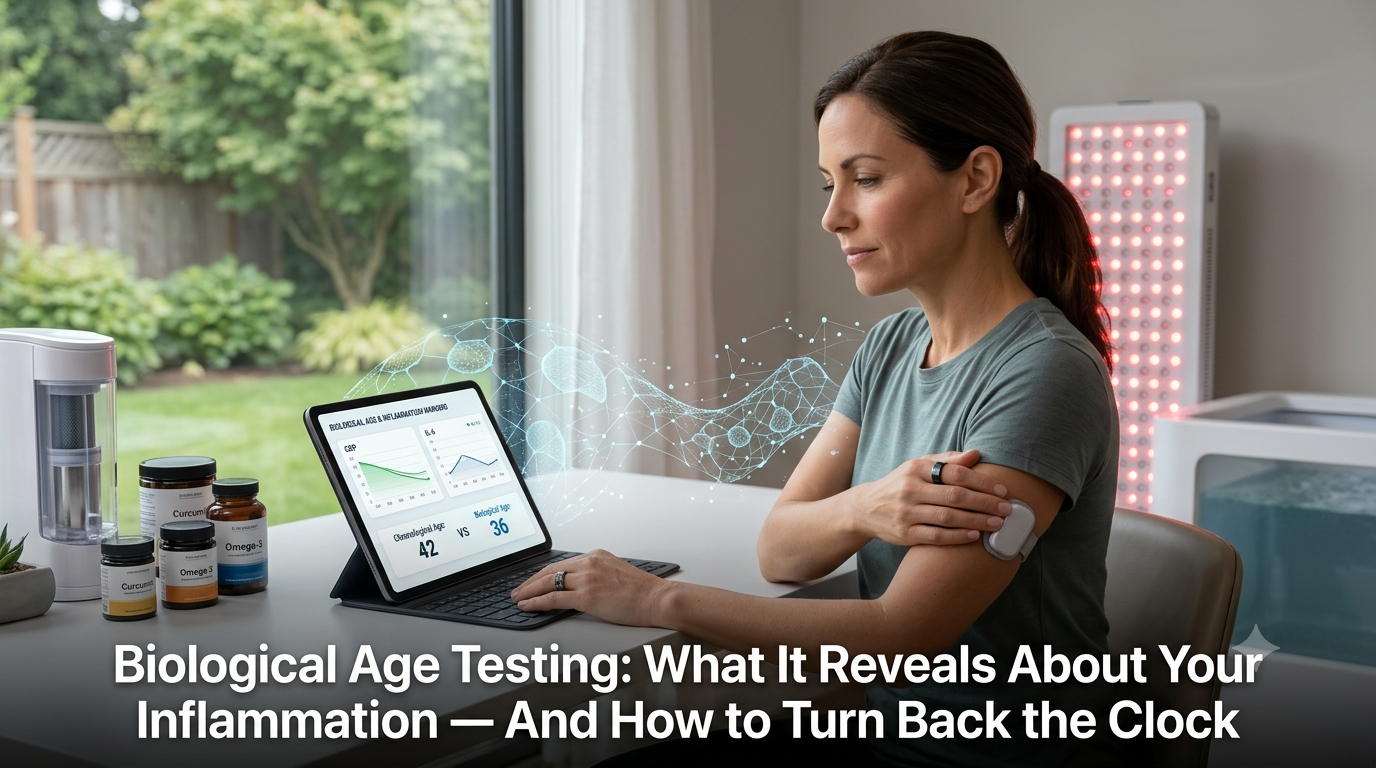
Biological age testing reveals the true impact of inflammation on your cellular aging. Discover the best tests available, what they measure, and the proven strategies to reverse your biological age after 50.
Introduction
Here’s a finding from epigenetic aging research that reframes how we should think about health after 50. Studies using DNA methylation-based biological age clocks have consistently found that adults with elevated chronic inflammatory markers — high CRP, elevated IL-6, high visceral fat burden — have biological ages that are measurably, sometimes dramatically, older than their chronological ages. In one major analysis, people in the highest quartile of inflammatory marker levels showed biological ages five to eight years older than their chronological age. Meanwhile, people in the lowest inflammatory quartile — those with well-controlled, low systemic inflammation — often showed biological ages younger than their years. Same chronological age on the birth certificate. Completely different cellular reality inside the body.
This is the most important insight in modern aging science, and it’s one that most people over 50 never encounter in conventional medical settings. We’ve been taught to think about aging as a linear, uniform process — you turn 55, and you have the biology of a 55-year-old. But the reality is far more varied and far more empowering. Biological age — the true functional age of your cells, tissues, and organs — is not fixed by your date of birth. It’s shaped continuously by your lifestyle, your inflammatory status, your sleep, your gut health, your mitochondrial function, and dozens of other factors that are directly within your sphere of influence. And it’s now measurable with increasing precision and accessibility.
I remember the specific moment biological age testing became personal for me. I’d been following an anti-inflammatory protocol for about eight months — Zone 2 exercise, dietary overhaul, gut healing, targeted supplementation — and decided to do my first epigenetic clock test. I was 54 chronologically. My result came back at 61. Seven years older than my birth certificate suggested. I won’t pretend that wasn’t a gut punch. But it was also the most motivating piece of data I’d ever received about my own health — because it was objective, it was specific, and it was actionable. A year later, after intensifying my protocol based on what the research said specifically reverses biological age, I retested at 57. Still not ideal, but four years younger than my first test. That trend told me the biology was responding.
This article is going to walk you through everything you need to know about biological age testing — what the different tests actually measure, how they connect to your inflammatory status, what specific lifestyle and supplementation interventions have the strongest evidence for reversing biological age, and how to build a longevity tracking dashboard that turns abstract biological data into practical, motivating feedback. Let’s get into it.
What Is Biological Age — And Why Does It Matter More Than Chronological Age?
Chronological age is simply how many years have passed since you were born. It’s determined entirely by the calendar and tells us almost nothing useful about your actual physiological state, disease risk, or remaining healthy years. Two people who are both 60 years old chronologically can have the biology of a 45-year-old or a 75-year-old depending on the cumulative impact of their lifestyle, genetics, inflammatory history, and the dozens of other factors that influence how quickly or slowly cellular aging processes accumulate. Biological age captures this reality where chronological age completely misses it.
Biological age is a composite measure of how old your body’s cells, tissues, and organs actually are in functional terms — how much cumulative molecular damage has accumulated, how much regenerative capacity remains, how efficiently your cellular repair and maintenance systems are operating, and how far along the aging process your biology sits relative to population norms for your chronological age. The science of biological age measurement has advanced dramatically over the past decade, moving from imprecise functional proxies like grip strength and walking speed toward highly sophisticated molecular measurements that capture aging at the epigenetic, proteomic, and metabolic levels.
The hallmarks of biological aging that modern tests aim to capture include epigenetic changes in DNA methylation patterns, telomere shortening, accumulation of cellular senescence, mitochondrial dysfunction, proteostasis loss (the breakdown of protein quality control), deregulated nutrient sensing, altered intercellular communication, and chronic low-grade inflammation — precisely the inflammaging state we’ve explored throughout this series. Different biological age tests capture different subsets of these hallmarks, which is why combining multiple testing approaches provides a more complete picture than any single test.
Why do two people the same chronological age have such different biological ages? The answer is the cumulative impact of lifestyle, environmental exposures, and inflammatory history on the molecular mechanisms that drive cellular aging. Chronic inflammation, as we’ve established across this series, directly accelerates virtually every hallmark of biological aging — it drives epigenetic changes that lock in pro-inflammatory gene expression, accelerates telomere shortening through oxidative damage to telomeric DNA, promotes cellular senescence through cytokine-mediated DNA damage signaling, impairs mitochondrial function through ROS-mediated damage, and disrupts the intercellular communication networks that coordinate tissue maintenance and repair. Every year of unaddressed chronic inflammation is a year in which biological aging outpaces chronological aging — producing the gap that biological age testing reveals.
The motivational power of biological age testing deserves specific acknowledgment. Unlike abstract risk factors or theoretical mechanisms, a biological age result that’s five, seven, or ten years older than your chronological age is viscerally concrete. It converts the diffuse concept of “I should take better care of myself” into a specific, measurable reality that’s hard to rationalize away. And perhaps more importantly, retesting after implementing lifestyle interventions and seeing measurable biological age improvement is one of the most powerful motivational feedback loops available in health optimization — providing objective evidence that the biology is actually responding to your efforts.
Epigenetic Clocks — The Most Sophisticated Biological Age Measurement
Epigenetic clocks are the most scientifically sophisticated and clinically meaningful biological age testing approach currently available, and understanding what they actually measure requires a brief introduction to epigenetics and DNA methylation.
Epigenetics refers to chemical modifications to DNA and the proteins around which DNA is wound that alter gene expression patterns without changing the underlying DNA sequence itself. The most important of these modifications for aging research is DNA methylation — the addition of methyl groups to specific cytosine bases in the DNA, typically at CpG sites (locations where a cytosine is followed by a guanine). DNA methylation patterns regulate which genes are expressed and which are silenced, and these patterns change in characteristic, reproducible ways as humans age. Different cells and tissues across the body show predictable shifts in their methylation patterns over time — patterns that are so consistent across individuals that they can be used to estimate biological age with remarkable accuracy.
The first generation of epigenetic clocks was developed by Steve Horvath at UCLA in 2013 — a mathematical algorithm trained on DNA methylation data from multiple tissue types that could estimate biological age from a blood or saliva sample with a median error of approximately 3.6 years across hundreds of tissue samples from different ages and cell types. The Horvath clock established the fundamental proof of concept that DNA methylation patterns provide a reliable biological age signal, and it remains one of the most widely used and cited epigenetic clocks in research.
The Hannum clock, developed around the same time using blood-specific methylation data, provided a complementary blood-optimized biological age measure. Subsequent generations of epigenetic clocks have progressively improved both accuracy and clinical relevance by training on outcome data rather than purely chronological age. PhenoAge, developed by Morgan Levine at Yale, was trained to predict a composite of clinical biomarkers associated with biological age rather than chronological age alone — making it more predictive of morbidity and mortality than earlier clocks. GrimAge, also developed at UCLA, was trained to predict time-to-death and has proven to be the single most powerful epigenetic predictor of mortality, disease incidence, and healthspan outcomes currently available. GrimAge acceleration — the difference between your GrimAge biological age and your chronological age — is now one of the most predictive biomarkers in aging research for a wide range of health outcomes.
For people over 50 primarily concerned with inflammation and inflammaging, GrimAge is the most clinically relevant epigenetic clock because it captures the accumulated biological damage of chronic inflammation more directly than chronological age-calibrated clocks. Research has shown that GrimAge acceleration correlates significantly with inflammatory markers including CRP and IL-6, with senescent cell burden, with visceral fat volume, and with mitochondrial dysfunction markers — making it essentially an integrated measure of how much inflammaging damage has been written into the epigenome. Reducing GrimAge acceleration through anti-inflammaging interventions is therefore a direct measure of biological success.
Commercial epigenetic clock testing is now available through several services at accessible price points. TruAge (formerly TruDiagnostic) offers comprehensive epigenetic testing including multiple clock algorithms including GrimAge, Horvath, and Hannum clocks from a blood spot or blood draw sample. Elysium Health’s Index test provides epigenetic age measurement with a strong research pedigree. MyDNAge offers saliva-based epigenetic testing using the Horvath clock methodology. Prices typically range from approximately $200-500 for a single test, with subscription models available that discount retesting — which is where the real longitudinal value emerges.
Other Biological Age Testing Methods Beyond Epigenetic Clocks
Epigenetic clocks are the gold standard for biological age assessment, but several complementary testing approaches capture different dimensions of the aging process and provide additional context that enhances the overall biological age picture.
Telomere length testing measures the protective caps at the chromosome ends that shorten with each cell division and with oxidative stress from inflammation. Telomere length is one of the original biological age markers — shorter telomeres are associated with cellular senescence, reduced regenerative capacity, and increased disease risk — and it has been used in aging research for decades. Blood-based telomere length testing is available through services including Life Length and TeloYears, which provide results alongside population-percentile comparisons that contextualize your telomere length relative to others at your chronological age. The relationship between telomere length and overall biological age is meaningful but imperfect — telomere length reflects one dimension of cellular aging that, while correlated with epigenetic age, provides distinct and complementary information. Critically, telomere length is one of the biological age markers most directly accelerated by chronic inflammation, since inflammatory reactive oxygen species specifically damage telomeric DNA sequences, making it a particularly relevant marker for inflammaging assessment.
GlycanAge is a biological age test based on an entirely different biomarker — the glycosylation pattern of IgG antibodies, as mentioned in our inflammaging article. The way the immune system adds sugar molecule chains (glycans) to the Fc region of IgG antibodies changes characteristically with aging and inflammation in ways that can be precisely measured through mass spectrometry-based analysis. GlycanAge has demonstrated strong correlations with biological age as measured by epigenetic clocks, but it has a particular advantage for people focused on anti-inflammaging protocols — it appears to be more sensitive and faster-responding to lifestyle interventions than DNA methylation-based clocks, potentially showing meaningful changes within three to six months of consistent lifestyle improvement when epigenetic clock changes might require six to twelve months to register. This makes GlycanAge a useful interim tracking tool between less frequent epigenetic clock retests, providing earlier feedback on whether an anti-inflammaging protocol is producing biological results.
Blood-based proteomics aging clocks represent the most exciting emerging frontier in biological age measurement. Proteomics-based approaches measure the concentrations of hundreds to thousands of circulating proteins simultaneously and use machine learning algorithms to identify the specific protein pattern most associated with biological aging and health outcomes. Research from Stanford and Hevolution Foundation using the SomaScan proteomics platform has identified biological age clocks based on protein patterns that are highly predictive of aging-related outcomes and, critically, appear to capture functional organ system aging in ways that DNA methylation alone does not. Companies including Juvena Therapeutics and several others are developing clinically accessible proteomics-based aging tests, and this space is likely to produce the most powerful next-generation biological age tools within the next three to five years.
Functional biological age tests — while less molecularly sophisticated than epigenetic or proteomics approaches — provide practical, accessible information about the actual functional consequences of biological aging on physical capacity. Grip strength, assessed with a hand dynamometer, is one of the most robust predictors of mortality and morbidity in the aging literature — stronger grip predicts longer, healthier life with remarkable consistency across studies. VO2 max — the maximum rate of oxygen consumption during exercise — is similarly powerful as both a functional aging marker and a direct predictor of cardiovascular health and longevity. Reaction time, balance assessment, and walking speed round out a functional biological age picture that complements molecular measurements. Many of these functional tests can be performed inexpensively in clinical settings or estimated with validated home protocols, providing accessible biological age indicators for people who aren’t yet ready to invest in molecular testing.
The Inflammation-Biological Age Connection — What the Research Shows
The research connecting chronic inflammation to accelerated biological aging has become one of the most consistent and mechanistically well-understood relationships in modern aging science. Multiple lines of evidence converge on the conclusion that chronic inflammation is not merely associated with biological age acceleration — it actively drives it through specific molecular mechanisms.
The most direct evidence comes from studies correlating inflammatory biomarkers with epigenetic clock measurements in large human cohorts. Research published in Aging Cell found that hsCRP levels were significantly associated with GrimAge acceleration — people with higher CRP showed faster-aging epigenomes independent of chronological age, lifestyle factors, and conventional disease diagnoses. Similar correlations have been documented for IL-6, TNF-α, and composite inflammatory burden scores with multiple epigenetic clock algorithms. These correlations are not merely statistical associations — they reflect the direct impact of pro-inflammatory cytokines on the methylation machinery that epigenetic clocks measure, specifically through cytokine-mediated changes in the activity of DNA methyltransferase and DNA demethylase enzymes that write and erase methylation marks across the genome.
Visceral fat’s contribution to epigenetic age acceleration is particularly well-documented. Because visceral fat is a major source of pro-inflammatory cytokines — as explored in depth in our visceral fat article — it drives epigenetic age acceleration both through direct cytokine-mediated methylation changes and through the downstream metabolic inflammation (insulin resistance, dyslipidemia, hepatic inflammation) that compounds inflammatory epigenetic damage. Research has shown that waist circumference and visceral fat volume predict epigenetic age acceleration above and beyond other measures of adiposity — reinforcing the unique metabolic and inflammatory danger of visceral fat relative to total body weight.
Cellular senescence drives epigenetic age acceleration through SASP cytokines that create a local and systemic inflammatory environment that directly alters methylation patterns in neighboring non-senescent cells — a phenomenon sometimes called the bystander epigenetic effect. This mechanism means that senescent cell accumulation doesn’t just accelerate the aging of senescent cells themselves — it accelerates the epigenetic aging of the healthy surrounding tissue exposed to SASP output. This finding provides powerful biological justification for the senolytic interventions covered in our senolytics article — clearing senescent cells doesn’t just reduce their SASP-driven inflammatory output, it potentially removes a significant driver of bystander epigenetic age acceleration in surrounding healthy tissue.
The research on lifestyle-driven biological age reversal is among the most motivating in the entire longevity field — because it confirms that the epigenetic clock, despite measuring the cumulative record of biological aging, is not a one-way timer. It’s a dynamic, responsive system that can run backward as well as forward. A landmark study published in Aging in 2021 by Dr. Kara Fitzgerald and colleagues found that an eight-week intensive lifestyle intervention — combining dietary modification, sleep optimization, exercise, and targeted supplementation — produced a statistically significant 3.23-year reduction in biological age as measured by the Horvath clock. This was a randomized controlled trial with active controls, making it one of the most compelling human demonstrations that biological age reversal is a real, measurable, achievable outcome — not just a theoretical possibility.
The Lifestyle Protocol That Reverses Biological Age After 50
With the research clearly establishing that biological age is responsive to lifestyle intervention, the question becomes which specific interventions have the strongest epigenetic and biological age reversal evidence. The answer, encouragingly, aligns closely with the comprehensive anti-inflammaging protocol we’ve built across this entire article series.
Diet has the most immediate and most potent documented effect on epigenetic aging markers of any lifestyle domain, and the evidence points clearly toward specific dietary patterns and foods with documented methylation-favorable effects. The Dr. Fitzgerald trial mentioned above used a diet high in methylation-supportive foods — leafy greens, cruciferous vegetables, colorful vegetables, berries, and modest amounts of animal protein — alongside specific attention to polyphenol intake and caloric moderation. The Mediterranean dietary pattern has multiple studies demonstrating its association with lower epigenetic age and slower epigenetic aging over time. Cruciferous vegetables deserve specific emphasis because they contain sulforaphane — a compound that directly activates Nrf2 and modulates DNA methylation patterns in ways that appear to support epigenetic age reduction. Time-restricted eating and caloric restriction both produce epigenetic aging benefits through AMPK activation, sirtuin stimulation, and autophagy induction — all of which influence the methylation machinery directly.
Exercise produces documented biological age reversal through multiple epigenetic mechanisms, and the evidence increasingly points to Zone 2 cardio as the exercise modality with the greatest epigenetic age impact. A study published in the European Heart Journal found that endurance-trained athletes had significantly younger epigenetic ages than strength athletes or sedentary controls matched for chronological age, pointing to sustained aerobic exercise as the exercise approach most specifically beneficial for epigenetic aging. The mechanisms include mitochondrial biogenesis-related methylation changes, myokine-mediated immune regulation that reduces inflammatory epigenetic damage, and the visceral fat reduction that removes a primary driver of epigenetic age acceleration. Resistance training adds complementary benefits through muscle-derived growth factors and insulin sensitivity improvements that modify epigenetic aging trajectories in metabolically active tissues.
Sleep’s epigenetic aging effects have been documented in both cross-sectional and interventional research. Chronic short sleep — below seven hours — is consistently associated with accelerated epigenetic aging across multiple clock algorithms. The mechanisms connect directly to the disrupted growth hormone release, elevated cortisol, impaired DNA repair, and reduced inflammatory resolution that characterize poor sleep — all of which leave epigenetic marks that clocks register as accelerated aging. Improving sleep quality and duration consistently produces more favorable epigenetic aging trajectories, and research suggests even relatively modest improvements in chronic short sleepers can produce measurable biological age benefits within weeks to months.
Stress reduction has specific and well-documented epigenetic aging effects that are mechanistically distinct from its effects on inflammatory markers. Chronic psychological stress drives specific methylation changes through glucocorticoid receptor signaling and NF-κB-mediated epigenetic modifications that accelerate GrimAge and PhenoAge specifically. Mindfulness meditation has been shown in multiple studies to produce methylation changes at specific CpG sites associated with inflammation and immune regulation — essentially writing anti-inflammatory epigenetic marks that clocks register as biological age reduction. Yoga, tai chi, and other mind-body practices produce similar documented methylation benefits, suggesting that the parasympathetic activation and cortisol normalization common to these practices has a direct and measurable epigenetic anti-aging effect.
Social connection and sense of purpose — the Blue Zone factors we covered in detail in article six — have specific epigenetic aging effects documented in large population studies. Research using UK Biobank data found that social isolation was associated with significantly accelerated GrimAge — a biological age effect that remained significant after controlling for inflammatory markers, suggesting that social isolation has epigenetic aging effects that go beyond its inflammatory consequences. Purpose-driven life engagement is similarly associated with slower epigenetic aging in longitudinal studies, pointing to these psychosocial factors as genuine biological age modulators rather than merely quality-of-life indicators.
How quickly can biological age actually change with consistent intervention? The research suggests meaningful biological age changes — detectable on validated epigenetic clocks — typically require sustained intervention over three to twelve months, depending on the magnitude of the baseline acceleration, the aggressiveness of the intervention, and the specific clock being measured. GlycanAge appears to respond faster — potentially within three to six months — while DNA methylation clock changes typically require six to twelve months of consistent intervention to register meaningfully. The Fitzgerald trial showed 3.23-year reversal in eight weeks with an intensive protocol — suggesting that highly motivated, intensive intervention can produce faster changes than gradual moderate lifestyle modification.
The Supplement and Biohacking Protocol for Biological Age Reversal
Targeted supplementation and advanced biohacking interventions add a meaningful biochemical layer to the lifestyle foundation for biological age reversal, with several compounds showing specific evidence for epigenetic aging effects beyond what lifestyle alone achieves.
NAD+ precursors have among the strongest documented effects on epigenetic aging of any supplement currently available. As established in our earlier articles, NAD+ fuels sirtuin activity — particularly SIRT1 and SIRT6 — and sirtuins directly regulate epigenetic aging through their roles as histone deacetylases that influence chromatin structure and DNA repair. SIRT6 specifically is recognized as one of the most important longevity proteins for epigenetic aging regulation — it regulates genomic stability, DNA repair, and the epigenetic modifications that aging clocks measure. Research has shown that NMN and NR supplementation raises NAD+ levels and increases sirtuin activity, producing downstream effects on DNA methylation patterns that translate into measurable epigenetic age improvements in animal studies and some human research. Dosing of 500-1000mg daily of NMN or NR, ideally combined with resveratrol to amplify SIRT1 activation, represents the most evidence-supported NAD+-focused biological age reversal approach.
Senolytic supplementation — the fisetin, quercetin, and resveratrol protocol detailed in our senolytics article — has emerging evidence for biological age reversal beyond its direct anti-inflammatory effects. Research using epigenetic clocks to measure biological age in senolytic-treated animal models has found significant epigenetic age reduction following effective senescent cell clearance — consistent with the bystander epigenetic age acceleration mechanism described above. Human clinical data from the D+Q combination senolytic trials has shown improvements in biological age indicators and senescence markers, and natural senolytic trials measuring epigenetic clock outcomes are currently underway. The pulse dosing protocol for natural senolytics — monthly fisetin at 1,000-2,000mg for two to three days combined with quercetin at 500-1,000mg — is the most accessible current application of this emerging biological age reversal approach.
Methyl-donor nutrients deserve special emphasis in the biological age reversal context because DNA methylation — the molecular basis of epigenetic clocks — literally requires methyl groups from specific dietary and supplementary sources. The primary methyl donors are folate (or the active form 5-methyltetrahydrofolate in supplemental form), vitamin B12, betaine (trimethylglycine), choline, and SAMe (S-adenosylmethionine — the body’s universal methyl donor). Deficiency in any of these compounds impairs the methylation reactions that maintain proper DNA methylation patterns, potentially contributing to the methylation drift that epigenetic clocks measure as biological aging. The Dr. Fitzgerald trial protocol specifically included methyl-donor nutrients alongside dietary methylation support, and their role in epigenetic aging modulation is mechanistically well-grounded. A comprehensive methyl-donor stack for biological age support would include methylfolate (400-800mcg), methylcobalamin B12 (500-1000mcg), trimethylglycine/betaine (1-3g), and choline from food or supplemental sources (400-550mg daily).
Omega-3 fatty acids have specific, documented epigenetic aging effects that go beyond their well-established anti-inflammatory properties. Research from the OMEGA-3 trial at Ohio State University found that omega-3 supplementation produced measurable changes in DNA methylation patterns and telomere length compared to placebo — specific molecular markers of biological aging that correlate with epigenetic clock measurements. The mechanisms likely involve omega-3’s effects on inflammatory gene methylation patterns and their protection of telomeric DNA from oxidative damage-driven shortening. Vitamin D similarly has documented effects on DNA methylation at genes related to immune function and inflammation, and vitamin D deficiency — extremely common after 50 — is associated with accelerated epigenetic aging in multiple studies. Optimizing vitamin D to the 60-80 ng/mL range discussed in our supplement article therefore has potential epigenetic aging benefits beyond the direct anti-inflammatory effects.
Red light therapy’s effects on biological aging are an area of rapidly growing research interest. Near-infrared light penetrates cells and directly stimulates mitochondrial ATP production and reduces mitochondrial oxidative stress — the same mitochondrial improvements that drive the mitochondrial biogenesis and dysfunction corrections that multiple biological aging hallmarks connect to. Early research suggests that regular photobiomodulation may produce measurable effects on biological aging markers including telomere length and DNA repair capacity, though the specific epigenetic clock evidence in humans is still accumulating. Cold exposure similarly shows emerging evidence for biological age markers through its effects on mitochondrial biogenesis and brown adipose tissue activation that reduce metabolic aging trajectories.
Tracking Biological Age Over Time — Building a Longevity Dashboard
The real power of biological age testing emerges not from a single measurement but from the pattern of change over time as you implement your anti-inflammaging protocol. Building a systematic longevity tracking dashboard transforms isolated data points into a motivating, actionable picture of biological progress.
How often to retest biological age for meaningful trend data depends on the specific test being used and the aggressiveness of your intervention. For epigenetic clock testing — which represents the most fundamental measure of biological age — annual retesting provides a meaningful progression timeline that captures real biological change while avoiding the noise of measurement variability at shorter intervals. For GlycanAge testing — which responds faster to lifestyle intervention — retesting every six months provides useful intermediate feedback. For simpler inflammatory biomarkers including hsCRP, IL-6, and fasting insulin that correlate with biological age — quarterly retesting provides the highest-resolution tracking of the inflammatory-metabolic component of biological age. This tiered retesting schedule balances meaningful information density against testing cost and frequency.
Building a comprehensive longevity dashboard combines biological age markers with the functional and inflammatory biomarkers we’ve tracked throughout this series. A practical annual dashboard might include epigenetic clock testing (GrimAge and Horvath via TruAge or equivalent), GlycanAge test, telomere length measurement, along with quarterly hsCRP, IL-6 where accessible, fasting insulin and HOMA-IR, comprehensive metabolic panel, vitamin D levels, and HRV trend data from your wearable device. Functional measures — grip strength tested with a handheld dynamometer, VO2 max estimated from exercise testing or from your wearable’s estimate, and waist circumference — round out the dashboard with accessible, no-cost biological age indicators that trend meaningfully with the molecular markers.
Interpreting biological age changes over time requires appropriate statistical humility alongside genuine engagement with the trend data. Single-test-to-single-test comparisons have more variability than multi-point trend analysis, and a one-year change of one to two biological age years — while meaningful — is within the measurement uncertainty of most current epigenetic clocks. Directional consistency over multiple retesting intervals — consistently moving younger rather than achieving dramatic single-interval reversals — is more meaningful and more reliable than any individual test comparison. When your GrimAge trends younger over two to three consecutive annual measurements alongside consistently improving inflammatory biomarkers and improving functional markers, that convergent evidence provides genuine confidence that your biological aging trajectory is genuinely reversing.
The psychological dimension of biological age tracking deserves honest acknowledgment because it’s genuinely complex. A biological age result significantly older than your chronological age — particularly the first time you test — can be distressing and potentially demotivating if encountered without appropriate context and preparation. The appropriate framing is this: your first biological age test reveals the cumulative impact of your history, not a fixed or permanent verdict about your future. The most valuable thing your first result provides is a baseline — a starting line from which your progress will be measured. The people who get the most value from biological age testing are those who use unfavorable initial results as motivation and evidence-base for intensifying their anti-inflammaging protocol, then experience the profound motivational power of seeing objective biological age improvement in subsequent tests.
The future of biological age testing and personalized longevity medicine is moving faster than any other area of health technology. AI-powered multi-omic biological age clocks integrating epigenetic, proteomic, metabolomic, and microbiome data will produce substantially more accurate and more actionable biological age assessments within the next five years. Personalized intervention recommendations generated from individual biological age profiles — telling you not just how old your biology is but specifically which pathways are most accelerated and which interventions are most likely to address your specific pattern — will transform biological age testing from a monitoring tool into a precision intervention guidance system. The foundation you’re building now by understanding and tracking your biological age puts you in exactly the right position to leverage these increasingly powerful tools as they become available.
Conclusion
Biological age testing is the most honest and most motivating health measurement available to people over 50 — because it tells you something your birth certificate never can. It tells you the truth about what your lifestyle, your inflammation history, your sleep, your gut health, and your cellular biology have collectively created inside your body. And the truth, as we’ve established across this series, is that this biological reality is not fixed. It is responsive to intervention. It can run backward. And the interventions that make it run backward are exactly the ones this series has been building toward — addressing inflammation at its cellular roots through diet, exercise, sleep, gut health, stress management, and targeted supplementation.
The most powerful thing biological age testing gives you is not a number — it’s a feedback loop. A way to see, objectively and measurably, whether the protocol you’re following is producing real biological results. This feedback loop transforms anti-inflammaging from an act of health faith into an evidence-based, data-driven project with clear metrics, demonstrable progress, and the profound motivation that comes from watching your own biology improve in response to choices you’re making every day.
Start with what’s most accessible — a GlycanAge test or an epigenetic clock test from TruAge or a similar service — and establish your baseline. Use that baseline to intensify your most impactful interventions, track your inflammatory biomarkers quarterly, and retest your biological age annually. Build the longevity dashboard that turns biological aspiration into biological accountability. And remember that every data point — even an unfavorable one — is information that helps you understand your biology more clearly and intervene more effectively.
Please work with a healthcare provider or functional medicine practitioner in interpreting your biological age results, particularly in the context of your broader health history and any medications you’re taking. And share your biological age testing experiences in the comments below — what tests you’ve tried, what results surprised you most, and what lifestyle changes have most moved your numbers. This community’s collective experience with the actual biology of aging is genuinely irreplaceable.