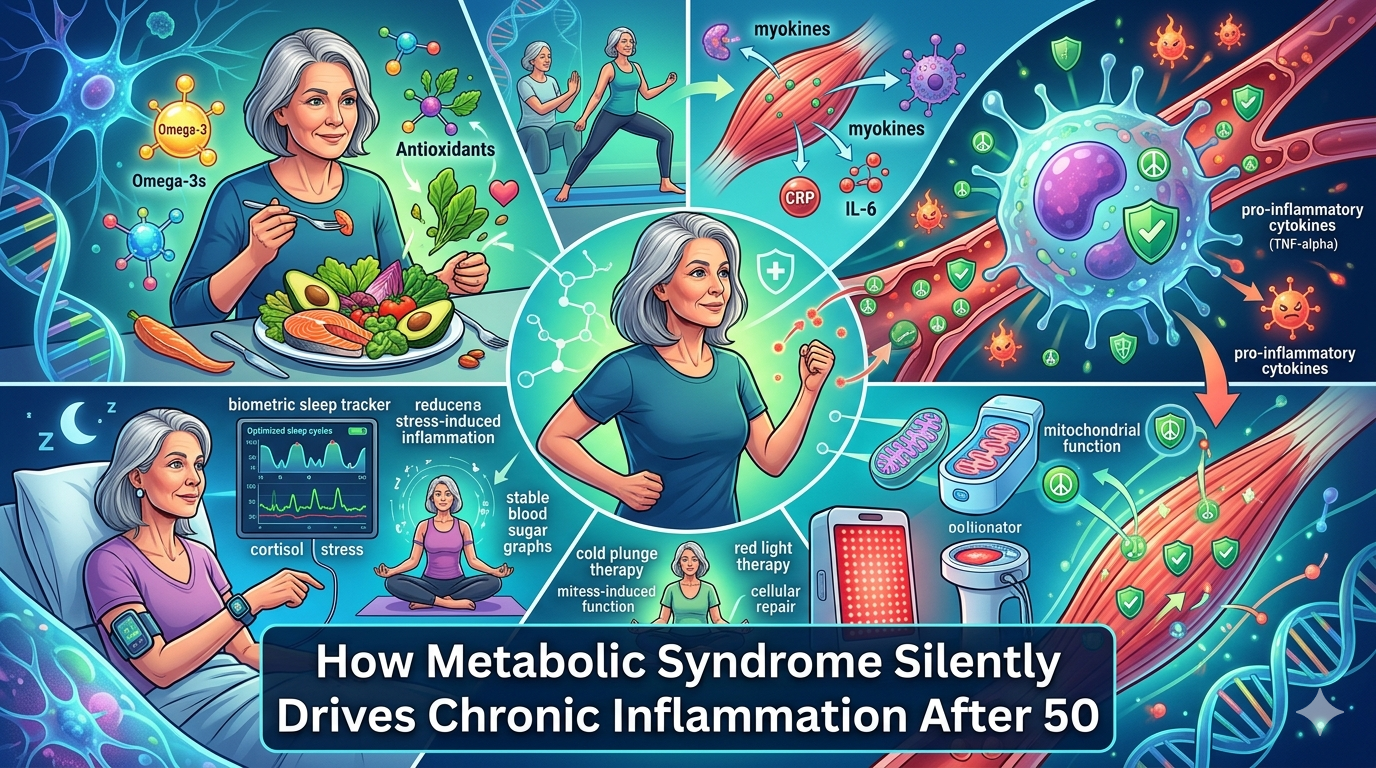
Metabolic syndrome is silently fueling chronic inflammation in millions of adults over 50. Discover what’s really happening inside your body, how to identify the warning signs, and the proven strategies to reverse it naturally.
Introduction
Here’s a number that stopped me in my tracks when I first came across it. More than 50% of adults over 60 in the United States meet the clinical criteria for metabolic syndrome. More than half. And the vast majority of them have no idea. No diagnosis, no treatment plan, no awareness that their body is running a slow-burning inflammatory fire that’s quietly damaging their heart, their brain, their joints, and their metabolic machinery — every single day.
Metabolic syndrome doesn’t announce itself with dramatic symptoms. It creeps up on you. A little extra weight around the middle. Blood pressure that’s crept up over the years. Fasting glucose that’s “borderline.” Triglycerides that your doctor mentions but doesn’t seem too alarmed by. On their own, each of these things seems manageable. Together, they form a cluster of metabolic dysfunction that drives some of the most dangerous and pervasive chronic inflammation a person over 50 can experience.
I remember sitting with my lab results a few years back thinking everything looked pretty okay. My doctor wasn’t particularly concerned. But when I started connecting the dots — waist measurement, blood pressure trending up, glucose creeping higher, energy tanking — I realized I was sitting squarely in metabolic syndrome territory. And once I understood what that was doing to my inflammatory biology, getting serious about reversing it became the most urgent health priority I had.
This article is going to walk you through exactly what metabolic syndrome is, why it’s such a powerful driver of chronic inflammation specifically after 50, how to know if you have it, and — most importantly — what you can actually do to reverse it. Diet, exercise, targeted supplements, and biohacking tools are all on the table. Let’s get into it.
What Is Metabolic Syndrome — And Why Does It Matter After 50?
Metabolic syndrome isn’t a single disease. It’s a cluster of five interconnected metabolic abnormalities that, when they occur together, dramatically increase your risk of cardiovascular disease, type 2 diabetes, stroke, Alzheimer’s disease, and certain cancers. The clinical definition requires three or more of the following five criteria to be present simultaneously.
First, central obesity — a waist circumference greater than 40 inches in men or 35 inches in women. Second, elevated fasting blood glucose — 100 mg/dL or higher, or already on glucose-lowering medication. Third, elevated triglycerides — 150 mg/dL or higher, or on triglyceride-lowering medication. Fourth, reduced HDL cholesterol — below 40 mg/dL in men or 50 mg/dL in women. Fifth, elevated blood pressure — 130/85 mmHg or higher, or already on blood pressure medication. Three out of five, and you have metabolic syndrome. Sound familiar? You’d be surprised how many people hit three or four of these without ever being told they have a syndrome at all.
Why does the risk skyrocket after 50? Several things converge simultaneously. Muscle mass naturally declines with age — a process called sarcopenia — and muscle tissue is the primary site of glucose uptake from the bloodstream. Less muscle means worse glucose disposal and rising insulin resistance. Hormonal changes compound this: declining testosterone in men and declining estrogen in women both remove natural metabolic protections. Testosterone supports muscle mass and insulin sensitivity. Estrogen influences fat distribution, and its decline tends to shift fat storage from the hips and thighs to the abdomen — the metabolically dangerous visceral fat depot. Thyroid function often becomes sluggish after 50, slowing metabolic rate further. Mitochondrial efficiency declines. And decades of dietary patterns, stress accumulation, and sleep disruption all add up.
The treatment problem is also worth naming. Conventional medicine tends to treat each component of metabolic syndrome as a separate condition — blood pressure medication here, statin there, metformin for the glucose. Rarely does anyone sit down and say “you have metabolic syndrome, and here’s a comprehensive strategy for reversing the underlying dysfunction.” That gap is what this article is designed to fill.
The Hidden Link Between Metabolic Syndrome and Chronic Inflammation
This is the section I most wish someone had explained to me years ago. Because once you understand the mechanism — how metabolic syndrome and chronic inflammation are not just correlated but are actively driving each other in a feedback loop — the urgency of addressing it becomes visceral.
Let’s start with visceral fat, because it’s the most important and most misunderstood player in this story. Visceral fat is the fat stored deep in the abdominal cavity, surrounding your organs. Unlike subcutaneous fat — the fat you can pinch under your skin — visceral fat is metabolically active. It functions essentially as an endocrine organ, secreting a range of biologically active compounds including pro-inflammatory cytokines like TNF-α and IL-6, and adipokines like leptin and resistin. As visceral fat accumulates, it creates a continuous low-grade inflammatory signal that circulates throughout the body, raising systemic inflammatory markers and setting the stage for every major inflammatory disease.
Insulin resistance is the second major inflammatory driver in metabolic syndrome. When cells stop responding efficiently to insulin, the pancreas compensates by pumping out more of it. Chronically elevated insulin directly activates NF-κB — the master transcription factor that switches on dozens of pro-inflammatory genes. High insulin also suppresses a key anti-inflammatory hormone called adiponectin, removing one of the body’s natural brakes on inflammation. And because insulin resistance drives more glucose into the bloodstream, you get the third mechanism: elevated blood sugar.
High blood sugar drives a process called glycation — where glucose molecules attach to proteins and lipids, forming advanced glycation end products (AGEs). AGEs are recognized by the immune system as foreign and damaged, triggering inflammatory responses. Elevated blood glucose also generates significant oxidative stress, producing reactive oxygen species that damage cells and activate inflammatory pathways. This is why chronically elevated blood sugar — even at levels below the diabetic threshold — is now understood to be a significant independent driver of systemic inflammation.
Dyslipidemia — specifically high triglycerides and low HDL — rounds out the inflammatory picture. Elevated triglycerides promote endothelial dysfunction, damaging the inner lining of blood vessels and creating a pro-inflammatory vascular environment. Small, dense LDL particles — more common in metabolic syndrome than standard LDL testing reveals — are particularly prone to oxidation, and oxidized LDL is a potent trigger for arterial inflammation. High blood pressure, the fifth component, further stresses the arterial endothelium and drives vascular inflammation.
Each of these five components drives inflammation independently. But here’s what makes metabolic syndrome particularly dangerous — they don’t just add together, they multiply each other. Visceral fat drives insulin resistance. Insulin resistance worsens dyslipidemia. Dyslipidemia promotes hypertension. Hypertension compounds vascular inflammation. And all of it feeds back to generate more visceral fat. It’s a self-reinforcing inflammatory spiral, and it tends to spin faster the longer it runs unchecked.
How to Know If You Have Metabolic Syndrome — Signs, Symptoms and Tests
The frustrating thing about metabolic syndrome is that it often produces no dramatic symptoms — at least not at first. The inflammation it generates is systemic and low-grade. The metabolic dysfunction it creates is gradual. By the time you start feeling genuinely unwell, the syndrome has often been running for years.
That said, there are signs worth paying attention to. Persistent fatigue that isn’t explained by poor sleep or overexertion. Brain fog and difficulty concentrating. Difficulty losing weight despite reasonable effort, particularly around the abdomen. Energy crashes after meals — a classic sign of post-meal glucose dysregulation. Elevated resting heart rate. Frequent urination or increased thirst. Slow wound healing. And that general sense that your body is inflamed — achy joints, puffy face in the morning, persistent low-grade malaise.
The diagnostic criteria I listed earlier give you the five key numbers to know. Here’s how to get them. A standard fasting blood panel will give you fasting glucose and a lipid panel including triglycerides and HDL. Blood pressure you can measure at home with an inexpensive cuff — and I strongly recommend doing so, because blood pressure measured in a doctor’s office is notoriously unreliable due to white coat hypertension. Waist circumference you can measure yourself with a tape measure at the level of your navel.
Beyond the five diagnostic criteria, there are additional tests worth requesting if you want a fuller picture of your metabolic-inflammatory status. HOMA-IR is a calculated measure of insulin resistance derived from fasting glucose and fasting insulin — it’s not routinely ordered but reveals subclinical insulin resistance before glucose gets high enough to meet the diagnostic threshold. High-sensitivity CRP (hsCRP) directly measures systemic inflammation and is one of the most powerful predictors of cardiovascular risk in metabolic syndrome. Fasting insulin alone is worth knowing — most labs consider anything under 25 μIU/mL normal, but functional medicine practitioners typically aim for under 8. Hemoglobin A1c reflects your average blood sugar over the past three months. And a comprehensive metabolic panel will reveal liver enzyme levels, which often become elevated in metabolic syndrome due to non-alcoholic fatty liver disease.
Don’t wait for your doctor to order these proactively. Most won’t unless you ask. Know your numbers, track them over time, and use them as your personal metabolic inflammation dashboard.
The Lifestyle Drivers Making Metabolic Syndrome Worse After 50
Understanding what’s driving your metabolic syndrome is just as important as knowing you have it. Because treating it effectively means addressing causes, not just managing numbers. And there are several lifestyle factors that hit particularly hard after 50.
Sedentary behavior is the most impactful. Physical inactivity directly impairs insulin sensitivity — muscle contraction is one of the primary mechanisms by which cells take up glucose independently of insulin, through GLUT4 transporter activation. When you’re inactive, this non-insulin-dependent glucose disposal essentially disappears, and blood sugar regulation becomes almost entirely dependent on an insulin signaling system that’s already struggling. Research consistently shows that even relatively modest increases in physical activity produce rapid and significant improvements in insulin sensitivity and inflammatory markers.
Diet quality — specifically the overconsumption of ultra-processed foods and refined carbohydrates — is the second major driver. Refined carbohydrates produce rapid glucose spikes that overwhelm insulin signaling and generate oxidative stress. Ultra-processed foods are typically high in refined seed oils (a major source of pro-inflammatory omega-6 fatty acids), added sugars, and food additives that disrupt the gut microbiome and promote intestinal permeability. A compromised gut barrier allows bacterial endotoxins called lipopolysaccharides (LPS) to leak into the bloodstream, triggering a chronic low-grade immune response that compounds metabolic inflammation significantly.
Chronic stress deserves more attention than it typically gets in metabolic syndrome conversations. Chronically elevated cortisol directly promotes visceral fat deposition, impairs insulin sensitivity, raises blood pressure, and suppresses the immune regulation needed to keep inflammation in check. People under chronic stress often eat poorly, sleep less, and move less — compounding the direct metabolic effects of cortisol itself. Stress management isn’t a soft lifestyle recommendation. For metabolic syndrome, it’s a clinical intervention.
Sleep deprivation is similarly underestimated. Even a single night of poor sleep measurably reduces insulin sensitivity the following day. Chronic sleep insufficiency — less than seven hours most nights — is consistently associated with elevated fasting glucose, higher triglycerides, increased visceral fat accumulation, and significantly elevated inflammatory markers. Growth hormone, which is released primarily during deep sleep and plays a key role in metabolic repair, is severely curtailed by sleep deprivation. If you’re not prioritizing sleep as part of your metabolic syndrome strategy, you’re fighting with one hand tied behind your back.
Hormonal decline after 50 creates additional metabolic vulnerability. In men, declining testosterone accelerates both muscle loss and visceral fat gain — directly worsening insulin resistance and inflammatory load. In women, the loss of estrogen’s metabolic protection during and after menopause shifts fat distribution toward the abdomen and worsens every metabolic syndrome marker. These hormonal changes don’t excuse metabolic syndrome, but they do explain why lifestyle interventions need to be more deliberate and consistent after 50 than they did at 35.
The Anti-Inflammatory Diet Protocol for Reversing Metabolic Syndrome After 50
Diet is probably the highest-leverage intervention available for reversing metabolic syndrome, and the good news is that the evidence strongly converges on a clear dietary framework — even if the specific diet names vary. Here’s what the research actually supports.
The foundation is whole, minimally processed food. Not a specific named diet, but a genuine commitment to eating things that look like food rather than things that were engineered in a laboratory. Real protein from quality animal and plant sources. Vegetables and low-sugar fruits in abundance. Healthy fats from avocados, olive oil, nuts, and fatty fish. Complex carbohydrates from whole food sources like legumes, sweet potatoes, and whole grains in portions appropriate to your activity level. This framework consistently outperforms any specific named diet in long-term metabolic syndrome research.
The Mediterranean diet deserves specific mention because it has the deepest evidence base for metabolic syndrome outcomes of any dietary pattern studied. The landmark PREDIMED trial showed that a Mediterranean diet supplemented with extra virgin olive oil or nuts reduced the incidence of major cardiovascular events by approximately 30% in high-risk adults — a population that heavily overlaps with metabolic syndrome. The anti-inflammatory mechanisms are multiple: high polyphenol intake, favorable omega-3 to omega-6 ratio, fiber from legumes and vegetables supporting gut health, and minimal refined carbohydrate and processed food.
Time-restricted eating (TRE) and intermittent fasting add a powerful metabolic layer on top of food quality. Limiting your eating window to 8-10 hours per day — a 16:8 or 14:10 approach — improves insulin sensitivity, promotes visceral fat loss, reduces fasting glucose and triglycerides, and activates cellular cleanup processes including autophagy and mitophagy. Research published in Cell Metabolism showed that time-restricted eating improved metabolic health markers in men with metabolic syndrome even without deliberate caloric restriction. The mechanism involves aligning food intake with circadian metabolic rhythms, allowing insulin to fully clear between meals and reducing the chronic insulin elevation that drives metabolic inflammation.
Specific foods with the strongest evidence for metabolic syndrome include fatty fish for omega-3s and anti-inflammatory effects, extra virgin olive oil for its oleocanthal and oleic acid content, berries for anthocyanins that improve insulin sensitivity, leafy greens for magnesium and nitrate content, legumes for soluble fiber and slow glucose release, and green tea for EGCG, a polyphenol with documented effects on insulin sensitivity and visceral fat reduction.
Fiber deserves its own emphasis. Soluble fiber from sources like oats, legumes, flaxseed, and vegetables feeds beneficial gut bacteria that produce short-chain fatty acids — particularly butyrate — which directly reduces intestinal inflammation, strengthens the gut barrier, and improves insulin sensitivity. Most adults over 50 consume roughly half the recommended 25-38 grams of fiber daily. Closing this gap consistently is one of the most underrated dietary interventions for metabolic syndrome.
What to eliminate or dramatically reduce: refined seed oils, ultra-processed packaged food, added sugars and sweetened beverages, refined grains, and excessive alcohol. These aren’t suggestions — they’re the primary dietary drivers of metabolic syndrome and replacing them with real food is the single most impactful dietary change most people can make.
Exercise Strategies That Directly Target Metabolic Syndrome and Inflammation
If diet is the highest-leverage dietary tool for metabolic syndrome, resistance training is the highest-leverage exercise tool — and it’s dramatically underutilized by most people over 50. Let me explain why it’s so central to this particular condition.
Skeletal muscle is the largest glucose-disposal organ in the body. When muscle contracts, it activates GLUT4 transporters that pull glucose out of the bloodstream independently of insulin — meaning even insulin-resistant muscle can clear glucose effectively during and after exercise. More muscle mass means more glucose disposal capacity and dramatically improved insulin sensitivity at rest. Building and maintaining muscle through resistance training is therefore a direct intervention on one of the primary mechanisms of metabolic syndrome. Research consistently shows that two to three resistance training sessions per week produce significant reductions in fasting glucose, insulin resistance, triglycerides, and waist circumference — even in people over 60.
Zone 2 cardio is the essential complement. Sustained low-to-moderate intensity aerobic exercise — at an intensity where you can hold a conversation but are working steadily — primarily burns fat through mitochondria in a way that improves mitochondrial efficiency, reduces visceral fat, and significantly lowers inflammatory markers over time. Zone 2 training also increases insulin sensitivity by improving mitochondrial fat oxidation capacity, reducing the reliance on glucose as a primary fuel source. Aim for 150 minutes per week broken into manageable sessions.
Post-meal walking is one of the simplest and most underrated metabolic interventions available. A 10-15 minute walk after meals has been shown in multiple studies to significantly blunt post-meal glucose spikes by activating muscle glucose uptake at the time when blood sugar is peaking. Over time, consistently flattening post-meal glucose spikes reduces glycation, oxidative stress, and the inflammatory burden that comes with blood sugar volatility. If you do nothing else from the exercise section, do this one.
HIIT can be a powerful tool for metabolic syndrome but needs a thoughtful approach after 50. Short bursts of high-intensity effort improve insulin sensitivity, stimulate mitochondrial biogenesis, and reduce visceral fat — but excessive HIIT without adequate recovery can elevate cortisol and worsen inflammation. Once per week, well-recovered from other training, is a sensible starting point.
A practical weekly framework: resistance training two to three times, Zone 2 cardio three to four times for 30-45 minutes, post-meal walks daily, and one optional HIIT session. This doesn’t require a gym membership or hours of daily exercise. Resistance bands at home, brisk walking, bodyweight exercises, and cycling all qualify. Consistency over intensity is the rule here — a moderate program you do every week beats an aggressive program you abandon after a month.
Targeted Supplements and Biohacks for Metabolic Inflammation After 50
Once diet and exercise are moving in the right direction, targeted supplementation can meaningfully accelerate progress on metabolic syndrome markers and inflammatory load. Here are the most evidence-backed options for this specific context.
Berberine is the supplement most specifically aligned with metabolic syndrome. It activates AMPK, improves insulin sensitivity, lowers fasting glucose, reduces triglycerides, improves HDL, and directly suppresses NF-κB inflammatory signaling — essentially addressing four of the five metabolic syndrome components simultaneously. The research comparing berberine to metformin for glucose management is well established, and its additional effects on lipids and inflammation give it advantages metformin doesn’t have. Standard protocol is 500mg two to three times daily with meals, cycled eight weeks on and two weeks off. Check for interactions with any medications you’re taking.
Magnesium is critical for metabolic syndrome specifically because it’s a required cofactor for insulin receptor signaling. Without adequate magnesium, insulin receptors don’t respond efficiently to insulin — directly worsening insulin resistance. Magnesium also regulates the inflammatory pathways activated by metabolic dysfunction. Deficiency is nearly universal in people with metabolic syndrome. Magnesium glycinate at 300-400mg nightly is the most practical starting point, with magnesium malate a useful addition for daytime energy support.
Omega-3 fatty acids at therapeutic doses (2-3 grams combined EPA and DHA daily) directly address the dyslipidemia component of metabolic syndrome, reducing triglycerides by 20-30% in many studies while simultaneously suppressing pro-inflammatory cytokine production. The combination of lipid improvement and anti-inflammatory effect makes omega-3s uniquely valuable in the metabolic syndrome context.
Alpha-lipoic acid (ALA) is particularly interesting for metabolic inflammation because it functions both as an insulin sensitizer — improving glucose uptake in muscle cells — and as a recycling antioxidant that regenerates glutathione, vitamin C, and vitamin E, all of which are depleted by the oxidative stress of metabolic dysfunction. R-ALA (the R isomer) at 300-600mg daily with meals is the most bioavailable form.
On the biohacking tools side, a continuous glucose monitor (CGM) is genuinely transformative for anyone with metabolic syndrome. Seeing your blood glucose response to specific foods, meal timing, stress, and sleep in real time gives you data no standard quarterly blood test can provide. Most people are shocked to discover which “healthy” foods spike their glucose significantly, and this awareness alone drives powerful dietary behavior change. CGMs are now accessible without a prescription through services like Levels Health.
HRV tracking through a wearable device gives you a complementary real-time window into your autonomic nervous system balance and overall stress load — both tightly coupled to metabolic inflammation. Consistently low HRV is a reliable signal that your body is under physiological strain, whether from inflammatory burden, poor recovery, or metabolic stress. Using HRV data to guide your training intensity and recovery decisions helps you avoid the cortisol spikes that worsen metabolic syndrome, and tracks your progress as your metabolic health improves.
Conclusion
Metabolic syndrome is one of the most common and most consequential health conditions affecting people over 50 — and one of the most underdiagnosed, undertreated, and misunderstood. The connection between metabolic syndrome and chronic inflammation isn’t incidental. It’s mechanistic, bidirectional, and self-reinforcing. Visceral fat, insulin resistance, elevated blood sugar, dyslipidemia, and hypertension don’t just damage your health independently — they lock together into an inflammatory feedback loop that accelerates biological aging and drives risk for virtually every major chronic disease.
The genuinely good news is that metabolic syndrome is not a life sentence. Unlike some aspects of aging, it responds powerfully to targeted lifestyle intervention. Diet quality, consistent exercise, stress management, sleep optimization, and well-chosen supplementation can produce measurable improvements in metabolic markers and inflammatory load within weeks to months. The biology is reversible. The trajectory is changeable.
Don’t try to change everything at once. Pick one or two interventions from this article that feel most accessible and most relevant to your situation — maybe it’s cutting ultra-processed food and adding post-meal walks, or starting resistance training and taking berberine. Build those habits until they’re automatic, then layer in the next thing. Small, consistent changes in the right direction compound into significant biological change over time.
Please work with a healthcare provider on this journey, especially if you’re already on medications for any of the metabolic syndrome components. A functional medicine doctor or knowledgeable integrative practitioner can help you track the right markers, adjust medications as your metabolic health improves, and personalize your protocol for your specific situation.
Now I want to hear from you. Are you dealing with metabolic syndrome or any of its components? Have you made changes that moved the needle on your markers or your inflammation? Share your experience in the comments below — real stories from real people navigating this after 50 are some of the most valuable contributions anyone can make to this conversation.
Pingback: Biological Age Testing: What It Reveals About Your Inflammation — And How to Turn Back the Clock - The Prime Reset
Pingback: Berberine vs. Metformin for Metabolic Inflammation Which Should You Choose After 50 - The Prime Reset
Pingback: Arthritis vs. Normal Aging Pain: How to Tell the Difference - The Prime Reset